
Erythrocyte Sedimentation Rate (ESR) Test: Purpose, Procedure, and Results
When inflammation is present, certain proteins—such as fibrinogen—cause red blood cells to clump together and settle faster than normal. Therefore, a high ESR can indicate inflammation, infection, autoimmune diseases, or even some cancers.
Although the ESR test cannot identify the exact cause of inflammation, it remains a valuable screening and monitoring tool in modern medicine. Doctors often use ESR results alongside other tests, such as C-reactive protein (CRP), to get a more complete picture of your health.
What Is an ESR Test?
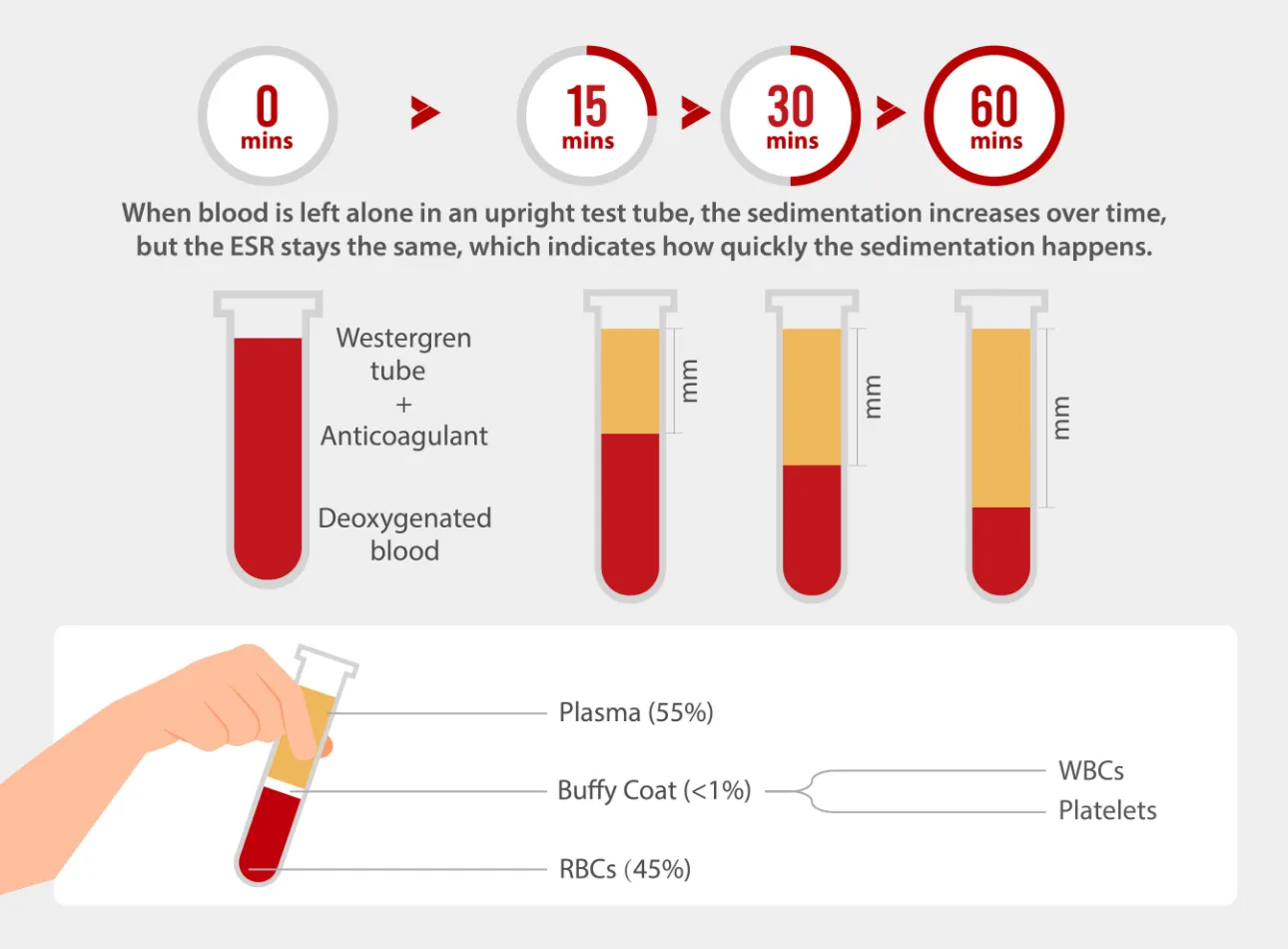
The erythrocyte sedimentation rate (ESR) test measures the rate at which red blood cells sink to the bottom of a thin, vertical tube filled with blood. The result is reported in millimeters per hour (mm/hr)—indicating how far the red cells fall in one hour.
This rate increases when proteins linked to inflammation make the red blood cells heavier and stickier. As a result, they settle more quickly.
How It Works:
- A small sample of your blood is mixed with an anticoagulant to prevent clotting.
- The blood is placed in a tall, narrow tube.
- After one hour, the laboratory technician measures the clear plasma layer at the top to see how far the red cells have fallen.
Purpose of the ESR Test
Doctors use the ESR test to help detect, diagnose, or monitor inflammatory and autoimmune diseases. Because ESR responds to a wide range of conditions, it’s most useful when interpreted along with other clinical findings.
Common reasons for ordering an ESR test include:
- Investigating persistent fever or fatigue with no clear cause.
- Checking for autoimmune disorders, such as rheumatoid arthritis (RA) or systemic lupus erythematosus (SLE).
- Monitoring inflammatory conditions like temporal arteritis or polymyalgia rheumatica.
- Detecting or tracking infections, such as tuberculosis or endocarditis.
- Evaluating the progress of chronic disease and response to treatment.
When Is the ESR Test Ordered?
Your doctor may order an ESR test when you experience symptoms that suggest inflammation, infection, or autoimmune activity, such as:
- Persistent fever or chills
- Unexplained fatigue or weight loss
- Joint pain, stiffness, or swelling
- Headaches or jaw pain (common in temporal arteritis)
- Muscle aches or weakness
- Recurring infections or slow healing
The ESR test is also commonly used to monitor how well a treatment is working in people with chronic inflammatory diseases. For example:
- A declining ESR can mean the condition is improving or responding to medication.
- A rising ESR may signal an ongoing or worsening inflammatory process.

How Is the ESR Test Performed?
The ESR test is a quick and straightforward blood test that can be done at any hospital, clinic, or diagnostic lab.
Step-by-step procedure:
- Blood sample collection: A healthcare professional will clean your skin and draw a small sample of blood from a vein—usually in your arm—using a sterile needle.
- Laboratory process: The blood sample is placed into a thin, vertical test tube (commonly a Westergren tube) that measures how fast red blood cells settle at the bottom over one hour.
- Result measurement: The lab technician records the distance the red blood cells have fallen, expressed in millimeters per hour (mm/hr).
Preparation and aftercare:
- No fasting is required.
- You can eat, drink, and take most medications normally unless your doctor advises otherwise.
- After the test, you might feel mild discomfort or bruising at the puncture site, which typically disappears quickly.
Normal ESR Levels
Normal ESR values can vary depending on age, sex, and laboratory methods. Generally, ESR tends to be slightly higher in older adults and women.
Typical reference ranges:
| Group | Normal ESR (mm/hr) |
| Men under 50 years | < 15 mm/hr |
| Men over 50 years | < 20 mm/hr |
| Women under 50 years | < 20 mm/hr |
| Women over 50 years | < 30 mm/hr |
| Children | < 10 mm/hr |
| Newborns | < 2 mm/hr |
High or Low ESR Levels: What They Mean
The ESR test provides clues about your body’s inflammatory activity—but it does not identify where or why the inflammation is occurring.
When ESR is high:
A higher-than-normal ESR can indicate:
- Infections: bacterial, viral, or fungal (e.g., tuberculosis, pneumonia, or sepsis)
- Autoimmune diseases: rheumatoid arthritis, lupus, vasculitis, temporal arteritis
- Chronic inflammatory disorders: inflammatory bowel disease (IBD), polymyalgia rheumatica
- Cancers: multiple myeloma, lymphoma, or metastatic disease
- Pregnancy, anemia, or kidney disease: can also elevate ESR levels without active inflammation
When ESR is low:
A lower-than-normal ESR is uncommon but can occur with:
- Polycythemia (too many red blood cells)
- Sickle cell anemia or other RBC abnormalities
- Severe liver disease
- Congestive heart failure
- Extreme leukocytosis (very high white blood cell count)
ESR vs. CRP: Key Differences
Although both the ESR and CRP tests are used to detect inflammation, they measure different biological responses and are often ordered together.
| Feature | ESR Test | CRP Test |
| What it measures | Rate of red blood cell sedimentation | Level of C-reactive protein in the blood |
| Response time | Slower (rises over 24–48 hours) | Faster (rises within 6–8 hours) |
| Best for | Chronic or long-term inflammation | Acute or sudden inflammation |
| Affected by other factors | Age, sex, anemia, pregnancy | Fewer external influences |
| Units of measure | mm/hour | mg/L |
In summary:
- CRP detects inflammation earlier and resolves quickly as the condition improves.
- ESR changes more slowly, making it useful for monitoring chronic diseases like rheumatoid arthritis or lupus over time.
Risks and Limitations of the ESR Test
Risks
The ESR test is very safe and involves minimal risks:
- Slight pain or bruising at the blood draw site
- Temporary dizziness or lightheadedness
- Very rare risk of infection at the puncture site
Limitations
While ESR is a valuable screening tool, it has several limitations:
- Non-specific indicator: It cannot pinpoint the exact cause or location of inflammation.
- Influenced by external factors: Age, sex, pregnancy, anemia, and certain medications (e.g., corticosteroids, NSAIDs) can alter ESR results.
- Delayed response: ESR may stay elevated for several weeks even after inflammation resolves.
Because of these limitations, healthcare providers typically combine ESR with CRP and clinical evaluation to reach a precise diagnosis.
When to See a Doctor
You should discuss your ESR test results with your healthcare provider if:
- You have persistent symptoms such as fever, fatigue, unexplained weight loss, or joint pain.
- Your ESR levels are consistently high in repeated tests.
- You are already being treated for autoimmune or inflammatory disease, and your doctor uses ESR to track progress.
Factors Affecting ESR Results
Several physiological and external factors can influence ESR readings:
Increase ESR
- Pregnancy
- Menstruation
- Older age
- Anemia
- Kidney disease
- Obesity
Decrease ESR
- Polycythemia
- High blood sugar levels
- Abnormal red blood cell shapes (e.g., sickle cells)
- Severe leukocytosis
- Certain medications (e.g., aspirin, corticosteroids)
To ensure accuracy, inform your doctor of any ongoing medications, infections, or health changes before taking the test.
Living With Chronic Inflammation
If your ESR remains high, managing lifestyle factors can help reduce systemic inflammation:
- Eat an anti-inflammatory diet: Include leafy greens, fatty fish, olive oil, and nuts.
- Avoid processed foods and added sugars.
- Exercise regularly: Aim for 30 minutes of moderate activity most days.
- Manage stress: Through meditation, yoga, or breathing techniques.
- Get enough sleep: 7–8 hours per night supports immune regulation.
References
- Mayo Clinic. Erythrocyte Sedimentation Rate (ESR) Test
- MedlinePlus. ESR Blood Test
- Cleveland Clinic. Sedimentation Rate (ESR)
- NIH National Library of Medicine. Erythrocyte Sedimentation Rate Explained
- American College of Rheumatology. ESR in Rheumatic Diseases
