
Nearsightedness (Myopia): Symptoms, Causes, Prevention, and Treatment
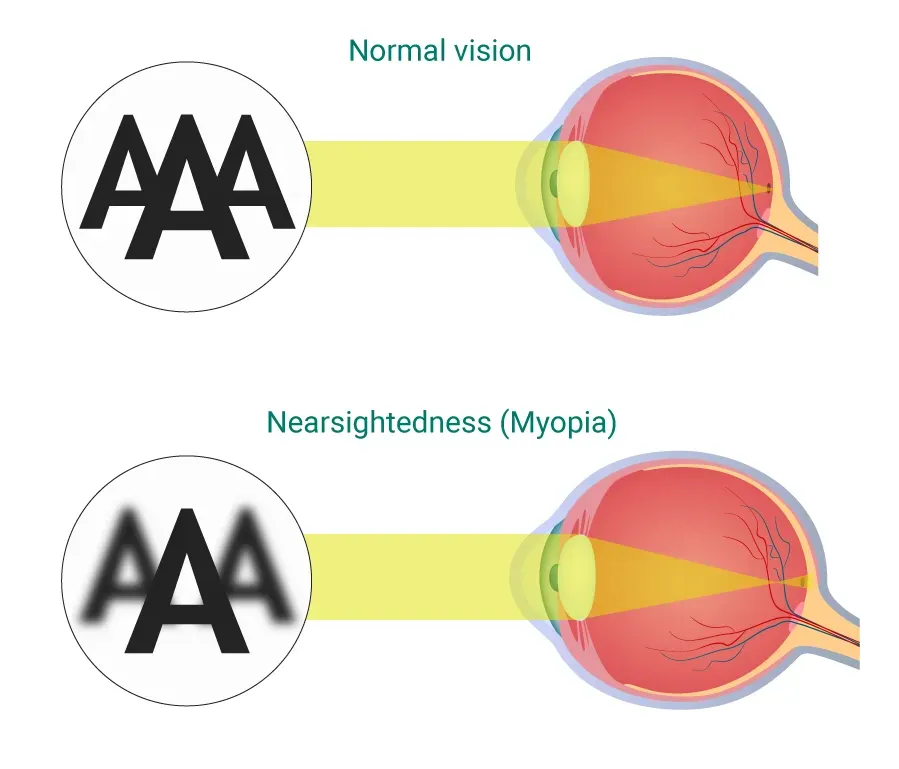
Myopia, commonly known as nearsightedness, is a refractive error of the eye in which light focuses in front of the retina instead of directly on it. As a result, people with myopia can see nearby objects clearly, but distant objects appear blurry.
This is the most common refractive error worldwide, especially among school-aged children and young adults. The prevalence of myopia has risen sharply in recent decades due to lifestyle and environmental factors such as prolonged screen use and limited outdoor activity.
Understanding Myopia
Myopia (also called Nearsightedness) occurs when the eyeball grows too long or the cornea has excessive curvature, causing light rays to focus incorrectly before they reach the retina. This results in blurred distance vision, affecting one’s ability to see clearly while driving, reading from a distance, or recognizing faces far away.
Untreated myopia can interfere with daily activities, learning performance, and work efficiency, and in severe cases may increase the risk of eye diseases later in life, such as retinal detachment or glaucoma.
Types of Myopia by Severity
Myopia is typically categorized by the degree of refractive error (measured in diopters):
- Mild Myopia: less than -3.00 D
- Moderate Myopia: from -3.00 D to -6.00 D
- High Myopia: greater than -6.00 D, often referred to as pathologic myopia
Common Signs and Symptoms
People with myopia often notice that distant objects appear blurry while near objects remain clear.
Typical symptoms include:
- Squinting to see faraway objects
- Eye strain or headaches after long periods of focusing
- Difficulty seeing road signs, classroom boards, or TV screens
When to See a Doctor
Seek professional evaluation if you:
- Experience blurred or double vision, especially at night
- Frequently squint or rub your eyes
- Suffer from headaches or eye fatigue after reading or screen time
- Notice a sudden change in vision clarity
Prompt diagnosis and treatment can help prevent worsening vision and maintain long-term eye health.

Causes of Myopia
1. Genetic Factors
Having one or both parents with myopia greatly increases a child’s risk of developing it.
Genetic myopia often involves rapid progression and higher refractive error that can continue worsening even after adulthood. Severe cases are associated with complications like retinal thinning or detachment.
2. Environmental and Behavioral Factors
In children and adolescents (ages 10–16), the eyeball is still developing. Excessive near work—such as prolonged reading, screen use, or studying under poor lighting—can strain the eye’s focusing mechanism, leading to acquired myopia.
This form usually progresses slowly and tends to stabilize in adulthood, with fewer complications compared to hereditary cases.
Who Is at Risk of Developing Myopia?
- Children and teenagers between 10 and 16 years old
- Individuals with a family history of nearsightedness
- People who spend many hours indoors or using digital screens
- Those with limited exposure to natural daylight
Risk Factors That Increase Myopia Development
- Reading, studying, or working in dim lighting
- Holding books, phones, or monitors too close to the eyes
- Extended screen time without regular breaks

Diagnosis and Medical Evaluation
To confirm a diagnosis of myopia, an ophthalmologist or optometrist may perform several assessments:
- Refraction test: Measures how light bends as it enters your eyes using various lenses.
- Eye health exam: Involves dilating the pupils with eye drops to evaluate the retina and internal eye structures.
These tests not only determine your eyeglass prescription but also help rule out other vision disorders.
Treatment Options for Myopia
1. Prescription Eyeglasses or Contact Lenses
The most common and safest method to correct vision. Depending on your degree of myopia, you may need glasses only for distance vision or all the time.
Contact lenses provide a wider field of view and are more cosmetically appealing, but they require careful hygiene to avoid infections.
2. Orthokeratology (Ortho-K)
Ortho-K uses specially designed rigid gas-permeable contact lenses worn overnight to temporarily reshape the cornea.
When removed in the morning, the cornea retains its new shape for a day or two, providing clear vision without glasses or daytime lenses.
This non-surgical, reversible method is effective for mild to moderate myopia and can also slow down myopia progression in children.
3. Refractive Surgery Options
Surgical correction is generally considered for adults over 18 years old with stable prescriptions and adequate corneal thickness.
Modern laser surgeries are highly accurate and have rapid recovery times compared to older techniques.
PRK (Photorefractive Keratectomy)
This was the first type of laser refractive surgery ever developed. The surgeon removes the thin outer layer of the cornea (epithelium) and then uses an excimer laser to reshape the underlying tissue.
The epithelium regenerates in a few days, but full visual recovery may take several weeks. Due to postoperative discomfort and slower healing, PRK is less common today.
LASIK (Laser-Assisted in Situ Keratomileusis)
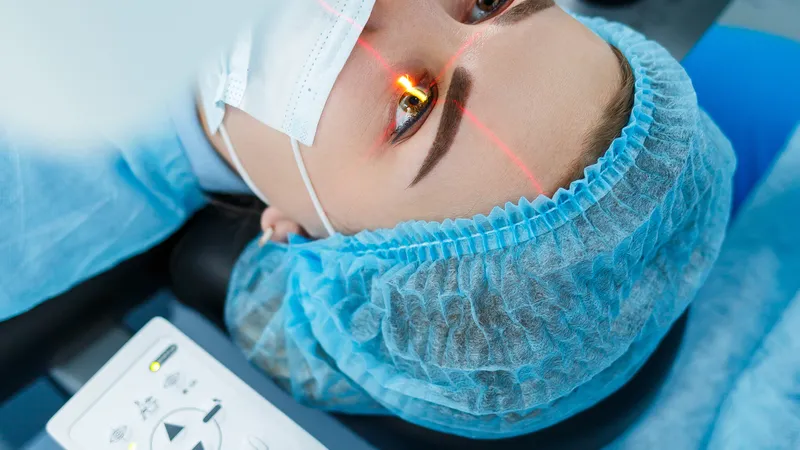
Currently one of the most popular refractive procedures, LASIK involves creating a thin corneal flap using a microkeratome blade, then reshaping the cornea with a laser before repositioning the flap.
LASIK offers rapid recovery, minimal pain, and high success rates. However, it may not be suitable for patients with thin corneas or certain eye conditions.
Advanced Surgical Treatments for Myopia
1. Femto-LASIK (Femtosecond LASIK)
Femto-LASIK is an advanced evolution of traditional LASIK surgery. Instead of using a mechanical blade, it employs a femtosecond laser to create a corneal flap with high precision and uniform thickness.
This reduces the risk of complications related to flap creation and allows for faster healing and better visual outcomes.
Advantages of Femto-LASIK:
- Greater accuracy in flap thickness
- Reduced risk of flap-related complications
- Shorter recovery time and improved comfort
- Suitable for patients with thinner corneas than those eligible for standard LASIK
2. ReLEx SMILE (Small Incision Lenticule Extraction)
ReLEx SMILE represents the newest generation of laser refractive surgery. It corrects myopia and astigmatism without creating a corneal flap. Instead, a small incision is made through which a thin lenticule (a disc-shaped piece of corneal tissue) is removed.
Key benefits of ReLEx SMILE:
- No flap creation, preserving corneal stability
- Lower risk of dry eye and nerve damage
- Minimal invasiveness and faster postoperative comfort
- Ideal for patients with high myopia or astigmatism
3. Phakic Intraocular Lens Implantation (ICL)
Phakic IOL implantation is a non-laser surgical solution designed for individuals with very high myopia or thin corneas, where laser correction isn’t suitable.
During this procedure, a micro lens is implanted behind the iris and in front of the natural lens, correcting vision without altering the cornea’s structure.
Unlike cataract surgery, the eye’s natural lens remains intact, allowing for clear vision and reversible correction if needed.
Benefits of ICL:
- Excellent for high refractive errors
- Preserves corneal tissue
- Can be removed or replaced if vision changes over time
4. Intraocular Lens Replacement
In cases of severe myopia with coexisting cataract, lens replacement surgery may be recommended.
The natural lens is removed and replaced with an artificial intraocular lens (IOL), simultaneously treating both conditions and restoring clear vision.
Medication-Based Approaches
While glasses and surgery are the mainstays of treatment, some medications can help slow the progression of myopia, particularly in children and adolescents.
Atropine Eye Drops
Atropine is a non-selective muscarinic receptor antagonist. Though its exact mechanism in myopia control is not fully understood, clinical studies have shown that low-dose atropine (usually 0.01%–0.05%) can effectively slow down myopia progression in children.
Possible side effects include:
- Dilated pupils and light sensitivity
- Difficulty focusing on near objects
- Mild blurred vision for close work
Pirenzepine
Pirenzepine is a selective muscarinic blocker with fewer side effects on pupil dilation and accommodation than atropine. It has shown similar efficacy in reducing myopia progression but is less commonly available in current clinical practice.
Lifestyle Adjustments and Prevention Strategies
A healthy lifestyle can play a crucial role in managing and preventing myopia, particularly in children and teenagers.
Healthy Daily Habits
- Follow your doctor’s advice and adhere strictly to treatment plans.
- Maintain a balanced lifestyle, avoid stress, and get sufficient rest.
- Schedule regular eye check-ups to monitor progression and adjust treatment early.
- Contact your doctor promptly if you experience sudden vision changes or persistent eye strain.
Eye-Friendly Nutrition
A nutrient-rich diet supports overall eye health. Incorporate foods high in:
- Vitamin A (carrots, sweet potatoes, spinach)
- Vitamin C (citrus fruits, bell peppers, strawberries)
- Vitamin E (almonds, sunflower seeds, avocados)
- B vitamins and zinc, which aid in retinal and optic nerve function
Effective Myopia Prevention Tips
You can significantly lower the risk of developing or worsening nearsightedness by following these evidence-based recommendations:
- Limit screen time — Avoid prolonged use of computers, smartphones, or TVs. Follow the 20-20-20 rule: every 20 minutes, look at something 20 feet away for 20 seconds.
- Take regular breaks — After every 45 minutes of near work, rest your eyes for at least 30 seconds by closing them or focusing on distant objects.
- Spend time outdoors — At least 2 hours per day in natural light can help slow the onset of myopia in children.
- Ensure proper lighting — Always study or work in well-lit environments to reduce eye strain.
- Maintain correct posture and viewing distance — Keep books, screens, or devices at least 30–40 cm (12–16 inches) from your eyes.
- Avoid reading while in motion — Do not read or use your phone on moving vehicles such as buses, trains, or airplanes.
Summary
Nearsightedness has become a modern epidemic due to increased screen use and reduced outdoor activity, but it’s largely preventable and treatable.
By combining medical treatment, eye-friendly habits, and nutritional support, you can protect your vision and maintain long-term ocular health.
