
Comprehensive Guide to Ziprasidone: Uses, Dosage, Side Effects, and More
What is Ziprasidone?
Overview of Ziprasidone
Generic Name: Ziprasidone
Brand Name: Geodon, Zeldox (Europe), generics
Drug Group: Atypical antipsychotic (second-generation)
Commonly Used For
This medication is used to:
- Treat schizophrenia.
- Manage acute mania in bipolar I disorder.
- Control agitation in psychiatric emergencies.
Key Characteristics
Form: Oral capsules (20 mg, 40 mg, 60 mg, 80 mg); intramuscular (IM) injection (20 mg/mL) (detailed in Dosage section).
Mechanism: D2 and 5-HT2A receptor antagonist with partial 5-HT1A agonism.
Approval: FDA-approved (2001 for Geodon) and EMA-approved for schizophrenia and bipolar disorder.
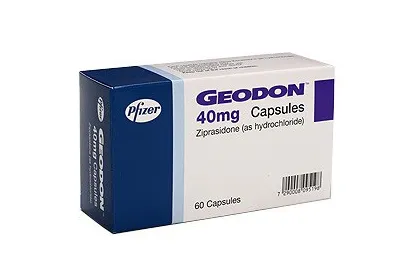
Indications and Uses of Ziprasidone
Ziprasidone is indicated for psychiatric conditions, leveraging its dual dopamine-serotonin modulation:
Schizophrenia: Treats positive (hallucinations, delusions) and negative (apathy, withdrawal) symptoms in adults and adolescents (13–17 years), improving functioning, per APA and NICE guidelines.
Bipolar I Disorder (Acute Mania/Mixed Episodes): Manages acute manic or mixed episodes with or without psychotic features, reducing agitation and mood elevation, supported by clinical trials.
Bipolar Maintenance Therapy: Used off-label as adjunctive therapy to prevent relapse in bipolar I, enhancing mood stability, with evidence from long-term studies.
Schizoaffective Disorder: Controls psychotic and mood symptoms in schizoaffective disorder, improving global assessment scores, under psychiatric supervision.
Agitation in Schizophrenia or Bipolar Disorder: Administered IM for acute agitation, providing rapid calming, per emergency psychiatry protocols.
Treatment-Resistant Depression: Investigated off-label as augmentation to antidepressants in major depressive disorder, improving response rates, supported by psychiatry research.
Autism Spectrum Disorder (ASD) Irritability: Used off-label in children (6+ years) with ASD to reduce aggression and irritability, with cautious monitoring.
Post-Traumatic Stress Disorder (PTSD): Explored off-label to manage hyperarousal and intrusive symptoms in PTSD, with emerging data from trauma psychiatry.
Delirium in ICU Settings: Employed off-label for delirium management in critically ill patients, reducing agitation without respiratory depression, supported by critical care studies.
Tourette Syndrome: Investigated off-label to reduce tics in treatment-resistant Tourette’s, with preliminary evidence from neurology trials.
Dosage of Ziprasidone
Dosage for Adults
Schizophrenia (Oral):
- Initial: 20 mg twice daily with food.
- Maintenance: Increase by 20–40 mg/day every 2 days; usual range 60–160 mg/day in two divided doses.
Bipolar I Mania (Oral):
- Day 1: 40 mg twice daily with food.
- Day 2: 60–80 mg twice daily; maximum 160 mg/day.
Acute Agitation (IM):
- 10–20 mg IM as needed, up to 40 mg/day; switch to oral when stable.
Dosage for Adolescents (13–17 years)
Schizophrenia or Bipolar Mania:
- Initial: 20 mg twice daily with food.
- Titrate to 80–160 mg/day based on response, under child psychiatry supervision.
Dosage for Children (6–12 years, off-label)
ASD Irritability: Start at 20 mg once daily with food, titrate slowly to 40–80 mg/day, with close monitoring.
Dosage for Pregnant Women
Pregnancy Category C: Use only if benefits outweigh risks (e.g., severe psychosis). Consult an obstetrician, with fetal monitoring.
Dosage Adjustments
Renal Impairment: No adjustment for oral; avoid IM in severe cases.
Hepatic Impairment: Use lower doses (e.g., 20 mg twice daily) in moderate/severe impairment.
Elderly: Start with 20 mg once daily; titrate slowly due to QT risk.
Concomitant Medications: Reduce dose with CYP3A4 inhibitors (e.g., ketoconazole); increase with inducers (e.g., carbamazepine).
Additional Considerations
- Take this active ingredient with food (≥500 calories) to double bioavailability.
- Avoid grapefruit juice due to CYP3A4 interaction.
How to Use Ziprasidone
Administration:
- Swallow capsules whole with a full meal (≥500 calories), using water; do not crush or open.
- For IM: Reconstitute with 1.2 mL sterile water, inject deep into gluteal or deltoid muscle.
Timing: Use twice daily for oral (morning and evening) with meals; IM as needed in emergencies.
Monitoring: Watch for dizziness, palpitations, or signs of movement disorders (e.g., tremors).
Additional Tips:
- Store at 20–25°C (68–77°F), protecting from light and moisture.
- Keep out of reach of children due to overdose risk.
- Report fainting, irregular heartbeat, or muscle stiffness immediately.
Contraindications for Ziprasidone
This drug is contraindicated in:
- Hypersensitivity: Patients with a known allergy to Ziprasidone.
- QT Prolongation History: Contraindicated.org/history-of-qt-prolongation-or-arrhythmias.
- Recent Myocardial Infarction or Unstable Heart Disease: Avoid due to cardiac risk.
- Concurrent Use with QT-Prolonging Drugs: Contraindicated with class Ia/III antiarrhythmics, certain antipsychotics.
Warnings & Precautions for Ziprasidone
General Warnings
QT Prolongation: Risk of torsades de pointes; perform baseline and periodic ECGs.
Neuroleptic Malignant Syndrome (NMS): Rare but fatal; discontinue if fever, rigidity, or altered mental status occurs.
Tardive Dyskinesia: Risk with long-term use; monitor for involuntary movements.
Metabolic Changes: May cause hyperglycemia, dyslipidemia, or weight gain; monitor glucose and lipids.
Orthostatic Hypotension: Risk of falls; rise slowly from sitting/lying.
Additional Warnings
Seizures: Lower seizure threshold; use cautiously in epilepsy.
Suicide Risk: Increased in young adults; monitor mood changes.
Hyperprolactinemia: May cause galactorrhea or amenorrhea; check prolactin levels.
Priapism: Rare prolonged erection; seek emergency care.
Hypersensitivity Reactions: Rare anaphylaxis; discontinue if swelling occurs.
Use in Specific Populations
Pregnancy: Category C; use only if essential with fetal monitoring.
Breastfeeding: Excreted in breast milk; monitor infant for sedation.
Elderly: Higher risk of mortality in dementia-related psychosis; avoid off-label use.
Children: Limited to 13+ years for approved uses; supervise closely.
Renal/Hepatic Impairment: Adjust dose; avoid IM in severe renal cases.
Additional Precautions
- Inform your doctor about heart disease, seizures, or medication history before starting this medication.
- Avoid alcohol and dehydration due to hypotension risk.
Overdose and Management of Ziprasidone
Overdose Symptoms
Overdose may cause:
- Drowsiness, slurred speech, or agitation.
- Severe cases: QT prolongation, seizures, or coma.
- Hypotension, tachycardia, or extrapyramidal symptoms as early signs.
- Respiratory depression with extremely high doses.
Immediate Actions
Contact the Medical Team: Seek immediate medical help.
Supportive Care: Administer activated charcoal if ingested recently, monitor ECG, and provide IV fluids.
Specific Treatment: Manage arrhythmias with magnesium; use benzodiazepines for seizures.
Monitor: Check ECG, electrolytes, and mental status for 24–48 hours.
Additional Notes
- Overdose risk is moderate; store securely.
- Report persistent symptoms (e.g., confusion, chest pain) promptly.
Side Effects of Ziprasidone
Common Side Effects
- Somnolence (10–20%, decreases with tolerance)
- Nausea (8–15%, reduced with food)
- Headache (5–12%, relieved with rest)
- Dizziness (5–10%, avoid sudden movements)
- Akathisia (4–8%, managed with dose adjustment)
These effects may subside with continued use.
Serious Side Effects
Seek immediate medical attention for:
- Cardiac: QT prolongation, torsades, or syncope.
- Neurological: NMS, tardive dyskinesia, or seizures.
- Metabolic: Diabetic ketoacidosis or severe hyperlipidemia.
- Hematologic: Agranulocytosis or leukopenia.
- Allergic: Rash, angioedema, or anaphylaxis.
Additional Notes
- Regular monitoring for ECG, glucose, lipids, and movement disorders is advised.
- Report any unusual symptoms (e.g., muscle rigidity, fever) immediately to a healthcare provider.
Drug Interactions with Ziprasidone
This active ingredient may interact with:
- QT-Prolonging Drugs: Increases arrhythmia risk (e.g., amiodarone); avoid.
- CYP3A4 Inhibitors: Increases levels (e.g., ketoconazole); reduce dose.
- CYP3A4 Inducers: Decreases efficacy (e.g., carbamazepine); increase dose.
- Antihypertensives: Enhances hypotension; monitor blood pressure.
- CNS Depressants: Increases sedation (e.g., benzodiazepines); use cautiously.
Action: Provide your healthcare provider with a complete list of medications.
Patient Education or Lifestyle
Medication Adherence: Take this atypical antipsychotic as prescribed, always with food.
Monitoring: Report irregular heartbeat, muscle stiffness, or mood changes immediately.
Lifestyle: Avoid alcohol; maintain hydration and regular meals.
Diet: Take with ≥500-calorie meals; monitor weight and glucose.
Emergency Awareness: Know signs of NMS or QT issues; seek care if present.
Follow-Up: Schedule regular check-ups every 1–3 months to monitor ECG, labs, and symptoms.
Pharmacokinetics of Ziprasidone
Absorption: Oral bioavailability ~60% with food; peak at 6–8 hours.
Distribution: Volume of distribution ~1.5 L/kg; 99% protein-bound.
Metabolism: Hepatic via CYP3A4 and aldehyde oxidase to inactive metabolites.
Excretion: Fecal (66%) and renal (20%); half-life 7 hours (oral), 2–5 hours (IM).
Half-Life: 7 hours, with steady-state in 3 days.
Pharmacodynamics of Ziprasidone
This drug exerts its effects by:
Blocking D2 (60–80% occupancy) and 5-HT2A (>90%) receptors, reducing psychosis.
Partial agonism at 5-HT1A, enhancing antidepressant effects.
Moderate affinity for histamine and alpha-1 receptors, causing sedation and hypotension.
Exhibiting dose-dependent QT prolongation and metabolic neutrality.
Storage of Ziprasidone
Temperature: Store at 20–25°C (68–77°F); protect from light.
Protection: Keep in original container, away from moisture.
Safety: Store out of reach of children due to overdose risk.
Disposal: Dispose of unused capsules per local regulations or consult a pharmacist.
Frequently Asked Questions (FAQs)
Q: What does Ziprasidone treat?
A: This medication treats schizophrenia and bipolar mania.
Q: Can this active ingredient cause weight gain?
A: Less likely than other antipsychotics; monitor diet.
Q: Is Ziprasidone safe for teens?
A: Yes, for 13–17 years with a doctor’s guidance.
Q: How is this drug taken?
A: Orally with food or IM in emergencies, as directed.
Q: How long is Ziprasidone treatment?
A: Long-term for chronic conditions with monitoring.
Q: Can I use Ziprasidone if pregnant?
A: Only if critical; consult a doctor.
Regulatory Information
This medication is approved by:
- U.S. Food and Drug Administration (FDA): Approved in 2001 (Geodon) for schizophrenia and bipolar disorder.
- European Medicines Agency (EMA): Approved as Zeldox for similar indications.
- Other Agencies: Approved globally for psychiatry; consult local guidelines.
References
- U.S. Food and Drug Administration (FDA). (2023). Geodon (Ziprasidone) Prescribing Information.
- Official FDA documentation detailing the drug’s approved uses, dosage, and safety.
- European Medicines Agency (EMA). (2023). Zeldox Summary of Product Characteristics.
- EMA’s comprehensive information on the medication’s indications and precautions in Europe.
- National Institutes of Health (NIH). (2023). Ziprasidone: MedlinePlus Drug Information.
- NIH resource providing detailed information on the drug’s uses, side effects, and precautions.
- World Health Organization (WHO). (2023). WHO Model List of Essential Medicines: Ziprasidone.
- WHO’s consideration of Ziprasidone for psychiatric disorders.
- American Journal of Psychiatry. (2022). Ziprasidone in Bipolar Maintenance.
- Peer-reviewed article on Ziprasidone efficacy (note: access may require a subscription).
