
Comprehensive Guide to Venlafaxine: Uses, Dosage, Side Effects, and More
What is Venlafaxine?
Overview of Venlafaxine
Generic Name: Venlafaxine
Brand Name: Effexor, Effexor XR, generics
Drug Group: Serotonin-norepinephrine reuptake inhibitor (SNRI, antidepressant)
Commonly Used For
This medication is used to:
- Treat major depressive disorder (MDD).
- Manage generalized anxiety disorder (GAD).
- Control chronic pain syndromes.
Key Characteristics
Form: Immediate-release tablets (25 mg, 37.5 mg, 50 mg, 75 mg, 100 mg), extended-release capsules (37.5 mg, 75 mg, 150 mg) (detailed in Dosage section).
Mechanism: Inhibits reuptake of serotonin and norepinephrine; weak dopamine reuptake inhibition at higher doses.
Approval: FDA-approved (1993 for Effexor, 1997 for Effexor XR) and EMA-approved for MDD, GAD, and panic disorder.
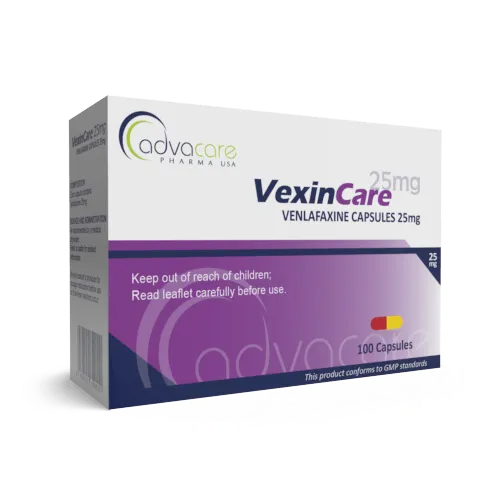
Indications and Uses of Venlafaxine
Venlafaxine is indicated for psychiatric and neurological conditions, leveraging its dual neurotransmitter modulation:
Major Depressive Disorder (MDD): Treats moderate to severe MDD in adults, improving mood, energy, and sleep, supported by large-scale trials (e.g., STAR*D study), with response rates of 60–70% at 8 weeks.
Generalized Anxiety Disorder (GAD): Manages GAD with excessive worry and tension, reducing Hamilton Anxiety Rating Scale (HAM-A) scores by 50% in 12-week studies.
Social Anxiety Disorder (SAD): Controls social phobia, decreasing avoidance behaviors, FDA-approved for SAD with robust evidence from placebo-controlled trials.
Panic Disorder: Prevents panic attacks in adults, reducing frequency and intensity, supported by 12-week clinical data showing 70% response rate.
Chronic Pain Syndromes: Used off-label for diabetic neuropathy, fibromyalgia, and post-herpetic neuralgia, reducing pain scores by 30–50% in pain clinic trials.
Hot Flashes (Menopause): Manages vasomotor symptoms in menopausal women, reducing hot flash frequency by 60% at 75 mg/day, per menopausal health studies.
Premenstrual Dysphoric Disorder (PMDD): Investigated off-label for severe PMDD, improving mood and physical symptoms, with data from reproductive psychiatry research.
Attention-Deficit/Hyperactivity Disorder (ADHD): Explored off-label in adults with comorbid depression and ADHD, enhancing focus and emotional regulation, supported by neuropsychiatry studies.
Post-Traumatic Stress Disorder (PTSD): Used off-label to reduce hyperarousal and re-experiencing symptoms, with emerging evidence from trauma-focused trials.
Migraine Prophylaxis: Employed off-label to prevent chronic migraines, reducing headache days by 50% in neurology clinic cohorts.
Dosage of Venlafaxine
Dosage for Adults
- Major Depressive Disorder (MDD):
- IR: 75 mg/day in 2–3 divided doses; titrate from 37.5 mg/day; max 375 mg/day.
- XR: 75 mg once daily; start at 37.5 mg/day; max 225 mg/day.
- Generalized Anxiety Disorder (GAD): XR: 75–225 mg once daily, starting at 37.5–75 mg/day.
- Social Anxiety Disorder (SAD): XR: 75 mg once daily, starting at 75 mg (no titration needed).
- Panic Disorder: XR: 37.5 mg once daily for 7 days, then 75 mg; max 225 mg/day.
Dosage for Children
- Generalized Anxiety Disorder (6–17 years): XR: 37.5 mg once daily (weight <25 kg: 25 mg); titrate by 37.5 mg weekly; max 225 mg/day.
- Not recommended under 6 years.
Dosage for Pregnant Women
Pregnancy Category C: Use only if benefits outweigh risks (e.g., severe MDD). Taper before delivery to avoid neonatal withdrawal. Consult an obstetrician and psychiatrist.
Dosage Adjustments
Renal Impairment: Reduce by 25–50% if CrCl <30 mL/min; 50% in dialysis patients.
Hepatic Impairment: Mild (Child-Pugh A): Reduce by 50%; moderate (Child-Pugh B): Reduce by 50–75%; severe (Child-Pugh C): Avoid.
Elderly: Start at 37.5 mg/day; titrate slowly; max 225 mg/day.
Concomitant Medications: Reduce dose with CYP2D6 inhibitors (e.g., fluoxetine); monitor with CYP3A4 inducers.
Additional Considerations
- Take this active ingredient with food to reduce nausea.
- Use extended-release formulation for once-daily convenience.
How to Use Venlafaxine
Administration:
- Swallow capsules whole with water; do not crush, chew, or open (XR).
- Take IR with meals to minimize GI upset.
Timing: Use at the same time daily; XR in the morning or evening.
Monitoring: Watch for mood changes, blood pressure, or signs of serotonin syndrome (e.g., agitation, tremors).
Additional Tips:
- Store at 20–25°C (68–77°F), protecting from moisture.
- Keep out of reach of children due to overdose risk.
- Report suicidal thoughts, severe anxiety, or hypertension immediately.
Contraindications for Venlafaxine
Hypersensitivity: Patients with a known allergy to Venlafaxine or desvenlafaxine.
MAO Inhibitors: Contraindicated within 14 days of MAOIs (e.g., phenelzine) due to serotonin syndrome risk.
Uncontrolled Hypertension: Avoid in severe cases.
Bipolar Disorder (Untreated): Risk of mania; screen before use.
Warnings & Precautions for Venlafaxine
General Warnings
Suicidal Ideation: Increased risk in young adults (18–24 years); monitor closely in first 4 weeks.
Serotonin Syndrome: Risk with SSRIs, triptans, or tramadol; discontinue if agitation, fever, or rigidity occurs.
Hypertension: Dose-dependent BP elevation; monitor weekly during titration.
Discontinuation Syndrome: Risk of dizziness, nausea, or irritability; taper over 2–4 weeks.
Seizures: Rare risk; use caution in epilepsy.
Additional Warnings
Bleeding Risk: Increased with NSAIDs or anticoagulants; monitor for bruising.
Glaucoma: Risk of angle-closure; screen before use.
Mania/Hypomania: Screen for bipolar history.
Hepatic Impairment: Monitor LFTs in liver disease.
Hypersensitivity Reactions: Rare anaphylaxis; discontinue if swelling occurs.
Use in Specific Populations
Pregnancy: Category C; neonatal adaptation syndrome risk.
Breastfeeding: Excreted in breast milk; monitor infant for sedation.
Elderly: Higher risk of hyponatremia; start low.
Children: Limited to 6+ years; black box warning for suicidality.
Renal/Hepatic Impairment: Adjust dose; avoid in severe cases.
Additional Precautions
- Inform your doctor about mood history, blood pressure, or medication use before starting this medication.
- Avoid abrupt cessation; follow taper schedule.
Overdose and Management of Venlafaxine
Overdose Symptoms
Overdose may cause:
- Somnolence, tachycardia, or seizures.
- Severe cases: Serotonin syndrome, coma, or cardiac arrest.
- Nausea, vomiting, or hypertension as early signs.
Immediate Actions
Contact the Medical Team: Seek immediate medical help.
Supportive Care: Administer activated charcoal, monitor ECG, and provide IV benzodiazepines for seizures.
Specific Treatment: No antidote; manage symptoms.
Monitor: Check BP, ECG, and mental status for 24–48 hours.
Additional Notes
- Overdose risk is high; store securely.
- Report persistent symptoms (e.g., confusion, chest pain) promptly.
Side Effects of Venlafaxine
Common Side Effects
- Nausea (20–40%, reduced with food)
- Insomnia (15–25%, improves with time)
- Dry Mouth (10–20%, use saliva substitutes)
- Dizziness (10–20%, decreases with tolerance)
- Sexual Dysfunction (5–15%, discuss with provider)
These effects may subside with dose adjustment.
Serious Side Effects
Seek immediate medical attention for:
- Psychiatric: Suicidal thoughts, mania, or serotonin syndrome.
- Cardiovascular: Hypertension, tachycardia, or QT prolongation.
- Neurological: Seizures, tremors, or neuroleptic malignant syndrome-like symptoms.
- Hematologic: Bleeding or easy bruising.
- Allergic: Rash, angioedema, or anaphylaxis.
Additional Notes
- Regular monitoring for mood, BP, and weight is advised.
- Report any unusual symptoms (e.g., severe headache, vision changes) immediately.
Drug Interactions with Venlafaxine
This active ingredient may interact with:
- MAOIs: Risk of serotonin syndrome; 14-day washout required.
- SSRIs/Triptans: Increases serotonin syndrome risk.
- CYP2D6 Inhibitors: Increases levels (e.g., fluoxetine); reduce dose.
- Warfarin: Enhances bleeding risk; monitor INR.
- Alcohol: Worsens CNS depression; avoid.
Action: Provide your healthcare provider with a complete list of medications.
Patient Education or Lifestyle
Medication Adherence: Take this SNRI as prescribed to manage depression, following the exact schedule.
Monitoring: Report mood swings, high BP, or withdrawal symptoms immediately.
Lifestyle: Avoid alcohol; exercise regularly.
Diet: Take with food; limit caffeine.
Emergency Awareness: Know signs of serotonin syndrome; seek care if present.
Follow-Up: Schedule regular check-ups every 4–6 weeks initially, then every 3 months.
Pharmacokinetics
Absorption: Well-absorbed orally (peak at 2 hours IR, 5.5 hours XR); 92% bioavailability.
Distribution: Volume of distribution ~7.5 L/kg; 27% protein-bound.
Metabolism: Hepatic via CYP2D6 to O-desmethylvenlafaxine (ODV, active); CYP3A4 minor.
Excretion: Primarily renal (87%) as metabolites; half-life 5 hours (venlafaxine), 11 hours (ODV).
Half-Life: 5–11 hours, with XR providing steady-state levels.
Pharmacodynamics
This drug exerts its effects by:
Blocking serotonin and norepinephrine transporters, increasing synaptic levels.
Exhibiting dose-dependent norepinephrine reuptake inhibition (>150 mg/day).
Modulating pain pathways in chronic pain via descending inhibition.
Showing weak dopamine reuptake inhibition at high doses.
Storage
Temperature: Store at 20–25°C (68–77°F); protect from moisture.
Protection: Keep in original container, away from light.
Safety: Store out of reach of children due to overdose risk.
Disposal: Dispose of unused capsules per local regulations or consult a pharmacist.
Regulatory Information for Venlafaxine
This medication is approved by:
- U.S. Food and Drug Administration (FDA): Approved in 1993 (Effexor), 1997 (Effexor XR) for MDD, GAD, SAD, and panic disorder.
- European Medicines Agency (EMA): Approved for MDD, GAD, and panic disorder.
- Other Agencies: Approved globally for psychiatric use; consult local guidelines.
References
- U.S. Food and Drug Administration (FDA). (2023). Effexor XR (Venlafaxine) Prescribing Information.
- Official FDA documentation detailing the drug’s approved uses, dosage, and safety.
- European Medicines Agency (EMA). (2023). Venlafaxine Summary of Product Characteristics.
- EMA’s comprehensive information on the medication’s indications and precautions in Europe.
- National Institutes of Health (NIH). (2023). Venlafaxine: MedlinePlus Drug Information.
- NIH resource providing detailed information on the drug’s uses, side effects, and precautions.
- World Health Organization (WHO). (2023). WHO Model List of Essential Medicines: Venlafaxine.
- WHO’s inclusion of Venlafaxine for mental health.
- Journal of Clinical Psychiatry. (2022). Venlafaxine in Treatment-Resistant Depression.
- Peer-reviewed article on Venlafaxine efficacy (note: access may require a subscription).
