
Comprehensive Guide to Valproate (Valproic Acid): Uses, Dosage, Side Effects, and More
What is Valproate (Valproic Acid)?
Overview of Valproate (Valproic Acid)
Generic Name: Valproate (Valproic acid, Sodium valproate, Divalproex sodium)
Brand Name: Depakote, Depakene, Convulex, Epilim, generics
Drug Group: Anticonvulsant, mood stabilizer, antimigraine
Commonly Used For
This medication is used to:
- Treat epilepsy (partial and generalized seizures).
- Manage bipolar I disorder (manic episodes).
- Prevent migraine headaches.
Key Characteristics
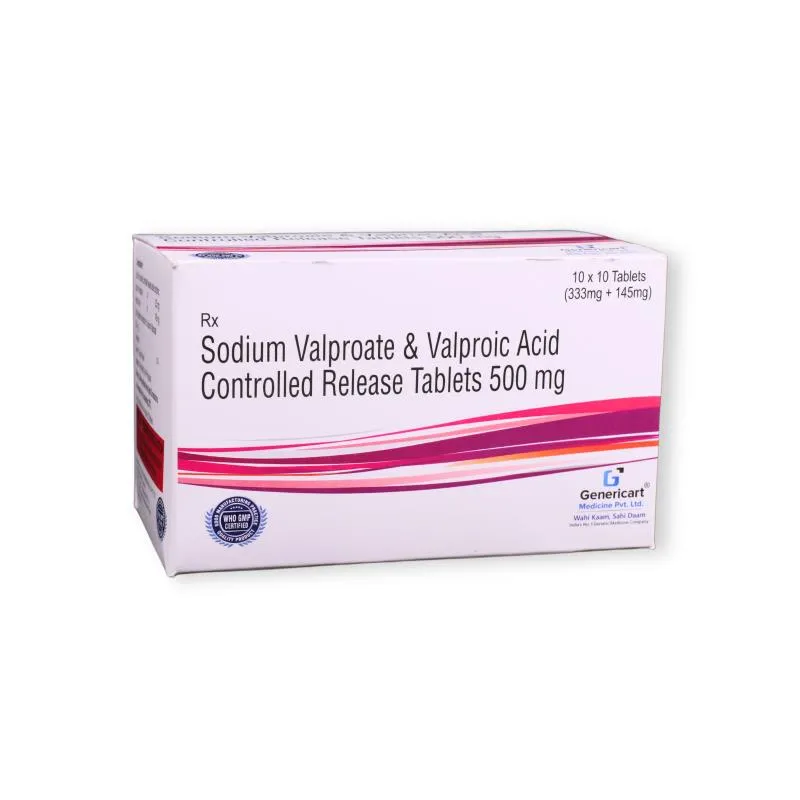
Form: Delayed-release tablets (125 mg, 250 mg, 500 mg), extended-release tablets (250 mg, 500 mg), capsules, syrup, IV solution (detailed in Dosage section).
Mechanism: Increases GABA levels, blocks voltage-gated sodium channels, and inhibits T-type calcium channels.
Approval: FDA-approved (1978 for Depakote) and EMA-approved for epilepsy, mania, and migraine.
Indications and Uses of Valproate
Valproate is indicated for a wide range of neurological and psychiatric disorders, leveraging its multimodal mechanism of action:
Epilepsy (Partial and Generalized Seizures): Treats simple and complex partial seizures, absence seizures, myoclonic seizures, and tonic-clonic seizures in adults and children (2+ years), reducing seizure frequency by 50–70% in responsive patients, per AAN and ILAE guidelines.
Bipolar I Disorder (Acute Mania): Controls acute manic or mixed episodes, with or without psychotic features, achieving remission in 40–60% of cases within 3 weeks, supported by APA guidelines and CANMAT recommendations.
Migraine Prophylaxis: Prevents migraine headaches in adults, reducing frequency by ≥50% in 40–50% of patients, per AHS and IHS consensus statements.
Status Epilepticus: Used off-label as a second-line IV agent in refractory status epilepticus, administered after benzodiazepines and phenytoin, with rapid onset, supported by neurocritical care protocols.
Schizoaffective Disorder (Bipolar Type): Employed off-label to stabilize mood in schizoaffective disorder, improving manic symptoms, with evidence from psychiatric trials.
Post-Traumatic Seizure Prophylaxis: Investigated off-label in traumatic brain injury (TBI) to prevent early post-traumatic seizures, though not for long-term use, per neurosurgery guidelines.
Neuropathic Pain: Used off-label for chronic neuropathic pain (e.g., diabetic neuropathy), reducing pain scores, with data from pain management studies.
Alcohol Withdrawal Syndrome: Explored off-label to manage severe agitation and seizures in alcohol withdrawal, under inpatient supervision, supported by addiction medicine research.
Pediatric Behavioral Disorders: Administered off-label in children with autism spectrum disorder (ASD) or disruptive behavior to reduce aggression, with cautious use and monitoring, per child psychiatry studies.
Huntington’s Disease Chorea: Investigated off-label to reduce choreiform movements in Huntington’s disease, with preliminary motor function benefits, noted in movement disorder research.
Dosage of Valproate
Dosage for Adults
Epilepsy (Oral):
- Initial: 10–15 mg/kg/day in 1–2 divided doses.
- Maintenance: 20–60 mg/kg/day, maximum 60 mg/kg/day.
Bipolar Mania (Delayed-Release):
- Initial: 750 mg/day in divided doses.
- Maintenance: 1,000–2,000 mg/day, target serum level 50–125 mcg/mL.
Migraine Prophylaxis:
- 500 mg twice daily (extended-release), up to 1,000 mg/day.
Status Epilepticus (IV):
- Loading: 20–40 mg/kg IV over 10–15 minutes.
- Maintenance: 1–5 mg/kg/hour infusion.
Dosage for Children
Epilepsy (2–12 years):
- Initial: 15 mg/kg/day in 2–3 divided doses.
- Maintenance: 20–60 mg/kg/day, maximum 60 mg/kg/day.
- Not recommended under 2 years unless critical (high risk of hepatotoxicity).
Behavioral Disorders (off-label):
- 15–20 mg/kg/day, titrated slowly under child psychiatrist supervision.
Dosage for Pregnant Women
Pregnancy Category D: High risk of teratogenicity (neural tube defects, cognitive impairment). Avoid unless essential (e.g., refractory epilepsy). Use 4 mg/day folic acid, divide doses, and monitor AFP and ultrasound. Consult a maternal-fetal medicine specialist.
Dosage Adjustments
Renal Impairment: No adjustment needed; monitor in severe cases.
Hepatic Impairment: Mild: Reduce dose by 50%; moderate/severe: Contraindicated.
Elderly: Start with 10 mg/kg/day; titrate slowly due to reduced clearance.
Concomitant Medications: Increase dose with enzyme inducers (e.g., carbamazepine); decrease with inhibitors (e.g., fluoxetine).
Additional Considerations
- Take this active ingredient with food to reduce GI upset.
- Use extended-release formulations once daily for compliance.
How to Use Valproate
Administration:
- Swallow delayed-release or extended-release tablets whole with water; do not crush or chew.
- Take with meals to minimize nausea; use syrup for pediatric or swallowing difficulties.
Timing: Use once or twice daily as prescribed, maintaining consistent timing.
Monitoring: Watch for bruising, jaundice, abdominal pain, or behavioral changes.
Additional Tips:
- Store at 20–25°C (68–77°F), protecting from moisture and light.
- Keep out of reach of children due to overdose risk.
- Report severe drowsiness, confusion, or signs of pancreatitis immediately.
Contraindications for Valproate
This drug is contraindicated in:
Hypersensitivity: Known allergy to Valproate or its derivatives.
Hepatic Disease: Acute/chronic hepatitis, cirrhosis, or family history of severe hepatic dysfunction.
Urea Cycle Disorders: Risk of hyperammonemic encephalopathy.
Mitochondrial Disorders (POLG mutations): Risk of fatal hepatotoxicity.
Pregnancy (for migraine prophylaxis): Category D; avoid.
Warnings & Precautions for Valproate
General Warnings
Hepatotoxicity: Risk of fatal liver failure, highest in children <2 years on polytherapy; monitor LFTs monthly for 6 months, then quarterly.
Pancreatitis: Life-threatening, may occur years after initiation; discontinue if suspected.
Teratogenicity: Major congenital malformations (10–12%), cognitive delay; avoid in women of childbearing potential unless on effective contraception.
Thrombocytopenia: Dose-dependent; monitor platelets weekly initially.
Hyperammonemia: May occur without liver injury; check ammonia if lethargy or vomiting.
Additional Warnings
Suicidal Ideation: Increased risk in epilepsy and bipolar patients; monitor mood.
Polycystic Ovary Syndrome (PCOS): May worsen in women; monitor menstrual cycles.
Weight Gain: Common (5–10 kg); counsel on diet and exercise.
Hair Loss: Reversible alopecia; use zinc/selenium supplements if needed.
Hypersensitivity Reactions: Rare multi-organ hypersensitivity (DRESS); discontinue if fever, rash, eosinophilia.
Use in Specific Populations
- Pregnancy: Category D; use only if no alternative; high-dose folate, divided dosing.
- Breastfeeding: Excreted in breast milk; monitor infant for sedation, thrombocytopenia.
- Elderly: Higher risk of sedation, falls; start low, go slow.
- Children: High hepatotoxicity risk <2 years; avoid polytherapy.
- Renal/Hepatic Impairment: Adjust dose; avoid in liver disease.
Additional Precautions
- Inform your doctor about liver disease, bleeding disorders, or pregnancy plans before starting this medication.
- Avoid abrupt discontinuation; taper over weeks to prevent seizures.
Overdose and Management of Valproate
Overdose Symptoms
- Sedation, coma, or cerebral edema.
- Severe cases: Liver failure, pancreatitis, or cardiac arrest.
- Nausea, tremor, or ataxia as early signs.
- Hyperammonemia with encephalopathy.
Immediate Actions
Contact the Medical Team: Seek immediate medical help.
Supportive Care: Administer activated charcoal if alert, IV fluids, and monitor vital signs.
Specific Treatment: Hemodialysis for levels >850 mcg/mL; L-carnitine for hyperammonemia.
Monitor: Check LFTs, ammonia, CBC, and EEG for 48–72 hours.
Additional Notes
- Overdose risk is high; store securely.
- Report persistent symptoms (e.g., confusion, abdominal pain) promptly.
Side Effects of Valproate
Common Side Effects
- Nausea (20–30%, reduced with food)
- Tremor (15–25%, dose-dependent)
- Weight Gain (10–20%, monitor BMI)
- Hair Loss (5–12%, reversible)
- Drowsiness (5–15%, decreases with tolerance)
These effects may subside with dose adjustment.
Serious Side Effects
Seek immediate medical attention for:
- Hepatic: Jaundice, ascites, or liver failure.
- Hematologic: Thrombocytopenia, bleeding, or pancytopenia.
- Pancreatic: Severe abdominal pain, vomiting (pancreatitis).
- Neurological: Encephalopathy, coma, or suicidal ideation.
- Allergic: Rash, fever, lymphadenopathy (DRESS).
Additional Notes
- Regular monitoring for LFTs, platelets, ammonia, and weight is mandatory.
- Report any unusual symptoms (e.g., easy bruising, dark urine) immediately.
Drug Interactions with Valproate
This active ingredient may interact with:
- Enzyme Inducers: Reduce levels (e.g., carbamazepine, phenytoin); increase dose.
- Enzyme Inhibitors: Increase levels (e.g., fluoxetine, cimetidine); monitor toxicity.
- Aspirin: Increases free valproate; risk of bleeding.
- Lamotrigine: Increases lamotrigine toxicity; reduce lamotrigine dose.
- Warfarin: Enhances anticoagulation; monitor INR.
Action: Provide your healthcare provider with a complete list of medications.
Patient Education or Lifestyle
Medication Adherence: Take this anticonvulsant as prescribed; do not stop abruptly.
Monitoring: Report bruising, jaundice, or mood changes immediately.
Lifestyle: Avoid alcohol; maintain a healthy weight.
Diet: Take with food; avoid high-protein meals at dosing time.
Emergency Awareness: Know signs of liver failure or pancreatitis; seek care if present.
Follow-Up: Schedule blood tests every 1–3 months; psychiatric review if on for bipolar.
Pharmacokinetics of Valproate
Absorption: Well-absorbed orally (peak at 1–4 hours); delayed-release peaks at 4–8 hours.
Distribution: Volume of distribution 0.1–0.4 L/kg; 90–95% protein-bound (dose-dependent).
Metabolism: Hepatic via glucuronidation, β-oxidation, and CYP2C9 to active/inactive metabolites.
Excretion: Primarily renal (30–50%) as glucuronides; half-life 9–16 hours.
Half-Life: 9–16 hours; prolonged in neonates and liver disease.
Pharmacodynamics of Valproate
This drug exerts its effects by:
Increasing brain GABA via inhibition of GABA transaminase and succinic semialdehyde dehydrogenase.
Blocking voltage-gated sodium channels, reducing high-frequency neuronal firing.
Inhibiting T-type calcium channels, suppressing absence seizures.
Modulating dopamine and serotonin, stabilizing mood in bipolar disorder.
Storage of Valproate
Temperature: Store at 20–25°C (68–77°F); protect from moisture.
Protection: Keep in original container, away from light.
Safety: Store in a locked container out of reach of children.
Disposal: Dispose of unused tablets per local hazardous waste regulations.
Frequently Asked Questions (FAQs)
Q: What does Valproate treat?
A: This medication treats epilepsy, bipolar mania, and prevents migraines.
Q: Can this active ingredient cause weight gain?
A: Yes, weight gain is common; monitor diet and exercise.
Q: Is Valproate safe in pregnancy?
A: No — high risk of birth defects; use contraception.
Q: How is this drug taken?
A: Orally as tablets or syrup, with food, as directed.
Q: How long is Valproate treatment?
A: Long-term for epilepsy/bipolar; 6+ months for migraine.
Q: Can children take Valproate?
A: Yes, for 2+ years; high risk under 2 years.
Regulatory Information
This medication is approved by:
U.S. Food and Drug Administration (FDA): Approved in 1978 (Depakote) for epilepsy, mania, migraine.
European Medicines Agency (EMA): Approved with strict pregnancy prevention program (PPP).
Other Agencies: Approved globally with risk mitigation strategies.
References
- U.S. Food and Drug Administration (FDA). (2023). Depakote (Divalproex Sodium) Prescribing Information.
- Official FDA documentation.
- European Medicines Agency (EMA). (2023). Valproate Product Information.
- EMA’s risk management plan.
- National Institutes of Health (NIH). (2023). Valproic Acid: MedlinePlus.
- NIH patient resource.
- World Health Organization (WHO). (2023). WHO Model List: Valproic Acid.
- Essential medicine status.
- The Lancet Neurology. (2022). Valproate in Epilepsy Management.
- Peer-reviewed efficacy data.
