
Comprehensive Guide to Trastuzumab: Uses, Dosage, Side Effects, and More
1. What is Trastuzumab?
2. Overview of Trastuzumab
Generic Name
Trastuzumab
Brand Name
Herceptin, Kanjinti, Ogivri, generics
Drug Group
Monoclonal antibody (antineoplastic)
Commonly Used For
This medication is used to:
- Treat HER2-positive breast cancer.
- Manage HER2-positive gastric cancer.
- Reduce cancer recurrence risk.
Key Characteristics
- Form: Intravenous infusion (440 mg/vial) or subcutaneous injection (600 mg/5 mL) (detailed in Dosage section).
- Mechanism: Binds to HER2 receptors, blocking signaling pathways and inducing antibody-dependent cellular cytotoxicity (ADCC).
- Approval: FDA-approved (1998 for Herceptin) and EMA-approved for HER2-positive cancers.
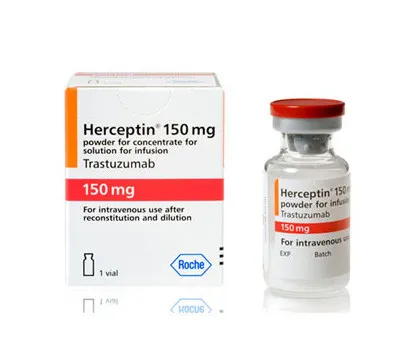
3. Indications and Uses of Trastuzumab
Trastuzumab is indicated for HER2-overexpressing malignancies, leveraging its targeted therapy approach:
- HER2-Positive Breast Cancer: Treats early-stage, locally advanced, or metastatic HER2-positive breast cancer, often combined with chemotherapy (e.g., doxorubicin, paclitaxel), improving survival rates, per oncology guidelines from ASCO and NCCN.
- Adjuvant Therapy for Breast Cancer: Reduces recurrence risk in early HER2-positive breast cancer post-surgery, administered for 1 year, supported by long-term clinical trials like HERA.
- Metastatic Breast Cancer: Manages HER2-positive metastatic breast cancer, enhancing progression-free survival when used with pertuzumab or taxanes, with evidence from phase III studies.
- HER2-Positive Gastric Cancer: Treats locally advanced or metastatic HER2-positive gastric or gastroesophageal junction adenocarcinoma, combined with cisplatin and capecitabine, per ESMO guidelines.
- Neoadjuvant Therapy: Used off-label in neoadjuvant settings for HER2-positive breast cancer to downstage tumors before surgery, improving surgical outcomes, supported by breast cancer research.
- HER2-Positive Esophageal Cancer: Investigated off-label for HER2-positive esophageal cancer, reducing tumor burden, with emerging data from gastrointestinal oncology studies.
- HER2-Positive Colorectal Cancer: Explored off-label for HER2-amplified colorectal cancer resistant to standard therapy, with promising results from precision medicine trials.
- HER2-Positive Lung Cancer: Used off-label in HER2-mutated non-small cell lung cancer (NSCLC), improving response rates, supported by thoracic oncology research.
- Brain Metastases from HER2-Positive Breast Cancer: Managed off-label with intrathecal or systemic Trastuzumab to control brain metastases, with neurological oncology evidence.
- Pediatric HER2-Positive Tumors: Investigated off-label for rare HER2-positive pediatric cancers (e.g., osteosarcoma), enhancing outcomes, with pediatric oncology data.
Note: This drug requires HER2 testing and cardiac monitoring; consult a healthcare provider for personalized treatment plans.
4. Dosage of Trastuzumab
Important Note: The dosage of this monoclonal antibody must be prescribed by a healthcare provider. Dosing varies by indication, body weight, and administration route, with adjustments based on clinical evaluation.
Dosage for Adults
- HER2-Positive Breast Cancer (IV):
- Initial: 4 mg/kg IV infusion over 90 minutes.
- Maintenance: 2 mg/kg IV weekly or 6 mg/kg every 3 weeks for 52 weeks (1 year), adjusted for toxicity.
- HER2-Positive Gastric Cancer (IV):
- Initial: 4 mg/kg IV infusion over 90 minutes.
- Maintenance: 2 mg/kg IV weekly or 6 mg/kg every 3 weeks, combined with chemotherapy.
- Subcutaneous (SC) Administration:
- 600 mg SC every 3 weeks, administered over 2–5 minutes, as an alternative to IV.
Dosage for Children
- HER2-Positive Tumors (off-label, IV):
- Initial: 4 mg/kg IV over 90 minutes.
- Maintenance: 2 mg/kg IV weekly, under pediatric oncologist supervision.
- Not recommended under 2 years unless critical.
Dosage for Pregnant Women
- Pregnancy Category D: Avoid unless benefits outweigh risks (e.g., life-threatening cancer). Consult an obstetrician, with fetal and cardiac monitoring.
Dosage Adjustments
- Renal Impairment: No adjustment needed; monitor in severe cases (CrCl <30 mL/min).
- Hepatic Impairment: No specific adjustment; monitor liver function.
- Elderly: Start with standard dosing; increase cautiously with cardiac monitoring.
- Cardiotoxicity: Discontinue or reduce dose if left ventricular ejection fraction (LVEF) drops significantly (e.g., <40%).
Additional Considerations
- Administer this active ingredient via IV infusion or SC injection by a healthcare provider.
- Premedicate with antihistamines or corticosteroids if infusion reactions occur.
5. How to Use Trastuzumab
- Administration:
- For IV: Dilute in 250 mL normal saline, infuse over 90 minutes initially, then 30–60 minutes for maintenance; avoid rapid infusion.
- For SC: Inject 600 mg into the thigh using the prefilled syringe, over 2–5 minutes.
- Administer in a controlled setting with cardiac and infusion monitoring.
- Timing: Use weekly or every 3 weeks, as prescribed, maintaining consistency.
- Monitoring: Watch for shortness of breath, swelling, or signs of heart failure (e.g., fatigue).
- Additional Tips:
- Store IV vials at 2–8°C (36–46°F); protect from light.
- Store SC prefilled syringes at 2–8°C; do not freeze.
- Report chest pain, difficulty breathing, or signs of allergic reaction immediately.
6. Contraindications for Trastuzumab
This drug is contraindicated in:
- Hypersensitivity: Patients with a known allergy to Trastuzumab or murine proteins.
- Severe Cardiac Dysfunction: Contraindicated if LVEF <30% or symptomatic heart failure.
- Severe Respiratory Compromise: Avoid in acute respiratory distress syndrome (ARDS).
7. Warnings & Precautions for Trastuzumab
General Warnings
- Cardiotoxicity: Risk of left ventricular dysfunction or congestive heart failure; monitor LVEF every 3 months.
- Infusion Reactions: Risk of anaphylaxis or pulmonary edema; premedicate and observe post-infusion.
- Embryofetal Toxicity: Severe risk to fetus; use contraception during and after therapy.
- Pulmonary Toxicity: Risk of interstitial lung disease; monitor respiratory status.
- Neutropenia: Increased risk with chemotherapy combinations; check blood counts.
Additional Warnings
- Thrombosis: Rare risk of thromboembolism; assess in at-risk patients.
- Hepatic Impairment: Monitor liver function with prolonged use.
- Neurological Effects: Rare peripheral neuropathy; report numbness or tingling.
- Skin Reactions: Severe rash or ulceration; discontinue if severe.
- Hypersensitivity Reactions: Rare anaphylaxis; stop infusion if swelling occurs.
Use in Specific Populations
- Pregnancy: Category D; avoid unless critical; use contraception for 7 months post-treatment.
- Breastfeeding: Avoid due to potential toxicity; monitor infant.
- Elderly: Higher risk of cardiotoxicity; start with standard dosing and monitor.
- Children: Limited to 2+ years off-label; supervise closely.
- Renal/Hepatic Impairment: Monitor function; no dose adjustment needed.
Additional Precautions
- Inform your doctor about heart disease, lung conditions, or prior chemotherapy before starting this medication.
- Avoid abrupt cessation; complete the prescribed course with monitoring.
8. Overdose and Management of Trastuzumab
Overdose Symptoms
Overdose may cause:
- Shortness of breath, hypotension, or severe fatigue.
- Severe cases: Cardiotoxicity, pulmonary edema, or anaphylaxis.
- Chest pain, dizziness, or swelling as early signs.
- Cardiac arrest with extremely high doses.
Immediate Actions
- Contact the Medical Team: Seek immediate medical help.
- Supportive Care: Administer oxygen, IV fluids, and monitor vital signs; treat anaphylaxis with epinephrine if needed.
- Specific Treatment: No antidote; manage symptoms and monitor cardiac function.
- Monitor: Check LVEF, respiratory status, and blood pressure for 24–48 hours.
Additional Notes
- Overdose risk is low with proper dosing; store securely.
- Report persistent symptoms (e.g., severe chest pain, breathing difficulty) promptly.
9. Side Effects of Trastuzumab
Common Side Effects
- Fatigue (30–50%, managed with rest)
- Nausea (20–40%, relieved with antiemetics)
- Diarrhea (15–35%, transient)
- Rash (10–25%, monitor for severity)
- Fever (10–20%, reduces with premedication)
These effects may subside with dose adjustment or supportive care.
Serious Side Effects
Seek immediate medical attention for:
- Cardiac: Left ventricular dysfunction, heart failure, or cardiomyopathy.
- Pulmonary: Interstitial lung disease, acute respiratory distress, or pneumonitis.
- Infusion-Related: Anaphylaxis, hypotension, or bronchospasm.
- Hematologic: Neutropenia or thrombocytopenia with chemotherapy.
- Allergic: Rash, angioedema, or severe hypersensitivity.
Additional Notes
- Regular monitoring for cardiac function, lung health, and blood counts is advised.
- Report any unusual symptoms (e.g., swelling, severe cough) immediately to a healthcare provider.
10. Drug Interactions with Trastuzumab
This active ingredient may interact with:
- Anthracyclines: Increases cardiotoxicity (e.g., doxorubicin); monitor LVEF.
- Taxanes: Enhances neutropenia risk (e.g., paclitaxel); adjust timing.
- Immunosuppressants: Alters immune response; monitor closely.
- Cardiac Medications: Affects efficacy (e.g., beta-blockers); coordinate care.
- Live Vaccines: Reduces immune response; avoid during therapy.
Action: Provide your healthcare provider with a complete list of medications.
11. Patient Education or Lifestyle
- Medication Adherence: Take this monoclonal antibody as prescribed in chemotherapy or adjuvant cycles, following the exact schedule.
- Monitoring: Report chest pain, shortness of breath, or swelling immediately.
- Lifestyle: Avoid strenuous activity if cardiac symptoms arise; maintain a heart-healthy diet.
- Diet: Take with antiemetics if nausea occurs; avoid heavy meals during infusion.
- Emergency Awareness: Know signs of heart failure or infusion reactions; seek care if present.
- Follow-Up: Schedule regular check-ups every 3 months during therapy to monitor cardiac function, lung health, and cancer progression.
12. Pharmacokinetics of Trastuzumab
- Absorption: Not orally bioavailable; administered IV or SC (peak at 1–3 days for IV, 2–5 days for SC).
- Distribution: Volume of distribution ~3–4 L; 44–91% protein-bound.
- Metabolism: Degraded by proteolytic enzymes; no specific hepatic metabolism.
- Excretion: Eliminated via catabolism, with a half-life of 28–38 days (IV) or 32–37 days (SC).
- Half-Life: 28–38 days, with sustained therapeutic levels over weeks.
13. Pharmacodynamics of Trastuzumab
This drug exerts its effects by:
- Binding to the extracellular domain of HER2 receptors, inhibiting downstream signaling (e.g., PI3K/AKT pathway).
- Inducing ADCC and complement-dependent cytotoxicity (CDC) against HER2-positive cells.
- Reducing tumor growth and metastasis in HER2-overexpressing cancers.
- Exhibiting dose-dependent cardiotoxicity and infusion-related reactions.
14. Storage of Trastuzumab
- Temperature: Store IV vials and SC prefilled syringes at 2–8°C (36–46°F); protect from light.
- Protection: Keep in original packaging, away from heat and freezing.
- Safety: Store in a locked container out of reach of children due to toxicity risk.
- Disposal: Dispose of unused vials or syringes per hazardous drug regulations or consult a pharmacist.
15. Frequently Asked Questions (FAQs)
Q: What does Trastuzumab treat?
A: This medication treats HER2-positive breast and gastric cancer.
Q: Can this active ingredient cause heart issues?
A: Yes, cardiotoxicity may occur; monitor regularly.
Q: Is Trastuzumab safe for children?
A: Yes, for 2+ years off-label with a doctor’s guidance.
Q: How is this drug taken?
A: Via IV infusion or SC injection, as directed by a healthcare provider.
Q: How long is Trastuzumab treatment?
A: Typically 1 year for adjuvant therapy or until progression.
Q: Can I use Trastuzumab if pregnant?
A: No, avoid unless life-saving; consult a doctor.
16. Regulatory Information for Trastuzumab
This medication is approved by:
- U.S. Food and Drug Administration (FDA): Approved in 1998 (Herceptin) for HER2-positive breast cancer, expanded to gastric cancer.
- European Medicines Agency (EMA): Approved for HER2-positive breast and gastric cancers.
- Other Agencies: Approved globally for oncology; consult local guidelines.
17. References
- U.S. Food and Drug Administration (FDA). (2023). Herceptin (Trastuzumab) Prescribing Information.
- Official FDA documentation detailing the drug’s approved uses, dosage, and safety.
- European Medicines Agency (EMA). (2023). Trastuzumab Summary of Product Characteristics.
- EMA’s comprehensive information on the medication’s indications and precautions in Europe.
- National Institutes of Health (NIH). (2023). Trastuzumab: MedlinePlus Drug Information.
- NIH resource providing detailed information on the drug’s uses, side effects, and precautions.
- World Health Organization (WHO). (2023). WHO Model List of Essential Medicines: Trastuzumab.
- WHO’s inclusion of Trastuzumab for cancer therapy.
- New England Journal of Medicine. (2022). Trastuzumab in HER2-Positive Breast Cancer.
- Peer-reviewed article on Trastuzumab efficacy (note: access may require a subscription).
