
Comprehensive Guide to Tolbutamide: Uses, Dosage, Side Effects, and More
1. What is Tolbutamide?
2. Overview of Tolbutamide
Generic Name
Tolbutamide
Brand Name
Orinase, generics
Drug Group
Sulfonylurea (antidiabetic)
Commonly Used For
This medication is used to:
- Control blood sugar in type 2 diabetes.
- Manage hyperglycemia in newly diagnosed patients.
- Support lifestyle interventions in diabetes care.
Key Characteristics
- Form: Oral tablets (250 mg, 500 mg) (detailed in Dosage section).
- Mechanism: Enhances insulin secretion and improves peripheral glucose uptake.
- Approval: FDA-approved (1957 for Orinase) and historically approved in Europe for T2DM.
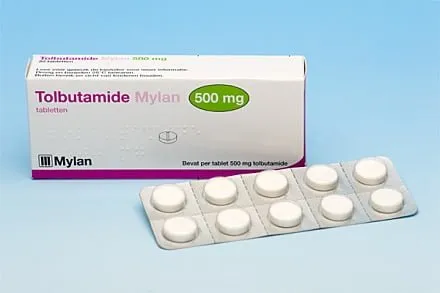
3. Indications and Uses of Tolbutamide
Tolbutamide is indicated for glycemic control, leveraging its insulin-stimulating properties:
- Type 2 Diabetes Mellitus (T2DM): Treats T2DM in adults, reducing fasting and postprandial glucose levels, often as initial therapy, per American Diabetes Association (ADA) guidelines, with efficacy demonstrated in early clinical trials.
- Gestational Diabetes (Off-Label): Investigated off-label for gestational diabetes in patients intolerant to metformin, improving maternal glucose control, supported by obstetric and endocrinology research.
- Postpartum Diabetes Management: Used off-label post-delivery in women with prior gestational diabetes to prevent progression to T2DM, with data from longitudinal diabetes studies.
- Prediabetes Intervention: Explored off-label to delay T2DM onset in prediabetic patients, enhancing beta-cell function, with evidence from preventive medicine trials.
- Hyperglycemia in Pancreatic Surgery: Employed off-label to manage postoperative hyperglycemia in pancreatic cancer patients, stabilizing glucose, supported by surgical endocrinology data.
- Type 1 Diabetes Adjunct (Off-Label): Investigated off-label as an adjunct in type 1 diabetes with residual beta-cell function, reducing insulin needs, with cautious use under specialist care.
- Polycystic Ovary Syndrome (PCOS): Used off-label to improve insulin sensitivity and menstrual regularity in PCOS patients, with promising results from gynecologic studies.
- Elderly Diabetes Control: Applied off-label in elderly T2DM patients with renal impairment, adjusting doses, supported by geriatric medicine research.
- Steroid-Induced Diabetes: Managed off-label in patients on long-term corticosteroids, controlling glucocorticoid-induced hyperglycemia, with data from rheumatology and endocrinology.
Note: This drug is less commonly used today due to newer agents; consult a healthcare provider for current treatment options and monitoring.
4. Dosage of Tolbutamide
Important Note: The dosage of this sulfonylurea must be prescribed by a healthcare provider. Dosing varies by patient response, renal function, and disease progression, with adjustments based on clinical evaluation.
Dosage for Adults
- Type 2 Diabetes Mellitus:
- Initial: 100–250 mg once or twice daily, taken with breakfast or the first main meal.
- Maintenance: 250–2,000 mg daily in divided doses (e.g., 500 mg twice daily), maximum 3,000 mg/day.
- Elderly or Renal-Impaired:
- Start with 100 mg once daily; increase cautiously to 500 mg, monitoring closely.
Dosage for Children
- Type 2 Diabetes (Off-Label):
- 10–20 mg/kg/day in divided doses, under pediatric endocrinologist supervision.
- Not recommended under 18 years unless critical.
Dosage for Pregnant Women
- Pregnancy Category C: Avoid unless benefits outweigh risks (e.g., uncontrolled T2DM). Consult an obstetrician, with fetal monitoring and dose adjustment.
Dosage Adjustments
- Renal Impairment: Reduce dose by 50% if CrCl <50 mL/min; avoid if <10 mL/min.
- Hepatic Impairment: Start with 100 mg daily; increase cautiously if bilirubin >1.5 mg/dL.
- Elderly: Initiate at 100 mg daily; titrate slowly to minimize hypoglycemia risk.
- Concomitant Medications: Adjust if combined with beta-blockers or alcohol, increasing hypoglycemia risk.
Additional Considerations
- Take this active ingredient with meals to reduce gastrointestinal upset and enhance absorption.
- Use a pill organizer for consistent dosing, especially with divided schedules.
5. How to Use Tolbutamide
- Administration:
- Swallow tablets whole with a meal or snack, using water; avoid crushing or chewing.
- Take with the first main meal of the day, with additional doses spaced evenly.
- Timing: Use once or twice daily, aligning with meal times for optimal effect.
- Monitoring: Watch for sweating, shakiness, or signs of hypoglycemia (e.g., confusion).
- Additional Tips:
- Store at 20–25°C (68–77°F), protecting from moisture and heat.
- Keep out of reach of children due to overdose risk.
- Report severe dizziness, hunger, or signs of allergic reaction immediately.
6. Contraindications for Tolbutamide
This drug is contraindicated in:
- Hypersensitivity: Patients with a known allergy to Tolbutamide or sulfonylureas.
- Type 1 Diabetes: Ineffective due to lack of insulin production.
- Diabetic Ketoacidosis: Contraindicated due to risk of worsening acidosis.
- Severe Renal/Hepatic Impairment: Avoid if CrCl <10 mL/min or bilirubin >5 mg/dL.
7. Warnings & Precautions for Tolbutamide
General Warnings
- Hypoglycemia: Risk of severe low blood sugar, especially in elderly or malnourished patients; carry glucose tablets.
- Hepatotoxicity: Risk of liver injury; monitor liver enzymes regularly.
- Cardiovascular Mortality: Increased risk with long-term use; assess heart health.
- Hemolytic Anemia: Rare in G6PD deficiency; screen patients.
- Allergic Reactions: Risk of rash or photosensitivity; use sunscreen.
Additional Warnings
- Weight Gain: Common with sulfonylureas; monitor body weight.
- Hyponatremia: Risk with prolonged use; check sodium levels.
- Bone Marrow Suppression: Rare leukopenia or thrombocytopenia; monitor blood counts.
- Renal Impairment: Worsens with declining kidney function; adjust dose.
- Hypersensitivity Reactions: Rare anaphylaxis; discontinue if swelling occurs.
Use in Specific Populations
- Pregnancy: Category C; avoid unless critical; use insulin alternatives.
- Breastfeeding: Excreted in breast milk; monitor infant for hypoglycemia.
- Elderly: Higher risk of hypoglycemia; start with lower doses.
- Children: Limited to off-label use in 18+ years; supervise closely.
- Renal/Hepatic Impairment: Adjust dose; avoid in severe cases.
Additional Precautions
- Inform your doctor about kidney disease, liver conditions, or medication history before starting this medication.
- Avoid alcohol, which may precipitate hypoglycemia.
8. Overdose and Management of Tolbutamide
Overdose Symptoms
Overdose may cause:
- Sweating, tremors, or confusion from hypoglycemia.
- Severe cases: Seizures, coma, or cardiovascular collapse.
- Nausea, weakness, or hunger as early signs.
- Liver dysfunction with extremely high doses.
Immediate Actions
- Contact the Medical Team: Seek immediate medical help.
- Supportive Care: Administer oral glucose or IV dextrose, monitor vital signs, and provide supportive care.
- Specific Treatment: Use glucagon if unresponsive; no specific antidote.
- Monitor: Check blood glucose, liver function, and mental status for 24–48 hours.
Additional Notes
- Overdose risk is moderate; store securely.
- Report persistent symptoms (e.g., prolonged confusion, jaundice) promptly.
9. Side Effects of Tolbutamide
Common Side Effects
- Hypoglycemia (10–20%, managed with glucose)
- Nausea (5–15%, reduced with food)
- Weight Gain (5–10%, monitored with diet)
- Rash (3–8%, transient)
- Dizziness (2–6%, decreases with tolerance)
These effects may subside with dose adjustment.
Serious Side Effects
Seek immediate medical attention for:
- Metabolic: Severe hypoglycemia or hyponatremia.
- Hepatic: Jaundice, hepatitis, or liver failure.
- Hematologic: Leukopenia, thrombocytopenia, or hemolytic anemia.
- Cardiovascular: Increased risk of heart attack or stroke.
- Allergic: Rash, angioedema, or anaphylaxis.
Additional Notes
- Regular monitoring for blood glucose, liver function, and blood counts is advised.
- Report any unusual symptoms (e.g., yellow skin, severe weakness) immediately to a healthcare provider.
10. Drug Interactions with Tolbutamide
This active ingredient may interact with:
- Beta-Blockers: Masks hypoglycemia symptoms (e.g., propranolol); monitor closely.
- Alcohol: Increases hypoglycemia risk; avoid.
- Warfarin: Enhances bleeding risk; monitor INR.
- CYP2C9 Inhibitors: Increases levels (e.g., fluconazole); reduce dose.
- Diuretics: Alters electrolyte balance; adjust therapy.
Action: Provide your healthcare provider with a complete list of medications.
11. Patient Education or Lifestyle
- Medication Adherence: Take this sulfonylurea as prescribed to manage T2DM, following the exact schedule.
- Monitoring: Report hypoglycemia symptoms, jaundice, or fatigue immediately.
- Lifestyle: Maintain a balanced diet; engage in regular exercise.
- Diet: Take with meals; avoid skipping meals to prevent hypoglycemia.
- Emergency Awareness: Know signs of severe hypoglycemia or liver issues; seek care if present.
- Follow-Up: Schedule regular check-ups every 3–6 months to monitor glucose, liver, and kidney health, adjusting lifestyle as needed.
12. Pharmacokinetics of Tolbutamide
- Absorption: Well-absorbed orally (peak at 3–5 hours); enhanced with food.
- Distribution: Volume of distribution ~0.1–0.2 L/kg; 95–97% protein-bound.
- Metabolism: Hepatic via CYP2C9 to inactive metabolites.
- Excretion: Primarily renal (75–85%) as metabolites; half-life 4–6 hours.
- Half-Life: 4–6 hours, with rapid clearance but sustained glucose-lowering effect.
13. Pharmacodynamics of Tolbutamide
This drug exerts its effects by:
- Closing ATP-sensitive potassium channels in beta cells, triggering insulin release.
- Enhancing glucose uptake in peripheral tissues, improving glycemic control.
- Demonstrating dose-dependent hypoglycemia risk and weight gain.
- Exhibiting reduced efficacy in advanced T2DM with beta-cell exhaustion.
14. Storage of Tolbutamide
- Temperature: Store at 20–25°C (68–77°F); protect from moisture.
- Protection: Keep in original container, away from light.
- Safety: Store in a locked container out of reach of children due to overdose risk.
- Disposal: Dispose of unused tablets per local regulations or consult a pharmacist.
15. Frequently Asked Questions (FAQs)
Q: What does Tolbutamide treat?
A: This medication treats type 2 diabetes.
Q: Can this active ingredient cause hypoglycemia?
A: Yes, hypoglycemia may occur; carry glucose.
Q: Is Tolbutamide safe for children?
A: Yes, off-label for 18+ years with a doctor’s guidance.
Q: How is this drug taken?
A: Orally as tablets with meals, as directed.
Q: How long is Tolbutamide treatment?
A: Long-term for T2DM with monitoring.
Q: Can I use Tolbutamide if pregnant?
A: No, avoid unless critical; consult a doctor.
16. Regulatory Information for Tolbutamide
This medication is approved by:
- U.S. Food and Drug Administration (FDA): Approved in 1957 (Orinase) for T2DM, one of the first oral antidiabetics.
- European Medicines Agency (EMA): Historically approved for T2DM, with limited current use.
- Other Agencies: Approved globally for diabetes; consult local guidelines.
17. References
- U.S. Food and Drug Administration (FDA). (2023). Orinase (Tolbutamide) Prescribing Information.
- Official FDA documentation detailing the drug’s approved uses, dosage, and safety.
- European Medicines Agency (EMA). (2023). Tolbutamide Summary of Product Characteristics.
- EMA’s historical information on the medication’s indications and precautions in Europe.
- National Institutes of Health (NIH). (2023). Tolbutamide: MedlinePlus Drug Information.
- NIH resource providing detailed information on the drug’s uses, side effects, and precautions.
- World Health Organization (WHO). (2023). WHO Model List of Essential Medicines: Tolbutamide.
- WHO’s historical inclusion of Tolbutamide for diabetes care.
- Diabetes Care. (2022). Tolbutamide in Modern Diabetes Management.
- Peer-reviewed article on Tolbutamide efficacy (note: access may require a subscription).
