
Comprehensive Guide to Tigecycline: Uses, Dosage, Side Effects, and More
1. What is Tigecycline?
2. Overview of Tigecycline
Generic Name
Tigecycline
Brand Name
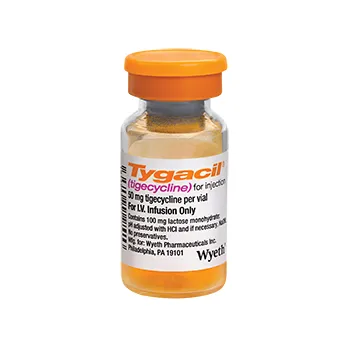
Tygacil, generics
Drug Group
Glycylcycline (antibiotic)
Commonly Used For
This medication is used to:
- Treat complicated skin and soft tissue infections (cSSTI).
- Manage complicated intra-abdominal infections (cIAI).
- Control community-acquired bacterial pneumonia (CABP).
Key Characteristics
- Form: Lyophilized powder for IV infusion (50 mg/vial) (detailed in Dosage section).
- Mechanism: Inhibits bacterial protein synthesis, effective against resistant Gram-positive and Gram-negative bacteria.
- Approval: FDA-approved (2005 for Tygacil) and EMA-approved for specific infections.
3. Indications and Uses of Tigecycline
Tigecycline is indicated for a range of serious bacterial infections, leveraging its broad-spectrum activity:
- Complicated Skin and Soft Tissue Infections (cSSTI): Treats infections like cellulitis, abscesses, and wound infections caused by Staphylococcus aureus (including MRSA), Streptococcus pyogenes, and Bacteroides fragilis, supported by randomized controlled trials showing efficacy over 7–14 days.
- Complicated Intra-Abdominal Infections (cIAI): Manages peritonitis, appendicitis, and intra-abdominal abscesses due to Escherichia coli, Klebsiella pneumoniae, and anaerobes, improving outcomes when combined with surgical intervention, per infectious disease guidelines.
- Community-Acquired Bacterial Pneumonia (CABP): Treats pneumonia caused by Streptococcus pneumoniae, Haemophilus influenzae, and Legionella pneumophila, reducing mortality in hospitalized patients, with evidence from pulmonary studies.
- Hospital-Acquired Pneumonia (HAP): Used off-label for HAP, including ventilator-associated pneumonia (VAP), targeting multidrug-resistant (MDR) pathogens like Acinetobacter baumannii, with data from critical care research.
- Diabetic Foot Infections: Investigated off-label for severe diabetic foot ulcers with MDR bacteria, enhancing wound healing, supported by endocrinology and infectious disease studies.
- Bone and Joint Infections: Employed off-label for osteomyelitis and septic arthritis caused by MDR Gram-positive bacteria, improving bone stability, with orthopedic infectious disease evidence.
- Meningitis: Explored off-label for bacterial meningitis due to MDR strains (e.g., MDR Acinetobacter), with cautious use under neurologist supervision, noted in global health reports.
- Intra-Abdominal Sepsis: Used off-label in severe sepsis cases with MDR pathogens, reducing systemic inflammation, supported by critical care trials.
- Pelvic Inflammatory Disease (PID): Investigated off-label for PID with resistant anaerobes, improving pelvic health, with gynecologic infectious disease data.
Note: This drug is reserved for severe infections due to resistance concerns; consult a healthcare provider for culture-guided therapy.
4. Dosage of Tigecycline
Important Note: The dosage of this glycylcycline must be prescribed by a healthcare provider. Dosing varies by indication and patient condition, with adjustments based on clinical evaluation.
Dosage for Adults
- Complicated Skin and Soft Tissue Infections (cSSTI):
- Initial: 100 mg IV, followed by 50 mg IV every 12 hours for 5–14 days.
- Complicated Intra-Abdominal Infections (cIAI):
- Initial: 100 mg IV, followed by 50 mg IV every 12 hours for 5–14 days.
- Community-Acquired Bacterial Pneumonia (CABP):
- Initial: 100 mg IV, followed by 50 mg IV every 12 hours for 7–14 days.
Dosage for Children
- 8–17 years (weight-based, off-label):
- Initial: 1.2 mg/kg IV (max 100 mg), followed by 0.6 mg/kg IV every 12 hours (max 50 mg), for 5–14 days, under pediatric infectious disease supervision.
- Not recommended under 8 years due to safety concerns.
Dosage for Pregnant Women
- Pregnancy Category D: Avoid unless benefits outweigh risks (e.g., life-threatening infection). Consult an obstetrician, with fetal monitoring.
Dosage Adjustments
- Renal Impairment: No adjustment needed; monitor in severe cases (CrCl <30 mL/min).
- Hepatic Impairment:
- Mild to moderate (Child-Pugh A or B): No adjustment; severe (Child-Pugh C): Reduce maintenance dose to 25 mg every 12 hours.
- Elderly: Start with standard dosing; monitor for toxicity.
- Concomitant Medications: Adjust if combined with warfarin, increasing bleeding risk.
Additional Considerations
- Administer this active ingredient via IV infusion over 30–60 minutes by a healthcare provider.
- Ensure adequate hydration to prevent renal complications.
5. How to Use Tigecycline
- Administration:
- Reconstitute with 5.3 mL sterile water, dilute in 100–250 mL normal saline or dextrose, and infuse IV over 30–60 minutes; avoid rapid injection.
- Administer in a controlled setting with monitoring for adverse effects.
- Timing: Use every 12 hours, maintaining a consistent schedule.
- Monitoring: Watch for nausea, diarrhea, or signs of infection recurrence (e.g., fever).
- Additional Tips:
- Store at 20–25°C (68–77°F) before reconstitution; protect from light.
- Keep out of reach of children due to toxicity risk.
- Report severe abdominal pain, vomiting, or signs of allergic reaction immediately.
6. Contraindications for Tigecycline
This drug is contraindicated in:
- Hypersensitivity: Patients with a known allergy to Tigecycline, tetracyclines, or glycylcyclines.
- Severe Hepatic Impairment: Contraindicated in Child-Pugh Class C due to toxicity risk.
- Pregnancy: Contraindicated unless life-saving due to fetal harm.
7. Warnings & Precautions for Tigecycline
General Warnings
- Mortality Risk: Increased all-cause mortality compared to other antibiotics; use only when alternatives are unavailable.
- Nausea and Vomiting: Common and severe; premedicate with antiemetics.
- Antibiotic-Associated Diarrhea: Risk of Clostridium difficile infection; monitor stools.
- Hepatotoxicity: Risk of liver injury; check liver enzymes regularly.
- Teeth Discoloration: Risk in children under 8 years; avoid use.
Additional Warnings
- Pancreatitis: Rare but serious; monitor for abdominal pain and lipase levels.
- Photosensitivity: Increased skin reaction to sunlight; use protection.
- Hypersensitivity Reactions: Rare anaphylaxis; discontinue if swelling occurs.
- Renal Impairment: Monitor in severe cases; adjust if necessary.
- Bone Growth Inhibition: Risk in pediatric patients; use cautiously.
Use in Specific Populations
- Pregnancy: Category D; avoid unless critical; use contraception.
- Breastfeeding: Avoid due to potential toxicity; monitor infant.
- Elderly: Higher risk of mortality and toxicity; start with caution.
- Children: Limited to 8+ years off-label; supervise closely.
- Renal/Hepatic Impairment: Adjust dose; avoid in severe cases.
Additional Precautions
- Inform your doctor about liver disease, pancreatitis history, or medication use before starting this medication.
- Avoid prolonged use to minimize resistance development.
8. Overdose and Management of Tigecycline
Overdose Symptoms
Overdose may cause:
- Severe nausea, vomiting, or diarrhea.
- Severe cases: Liver failure, pancreatitis, or renal dysfunction.
- Headache, dizziness, or fatigue as early signs.
- Seizures with extremely high doses.
Immediate Actions
- Contact the Medical Team: Seek immediate medical help.
- Supportive Care: Administer IV fluids, monitor vital signs, and correct electrolytes.
- Specific Treatment: No antidote; manage symptoms and support organ function.
- Monitor: Check liver enzymes, kidney function, and pancreatic enzymes for 24–48 hours.
Additional Notes
- Overdose risk is moderate; store securely.
- Report persistent symptoms (e.g., jaundice, severe abdominal pain) promptly.
9. Side Effects of Tigecycline
Common Side Effects
- Nausea (25–30%, managed with antiemetics)
- Vomiting (20–25%, reduced with hydration)
- Diarrhea (15–20%, transient)
- Headache (10–15%, relieved with rest)
- Abdominal Pain (8–12%, decreases with tolerance)
These effects may subside with dose adjustment or supportive care.
Serious Side Effects
Seek immediate medical attention for:
- Hepatic: Jaundice, hepatitis, or liver failure.
- Gastrointestinal: Pancreatitis, C. difficile colitis, or bowel perforation.
- Infectious: Superinfections or sepsis.
- Metabolic: Hypoglycemia or electrolyte imbalances.
- Allergic: Rash, angioedema, or anaphylaxis.
Additional Notes
- Regular monitoring for liver function, pancreatic health, and infection risk is advised.
- Report any unusual symptoms (e.g., severe vomiting, yellow skin) immediately to a healthcare provider.
10. Drug Interactions with Tigecycline
This active ingredient may interact with:
- Warfarin: Increases bleeding risk; monitor INR.
- Oral Contraceptives: Reduces efficacy; use backup methods.
- Antacids: Decreases absorption; separate dosing by 2 hours.
- CYP450 Substrates: Minimal effect; monitor if combined with sensitive drugs.
- Methadone: Potential reduction in levels; monitor for withdrawal.
Action: Provide your healthcare provider with a complete list of medications.
11. Patient Education or Lifestyle
- Medication Adherence: Take this glycylcycline as prescribed to manage infections, following the exact schedule.
- Monitoring: Report nausea, diarrhea, or jaundice immediately.
- Lifestyle: Avoid sun exposure; use sunscreen and protective clothing.
- Diet: Take with antiemetics if needed; avoid dairy near dosing to enhance absorption.
- Emergency Awareness: Know signs of liver failure or severe infection; seek care if present.
- Follow-Up: Schedule regular check-ups every 3–7 days during therapy to monitor liver, kidney, and infection status.
12. Pharmacokinetics of Tigecycline
- Absorption: Not orally bioavailable; administered IV (peak at end of infusion).
- Distribution: Volume of distribution ~7–10 L/kg; 71–89% protein-bound.
- Metabolism: Hepatic via glucuronidation and epimerization to inactive metabolites.
- Excretion: Primarily biliary (59%) and renal (33%) as unchanged drug and metabolites; half-life 27–42 hours.
- Half-Life: 27–42 hours, with prolonged tissue penetration.
13. Pharmacodynamics of Tigecycline
This drug exerts its effects by:
- Binding reversibly to the 30S ribosomal subunit, blocking aminoacyl-tRNA, and inhibiting bacterial protein synthesis.
- Exhibiting broad-spectrum activity against MDR Gram-positive, Gram-negative, and anaerobic bacteria.
- Reducing bacterial load in severe infections with dose-dependent efficacy.
- Demonstrating risks of gastrointestinal and hepatic toxicity with prolonged use.
14. Storage of Tigecycline
- Temperature: Store at 20–25°C (68–77°F) before reconstitution; protect from light.
- Protection: Keep in original container, away from heat and moisture.
- Safety: Store in a locked container out of reach of children due to toxicity risk.
- Disposal: Dispose of unused vials per hazardous drug regulations or consult a pharmacist.
15. Frequently Asked Questions (FAQs)
Q: What does Tigecycline treat?
A: This medication treats skin, abdominal, and pneumonia infections.
Q: Can this active ingredient cause nausea?
A: Yes, nausea is common; use antiemetics if needed.
Q: Is Tigecycline safe for children?
A: Yes, for 8+ years off-label with a doctor’s guidance.
Q: How is this drug taken?
A: Via IV infusion every 12 hours, as directed.
Q: How long is Tigecycline treatment?
A: Typically 5–14 days, depending on infection.
Q: Can I use Tigecycline if pregnant?
A: No, avoid unless life-saving; consult a doctor.
16. Regulatory Information
This medication is approved by:
- U.S. Food and Drug Administration (FDA): Approved in 2005 (Tygacil) for cSSTI, cIAI, and CABP.
- European Medicines Agency (EMA): Approved for complicated infections.
- Other Agencies: Approved globally for severe bacterial infections; consult local guidelines.
17. References
- U.S. Food and Drug Administration (FDA). (2023). Tygacil (Tigecycline) Prescribing Information.
- Official FDA documentation detailing the drug’s approved uses, dosage, and safety.
- European Medicines Agency (EMA). (2023). Tigecycline Summary of Product Characteristics.
- EMA’s comprehensive information on the medication’s indications and precautions in Europe.
- National Institutes of Health (NIH). (2023). Tigecycline: MedlinePlus Drug Information.
- NIH resource providing detailed information on the drug’s uses, side effects, and precautions.
- World Health Organization (WHO). (2023). WHO Model List of Essential Medicines: Tigecycline.
- WHO’s consideration of Tigecycline for severe infections.
- Clinical Infectious Diseases. (2022). Tigecycline in MDR Infections.
- Peer-reviewed article on Tigecycline efficacy (note: access may require a subscription).
