
Comprehensive Guide to Ticagrelor: Uses, Dosage, Side Effects, and More
1. What is Ticagrelor?
2. Overview of Ticagrelor
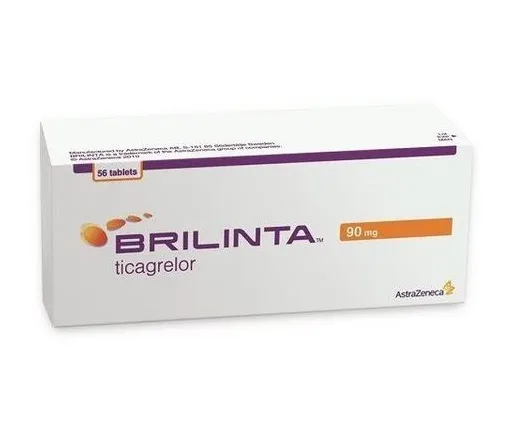
Generic Name
Ticagrelor
Brand Name
Brilinta, generics
Drug Group
P2Y12 inhibitor (antiplatelet)
Commonly Used For
This medication is used to:
- Prevent atherothrombotic events in ACS.
- Reduce risk after myocardial infarction.
- Manage coronary artery disease.
Key Characteristics
- Form: Oral tablets (60 mg, 90 mg) (detailed in Dosage section).
- Mechanism: Reversibly binds P2Y12 receptors, blocking ADP-mediated platelet activation.
- Approval: FDA-approved (2011 for Brilinta) and EMA-approved for ACS and post-MI prevention.
3. Indications and Uses of Ticagrelor
Ticagrelor is indicated for cardiovascular conditions, leveraging its antiplatelet effects to prevent thrombosis:
- Acute Coronary Syndrome (ACS): Treats ACS (unstable angina, non-ST-elevation myocardial infarction [NSTEMI], ST-elevation myocardial infarction [STEMI]), reducing recurrent events when used with aspirin, per ACC/AHA guidelines, supported by the PLATO trial.
- Post-Myocardial Infarction (MI): Prevents atherothrombotic events in patients with a history of MI (1–3 years post-event), lowering mortality and reinfarction rates, endorsed by cardiology consensus.
- Coronary Artery Disease (CAD): Manages stable CAD in high-risk patients, reducing ischemic events, used as part of dual antiplatelet therapy (DAPT), with evidence from long-term studies.
- Peripheral Artery Disease (PAD): Used off-label to reduce cardiovascular risk in PAD patients, improving limb perfusion and event-free survival, supported by vascular surgery research.
- Stroke Prevention: Investigated off-label for secondary stroke prevention in patients with non-cardioembolic stroke, reducing recurrence, with data from neurology trials.
- Atrial Fibrillation (AF) with PCI: Explored off-label as an alternative to warfarin in AF patients undergoing percutaneous coronary intervention (PCI), balancing bleeding and thrombosis risks, per electrophysiology studies.
- Heart Failure with Reduced Ejection Fraction (HFrEF): Employed off-label to reduce thrombotic risk in HFrEF patients with CAD, improving outcomes, with emerging cardiology evidence.
- Post-Coronary Artery Bypass Grafting (CABG): Used off-label to prevent graft occlusion post-CABG, enhancing long-term patency, supported by cardiac surgery data.
- Diabetes-Related Cardiovascular Disease: Investigated off-label in diabetic patients with CAD to mitigate microvascular and macrovascular complications, with endocrinology and cardiology insights.
Note: This drug requires monitoring for bleeding risk; consult a healthcare provider for combination therapy and duration.
4. Dosage of Ticagrelor
Important Note: The dosage of this P2Y12 inhibitor must be prescribed by a healthcare provider. Dosing varies by indication and patient risk profile, with adjustments based on clinical evaluation.
Dosage for Adults
- Acute Coronary Syndrome (ACS):
- Loading Dose: 180 mg (two 90 mg tablets) once, followed by 90 mg twice daily for up to 12 months, with low-dose aspirin (75–100 mg/day).
- Post-Myocardial Infarction (MI):
- 60 mg twice daily for up to 3 years, starting beyond 12 months post-MI, with aspirin if tolerated.
- Coronary Artery Disease (CAD):
- 60 mg twice daily in high-risk patients, as part of DAPT, adjusted based on bleeding risk.
Dosage for Children
- Not Recommended: Safety and efficacy not established in patients under 18 years.
Dosage for Pregnant Women
- Pregnancy Category C: Limited data; use only if benefits outweigh risks (e.g., severe ACS). Consult an obstetrician, with fetal monitoring.
Dosage Adjustments
- Renal Impairment: No adjustment needed; monitor in severe cases (CrCl <30 mL/min).
- Hepatic Impairment:
- Mild (Child-Pugh A): No adjustment; moderate (Child-Pugh B): Use caution; severe (Child-Pugh C): Avoid.
- Elderly: Start with 60 mg twice daily; increase to 90 mg if tolerated.
- Concomitant Medications: Avoid high-dose aspirin (>100 mg/day) or strong CYP3A inhibitors/inducers (e.g., ketoconazole, rifampin).
Additional Considerations
- Take this active ingredient with or without food, using a glass of water.
- Avoid missing doses to maintain antiplatelet effect.
5. How to Use Ticagrelor
- Administration:
- Swallow tablets whole with water, with or without food; avoid crushing or chewing.
- Take twice daily (e.g., morning and evening) with aspirin as directed.
- Timing: Use at consistent intervals (e.g., 12 hours apart), maintaining adherence.
- Monitoring: Watch for bruising, bleeding gums, or signs of shortness of breath.
- Additional Tips:
- Store at 20–25°C (68–77°F), protecting from moisture and heat.
- Keep out of reach of children due to bleeding risk.
- Report severe chest pain, unusual bleeding, or signs of allergic reaction immediately.
6. Contraindications for Ticagrelor
This drug is contraindicated in:
- Hypersensitivity: Patients with a known allergy to Ticagrelor or its components.
- Active Pathological Bleeding: Contraindicated due to hemorrhage risk.
- Severe Hepatic Impairment: Contraindicated in Child-Pugh Class C.
- History of Intracranial Hemorrhage: Avoid due to bleeding risk.
7. Warnings & Precautions for Ticagrelor
General Warnings
- Bleeding Risk: Increased risk of major bleeding (e.g., intracranial, gastrointestinal); monitor closely.
- Bradycardia: Risk of heart block or dyspnea; assess cardiac function.
- Hyperuricemia: May elevate uric acid levels; monitor in gout patients.
- Thrombotic Thrombocytopenic Purpura (TTP): Rare risk; report symptoms promptly.
- Discontinuation Risk: Premature cessation increases thrombotic events; taper cautiously.
Additional Warnings
- Renal Impairment: Monitor in severe cases; adjust if creatinine clearance drops.
- Hypotension: Risk in volume-depleted patients; ensure hydration.
- Allergic Reactions: Rare angioedema or rash; discontinue if severe.
- Stroke Risk: Increased risk of intracranial hemorrhage in prior stroke patients; use cautiously.
- Surgical Procedures: Suspend 5 days before major surgery; consult surgeon.
Use in Specific Populations
- Pregnancy: Category C; use only if essential with fetal monitoring.
- Breastfeeding: Avoid due to potential toxicity; monitor infant.
- Elderly: Higher bleeding risk; start with lower doses.
- Children: Not recommended; safety data lacking.
- Renal/Hepatic Impairment: Adjust dose; avoid in severe cases.
Additional Precautions
- Inform your doctor about bleeding disorders, liver disease, or upcoming surgery before starting this medication.
- Avoid NSAIDs or other anticoagulants without medical advice.
8. Overdose and Management of Ticagrelor
Overdose Symptoms
Overdose may cause:
- Prolonged bleeding, bruising, or epistaxis.
- Severe cases: Intracranial hemorrhage, hypotension, or ventricular pause.
- Dizziness, fatigue, or shortness of breath as early signs.
- Cardiac arrest with extremely high doses.
Immediate Actions
- Contact the Medical Team: Seek immediate medical help.
- Supportive Care: Administer IV fluids, monitor vital signs, and transfuse platelets if bleeding occurs.
- Specific Treatment: No antidote; use platelet transfusion or desmopressin for severe bleeding.
- Monitor: Check hemoglobin, cardiac rhythm, and bleeding sites for 24–48 hours.
Additional Notes
- Overdose risk is moderate; store securely.
- Report persistent symptoms (e.g., severe headache, black stools) promptly.
9. Side Effects of Ticagrelor
Common Side Effects
- Dyspnea (15–20%, manageable with rest)
- Bleeding (Minor) (10–15%, monitor closely)
- Headache (5–10%, relieved with hydration)
- Nausea (3–8%, reduced with food)
- Dizziness (2–6%, decreases with tolerance)
These effects may subside with dose adjustment.
Serious Side Effects
Seek immediate medical attention for:
- Hematologic: Major bleeding, thrombocytopenia, or TTP.
- Cardiovascular: Bradycardia, ventricular pause, or heart block.
- Gastrointestinal: Severe bleeding or ulcer perforation.
- Neurological: Intracranial hemorrhage or stroke.
- Allergic: Rash, angioedema, or anaphylaxis.
Additional Notes
- Regular monitoring for bleeding time, cardiac function, and uric acid levels is advised.
- Report any unusual symptoms (e.g., chest pain, severe weakness) immediately to a healthcare provider.
10. Drug Interactions with Ticagrelor
This active ingredient may interact with:
- CYP3A Inhibitors: Increases levels (e.g., ketoconazole); avoid.
- CYP3A Inducers: Reduces efficacy (e.g., rifampin); avoid.
- Aspirin: Enhances bleeding risk; limit to 75–100 mg/day.
- Anticoagulants: Potentiates bleeding (e.g., warfarin); monitor INR.
- Opioids: Delays absorption; adjust timing.
Action: Provide your healthcare provider with a complete list of medications.
11. Patient Education or Lifestyle
- Medication Adherence: Take this P2Y12 inhibitor as prescribed to prevent thrombosis, following the exact schedule.
- Monitoring: Report bleeding, shortness of breath, or fatigue immediately.
- Lifestyle: Avoid alcohol; maintain a heart-healthy diet (e.g., low sodium).
- Diet: Take with or without food; avoid grapefruit juice.
- Emergency Awareness: Know signs of severe bleeding or heart issues; seek care if present.
- Follow-Up: Schedule regular check-ups every 3–6 months to monitor cardiac health, bleeding risk, and uric acid levels.
12. Pharmacokinetics of Ticagrelor
- Absorption: Well-absorbed orally (peak at 1.5–3 hours); enhanced with food.
- Distribution: Volume of distribution ~88 L; 99% protein-bound.
- Metabolism: Hepatic via CYP3A4 to active metabolite (AR-C124910XX).
- Excretion: Primarily biliary (58%) and renal (26%) as metabolites; half-life 7–9 hours.
- Half-Life: 7–9 hours, with active metabolite extending effect to 12 hours.
13. Pharmacodynamics of Ticagrelor
This drug exerts its effects by:
- Reversibly inhibiting P2Y12 receptors on platelets, preventing ADP-induced aggregation.
- Reducing thrombus formation in ACS and post-MI patients.
- Demonstrating faster onset and offset compared to clopidogrel, with dose-dependent bleeding risks.
- Enhancing cardiovascular protection with sustained platelet inhibition.
14. Storage of Ticagrelor
- Temperature: Store at 20–25°C (68–77°F); protect from moisture.
- Protection: Keep in original container, away from light.
- Safety: Store in a locked container out of reach of children due to bleeding risk.
- Disposal: Dispose of unused tablets per local regulations or consult a pharmacist.
15. Frequently Asked Questions (FAQs)
Q: What does Ticagrelor treat?
A: This medication treats acute coronary syndrome and prevents post-MI events.
Q: Can this active ingredient cause bleeding?
A: Yes, minor bleeding may occur; report severe cases.
Q: Is Ticagrelor safe for children?
A: No, not recommended for patients under 18.
Q: How is this drug taken?
A: Orally as tablets twice daily, with or without food, as directed.
Q: How long is Ticagrelor treatment?
A: Up to 12 months for ACS or 3 years post-MI.
Q: Can I use Ticagrelor if pregnant?
A: Yes, with caution; consult a doctor.
16. Regulatory Information
This medication is approved by:
- U.S. Food and Drug Administration (FDA): Approved in 2011 (Brilinta) for ACS and post-MI prevention.
- European Medicines Agency (EMA): Approved for ACS and secondary prevention.
- Other Agencies: Approved globally for cardiovascular indications; consult local guidelines.
17. References
- U.S. Food and Drug Administration (FDA). (2023). Brilinta (Ticagrelor) Prescribing Information.
- Official FDA documentation detailing the drug’s approved uses, dosage, and safety.
- European Medicines Agency (EMA). (2023). Ticagrelor Summary of Product Characteristics.
- EMA’s comprehensive information on the medication’s indications and precautions in Europe.
- National Institutes of Health (NIH). (2023). Ticagrelor: MedlinePlus Drug Information.
- NIH resource providing detailed information on the drug’s uses, side effects, and precautions.
- World Health Organization (WHO). (2023). WHO Guidelines on Cardiovascular Diseases: Ticagrelor.
- WHO’s recommendations for Ticagrelor in cardiovascular care.
- New England Journal of Medicine. (2022). Ticagrelor in Post-MI Prevention.
- Peer-reviewed article on Ticagrelor efficacy (note: access may require a subscription).
