
Comprehensive Guide to Terbutaline: Uses, Dosage, Side Effects, and More
1. What is Terbutaline?
2. Overview of Terbutaline
Generic Name
Terbutaline
Brand Name
Brethine, Bricanyl, generics
Drug Group
Beta-2 adrenergic agonist (bronchodilator, tocolytic)
Commonly Used For
This medication is used to:
- Relieve asthma and COPD symptoms.
- Prevent bronchospasm.
- Delay preterm labor.
Key Characteristics
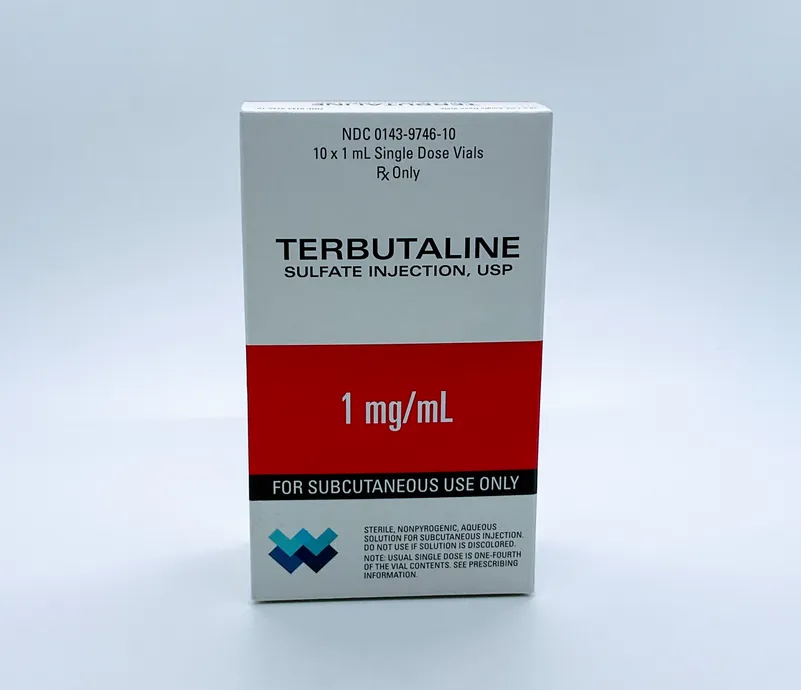
- Form: Oral tablets (2.5 mg, 5 mg), subcutaneous injection (1 mg/mL), inhalation (as sulfate) (detailed in Dosage section).
- Mechanism: Activates beta-2 receptors, causing bronchodilation and uterine relaxation.
- Approval: FDA-approved (1974 for Brethine) and EMA-approved for asthma and preterm labor management.
3. Indications and Uses of Terbutaline
Terbutaline is indicated for respiratory and obstetric conditions, leveraging its bronchodilatory and tocolytic effects:
- Asthma: Treats acute asthma exacerbations and prevents bronchospasm in adults and children, improving airflow, per Global Initiative for Asthma (GINA) guidelines.
- Chronic Obstructive Pulmonary Disease (COPD): Manages COPD symptoms, reducing breathlessness and enhancing exercise tolerance, supported by GOLD (Global Initiative for Chronic Obstructive Lung Disease) recommendations.
- Preterm Labor: Delays preterm delivery (20–33 weeks gestation) by inhibiting uterine contractions, used as a tocolytic, per ACOG (American College of Obstetricians and Gynecologists) protocols.
- Exercise-Induced Bronchoconstriction: Prevents bronchospasm during exercise in asthmatic patients, improving physical activity capacity, with evidence from sports medicine studies.
- Acute Bronchitis: Used off-label to relieve wheezing and airway obstruction in acute bronchitis, enhancing respiratory function, supported by pulmonary research.
- Cystic Fibrosis: Investigated off-label to improve airway clearance in cystic fibrosis patients, reducing mucus viscosity, with data from pediatric pulmonology trials.
- Hyperkalemia Management: Employed off-label to shift potassium into cells in acute hyperkalemia, stabilizing cardiac function, per emergency medicine guidelines.
- Allergic Rhinitis with Asthma: Explored off-label to manage concurrent asthma and allergic rhinitis symptoms, improving quality of life, with allergology evidence.
- Pediatric Reactive Airway Disease: Used off-label in children with reactive airway disease, controlling symptoms, supported by pediatric respiratory studies.
Note: This drug requires monitoring for cardiovascular and electrolyte effects; consult a healthcare provider for chronic use or pregnancy.
4. Dosage of Terbutaline
Important Note: The dosage of this bronchodilator must be prescribed by a healthcare provider. Dosing varies by indication, route, and patient response, with adjustments based on clinical evaluation.
Dosage for Adults
- Asthma or COPD (Oral):
- Initial: 2.5 mg two to three times daily, taken with water.
- Maintenance: Increase to 5 mg three times daily if tolerated, maximum 15 mg/day.
- Asthma or COPD (Subcutaneous):
- 0.25 mg injected into the thigh, repeated after 15–30 minutes if needed (maximum 0.5 mg in 4 hours).
- Preterm Labor (Subcutaneous):
- 0.25 mg every 20–30 minutes for up to 4 doses, then 0.25 mg every 3–4 hours if contractions persist, under obstetric supervision.
Dosage for Children
- Asthma or COPD (Oral, 6–12 years):
- 0.05–0.1 mg/kg three times daily, maximum 2.5 mg/dose, under pediatric pulmonologist supervision.
- Not recommended under 6 years for oral use.
- Asthma (Subcutaneous, 12+ years):
- 0.25 mg per dose, repeated if needed, under medical supervision.
Dosage for Pregnant Women
- Pregnancy Category C: Use only to delay preterm labor when benefits outweigh risks. Start with 0.25 mg subcutaneously, with fetal and maternal monitoring, per obstetric guidelines.
Dosage Adjustments
- Renal Impairment: Reduce dose by 50% if CrCl <10 mL/min; monitor in severe cases.
- Hepatic Impairment: No specific adjustment; monitor in severe cases.
- Elderly: Start with 1.25 mg two times daily; increase cautiously to 2.5 mg if tolerated.
- Concomitant Medications: Adjust if combined with beta-blockers (e.g., propranolol), reducing efficacy.
Additional Considerations
- Take this active ingredient with water for oral use; inject subcutaneously with proper technique.
- Monitor heart rate and potassium levels during therapy.
5. How to Use Terbutaline
- Administration:
- Oral: Swallow tablets whole with a full glass of water, with or without food; avoid chewing or crushing.
- Subcutaneous: Administer 0.25 mg into the lateral thigh using a sterile syringe, avoiding IV use due to cardiac risks.
- Inhalation: Use a nebulizer or metered-dose inhaler as prescribed, following device instructions.
- Timing: Use as needed for asthma (every 4–6 hours) or on a scheduled basis for preterm labor, maintaining consistency.
- Monitoring: Watch for palpitations, tremors, or signs of hypokalemia (e.g., muscle weakness).
- Additional Tips:
- Store at 20–25°C (68–77°F), protecting from moisture and heat.
- Keep out of reach of children due to overdose risk.
- Report severe chest pain, irregular heartbeat, or signs of allergic reaction immediately.
6. Contraindications for Terbutaline
This drug is contraindicated in:
- Hypersensitivity: Patients with a known allergy to Terbutaline or beta-agonists.
- Tachycardia: Contraindicated in uncontrolled heart rate >110 bpm.
- Severe Hypertension: Avoid due to risk of cardiovascular complications.
- Hyperthyroidism: Contraindicated due to enhanced sympathomimetic effects.
7. Warnings & Precautions for Terbutaline
General Warnings
- Cardiovascular Effects: Risk of tachycardia, palpitations, or arrhythmias; monitor heart rate regularly.
- Hypokalemia: Risk of low potassium levels, especially with high doses; check electrolytes.
- Pulmonary Edema: Rare risk in preterm labor; monitor respiratory status.
- Paradoxical Bronchospasm: Risk with inhalation; discontinue if wheezing worsens.
- Overuse Risk: Excessive use may lead to tolerance; limit to prescribed doses.
Additional Warnings
- Diabetes Mellitus: May exacerbate hyperglycemia; monitor blood sugar.
- Seizure Disorders: Risk of lowering seizure threshold; use cautiously.
- Hypersensitivity Pneumonitis: Rare with inhalation; assess lung function.
- Glaucoma: Risk in narrow-angle glaucoma; screen before use.
- Hypersensitivity Reactions: Rare anaphylaxis; discontinue if swelling occurs.
Use in Specific Populations
- Pregnancy: Category C; use only for preterm labor with fetal monitoring.
- Breastfeeding: Excreted in breast milk; monitor infant for effects.
- Elderly: Higher risk of side effects; start with lower doses.
- Children: Limited to 6+ years; supervise closely.
- Renal/Hepatic Impairment: Adjust dose; monitor in severe cases.
Additional Precautions
- Inform your doctor about heart disease, diabetes, or medication history before starting this medication.
- Avoid abrupt cessation; taper if used long-term for asthma.
8. Overdose and Management of Terbutaline
Overdose Symptoms
Overdose may cause:
- Tachycardia, palpitations, or hypertension.
- Severe cases: Cardiac arrhythmias, hypokalemia, or seizures.
- Tremors, headache, or nausea as early signs.
- Respiratory depression with extremely high doses.
Immediate Actions
- Contact the Medical Team: Seek immediate medical help.
- Supportive Care: Administer IV fluids, monitor vital signs, and correct electrolytes (e.g., potassium).
- Specific Treatment: Use beta-blockers (e.g., propranolol) cautiously for tachycardia; no specific antidote.
- Monitor: Check heart rate, potassium levels, and ECG for 24–48 hours.
Additional Notes
- Overdose risk is moderate; store securely.
- Report persistent symptoms (e.g., chest pain, severe weakness) promptly.
9. Side Effects of Terbutaline
Common Side Effects
- Tremors (15–25%, manageable with dose adjustment)
- Palpitations (10–20%, monitor heart rate)
- Headache (8–15%, relieved with rest)
- Nausea (5–12%, reduced with food)
- Sweating (4–10%, decreases with tolerance)
These effects may subside with dose reduction.
Serious Side Effects
Seek immediate medical attention for:
- Cardiovascular: Tachycardia, arrhythmias, or myocardial ischemia.
- Metabolic: Hypokalemia, hyperglycemia, or lactic acidosis.
- Neurological: Seizures or severe tremors.
- Respiratory: Paradoxical bronchospasm or pulmonary edema.
- Allergic: Rash, angioedema, or anaphylaxis.
Additional Notes
- Regular monitoring for heart rate, electrolytes, and glucose is advised.
- Report any unusual symptoms (e.g., irregular heartbeat, muscle cramps) immediately to a healthcare provider.
10. Drug Interactions with Terbutaline
This active ingredient may interact with:
- Beta-Blockers: Reduces efficacy (e.g., propranolol); avoid combinations.
- Diuretics: Enhances hypokalemia risk; monitor electrolytes.
- MAO Inhibitors: Increases pressor effects; avoid within 14 days.
- Tricyclic Antidepressants: Potentiates cardiovascular effects; use cautiously.
- Corticosteroids: Increases hyperglycemia risk; adjust dose.
Action: Provide your healthcare provider with a complete list of medications.
11. Patient Education or Lifestyle
- Medication Adherence: Take this bronchodilator as prescribed to manage asthma or preterm labor, following the exact schedule.
- Monitoring: Report palpitations, tremors, or breathing difficulty immediately.
- Lifestyle: Avoid caffeine; maintain hydration.
- Diet: Take with or without food; avoid heavy meals to reduce nausea.
- Emergency Awareness: Know signs of cardiac issues or electrolyte imbalance; seek care if present.
- Follow-Up: Schedule regular check-ups every 3–6 months to monitor lung function, heart health, and electrolyte levels.
12. Pharmacokinetics of Terbutaline
- Absorption: Well-absorbed orally (peak at 1–2 hours); subcutaneous peak at 30–60 minutes; enhanced with food.
- Distribution: Volume of distribution ~1.6 L/kg; 15–25% protein-bound.
- Metabolism: Hepatic via conjugation to glucuronides and sulfates.
- Excretion: Primarily renal (60%) as unchanged drug and metabolites; half-life 3–4 hours.
- Half-Life: 3–4 hours, with sustained bronchodilatory effect.
13. Pharmacodynamics of Terbutaline
This drug exerts its effects by:
- Stimulating beta-2 receptors in the lungs, causing bronchodilation and improved airflow.
- Relaxing uterine smooth muscle to delay preterm labor via cyclic AMP activation.
- Exhibiting dose-dependent cardiovascular stimulation and metabolic effects.
- Demonstrating rapid onset (15–30 minutes) for acute respiratory relief.
14. Storage of Terbutaline
- Temperature: Store at 20–25°C (68–77°F); protect from moisture.
- Protection: Keep in original container, away from light.
- Safety: Store out of reach of children due to overdose risk.
- Disposal: Dispose of unused tablets or vials per local regulations or consult a pharmacist.
15. Frequently Asked Questions (FAQs)
Q: What does Terbutaline treat?
A: This medication treats asthma, COPD, and preterm labor.
Q: Can this active ingredient cause tremors?
A: Yes, tremors may occur; report if severe.
Q: Is Terbutaline safe for children?
A: Yes, for 6+ years with a doctor’s guidance.
Q: How is this drug taken?
A: Orally, subcutaneously, or via inhalation, as directed.
Q: How long is Terbutaline treatment?
A: Varies by condition; short-term for labor, long-term for asthma.
Q: Can I use Terbutaline if pregnant?
A: Yes, for preterm labor with caution; consult a doctor.
16. Regulatory Information
This medication is approved by:
- U.S. Food and Drug Administration (FDA): Approved in 1974 (Brethine) for asthma, later for preterm labor (restricted use).
- European Medicines Agency (EMA): Approved for asthma and tocolysis.
- Other Agencies: Approved globally for respiratory and obstetric use; consult local guidelines.
17. References
- U.S. Food and Drug Administration (FDA). (2023). Brethine (Terbutaline) Prescribing Information.
- Official FDA documentation detailing the drug’s approved uses, dosage, and safety.
- European Medicines Agency (EMA). (2023). Terbutaline Summary of Product Characteristics.
- EMA’s comprehensive information on the medication’s indications and precautions in Europe.
- National Institutes of Health (NIH). (2023). Terbutaline: MedlinePlus Drug Information.
- NIH resource providing detailed information on the drug’s uses, side effects, and precautions.
- World Health Organization (WHO). (2023). WHO Model List of Essential Medicines: Terbutaline.
- WHO’s inclusion of Terbutaline for respiratory therapy.
- American Journal of Respiratory and Critical Care Medicine. (2022). Terbutaline in Asthma Management.
- Peer-reviewed article on Terbutaline efficacy (note: access may require a subscription).
