
Comprehensive Guide to Terbinafine: Uses, Dosage, Side Effects, and More
1. What is Terbinafine?
2. Overview of Terbinafine
Generic Name
Terbinafine
Brand Name
Lamisil, generics
Drug Group
Allylamine antifungal
Commonly Used For
This medication is used to:
- Treat fungal skin infections.
- Manage nail fungus (onychomycosis).
- Control systemic fungal infections.
Key Characteristics
- Form: Oral tablets (250 mg), topical cream (1%), gel, or solution (detailed in Dosage section).
- Mechanism: Inhibits fungal cell membrane formation by targeting ergosterol synthesis.
- Approval: FDA-approved (1992 for Lamisil) and EMA-approved for fungal infections.
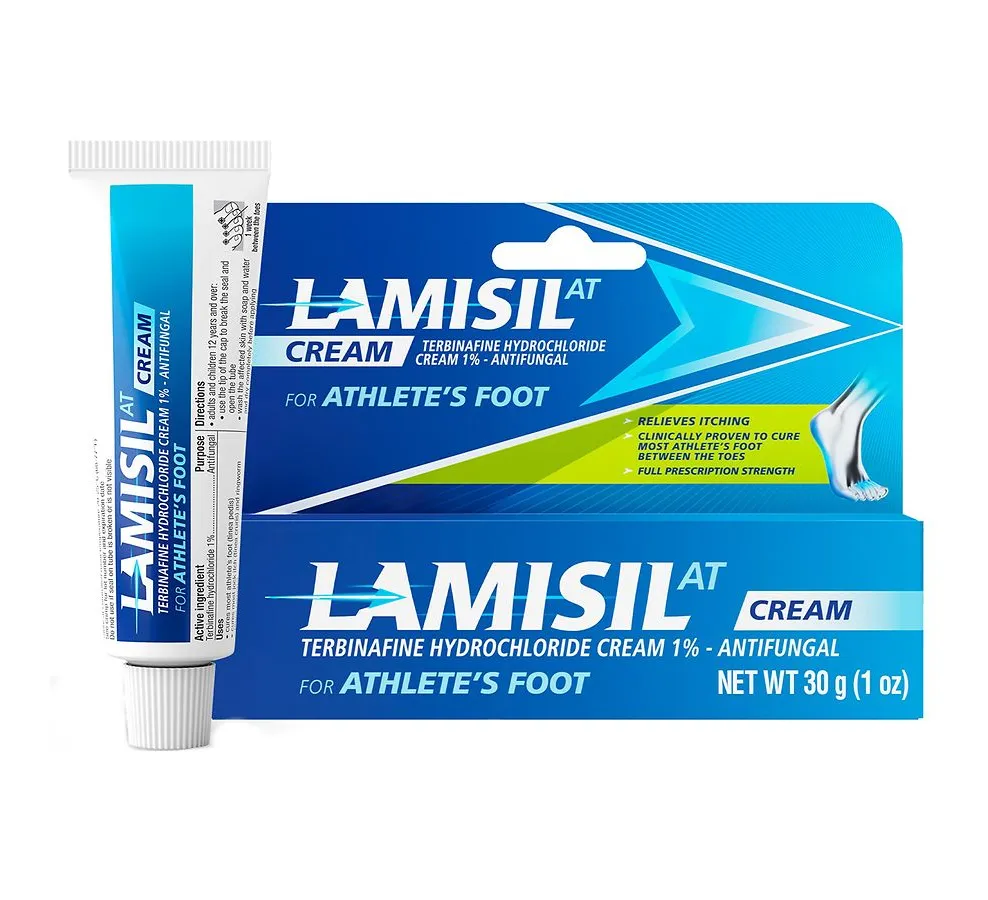
3. Indications and Uses of Terbinafine
Terbinafine is indicated for a broad spectrum of fungal infections, leveraging its fungicidal properties:
- Onychomycosis: Treats nail fungus (toenails or fingernails) caused by dermatophytes (e.g., Trichophyton rubrum), improving nail appearance and function, supported by long-term clinical studies over 12–24 weeks.
- Tinea Pedis (Athlete’s Foot): Manages tinea pedis, reducing itching and scaling, with topical or oral options, per dermatology guidelines.
- Tinea Corporis (Ringworm): Controls tinea corporis on the body, clearing lesions, often with topical application, supported by randomized trials.
- Tinea Cruris (Jock Itch): Treats tinea cruris in the groin area, alleviating discomfort, with evidence from dermatologic research.
- Tinea Versicolor: Used off-label to treat tinea versicolor caused by Malassezia species, reducing hypopigmentation, with promising data from mycology studies.
- Cutaneous Candidiasis: Manages skin infections by Candida species, improving symptoms, employed off-label with oral or topical forms, supported by infectious disease data.
- Oropharyngeal Candidiasis: Investigated off-label for resistant oropharyngeal candidiasis in immunocompromised patients, enhancing mucosal healing, with emerging evidence.
- Systemic Fungal Infections: Used off-label in severe cases (e.g., aspergillosis, cryptococcosis) as an adjunct to amphotericin B, under infectious disease specialist care, with limited but growing research.
- Chronic Mucocutaneous Candidiasis: Explored off-label for chronic candidiasis in immunocompromised patients, improving long-term control, supported by immunology studies.
- Pityriasis Rosea (Misdiagnosis Cases): Investigated off-label for fungal misdiagnosis in pityriasis rosea, with cautious use under dermatologic supervision, noted in differential diagnosis research.
Note: This drug requires monitoring for liver function; consult a healthcare provider for chronic or systemic use.
4. Dosage of Terbinafine
Important Note: The dosage of this antifungal must be prescribed by a healthcare provider. Dosing varies by indication, form (oral or topical), and patient response, with adjustments based on clinical evaluation.
Dosage for Adults
- Onychomycosis (Oral):
- 250 mg once daily for 6 weeks (fingernails) or 12 weeks (toenails), taken with or without food.
- Tinea Pedis, Corporis, or Cruris (Oral):
- 250 mg once daily for 2–4 weeks, depending on severity.
- Tinea Pedis, Corporis, or Cruris (Topical):
- Apply 1% cream or gel to affected area once or twice daily for 1–2 weeks.
- Cutaneous Candidiasis (Oral or Topical):
- 250 mg once daily for 2–4 weeks or apply 1% cream twice daily for 1–2 weeks.
Dosage for Children
- Onychomycosis or Tinea Infections (Oral, 4+ years, weight-based):
- ≥25 kg: 125 mg once daily; ≥35 kg: 187.5 mg once daily; ≥45 kg: 250 mg once daily, under pediatric dermatologist supervision.
- Not recommended under 4 years.
- Topical Use:
- Apply 1% cream to affected area once or twice daily for 1–2 weeks, as directed.
Dosage for Pregnant Women
- Pregnancy Category B: Limited data; use only if benefits outweigh risks (e.g., severe infection). Consult an obstetrician, with fetal monitoring.
Dosage Adjustments
- Renal Impairment: Reduce oral dose to 50% if CrCl <50 mL/min; avoid topical use on large areas.
- Hepatic Impairment: Avoid oral use if liver enzymes are elevated (ALT/AST >2x ULN); use topical cautiously.
- Elderly: Start with 125 mg once daily; increase to 250 mg if tolerated.
- Concomitant Medications: Adjust if combined with CYP2D6 inhibitors (e.g., fluoxetine), increasing levels.
Additional Considerations
- Take this active ingredient with or without food for oral forms; apply topical forms to clean, dry skin.
- Avoid occlusive dressings with topical use to prevent irritation.
5. How to Use Terbinafine
- Administration (Oral):
- Swallow tablets whole with water, with or without food; avoid alcohol.
- Take at the same time daily for consistency.
- Administration (Topical):
- Apply a thin layer of 1% cream, gel, or solution to the affected area, rubbing gently; wash hands after use.
- Use for the full prescribed duration, even if symptoms improve.
- Monitoring: Watch for rash, jaundice, or signs of liver issues (e.g., dark urine).
- Additional Tips:
- Store at 20–25°C (68–77°F), protecting from moisture and heat.
- Keep out of reach of children due to toxicity risk.
- Report severe itching, swelling, or signs of allergic reaction immediately.
6. Contraindications for Terbinafine
This drug is contraindicated in:
- Hypersensitivity: Patients with a known allergy to Terbinafine or allylamines.
- Severe Hepatic Impairment: Contraindicated due to risk of liver failure.
- Chronic Active Liver Disease: Avoid due to hepatotoxicity risk.
7. Warnings & Precautions for Terbinafine
General Warnings
- Hepatotoxicity: Risk of liver injury or failure; monitor liver function monthly during oral therapy.
- Severe Skin Reactions: Risk of Stevens-Johnson syndrome or toxic epidermal necrolysis; discontinue if rash worsens.
- Taste/Smell Disturbance: Loss of taste or smell may occur; report if persistent.
- Depression: Rare mood changes; assess mental health.
- Blood Dyscrasias: Rare neutropenia or thrombocytopenia; monitor blood counts.
Additional Warnings
- Photosensitivity: Increased skin reaction to sunlight; use protection.
- Renal Impairment: Monitor in severe cases; adjust dose if needed.
- Lupus Erythematosus: May exacerbate lupus; use cautiously.
- Gastrointestinal Issues: Rare pancreatitis; watch for abdominal pain.
- Hypersensitivity Reactions: Rare anaphylaxis; discontinue if swelling occurs.
Use in Specific Populations
- Pregnancy: Category B; use only if essential with fetal monitoring.
- Breastfeeding: Excreted in breast milk; monitor infant for effects.
- Elderly: Higher risk of toxicity; start with lower doses.
- Children: Limited to 4+ years; supervise closely.
- Renal/Hepatic Impairment: Adjust dose; avoid in severe cases.
Additional Precautions
- Inform your doctor about liver disease, kidney issues, or medication history before starting this medication.
- Avoid prolonged use without monitoring; report any unusual symptoms promptly.
8. Overdose and Management of Terbinafine
Overdose Symptoms
Overdose may cause:
- Nausea, vomiting, or abdominal pain.
- Severe cases: Liver damage, rash, or neurological symptoms (e.g., dizziness).
- Headache, fatigue, or rash as early signs.
- Seizures with extremely high doses.
Immediate Actions
- Contact the Medical Team: Seek immediate medical help.
- Supportive Care: Administer activated charcoal if ingested recently, monitor vital signs, and provide IV fluids.
- Specific Treatment: Manage liver function and symptoms; no specific antidote.
- Monitor: Check liver enzymes, kidney function, and mental status for 24–48 hours.
Additional Notes
- Overdose risk is low; store securely.
- Report persistent symptoms (e.g., jaundice, confusion) promptly.
9. Side Effects of Terbinafine
Common Side Effects
- Rash (5–15%, monitor for severity)
- Headache (5–13%, relieved with rest)
- Nausea (3–10%, manageable with food)
- Diarrhea (2–8%, transient)
- Taste Disturbance (2–7%, may persist)
These effects may subside with dose adjustment or discontinuation.
Serious Side Effects
Seek immediate medical attention for:
- Hepatic: Jaundice, hepatitis, or liver failure.
- Dermatologic: Stevens-Johnson syndrome or toxic epidermal necrolysis.
- Hematologic: Neutropenia or thrombocytopenia.
- Neurological: Depression, anxiety, or seizures.
- Allergic: Rash, angioedema, or anaphylaxis.
Additional Notes
- Regular monitoring for liver function and blood counts is advised during oral therapy.
- Report any unusual symptoms (e.g., yellow skin, severe weakness) immediately to a healthcare provider.
10. Drug Interactions with Terbinafine
This active ingredient may interact with:
- CYP2D6 Inhibitors: Increases levels (e.g., fluoxetine); monitor closely.
- CYP2D6 Substrates: Alters metabolism (e.g., metoprolol); adjust dose.
- Rifampin: Reduces levels; avoid combination.
- Caffeine: Enhances effects; limit intake.
- Warfarin: Increases bleeding risk; monitor INR.
Action: Provide your healthcare provider with a complete list of medications.
11. Patient Education or Lifestyle
- Medication Adherence: Take this antifungal as prescribed to manage fungal infections, following the exact schedule.
- Monitoring: Report rash, jaundice, or taste changes immediately.
- Lifestyle: Avoid sun exposure; use sunscreen and protective clothing.
- Diet: Take oral forms with or without food; avoid alcohol to protect liver health.
- Emergency Awareness: Know signs of liver failure or allergic reaction; seek care if present.
- Follow-Up: Schedule regular check-ups every 4–6 weeks during oral therapy to monitor liver function and treatment response.
12. Pharmacokinetics of Terbinafine
- Absorption: Well-absorbed orally (peak at 1–2 hours); enhanced with food.
- Distribution: Volume of distribution ~900 L; 99% protein-bound.
- Metabolism: Hepatic via CYP2C9 and CYP2D6 to inactive metabolites.
- Excretion: Primarily renal (70%) as metabolites; half-life 36 hours (initial) to 200–400 hours (terminal).
- Half-Life: 36 hours (initial), with a prolonged terminal phase due to tissue retention.
13. Pharmacodynamics of Terbinafine
This drug exerts its effects by:
- Inhibiting squalene epoxidase, disrupting ergosterol synthesis in fungal cell membranes.
- Causing fungal cell death (fungicidal action) against dermatophytes and some yeasts.
- Demonstrating concentration-dependent activity with minimal resistance development.
- Exhibiting dose-dependent liver and skin toxicity risks.
14. Storage of Terbinafine
- Temperature: Store at 20–25°C (68–77°F); protect from moisture.
- Protection: Keep in original container, away from light.
- Safety: Store out of reach of children due to toxicity risk.
- Disposal: Dispose of unused tablets or creams per local regulations or consult a pharmacist.
15. Frequently Asked Questions (FAQs)
Q: What does Terbinafine treat?
A: This medication treats nail fungus and skin infections.
Q: Can this active ingredient cause taste loss?
A: Yes, taste disturbance may occur; report if persistent.
Q: Is Terbinafine safe for children?
A: Yes, for 4+ years with a doctor’s guidance.
Q: How is this drug taken?
A: Orally as tablets or applied topically, as directed.
Q: How long is Terbinafine treatment?
A: 2–12 weeks depending on infection type.
Q: Can I use Terbinafine if pregnant?
A: Yes, with caution; consult a doctor.
16. Regulatory Information
This medication is approved by:
- U.S. Food and Drug Administration (FDA): Approved in 1992 (Lamisil) for onychomycosis and tinea infections.
- European Medicines Agency (EMA): Approved for fungal infections.
- Other Agencies: Approved globally for dermatologic and systemic fungal use; consult local guidelines.
17. References
- U.S. Food and Drug Administration (FDA). (2023). Lamisil (Terbinafine) Prescribing Information.
- Official FDA documentation detailing the drug’s approved uses, dosage, and safety.
- European Medicines Agency (EMA). (2023). Terbinafine Summary of Product Characteristics.
- EMA’s comprehensive information on the medication’s indications and precautions in Europe.
- National Institutes of Health (NIH). (2023). Terbinafine: MedlinePlus Drug Information.
- NIH resource providing detailed information on the drug’s uses, side effects, and precautions.
- World Health Organization (WHO). (2023). WHO Model List of Essential Medicines: Terbinafine.
- WHO’s inclusion of Terbinafine for fungal infections.
- Journal of the American Academy of Dermatology. (2022). Terbinafine in Onychomycosis Management.
- Peer-reviewed article on Terbinafine efficacy (note: access may require a subscription).
