
Comprehensive Guide to Tapentadol: Uses, Dosage, Side Effects, and More
What is Tapentadol?
Overview of Tapentadol
Generic Name: Tapentadol
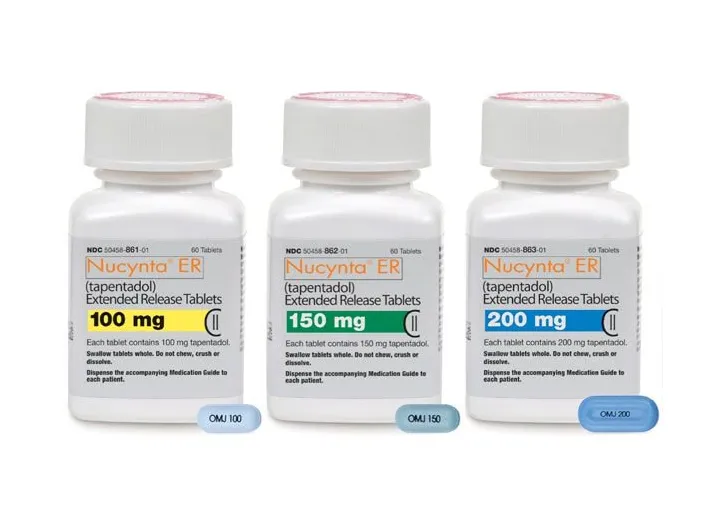
Brand Name: Nucynta, Nucynta ER, generics
Drug Group: Opioid analgesic
Commonly Used For
This medication is used to:
- Treat moderate to severe acute pain.
- Manage chronic pain, including neuropathic pain.
- Provide pain relief in postoperative settings.
Key Characteristics
Form: Immediate-release tablets (50 mg, 75 mg, 100 mg), extended-release tablets (50 mg, 100 mg, 150 mg, 200 mg, 250 mg) (detailed in Dosage section).
Mechanism: Mu-opioid receptor agonist and norepinephrine reuptake inhibitor.
Approval: FDA-approved (2008 for Nucynta, 2011 for Nucynta ER) and EMA-approved for pain management.
Indications and Uses of Tapentadol
Tapentadol is indicated for a variety of pain conditions, leveraging its dual-action profile to address both nociceptive and neuropathic pain:
Moderate to Severe Acute Pain: Treats postoperative pain, injury-related pain, or acute musculoskeletal pain, providing rapid relief, per pain management guidelines.
Chronic Pain: Manages chronic lower back pain or osteoarthritis pain in adults, improving quality of life, supported by long-term clinical studies.
Neuropathic Pain: Addresses diabetic peripheral neuropathy and postherpetic neuralgia, reducing pain intensity, with evidence from neurology and pain research.
Cancer-Related Pain: Used off-label to manage cancer pain, especially when other opioids are ineffective, enhancing patient comfort, per oncology pain protocols.
Fibromyalgia: Investigated off-label for fibromyalgia pain, improving symptoms in some patients, with data from rheumatology studies.
Chronic Regional Pain Syndrome (CRPS): Explored off-label for CRPS, reducing allodynia and hyperalgesia, supported by pain management research.
Post-Amputation Pain: Employed off-label to treat phantom limb pain or stump pain post-amputation, with promising results from orthopedic studies.
Migraine-Associated Pain: Used off-label in refractory migraine cases, providing adjunctive relief, noted in headache medicine trials.
Pediatric Pain Management: Investigated off-label for severe pain in children (12+ years), with cautious use under pediatric supervision, supported by emerging data.
Dosage of Tapentadol
Dosage for Adults
Immediate-Release (Acute Pain): Initial: 50–100 mg every 4–6 hours as needed, maximum 700 mg on day 1, then 600 mg/day.
Extended-Release (Chronic Pain): Initial: 50–100 mg twice daily, titrated to 100–250 mg twice daily, maximum 500 mg/day.
Neuropathic Pain: 50–100 mg twice daily (ER), adjusted based on response, up to 250 mg twice daily.
Dosage for Children
12–17 years (off-label, ER for chronic pain): 50 mg twice daily, titrated to 100 mg twice daily if needed, under pediatric pain specialist supervision.
Not recommended under 12 years.
Dosage for Pregnant Women
Pregnancy Category C: Avoid unless benefits outweigh risks (e.g., severe pain). Consult an obstetrician, with fetal monitoring.
Dosage Adjustments
Renal Impairment: Reduce dose by 50% if CrCl <30 mL/min; avoid in severe cases (CrCl <15 mL/min).
Hepatic Impairment: Mild (Child-Pugh A): No adjustment; moderate (Child-Pugh B): Maximum 50 mg every 8 hours (IR) or 100 mg/day (ER); severe (Child-Pugh C): Avoid.
Elderly: Start with 50 mg every 6 hours (IR) or 50 mg twice daily (ER); increase cautiously.
Concomitant Medications: Adjust if combined with CNS depressants (e.g., benzodiazepines), reducing dose to minimize sedation.
Additional Considerations
- Take this active ingredient with or without food, using a glass of water.
- Use a medication schedule to maintain consistent dosing intervals.
How to Use Tapentadol
Administration:
- Swallow tablets whole with water, with or without food; avoid crushing or chewing ER tablets to prevent dose dumping.
- Take at scheduled intervals, avoiding alcohol during use.
Timing: Use every 4–6 hours (IR) or twice daily (ER), as directed, maintaining consistency.
Monitoring: Watch for drowsiness, shallow breathing, or signs of overdose (e.g., confusion).
Additional Tips:
- Store at 20–25°C (68–77°F), protecting from moisture and heat.
- Keep out of reach of children due to overdose and addiction risk.
- Report severe dizziness, slow heartbeat, or signs of allergic reaction immediately.
Contraindications for Tapentadol
Hypersensitivity: Patients with a known allergy to Tapentadol or opioids.
Severe Respiratory Depression: Contraindicated due to risk of fatal overdose.
Acute or Severe Bronchial Asthma: Avoid due to respiratory risk.
Paralytic Ileus: Contraindicated due to gastrointestinal obstruction risk.
MAO Inhibitors: Avoid within 14 days due to serotonin syndrome risk.
Warnings & Precautions for Tapentadol
General Warnings
Addiction, Abuse, and Misuse: High risk of opioid use disorder; use only with risk evaluation and mitigation strategies (REMS).
Respiratory Depression: Risk increases with higher doses or CNS depressant use; monitor closely.
Overdose Risk: Fatal with excessive intake; educate patients on safe storage.
Withdrawal Symptoms: Risk with abrupt cessation; taper gradually.
Serotonin Syndrome: Risk with SSRIs or MAOIs; watch for agitation or fever.
Additional Warnings
Hepatotoxicity: Rare liver injury; monitor liver function in chronic use.
Seizure Risk: Increased in patients with seizure history; avoid in epilepsy.
Hypotension: Risk of orthostatic hypotension; monitor blood pressure.
Urinary Retention: Risk in patients with bladder obstruction; assess urinary function.
Hypersensitivity Reactions: Rare anaphylaxis; discontinue if swelling occurs.
Use in Specific Populations
Pregnancy: Category C; avoid unless critical; use neonatal monitoring if exposed.
Breastfeeding: Excreted in breast milk; monitor infant for sedation.
Elderly: Higher risk of sedation and falls; start with lower doses.
Children: Limited to 12+ years off-label; supervise closely.
Renal/Hepatic Impairment: Adjust dose; avoid in severe cases.
Additional Precautions
- Inform your doctor about respiratory issues, mental health conditions, or medication history before starting this medication.
- Avoid driving or operating machinery until effects are known.
Overdose and Management of Tapentadol
Overdose Symptoms
- Extreme drowsiness, shallow breathing, or pinpoint pupils.
- Severe cases: Respiratory arrest, coma, or cardiac arrest.
- Nausea, vomiting, or confusion as early signs.
- Seizures with extremely high doses.
Immediate Actions
Contact the Medical Team: Seek immediate medical help.
Supportive Care: Administer naloxone, provide oxygen, and monitor vital signs.
Specific Treatment: Intubate if respiratory depression occurs; no specific antidote beyond naloxone.
Monitor: Check respiratory rate, oxygen saturation, and consciousness for 24–48 hours.
Additional Notes
- Overdose risk is high with misuse; store securely and dispose of unused tablets properly.
- Report persistent symptoms (e.g., blue lips, unresponsiveness) promptly.
Side Effects of Tapentadol
Common Side Effects
- Drowsiness (15–25%, manageable with rest)
- Nausea (20–30%, reduced with food)
- Dizziness (10–20%, decreases with tolerance)
- Constipation (10–15%, relieved with fiber)
- Headache (5–12%, relieved with hydration)
These effects may subside with dose adjustment.
Serious Side Effects
Seek immediate medical attention for:
- Respiratory: Slow or shallow breathing, apnea.
- Neurological: Seizures, confusion, or serotonin syndrome.
- Gastrointestinal: Severe constipation, ileus, or bowel obstruction.
- Cardiovascular: Hypotension or bradycardia.
- Allergic: Rash, angioedema, or anaphylaxis.
Additional Notes
- Regular monitoring for respiratory function, mental status, and bowel habits is advised.
- Report any unusual symptoms (e.g., severe weakness, irregular heartbeat) immediately to a healthcare provider.
Drug Interactions with Tapentadol
This active ingredient may interact with:
- CNS Depressants: Enhances sedation (e.g., alcohol, benzodiazepines); reduce dose.
- MAO Inhibitors: Increases serotonin syndrome risk; avoid within 14 days.
- SSRIs/SNRIs: Potentiates serotonin syndrome; monitor closely.
- Antihypertensives: Amplifies hypotension; adjust dose.
- CYP2D6 Inhibitors: Alters metabolism (e.g., paroxetine); monitor efficacy.
Action: Provide your healthcare provider with a complete list of medications.
Patient Education or Lifestyle
Medication Adherence: Take this opioid analgesic as prescribed to manage pain, following the exact schedule.
Monitoring: Report drowsiness, breathing difficulties, or constipation immediately.
Lifestyle: Avoid alcohol and limit physical activity until stable on the drug.
Diet: Take with food to reduce nausea; increase fiber and water to prevent constipation.
Emergency Awareness: Know signs of overdose or respiratory depression; seek care if present.
Follow-Up: Schedule regular check-ups every 1–3 months to monitor pain, respiratory function, and addiction risk.
Pharmacokinetics of Tapentadol
Absorption: Well-absorbed orally (peak at 1.25–1.5 hours for IR, 3–6 hours for ER); enhanced with food.
Distribution: Volume of distribution ~540 L; 20% protein-bound.
Metabolism: Hepatic via CYP2D6 and glucuronidation to active (tapentadol-O-glucuronide) and inactive metabolites.
Excretion: Primarily renal (99%) as metabolites; half-life 4 hours (IR), 5–6 hours (ER).
Half-Life: 4–6 hours, with sustained release in ER formulation.
Pharmacodynamics of Tapentadol
This drug exerts its effects by:
Activating mu-opioid receptors in the central nervous system, reducing pain perception.
Inhibiting norepinephrine reuptake, enhancing descending pain inhibition pathways.
Providing analgesia for both nociceptive and neuropathic pain with a lower mu-opioid receptor affinity than morphine.
Exhibiting dose-dependent risks of sedation, respiratory depression, and addiction.
Storage of Tapentadol
Temperature: Store at 20–25°C (68–77°F); protect from moisture.
Protection: Keep in original container, away from light and children.
Safety: Store in a locked container due to overdose and abuse risk.
Disposal: Dispose of unused tablets via take-back programs or follow local regulations, consulting a pharmacist.
Frequently Asked Questions (FAQs)
Q: What does Tapentadol treat?
A: This medication treats moderate to severe pain, including neuropathic pain.
Q: Can this active ingredient cause drowsiness?
A: Yes, drowsiness may occur; avoid driving until stable.
Q: Is Tapentadol safe for children?
A: Yes, for 12+ years off-label with a doctor’s guidance.
Q: How is this drug taken?
A: Orally as tablets, as directed, with or without food.
Q: How long is Tapentadol treatment?
A: Varies by pain condition, often short-term or chronic with monitoring.
Q: Can I use Tapentadol if pregnant?
A: No, avoid unless critical; consult a doctor.
Regulatory Information
This medication is approved by:
U.S. Food and Drug Administration (FDA): Approved in 2008 (Nucynta) and 2011 (Nucynta ER) for pain management, classified as a Schedule II controlled substance.
European Medicines Agency (EMA): Approved for acute and chronic pain.
Other Agencies: Approved globally for pain; consult local guidelines.
References
- U.S. Food and Drug Administration (FDA). (2023). Nucynta (Tapentadol) Prescribing Information.
- Official FDA documentation detailing the drug’s approved uses, dosage, and safety.
- European Medicines Agency (EMA). (2023). Tapentadol Summary of Product Characteristics.
- EMA’s comprehensive information on the medication’s indications and precautions in Europe.
- National Institutes of Health (NIH). (2023). Tapentadol: MedlinePlus Drug Information.
- NIH resource providing detailed information on the drug’s uses, side effects, and precautions.
- World Health Organization (WHO). (2023). WHO Guidelines on Pain Management: Opioids.
- WHO’s recommendations for opioid use, including Tapentadol.
- Pain. (2022). Tapentadol in Neuropathic Pain.
- Peer-reviewed article on Tapentadol efficacy (note: access may require a subscription).
