
Comprehensive Guide to Sulfasalazine: Uses, Dosage, Side Effects, and More
1. What is Sulfasalazine?
2. Overview of Sulfasalazine
Generic Name
Sulfasalazine
Brand Name
Azulfidine, Azulfidine EN-tabs, generics
Drug Group
Anti-inflammatory (disease-modifying antirheumatic drug, DMARD)
Commonly Used For
This medication is used to:
- Treat rheumatoid arthritis (RA).
- Manage ulcerative colitis (UC).
- Control Crohn’s disease symptoms.
Key Characteristics
- Form: Oral tablets (500 mg, delayed-release 500 mg) and enteric-coated tablets (detailed in Dosage section).
- Mechanism: Releases 5-ASA in the colon to reduce inflammation and sulfapyridine to suppress immune activity.
- Approval: FDA-approved (1950 for Azulfidine) and EMA-approved for IBD and RA.
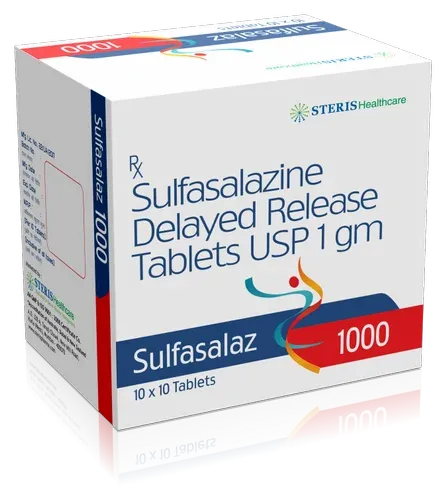
3. Indications and Uses of Sulfasalazine
Sulfasalazine is indicated for inflammatory and autoimmune conditions, leveraging its dual-action anti-inflammatory and immunomodulatory properties:
- Rheumatoid Arthritis (RA): Treats RA in adults and children (6+ years), reducing joint pain, swelling, and disease progression, per rheumatology guidelines, supported by long-term clinical studies.
- Ulcerative Colitis (UC): Manages mild to moderate UC, inducing and maintaining remission by targeting colonic inflammation, a cornerstone of gastroenterology therapy.
- Crohn’s Disease: Used off-label for mild Crohn’s disease, particularly colonic involvement, reducing flare-ups, with evidence from IBD research.
- Ankylosing Spondylitis: Employed off-label to alleviate spinal inflammation and stiffness in ankylosing spondylitis, improving mobility, supported by rheumatologic studies.
- Psoriatic Arthritis: Investigated off-label for psoriatic arthritis, reducing joint and skin symptoms, with dermatology and rheumatology data.
- Juvenile Idiopathic Arthritis (JIA): Treats JIA in children (6+ years), controlling joint damage, under pediatric rheumatology supervision.
- Chronic Proctitis: Used off-label to manage chronic proctitis, reducing rectal bleeding and inflammation, with gastroenterology evidence.
- Irritable Bowel Syndrome (IBS) with Inflammation: Explored off-label for IBS with inflammatory components, improving quality of life, supported by gastrointestinal research.
- Systemic Lupus Erythematosus (SLE): Investigated off-label for mild SLE with joint involvement, modulating immune activity, with emerging rheumatology insights.
Note: This drug requires monitoring for efficacy and side effects; consult a healthcare provider for chronic use or comorbidities.
4. Dosage of Sulfasalazine
Important Note: The dosage of this anti-inflammatory must be prescribed by a healthcare provider. Dosing varies by indication, patient response, and tolerance, with adjustments based on clinical evaluation.
Dosage for Adults
- Rheumatoid Arthritis:
- Initial: 500 mg orally once or twice daily, increased by 500 mg weekly.
- Maintenance: 2,000–3,000 mg/day in 2–4 divided doses, with food.
- Ulcerative Colitis:
- Initial: 1,000–1,500 mg/day in divided doses, increased after 1 week.
- Maintenance: 2,000–4,000 mg/day in divided doses, with meals.
Dosage for Children
- Rheumatoid Arthritis or Juvenile Idiopathic Arthritis (6–16 years):
- 30–50 mg/kg/day in 2 divided doses, maximum 2,000 mg/day, under pediatric rheumatologist supervision.
- Not recommended under 6 years.
- Ulcerative Colitis (6+ years):
- 40–60 mg/kg/day in 3–6 divided doses, maximum 2,000 mg/day, adjusted for weight.
Dosage for Pregnant Women
- Pregnancy Category B: Limited data; use only if benefits outweigh risks (e.g., severe RA or UC). Consult an obstetrician, with fetal monitoring.
Dosage Adjustments
- Renal Impairment: Reduce dose by 50% if CrCl <30 mL/min; avoid if <10 mL/min.
- Hepatic Impairment: Use caution; avoid in severe cases (Child-Pugh C).
- Elderly: Start with 500 mg once daily; increase cautiously to 2,000 mg/day.
- Concomitant Medications: Adjust if combined with folate antagonists (e.g., methotrexate), increasing toxicity risk.
Additional Considerations
- Take this active ingredient with food or after meals to reduce stomach upset.
- Use enteric-coated tablets to minimize gastrointestinal irritation.
5. How to Use Sulfasalazine
- Administration:
- Swallow tablets whole with a meal or snack, using a full glass of water; avoid crushing or chewing enteric-coated forms.
- Take in divided doses to maintain steady levels, as directed.
- Timing: Use 2–4 times daily with meals, maintaining consistency.
- Monitoring: Watch for rash, fever, or signs of liver issues (e.g., yellowing skin).
- Additional Tips:
- Store at 20–25°C (68–77°F), protecting from moisture and heat.
- Keep out of reach of children due to toxicity risk.
- Report severe abdominal pain, persistent diarrhea, or signs of allergic reaction immediately.
6. Contraindications for Sulfasalazine
This drug is contraindicated in:
- Hypersensitivity: Patients with a known allergy to Sulfasalazine, sulfa drugs, or salicylates.
- Intestinal or Urinary Obstruction: Contraindicated due to risk of worsening.
- Severe Hepatic or Renal Impairment: Avoid in severe cases (e.g., Child-Pugh C, CrCl <10 mL/min).
- Porphyria: Contraindicated due to potential exacerbation.
7. Warnings & Precautions for Sulfasalazine
General Warnings
- Bone Marrow Suppression: Risk of leukopenia, thrombocytopenia, or aplastic anemia; monitor blood counts regularly.
- Hepatotoxicity: Risk of liver injury; check liver function tests periodically.
- Severe Allergic Reactions: Risk of Stevens-Johnson syndrome or drug reaction with eosinophilia and systemic symptoms (DRESS); discontinue if rash worsens.
- Gastrointestinal Effects: Risk of nausea or exacerbation of colitis; use with food.
- Infections: Increased susceptibility due to immunosuppression; monitor closely.
Additional Warnings
- Renal Toxicity: Risk of crystalluria or interstitial nephritis; ensure hydration.
- Photosensitivity: Increased skin reaction to sunlight; use sunscreen.
- Folate Deficiency: May reduce folate levels; consider supplementation.
- Neurological Effects: Rare peripheral neuropathy; report numbness or tingling.
- Hypersensitivity Reactions: Rare anaphylaxis; discontinue if swelling occurs.
Use in Specific Populations
- Pregnancy: Category B; use only if essential with fetal monitoring.
- Breastfeeding: Excreted in breast milk; monitor infant for diarrhea or rash.
- Elderly: Higher risk of side effects; start with lower doses.
- Children: Limited to 6+ years; supervise closely.
- Renal/Hepatic Impairment: Adjust dose; avoid in severe cases.
Additional Precautions
- Inform your doctor about kidney disease, liver conditions, or medication history before starting this medication.
- Avoid abrupt cessation; taper if needed for long-term use.
8. Overdose and Management of Sulfasalazine
Overdose Symptoms
Overdose may cause:
- Nausea, vomiting, or severe abdominal pain.
- Severe cases: Bone marrow suppression, liver failure, or seizures.
- Fever, rash, or jaundice as early signs.
- Coma with extremely high doses.
Immediate Actions
- Contact the Medical Team: Seek immediate medical help.
- Supportive Care: Administer activated charcoal if ingested recently, provide IV fluids, and monitor vital signs.
- Specific Treatment: Manage symptoms, correct electrolyte imbalances, and consider hemodialysis in severe cases.
- Monitor: Check blood counts, liver enzymes, and kidney function for 24–72 hours.
Additional Notes
- Overdose risk is moderate; store securely.
- Report persistent symptoms (e.g., severe weakness, yellow skin) promptly.
9. Side Effects of Sulfasalazine
Common Side Effects
- Nausea (20–30%, manageable with food)
- Headache (15–25%, relieved with rest)
- Rash (10–20%, monitor for severity)
- Loss of Appetite (10–15%, improved with small meals)
- Diarrhea (5–15%, transient)
These effects may subside with dose adjustment.
Serious Side Effects
Seek immediate medical attention for:
- Hematologic: Leukopenia, thrombocytopenia, or aplastic anemia.
- Hepatic: Hepatitis, jaundice, or liver failure.
- Allergic: Stevens-Johnson syndrome, DRESS, or anaphylaxis.
- Renal: Crystalluria, nephrotic syndrome, or renal failure.
- Neurological: Peripheral neuropathy or seizures.
Additional Notes
- Regular monitoring for blood counts, liver function, and kidney health is advised.
- Report any unusual symptoms (e.g., fever, severe rash) immediately to a healthcare provider.
10. Drug Interactions with Sulfasalazine
This active ingredient may interact with:
- Folate Antagonists: Increases toxicity (e.g., methotrexate); monitor levels.
- Anticoagulants: Enhances bleeding risk (e.g., warfarin); monitor INR.
- Antibiotics: Alters gut flora, reducing efficacy (e.g., rifampin); adjust dose.
- Digoxin: Reduces absorption; monitor levels.
- Non-Steroidal Anti-Inflammatory Drugs (NSAIDs): Potentiates gastrointestinal irritation; use cautiously.
Action: Provide your healthcare provider with a complete list of medications.
11. Patient Education or Lifestyle
- Medication Adherence: Take this anti-inflammatory as prescribed to manage RA or IBD, following the exact schedule.
- Monitoring: Report rash, fever, or yellowing skin immediately.
- Lifestyle: Avoid sun exposure; use sunscreen and protective clothing.
- Diet: Take with food to reduce stomach upset; increase fiber to manage diarrhea.
- Emergency Awareness: Know signs of liver failure, allergic reactions, or severe infection; seek care if present.
- Follow-Up: Schedule regular check-ups every 3–6 months to monitor blood, liver, and kidney function, adjusting lifestyle as needed.
12. Pharmacokinetics of Sulfasalazine
- Absorption: Poorly absorbed in the small intestine (10–30%); 5-ASA released in the colon (peak 3–6 hours).
- Distribution: Volume of distribution ~7.5 L/kg; 99% protein-bound.
- Metabolism: Hepatic and bacterial cleavage in the colon to sulfapyridine and 5-ASA, further metabolized by acetylation.
- Excretion: Primarily renal (60–90%) as metabolites; half-life 5–10 hours (sulfapyridine 6–14 hours).
- Half-Life: 5–10 hours, with prolonged effects due to active metabolites.
13. Pharmacodynamics of Sulfasalazine
This drug exerts its effects by:
- Releasing 5-ASA in the colon to inhibit prostaglandin and leukotriene synthesis, reducing inflammation.
- Sulfapyridine modulates immune responses, suppressing T-cell activity in RA.
- Demonstrating dose-dependent gastrointestinal and hematologic side effects.
- Exhibiting synergistic effects with other DMARDs in autoimmune diseases.
14. Storage of Sulfasalazine
- Temperature: Store at 20–25°C (68–77°F); protect from moisture.
- Protection: Keep in original container, away from light.
- Safety: Store in a locked container out of reach of children due to toxicity risk.
- Disposal: Dispose of unused tablets per local regulations or consult a pharmacist.
15. Frequently Asked Questions (FAQs) About Sulfasalazine
Q: What does Sulfasalazine treat?
A: This medication treats rheumatoid arthritis and ulcerative colitis.
Q: Can this active ingredient cause rash?
A: Yes, rash may occur; report if severe.
Q: Is Sulfasalazine safe for children?
A: Yes, for 6+ years with a doctor’s guidance.
Q: How is this drug taken?
A: Orally as tablets with food, as directed.
Q: How long is Sulfasalazine treatment?
A: Long-term for RA or UC with monitoring.
Q: Can I use Sulfasalazine if pregnant?
A: Yes, with caution; consult a doctor.
16. Regulatory Information for Sulfasalazine
This medication is approved by:
- U.S. Food and Drug Administration (FDA): Approved in 1950 (Azulfidine) for UC, later expanded to RA.
- European Medicines Agency (EMA): Approved for IBD and RA management.
- Other Agencies: Approved globally for inflammatory conditions; consult local guidelines.
17. References
- U.S. Food and Drug Administration (FDA). (2023). Azulfidine (Sulfasalazine) Prescribing Information.
- Official FDA documentation detailing the drug’s approved uses, dosage, and safety.
- European Medicines Agency (EMA). (2023). Sulfasalazine Summary of Product Characteristics.
- EMA’s comprehensive information on the medication’s indications and precautions in Europe.
- National Institutes of Health (NIH). (2023). Sulfasalazine: MedlinePlus Drug Information.
- NIH resource providing detailed information on the drug’s uses, side effects, and precautions.
- World Health Organization (WHO). (2023). WHO Model List of Essential Medicines: Sulfasalazine.
- WHO’s inclusion of Sulfasalazine for inflammatory diseases.
- Gastroenterology. (2022). Sulfasalazine in Ulcerative Colitis Management.
- Peer-reviewed article on Sulfasalazine efficacy (note: access may require a subscription).
