
Comprehensive Guide to Streptokinase: Uses, Dosage, Side Effects, and More
1. What is Streptokinase?
2. Overview of Streptokinase
Generic Name
Streptokinase
Brand Name
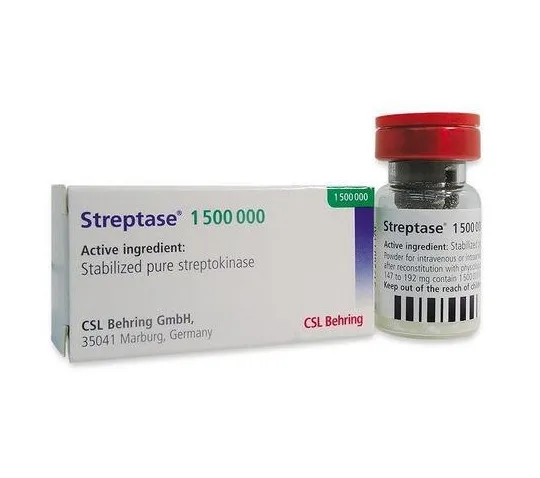
Streptase, Kabikinase, generics
Drug Group
Thrombolytic agent
Commonly Used For
This medication is used to:
- Treat acute myocardial infarction (heart attack).
- Manage pulmonary embolism.
- Address deep vein thrombosis (DVT).
Key Characteristics
- Form: Lyophilized powder for injection (250,000 IU, 750,000 IU, 1,500,000 IU/vial) (detailed in Dosage section).
- Mechanism: Activates plasminogen to degrade fibrin in clots, restoring circulation.
- Approval: FDA-approved (1982 for Streptase) and EMA-approved for thrombolytic therapy.
3. Indications and Uses of Streptokinase
Streptokinase is indicated for life-threatening thrombotic conditions, leveraging its fibrinolytic properties:
- Acute Myocardial Infarction (AMI): Treats ST-elevation myocardial infarction (STEMI) within 12 hours of symptom onset, restoring coronary artery patency, per American Heart Association (AHA) guidelines, reducing mortality in resource-limited settings.
- Pulmonary Embolism (PE): Manages massive pulmonary embolism with hemodynamic instability, dissolving clots to improve oxygenation, supported by pulmonary and critical care studies.
- Deep Vein Thrombosis (DVT): Addresses acute DVT, particularly iliofemoral thrombosis, to prevent post-thrombotic syndrome, used under vascular surgery supervision.
- Arterial Thrombosis: Employed off-label for acute arterial occlusion (e.g., limb ischemia), restoring blood flow, with evidence from vascular surgery research.
- Cerebral Venous Sinus Thrombosis (CVST): Investigated off-label for CVST in severe cases, reducing intracranial pressure, supported by neurology and stroke studies.
- Peripheral Artery Occlusion: Used off-label to manage acute peripheral artery thrombosis, improving limb salvage rates, with data from interventional radiology.
- Thrombosed Hemodialysis Grafts: Administered off-label to restore patency in clotted dialysis access grafts, enhancing dialysis efficiency, noted in nephrology protocols.
- Postpartum Thrombosis: Explored off-label for acute thrombosis post-delivery, preventing maternal complications, with obstetric and hematology evidence.
- Acute Ischemic Stroke: Investigated off-label within a narrow therapeutic window (e.g., 3–4.5 hours), improving outcomes in select patients, per stroke management research.
Note: This drug requires rapid administration and monitoring; consult a healthcare provider for eligibility and contraindications.
4. Dosage of Streptokinase
Important Note: The dosage of this thrombolytic must be prescribed by a healthcare provider. Dosing varies by condition, patient weight, and clinical urgency, with adjustments based on response and bleeding risk.
Dosage for Adults
- Acute Myocardial Infarction (AMI):
- 1,500,000 IU IV over 60 minutes as a single bolus or infusion, initiated within 12 hours of symptom onset.
- Pulmonary Embolism (PE):
- 250,000 IU IV loading dose over 30 minutes, followed by 100,000 IU/hour for 24–72 hours, adjusted for response.
- Deep Vein Thrombosis (DVT):
- 250,000 IU IV loading dose over 30 minutes, then 100,000 IU/hour for 24–72 hours, with anticoagulation follow-up.
Dosage for Children
- Thrombosis (off-label):
- 2,000–4,000 IU/kg IV loading dose over 10–30 minutes, followed by 1,000–2,000 IU/kg/hour for 6–12 hours, under pediatric hematologist supervision.
- Not routinely recommended under 2 years unless critical.
Dosage for Pregnant Women
- Pregnancy Category C: Avoid unless benefits outweigh risks (e.g., life-threatening PE). Consult an obstetrician, with fetal monitoring and minimal effective dose.
Dosage Adjustments
- Renal Impairment: No specific adjustment; monitor in severe cases (CrCl <30 mL/min).
- Hepatic Impairment: Use caution; avoid if severe due to bleeding risk.
- Elderly: Start with lower end of range (e.g., 1,000,000 IU for AMI); increase cautiously.
- Concomitant Anticoagulants: Adjust if combined with heparin or warfarin, increasing hemorrhage risk.
Additional Considerations
- Administer this active ingredient via IV infusion by a healthcare provider, using a controlled pump.
- Premedicate with antihistamines or corticosteroids if allergic risk is high.
5. How to Use Streptokinase
- Administration:
- Reconstitute with sterile water or saline, dilute as directed, and infuse IV via a central or peripheral line over the prescribed duration; avoid intramuscular use.
- Administer in an ICU or emergency setting with continuous monitoring.
- Timing: Initiate within the therapeutic window (e.g., 12 hours for AMI, 14 days for DVT), as directed.
- Monitoring: Watch for bleeding, fever, or signs of allergic reaction (e.g., rash, wheezing).
- Additional Tips:
- Store at 2–8°C (36–46°F); protect from light and freezing.
- Handle with gloves; dispose of waste per biohazard protocols.
- Report severe headache, chest pain, or signs of hemorrhage immediately.
6. Contraindications for Streptokinase
This drug is contraindicated in:
- Hypersensitivity: Patients with a known allergy to Streptokinase, streptococcal proteins, or anistreplase.
- Active Bleeding: Contraindicated due to hemorrhage risk (e.g., recent surgery, gastrointestinal bleed).
- History of Hemorrhagic Stroke: Avoid within 6 months due to intracranial bleed risk.
- Severe Hypertension: Contraindicated if systolic >180 mmHg or diastolic >110 mmHg.
7. Warnings & Precautions for Streptokinase
General Warnings
- Bleeding Risk: Major hemorrhage (e.g., intracranial, gastrointestinal); monitor closely with coagulation tests.
- Allergic Reactions: Risk of anaphylaxis or serum sickness; premedicate if history exists.
- Readministration Risk: Reduced efficacy and increased allergy risk if used within 6–12 months; consider alternatives.
- Fibrinolysis Systemic Effects: Risk of disseminated intravascular coagulation (DIC); monitor fibrinogen levels.
- Arrhythmias: Risk during reperfusion; monitor ECG.
Additional Warnings
- Recent Trauma: Increased bleeding risk post-surgery or injury; delay if possible.
- Peptic Ulcer Disease: Risk of gastric bleeding; assess prior to use.
- Pregnancy Complications: Risk of placental abruption; use only if critical.
- Infectious Complications: Rare streptococcal reactivation; monitor for fever.
- Hypotension: Risk during infusion; maintain fluid balance.
Use in Specific Populations
- Pregnancy: Category C; avoid unless life-saving; use minimal dose.
- Breastfeeding: Avoid due to potential bleeding risk; monitor infant.
- Elderly: Higher bleeding risk; start with lower doses and monitor.
- Children: Limited to 2+ years off-label; supervise closely.
- Renal/Hepatic Impairment: Use caution; avoid in severe cases.
Additional Precautions
- Inform your doctor about recent surgery, bleeding disorders, or medication history before starting this medication.
- Avoid invasive procedures during therapy.
8. Overdose and Management of Streptokinase
Overdose Symptoms
Overdose may cause:
- Excessive bleeding, hypotension, or bruising.
- Severe cases: Intracranial hemorrhage, shock, or DIC.
- Fever, chills, or rash as early signs.
- Cardiac arrest with extremely high doses.
Immediate Actions
- Contact the Medical Team: Seek immediate medical help.
- Supportive Care: Administer cryoprecipitate or fresh frozen plasma to replace fibrinogen, monitor vital signs, and provide IV fluids.
- Specific Treatment: Use tranexamic acid or aminocaproic acid to reverse fibrinolysis if bleeding is uncontrolled.
- Monitor: Check coagulation parameters, hemoglobin, and neurological status for 24–72 hours.
Additional Notes
- Overdose risk is high; store securely.
- Report persistent symptoms (e.g., severe weakness, confusion) promptly.
9. Side Effects of Streptokinase
Common Side Effects
- Bleeding (10–20%, minor sites like gums or injection site)
- Fever (5–15%, manageable with antipyretics)
- Nausea (4–12%, reduced with antiemetics)
- Allergic Reaction (3–10%, mild rash or itching)
- Hypotension (2–8%, improves with fluids)
These effects may subside with dose adjustment or supportive care.
Serious Side Effects
Seek immediate medical attention for:
- Hemorrhagic: Intracranial hemorrhage, gastrointestinal bleed, or hematuria.
- Allergic: Anaphylaxis, angioedema, or serum sickness.
- Cardiovascular: Reperfusion arrhythmias or cardiac rupture.
- Coagulopathic: DIC or severe fibrinogen depletion.
- Neurological: Stroke or transient ischemic attack.
Additional Notes
- Regular monitoring for bleeding, coagulation, and allergic responses is advised.
- Report any unusual symptoms (e.g., severe headache, chest pain) immediately to a healthcare provider.
10. Drug Interactions with Streptokinase
This active ingredient may interact with:
- Anticoagulants: Enhances bleeding risk (e.g., heparin, warfarin); monitor INR.
- Antiplatelet Agents: Increases hemorrhage risk (e.g., aspirin, clopidogrel); adjust dose.
- Thrombolytics: Potentiates effects (e.g., alteplase); avoid combinations.
- Corticosteroids: May reduce allergic response; use cautiously.
- NSAIDs: Elevates bleeding risk; avoid during therapy.
Action: Provide your healthcare provider with a complete list of medications.
11. Patient Education or Lifestyle
- Medication Adherence: Take this thrombolytic as prescribed in emergency settings, following medical guidance.
- Monitoring: Report bleeding, fever, or allergic signs immediately.
- Lifestyle: Avoid alcohol and strenuous activity post-treatment.
- Diet: Maintain hydration; avoid foods affecting coagulation (e.g., high vitamin K).
- Emergency Awareness: Know signs of hemorrhage or stroke; seek care if present.
- Follow-Up: Schedule regular check-ups every 1–3 months to monitor cardiovascular and coagulation health.
12. Pharmacokinetics of Streptokinase
- Absorption: Not orally absorbed; administered IV (peak activity within minutes).
- Distribution: Volume of distribution ~0.1 L/kg; binds plasminogen systemically.
- Metabolism: Hepatic and plasma degradation to inactive fragments.
- Excretion: Primarily renal (cleared as complexes); half-life 18–23 minutes (antigenic activity persists longer).
- Half-Life: 18–23 minutes, with fibrinolytic effects lasting hours.
13. Pharmacodynamics of Streptokinase
This drug exerts its effects by:
- Forming a complex with plasminogen, converting it to plasmin to degrade fibrin clots.
- Restoring blood flow in occluded vessels, reducing ischemic damage.
- Demonstrating dose-dependent bleeding and allergic risks.
- Exhibiting variable efficacy based on clot age and patient immune status.
14. Storage of Streptokinase
- Temperature: Store at 2–8°C (36–46°F); protect from light and freezing.
- Protection: Keep in original container, away from heat.
- Safety: Store in a locked container out of reach of children due to toxicity risk.
- Disposal: Dispose of unused vials per biohazard regulations or consult a pharmacist.
15. Frequently Asked Questions (FAQs) About Streptokinase
Q: What does Streptokinase treat?
A: This medication treats heart attacks and pulmonary embolism.
Q: Can this active ingredient cause bleeding?
A: Yes, bleeding may occur; report immediately.
Q: Is Streptokinase safe for children?
A: Yes, for 2+ years off-label with a doctor’s guidance.
Q: How is this drug taken?
A: Via IV infusion, as directed by a healthcare provider.
Q: How long is Streptokinase treatment?
A: Short-term (hours to days) based on condition.
Q: Can I use Streptokinase if pregnant?
A: No, avoid unless life-saving; consult a doctor.
16. Regulatory Information for Streptokinase
This medication is approved by:
- U.S. Food and Drug Administration (FDA): Approved in 1982 (Streptase) for AMI and PE.
- European Medicines Agency (EMA): Approved for thrombolytic therapy.
- Other Agencies: Approved globally for thrombosis; consult local guidelines.
17. References
- U.S. Food and Drug Administration (FDA). (2023). Streptase (Streptokinase) Prescribing Information.
- Official FDA documentation detailing the drug’s approved uses, dosage, and safety.
- European Medicines Agency (EMA). (2023). Streptokinase Summary of Product Characteristics.
- EMA’s comprehensive information on the medication’s indications and precautions in Europe.
- National Institutes of Health (NIH). (2023). Streptokinase: MedlinePlus Drug Information.
- NIH resource providing detailed information on the drug’s uses, side effects, and precautions.
- World Health Organization (WHO). (2023). WHO Model List of Essential Medicines: Streptokinase.
- WHO’s inclusion of Streptokinase for emergency thrombolysis.
- Circulation. (2022). Streptokinase in Acute Myocardial Infarction.
- Peer-reviewed article on Streptokinase efficacy (note: access may require a subscription).
