
Comprehensive Guide to Sotalol: Uses, Dosage, Side Effects, and More
1. What is Sotalol?
2. Overview of Sotalol
Generic Name
Sotalol
Brand Name
Betapace, Sorine, generics
Drug Group
Beta-blocker with Class III antiarrhythmic properties
Commonly Used For
This medication is used to:
- Treat ventricular arrhythmias.
- Manage atrial fibrillation or flutter.
- Prevent sudden cardiac death.
Key Characteristics
- Form: Oral tablets (80 mg, 120 mg, 160 mg, 240 mg) and IV solution (detailed in Dosage section).
- Mechanism: Blocks beta-adrenergic receptors and prolongs cardiac action potential duration.
- Approval: FDA-approved (1992 for Betapace) and EMA-approved for arrhythmias.
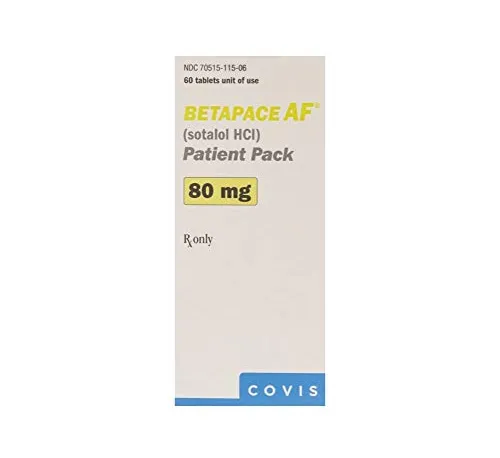
3. Indications and Uses of Sotalol
Sotalol is indicated for various cardiac rhythm disorders, leveraging its dual beta-blocker and antiarrhythmic effects:
- Ventricular Tachycardia (VT): Treats sustained VT, reducing recurrence and sudden cardiac death risk, per American Heart Association (AHA) guidelines, supported by long-term clinical studies.
- Ventricular Fibrillation (VF): Manages VF in patients with structural heart disease, improving survival rates, used as an adjunct to implantable cardioverter-defibrillators (ICDs).
- Atrial Fibrillation (AF) or Atrial Flutter: Controls rhythm in symptomatic AF or flutter, maintaining sinus rhythm, with evidence from cardiology trials like the AFFIRM study.
- Post-Myocardial Infarction (MI) Arrhythmias: Used off-label to prevent arrhythmias after MI, reducing mortality in high-risk patients, supported by cardiovascular research.
- Heart Failure with Arrhythmias: Investigated off-label for heart failure patients with concurrent arrhythmias, improving quality of life, with data from heart failure cohorts.
- Pediatric Arrhythmias: Treats supraventricular tachycardia (SVT) or VT in children (2+ years), adjusting doses, under pediatric cardiology supervision, per pediatric guidelines.
- Wolff-Parkinson-White (WPW) Syndrome: Employed off-label to manage arrhythmias in WPW, stabilizing conduction, with emerging electrophysiology evidence.
- Hypertrophic Cardiomyopathy (HCM): Explored off-label to control arrhythmias in HCM, reducing symptom burden, supported by cardiomyopathy studies.
- Long QT Syndrome (LQTS): Used off-label with caution in LQTS patients without QT prolongation, balancing risks, noted in genetic cardiology research.
Note: This drug requires ECG monitoring and hospitalization for initiation; consult a healthcare provider for individualized therapy.
4. Dosage of Sotalol
Important Note: The dosage of this beta-blocker must be prescribed by a healthcare provider. Dosing varies by indication, renal function, and patient response, with adjustments based on clinical evaluation.
Dosage for Adults
- Ventricular Arrhythmias:
- Initial: 80 mg twice daily, taken with or without food.
- Maintenance: Increase to 160–320 mg/day (divided twice daily) if tolerated, maximum 640 mg/day, with ECG monitoring.
- Atrial Fibrillation/Flutter:
- Initial: 80 mg twice daily, titrated to 120–160 mg twice daily based on response.
- IV Use (Acute Setting):
- 75 mg IV over 5 hours, repeated every 12 hours, transitioning to oral therapy.
Dosage for Children
- 2–17 years (weight-based, renal-adjusted):
- 1–1.5 mg/kg/dose twice daily, maximum 240 mg/m²/day, under pediatric cardiologist supervision.
- Not recommended under 2 years.
Dosage for Pregnant Women
- Pregnancy Category B: Limited data; use only if benefits outweigh risks (e.g., life-threatening arrhythmias). Consult an obstetrician, with fetal monitoring.
Dosage Adjustments
- Renal Impairment:
- CrCl 30–60 mL/min: Reduce to 80 mg once daily; CrCl 10–30 mL/min: 80 mg every 24–48 hours; avoid if <10 mL/min.
- Hepatic Impairment: No adjustment needed; monitor in severe cases.
- Elderly: Start with 80 mg once daily; increase cautiously with monitoring.
- Concomitant Medications: Adjust if combined with other QT-prolonging drugs (e.g., amiodarone), increasing arrhythmia risk.
Additional Considerations
- Take this active ingredient with or without food, using a glass of water.
- Use a pill organizer for consistent twice-daily dosing.
5. How to Use Sotalol
- Administration:
- Swallow tablets whole with water, with or without food; avoid grapefruit juice.
- IV administration requires slow infusion under ECG monitoring in a hospital.
- Timing: Use twice daily (e.g., morning and evening), maintaining consistency.
- Monitoring: Watch for dizziness, fatigue, or signs of bradycardia (e.g., slow pulse).
- Additional Tips:
- Store at 20–25°C (68–77°F), protecting from moisture and heat.
- Keep out of reach of children due to toxicity risk.
- Report severe shortness of breath, chest pain, or signs of arrhythmia immediately.
6. Contraindications for Sotalol
This drug is contraindicated in:
- Hypersensitivity: Patients with a known allergy to Sotalol or beta-blockers.
- Bradycardia: Contraindicated if heart rate <50 bpm due to risk of asystole.
- QT Prolongation: Avoid if QTc >450 ms (men) or >470 ms (women) due to torsades de pointes risk.
- Severe Renal Impairment: Contraindicated if CrCl <10 mL/min.
- Uncontrolled Heart Failure: Avoid in decompensated states.
7. Warnings & Precautions for Sotalol
General Warnings
- Torsades de Pointes: Risk of life-threatening ventricular arrhythmia; monitor QTc regularly.
- Bradycardia: Excessive slowing of heart rate; adjust dose or discontinue if severe.
- Heart Failure: Risk in patients with marginal cardiac function; monitor closely.
- Electrolyte Imbalance: Hypokalemia or hypomagnesemia increases arrhythmia risk; correct before use.
- Bronchospasm: Risk in asthma or COPD patients; use cautiously.
Additional Warnings
- Hypotension: Risk in volume-depleted patients; monitor blood pressure.
- Fatigue and Dizziness: Common with initiation; advise activity caution.
- Peripheral Vascular Disease: May worsen claudication; assess circulation.
- Diabetes Mellitus: Masks hypoglycemia symptoms; monitor glucose.
- Hypersensitivity Reactions: Rare anaphylaxis; discontinue if swelling occurs.
Use in Specific Populations
- Pregnancy: Category B; use only if essential with fetal monitoring.
- Breastfeeding: Excreted in breast milk; monitor infant for effects.
- Elderly: Higher risk of bradycardia; start with lower doses.
- Children: Limited to 2+ years; supervise closely.
- Renal/Hepatic Impairment: Adjust dose; avoid in severe renal cases.
Additional Precautions
- Inform your doctor about heart conditions, electrolyte imbalances, or medication history before starting this medication.
- Avoid abrupt cessation; taper over 1–2 weeks to prevent rebound tachycardia.
8. Overdose and Management of Sotalol
Overdose Symptoms
Overdose may cause:
- Bradycardia, hypotension, or dizziness.
- Severe cases: Torsades de pointes, cardiac arrest, or respiratory depression.
- Fatigue, confusion, or weakness as early signs.
- Seizures with extremely high doses.
Immediate Actions
- Contact the Medical Team: Seek immediate medical help.
- Supportive Care: Administer IV fluids, atropine for bradycardia, and magnesium for torsades; use a pacemaker if needed.
- Specific Treatment: No antidote; manage arrhythmias with defibrillation if present.
- Monitor: Check ECG, electrolytes, and vital signs for 24–48 hours.
Additional Notes
- Overdose risk is moderate; store securely.
- Report persistent symptoms (e.g., severe dizziness, fainting) promptly.
9. Side Effects of Sotalol
Common Side Effects
- Fatigue (15–25%, decreases with tolerance)
- Dizziness (10–20%, relieved with rest)
- Bradycardia (5–15%, monitor pulse)
- Nausea (3–10%, manageable with food)
- Dyspnea (2–8%, worsens with exertion)
These effects may subside with dose adjustment.
Serious Side Effects
Seek immediate medical attention for:
- Cardiac: Torsades de pointes, bradycardia, or heart block.
- Respiratory: Bronchospasm or severe dyspnea.
- Neurological: Syncope, confusion, or seizures.
- Metabolic: Hypokalemia or hypoglycemia.
- Allergic: Rash, angioedema, or anaphylaxis.
Additional Notes
- Regular monitoring for ECG, electrolytes, and heart rate is advised.
- Report any unusual symptoms (e.g., chest pain, irregular heartbeat) immediately to a healthcare provider.
10. Drug Interactions with Sotalol
This active ingredient may interact with:
- QT-Prolonging Drugs: Increases arrhythmia risk (e.g., amiodarone, quinidine); avoid combinations.
- Calcium Channel Blockers: Enhances bradycardia (e.g., verapamil); monitor.
- Diuretics: Potentiates electrolyte imbalance; adjust dose.
- Insulin/Oral Hypoglycemics: Masks hypoglycemia; monitor glucose.
- CYP2D6 Inhibitors: Alters metabolism (e.g., fluoxetine); adjust dose.
Action: Provide your healthcare provider with a complete list of medications.
11. Patient Education or Lifestyle
- Medication Adherence: Take this beta-blocker as prescribed to manage arrhythmias, following the exact schedule.
- Monitoring: Report dizziness, shortness of breath, or fatigue immediately.
- Lifestyle: Avoid alcohol; engage in light exercise as tolerated.
- Diet: Take with or without food; avoid excessive salt if managing heart failure.
- Emergency Awareness: Know signs of arrhythmia or heart failure; seek care if present.
- Follow-Up: Schedule regular check-ups every 1–3 months to monitor ECG, electrolytes, and cardiac function.
12. Pharmacokinetics of Sotalol
- Absorption: Well-absorbed orally (peak at 2–4 hours); unaffected by food.
- Distribution: Volume of distribution ~1.6–2.4 L/kg; 0% protein-bound.
- Metabolism: Minimal hepatic metabolism; excreted unchanged.
- Excretion: Primarily renal (80–90%) as unchanged drug; half-life 12 hours (normal renal function).
- Half-Life: 12–24 hours, prolonged in renal impairment (up to 69 hours if CrCl <10 mL/min).
13. Pharmacodynamics of Sotalol
This drug exerts its effects by:
- Non-selectively blocking beta-1 and beta-2 adrenergic receptors, reducing heart rate and contractility.
- Prolonging cardiac action potential duration via potassium channel blockade (Class III effect).
- Suppressing re-entrant arrhythmias and stabilizing ventricular rhythm.
- Exhibiting dose-dependent risks of bradycardia and QT prolongation.
14. Storage of Sotalol
- Temperature: Store at 20–25°C (68–77°F); protect from moisture.
- Protection: Keep in original container, away from light.
- Safety: Store in a locked container out of reach of children due to toxicity risk.
- Disposal: Dispose of unused tablets per local regulations or consult a pharmacist.
15. Frequently Asked Questions (FAQs) About Sotalol
Q: What does Sotalol treat?
A: This medication treats ventricular arrhythmias and atrial fibrillation.
Q: Can this active ingredient cause dizziness?
A: Yes, dizziness may occur; report if severe.
Q: Is Sotalol safe for children?
A: Yes, for 2+ years with a doctor’s guidance.
Q: How is this drug taken?
A: Orally as tablets twice daily, as directed.
Q: How long is Sotalol treatment?
A: Long-term for arrhythmia management.
Q: Can I use Sotalol if pregnant?
A: Yes, with caution; consult a doctor.
16. Regulatory Information for Sotalol
This medication is approved by:
- U.S. Food and Drug Administration (FDA): Approved in 1992 (Betapace) for ventricular arrhythmias, later expanded to AF.
- European Medicines Agency (EMA): Approved for arrhythmias.
- Other Agencies: Approved globally for cardiac rhythm management; consult local guidelines.
17. References
- U.S. Food and Drug Administration (FDA). (2023). Betapace (Sotalol) Prescribing Information.
- Official FDA documentation detailing the drug’s approved uses, dosage, and safety.
- European Medicines Agency (EMA). (2023). Sotalol Summary of Product Characteristics.
- EMA’s comprehensive information on the medication’s indications and precautions in Europe.
- National Institutes of Health (NIH). (2023). Sotalol: MedlinePlus Drug Information.
- NIH resource providing detailed information on the drug’s uses, side effects, and precautions.
- World Health Organization (WHO). (2023). WHO Model List of Essential Medicines: Sotalol.
- WHO’s inclusion of Sotalol for cardiovascular therapy.
- Journal of the American College of Cardiology. (2022). Sotalol in Atrial Fibrillation Management.
- Peer-reviewed article on Sotalol efficacy (note: access may require a subscription).
