
Comprehensive Guide to Solifenacin: Uses, Dosage, Side Effects, and More
1. What is Solifenacin?
2. Overview of Solifenacin
Generic Name
Solifenacin
Brand Name
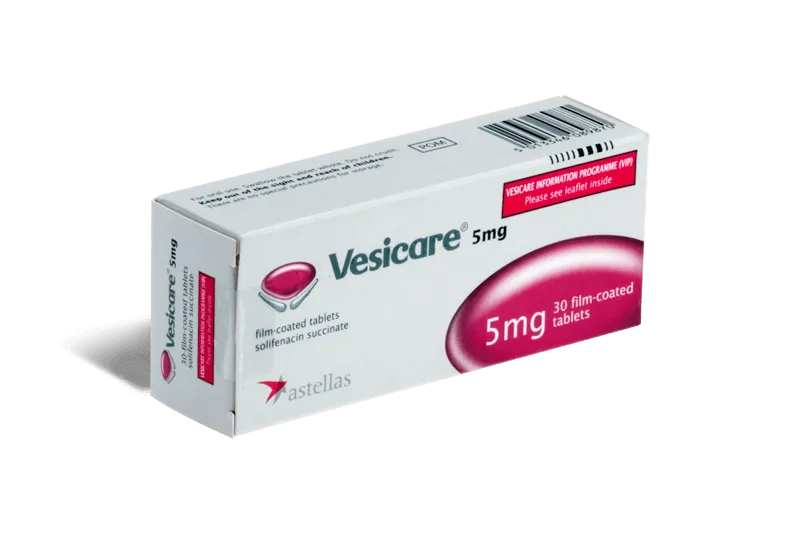
Vesicare, generics
Drug Group
Antimuscarinic (anticholinergic)
Commonly Used For
This medication is used to:
- Treat overactive bladder (OAB).
- Reduce urinary incontinence.
- Manage urinary urgency and frequency.
Key Characteristics
- Form: Oral tablets (5 mg, 10 mg) (detailed in Dosage section).
- Mechanism: Competitive antagonist at M3 muscarinic receptors, relaxing bladder detrusor muscle.
- Approval: FDA-approved (2004 for Vesicare) and EMA-approved for OAB.
3. Indications and Uses of Solifenacin
Solifenacin is indicated for urinary and bladder-related conditions, leveraging its antimuscarinic properties to control overactivity:
- Overactive Bladder (OAB): Treats OAB with symptoms of urge incontinence, urgency, and increased urinary frequency, improving bladder capacity over 12-week trials, per urology guidelines.
- Urge Urinary Incontinence: Reduces involuntary urine loss due to detrusor overactivity, enhancing patient confidence and daily functioning, supported by randomized controlled studies.
- Neurogenic Detrusor Overactivity: Manages bladder overactivity in conditions like multiple sclerosis or spinal cord injury, decreasing incontinence episodes, under urologic specialist care.
- Mixed Urinary Incontinence: Used off-label to address mixed incontinence (urge and stress components), improving symptom scores and quality of life, with evidence from urology research.
- Nocturia: Employed off-label to reduce nighttime urination in OAB patients, improving sleep quality and reducing fatigue, supported by sleep medicine studies.
- Bladder Pain Syndrome/Interstitial Cystitis: Investigated off-label to alleviate pelvic pain and urgency in interstitial cystitis, with preliminary data from pain management trials showing symptom relief.
- Pediatric Overactive Bladder: Used off-label in children (5+ years) with OAB, adjusting doses for safety and efficacy, under pediatric urology supervision, with emerging pediatric data.
- Post-Prostate Surgery Recovery: Manages temporary bladder overactivity post-prostatectomy, reducing urgency and improving recovery, with data from surgical urology studies.
- Chronic Pelvic Pain Syndrome: Explored off-label to reduce bladder-related pain in chronic pelvic pain, offering adjunctive relief, with cautious use under specialist guidance.
- Overactive Bladder in Elderly with Dementia: Investigated off-label to manage OAB in elderly patients with dementia, balancing efficacy and cognitive side effects, supported by geriatric urology research.
Note: This drug is for symptomatic relief; consult a healthcare provider for persistent or worsening symptoms or long-term management strategies.
4. Dosage of Solifenacin
Important Note: The dosage of this antimuscarinic must be prescribed by a healthcare provider. Dosing varies by patient response, tolerance, and condition severity, with adjustments based on clinical evaluation.
Dosage for Adults
- Overactive Bladder:
- Initial: 5 mg once daily, with or without food.
- Maintenance: Increase to 10 mg once daily if tolerated after 4–8 weeks, maximum 10 mg/day.
- With Mild Hepatic/Renal Impairment:
- Maximum 5 mg once daily, with close monitoring.
Dosage for Children
- Overactive Bladder (5–17 years, off-label):
- 2.5–5 mg once daily, titrated to 10 mg if needed based on weight and tolerance, under pediatric urologist supervision.
- Not recommended under 5 years.
Dosage for Pregnant Women
- Pregnancy Category C: Limited data; use only if benefits outweigh risks (e.g., severe OAB). Consult an obstetrician, with fetal monitoring and dose adjustment if necessary.
Dosage Adjustments
- Renal Impairment: Maximum 5 mg/day if CrCl 10–30 mL/min; avoid if CrCl <10 mL/min.
- Hepatic Impairment:
- Mild (Child-Pugh A): No adjustment; moderate (Child-Pugh B): Maximum 5 mg/day; severe (Child-Pugh C): Avoid.
- Elderly: Start with 5 mg once daily; increase to 10 mg if tolerated, with regular cognitive assessment.
- Concomitant Medications: Reduce dose if combined with CYP3A4 inhibitors (e.g., ketoconazole) or other anticholinergics, increasing side effect risk.
Additional Considerations
- Take this active ingredient with or without food, using a glass of water, to optimize absorption.
- Use a pill organizer for consistent daily dosing and adherence tracking.
5. How to Use Solifenacin
- Administration:
- Swallow tablets whole with water, with or without food; avoid grapefruit juice which may alter metabolism.
- Take at the same time daily for consistency, preferably in the morning or evening.
- Timing: Use once daily, maintaining a regular schedule to maximize efficacy.
- Monitoring: Watch for dry mouth, constipation, or signs of urinary retention (e.g., difficulty urinating or incomplete bladder emptying).
- Additional Tips:
- Store at 20–25°C (68–77°F), protecting from moisture and excessive heat.
- Keep out of reach of children due to overdose risk and potential toxicity.
- Report severe dizziness, blurred vision, or signs of allergic reaction (e.g., swelling, rash) immediately to a healthcare provider.
6. Contraindications for Solifenacin
This drug is contraindicated in:
- Hypersensitivity: Patients with a known allergy to Solifenacin or other anticholinergics.
- Urinary Retention: Contraindicated due to risk of worsening obstruction.
- Gastric Retention: Avoid in severe cases (e.g., pyloric stenosis or paralytic ileus).
- Uncontrolled Narrow-Angle Glaucoma: Contraindicated due to potential increase in intraocular pressure.
- Severe Hepatic Impairment: Contraindicated in Child-Pugh Class C patients.
7. Warnings & Precautions for Solifenacin
General Warnings
- Urinary Retention: Risk in patients with bladder outflow obstruction or weakened detrusor muscle; monitor closely with regular bladder scans.
- Constipation: May lead to severe gastrointestinal issues like fecal impaction; increase dietary fiber and fluid intake.
- Glaucoma: Risk of acute angle-closure; screen for glaucoma history before initiating therapy.
- Central Nervous System Effects: May cause drowsiness, confusion, or hallucinations, particularly in the elderly; avoid driving if affected.
- Heat Prostration: Risk in hot climates due to reduced sweating; ensure adequate hydration and cooling measures.
Additional Warnings
- Myasthenia Gravis: May exacerbate muscle weakness; use with caution and monitor neuromuscular function.
- Cardiac Arrhythmias: Risk in patients with QT prolongation or pre-existing heart conditions; perform ECG monitoring.
- Cognitive Impairment: Increased risk in elderly or dementia patients; assess mental status regularly.
- Dry Mouth: Persistent dryness may lead to dental caries or oral infections; recommend saliva substitutes or oral hygiene products.
- Hypersensitivity Reactions: Rare anaphylaxis or severe skin reactions; discontinue if swelling or rash escalates.
Use in Specific Populations
- Pregnancy: Category C; use only if essential with fetal monitoring; consider alternative therapies if possible.
- Breastfeeding: Excreted in breast milk; monitor infant for adverse effects like drowsiness or feeding difficulties.
- Elderly: Higher risk of side effects (e.g., confusion); start with lower doses and adjust based on tolerance.
- Children: Limited to 5+ years off-label; supervise closely with pediatric oversight.
- Renal/Hepatic Impairment: Adjust dose; avoid in severe cases to prevent accumulation and toxicity.
Additional Precautions
- Inform your doctor about glaucoma, urinary issues, cognitive disorders, or medication history before starting this medication.
- Avoid abrupt cessation; taper if needed for long-term use to prevent rebound symptoms.
8. Overdose and Management of Solifenacin
Overdose Symptoms
Overdose may cause:
- Dry mouth, blurred vision, or tachycardia as initial signs.
- Severe cases: Urinary retention, delirium, seizures, or respiratory depression.
- Drowsiness, flushing, or severe constipation as early indicators.
- Cardiovascular collapse with extremely high doses.
Immediate Actions
- Contact the Medical Team: Seek immediate medical help.
- Supportive Care: Administer activated charcoal if ingested recently (within 1–2 hours), monitor vital signs, and provide IV fluids to maintain hydration.
- Specific Treatment: Use physostigmine for severe anticholinergic effects under medical supervision; catheterize if urinary retention occurs.
- Monitor: Check heart rate, mental status, pupil response, and urine output for 24–48 hours, with extended observation if symptoms persist.
Additional Notes
- Overdose risk is moderate; store securely in a child-proof location.
- Report persistent symptoms (e.g., confusion, severe abdominal distension) promptly to ensure timely intervention.
9. Side Effects of Solifenacin
Common Side Effects
- Dry Mouth (20–30%, manageable with water or saliva substitutes)
- Constipation (15–20%, relieved with increased fiber and fluids)
- Headache (5–10%, alleviated with rest or over-the-counter analgesics)
- Nausea (3–8%, reduced with food intake)
- Dizziness (2–6%, decreases with tolerance and hydration)
- Blurred Vision (2–5%, temporary and often resolves with adjustment)
These effects may subside with dose adjustment or supportive care.
Serious Side Effects
Seek immediate medical attention for:
- Urinary: Retention, dysuria, or overflow incontinence requiring catheterization.
- Gastrointestinal: Severe constipation, ileus, or bowel obstruction necessitating laxatives or surgical evaluation.
- Ocular: Acute angle-closure glaucoma with eye pain or vision loss.
- Neurological: Confusion, hallucinations, or seizures, particularly in the elderly.
- Allergic: Rash, angioedema, or anaphylaxis requiring discontinuation.
Additional Notes
- Regular monitoring for urinary function, gastrointestinal health, and cognitive status is advised, especially in vulnerable populations.
- Report any unusual symptoms (e.g., severe abdominal pain, vision changes, or persistent dry mouth) immediately to a healthcare provider for evaluation and management.
10. Drug Interactions with Solifenacin
This active ingredient may interact with:
- CYP3A4 Inhibitors: Increases levels (e.g., ketoconazole, itraconazole); reduce dose to 5 mg/day.
- CYP3A4 Inducers: Decreases levels (e.g., rifampin, carbamazepine); monitor efficacy and consider dose adjustment.
- Other Anticholinergics: Enhances side effects (e.g., oxybutynin); avoid combinations unless supervised.
- Antihistamines: Potentiates sedation and dry mouth; use cautiously.
- Metoclopramide: Reduces gastrointestinal motility effects; adjust timing or dose if co-administered.
Action: Provide your healthcare provider with a complete list of medications, including over-the-counter drugs and supplements, to avoid adverse interactions.
11. Patient Education or Lifestyle
- Medication Adherence: Take this antimuscarinic as prescribed to manage OAB, following the exact daily schedule to optimize outcomes.
- Monitoring: Report urinary retention, severe constipation, blurred vision, or cognitive changes immediately to prevent complications.
- Lifestyle: Avoid overheating by staying in cool environments and maintaining hydration, especially in summer months.
- Diet: Take with or without food; increase fiber intake (e.g., fruits, vegetables) and water to prevent constipation; avoid spicy or acidic foods if experiencing dry mouth.
- Emergency Awareness: Recognize signs of glaucoma (e.g., eye pain, halos around lights) or urinary obstruction (e.g., inability to urinate); seek care if present.
- Follow-Up: Schedule regular check-ups every 3–6 months to monitor bladder function, cognitive health, and adjust treatment as needed, with additional visits if side effects arise.
- Supportive Measures: Use sugar-free gum or lozenges for dry mouth, consult a dentist for oral health, and consider physical therapy for pelvic floor strengthening to complement therapy.
12. Pharmacokinetics of Solifenacin
- Absorption: Well-absorbed orally (peak at 3–8 hours); bioavailability increases with food, reaching approximately 90%.
- Distribution: Volume of distribution ~600 L; 98% protein-bound, primarily to albumin.
- Metabolism: Hepatic via CYP3A4 to active (4R-hydroxysolifenacin) and inactive metabolites, with minimal first-pass effect.
- Excretion: Primarily renal (69%) as metabolites, with 11% as unchanged drug; fecal excretion accounts for 23%; half-life 45–70 hours.
- Half-Life: 45–70 hours, supporting once-daily dosing with sustained therapeutic levels.
13. Pharmacodynamics of Solifenacin
This drug exerts its effects by:
- Selectively blocking M3 muscarinic receptors in the bladder, reducing detrusor muscle contractions and increasing bladder capacity.
- Improving urinary continence and reducing urgency episodes in OAB patients.
- Demonstrating high selectivity to minimize systemic anticholinergic effects (e.g., on heart or salivary glands) compared to non-selective agents.
- Exhibiting dose-dependent risks of dry mouth, constipation, and cognitive impairment, particularly at higher doses.
14. Storage of Solifenacin
- Temperature: Store at 20–25°C (68–77°F); excursions permitted to 15–30°C (59–86°F) are acceptable, but avoid prolonged exposure.
- Protection: Keep in original container, away from direct sunlight and humidity to maintain potency.
- Safety: Store in a locked container out of reach of children and pets due to overdose potential.
- Disposal: Dispose of unused tablets per local pharmaceutical waste regulations or consult a pharmacist for safe disposal methods, avoiding household trash.
15. Frequently Asked Questions (FAQs) About Solifenacin
Q: What does Solifenacin treat?
A: This medication treats overactive bladder (OAB).
Q: Can this active ingredient cause dry mouth?
A: Yes, dry mouth is common; use water or saliva substitutes to manage.
Q: Is Solifenacin safe for children?
A: Yes, for 5+ years off-label with a doctor’s guidance.
Q: How is this drug taken?
A: Orally as tablets once daily, with or without food, as directed.
Q: How long is Solifenacin treatment?
A: Long-term for OAB management, with periodic reassessment.
Q: Can I use Solifenacin if pregnant?
A: Yes, with caution; consult a doctor and monitor fetal health.
Q: What should I do if I miss a dose?
A: Take it as soon as remembered unless near the next dose; do not double up.
16. Regulatory Information for Solifenacin
This medication is approved by:
- U.S. Food and Drug Administration (FDA): Approved in 2004 (Vesicare) for OAB treatment.
- European Medicines Agency (EMA): Approved for overactive bladder management.
- Other Agencies: Approved globally for OAB; consult local guidelines for specific indications and restrictions.
17. References
- U.S. Food and Drug Administration (FDA). (2023). Vesicare (Solifenacin) Prescribing Information.
- Official FDA documentation detailing the drug’s approved uses, dosage, and safety profile.
- European Medicines Agency (EMA). (2023). Solifenacin Summary of Product Characteristics.
- EMA’s comprehensive information on the medication’s indications and precautions in Europe.
- National Institutes of Health (NIH). (2023). Solifenacin: MedlinePlus Drug Information.
- NIH resource providing detailed information on the drug’s uses, side effects, and precautions.
- World Health Organization (WHO). (2023). WHO Model List of Essential Medicines: Solifenacin.
- WHO’s consideration of Solifenacin for urinary disorders.
- European Urology. (2022). Solifenacin in Overactive Bladder Management.
- Peer-reviewed article on Solifenacin efficacy and long-term outcomes (note: access may require a subscription).
- Journal of Urology. (2023). Pediatric Use of Solifenacin in OAB.
- Recent study on off-label use in children (note: access may require a subscription).
