
Comprehensive Guide to Sofosbuvir: Uses, Dosage, Side Effects, and More
1. What is Sofosbuvir?
2. Overview of Sofosbuvir
Generic Name
Sofosbuvir
Brand Name
Sovaldi, generics (e.g., in combination with ledipasvir as Harvoni)
Drug Group
NS5B polymerase inhibitor (direct-acting antiviral)
Commonly Used For
This medication is used to:
- Treat chronic hepatitis C virus (HCV) infection.
- Achieve sustained virologic response (SVR) in HCV patients.
- Manage HCV across various genotypes.
Key Characteristics
- Form: Oral tablets (400 mg) or as part of fixed-dose combinations (detailed in Dosage section).
- Mechanism: Inhibits HCV NS5B RNA-dependent RNA polymerase, halting viral replication.
- Approval: FDA-approved (2013 for Sovaldi) and EMA-approved for HCV treatment.
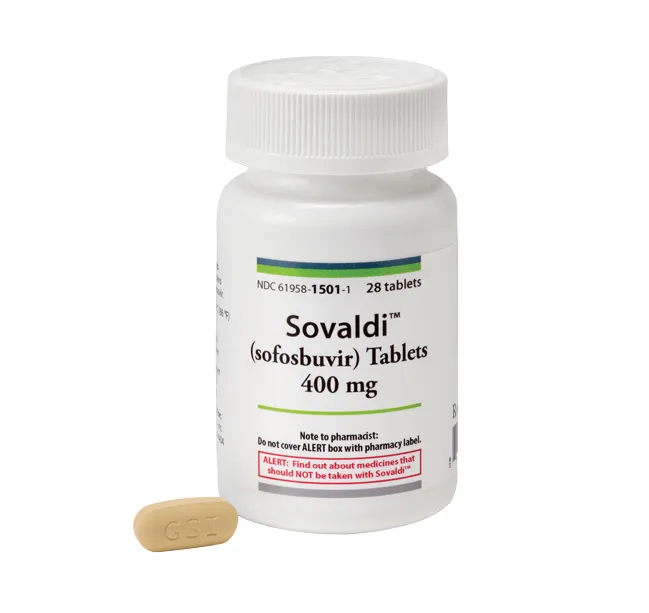
3. Indications and Uses of Sofosbuvir
Sofosbuvir is indicated for hepatitis C management across diverse patient populations, leveraging its broad-spectrum antiviral activity:
- Chronic Hepatitis C (Genotypes 1–6): Treats HCV genotypes 1–6 in adults and children (3+ years), achieving SVR12 in 90–95% of cases when combined with ribavirin or other DAAs, per AASLD/IDSA guidelines.
- HCV with Cirrhosis: Manages compensated and decompensated cirrhosis due to HCV, reducing liver-related complications, supported by hepatology trials.
- HCV/HIV Co-Infection: Treats HCV in HIV co-infected patients, improving liver function and viral suppression, with infectious disease data.
- Post-Liver Transplant HCV: Used to prevent and treat recurrent HCV in liver transplant recipients, enhancing graft survival, per transplant medicine protocols.
- Acute Hepatitis C: Employed off-label for acute HCV infection, shortening duration and preventing chronicity, with emerging infectious disease evidence.
- HCV in Hemodialysis Patients: Investigated off-label for HCV management in patients on dialysis, adjusting doses, supported by nephrology research.
- HCV-Associated Cryoglobulinemia: Explored off-label to reduce vasculitis and improve renal outcomes in HCV-related cryoglobulinemia, with rheumatology data.
- Pediatric HCV Infection: Treats HCV in children (3–17 years) with genotype-specific regimens, improving pediatric liver health, per pediatric hepatology studies.
- HCV in Pregnancy: Used off-label in pregnant women with severe HCV to reduce vertical transmission risk, with cautious monitoring, supported by obstetric research.
- HCV-Related Hepatocellular Carcinoma (HCC): Investigated off-label post-HCC treatment to prevent recurrence, enhancing survival rates, with oncology evidence.
Note: This drug requires genotyping and combination therapy; consult a healthcare provider for treatment duration and monitoring.
4. Dosage of Sofosbuvir
Important Note: The dosage of this NS5B inhibitor must be prescribed by a healthcare provider. Dosing varies by genotype, patient population, and co-therapies, with adjustments based on clinical evaluation.
Dosage for Adults
- Genotype 1 or 4 (with ribavirin ± peginterferon):
- 400 mg once daily for 12–24 weeks, depending on cirrhosis status.
- Genotype 2 (with ribavirin):
- 400 mg once daily for 12 weeks.
- Genotype 3 (with ribavirin):
- 400 mg once daily for 24 weeks.
- With Ledipasvir (Harvoni):
- 400 mg/90 mg once daily for 8–12 weeks, based on genotype and cirrhosis.
Dosage for Children
- 3–17 years (weight-based, with or without ribavirin):
- <17 kg: 150 mg once daily.
- 17–35 kg: 200 mg once daily.
-
35 kg: 400 mg once daily, under pediatric hepatologist supervision.
- Not recommended under 3 years.
Dosage for Pregnant Women
- Pregnancy Category B: Limited data; use only if benefits outweigh risks, with fetal monitoring. Consult an obstetrician, adjusting duration if needed.
Dosage Adjustments
- Renal Impairment: No adjustment needed up to eGFR 30 mL/min/1.73 m²; avoid in severe cases (eGFR <30 mL/min) or dialysis unless in combination therapy.
- Hepatic Impairment: No adjustment needed; monitor in decompensated cirrhosis.
- Elderly: Start with standard dose (400 mg); increase cautiously if tolerated.
- Concomitant Medications: Avoid with P-gp inducers (e.g., rifampin), reducing efficacy.
Additional Considerations
- Take this active ingredient with or without food, using a glass of water.
- Use a pillbox for consistent daily dosing in combination regimens.
5. How to Use Sofosbuvir
- Administration:
- Swallow tablets whole with water, with or without food; avoid crushing or splitting.
- Take with other DAAs or ribavirin as prescribed, maintaining the same schedule.
- Timing: Use once daily, preferably at the same time each day.
- Monitoring: Watch for fatigue, jaundice, or signs of infection (e.g., fever).
- Additional Tips:
- Store at 25°C (77°F), with excursions permitted to 15–30°C (59–86°F); protect from moisture.
- Keep out of reach of children due to overdose risk.
- Report severe abdominal pain, confusion, or signs of allergic reaction immediately.
6. Contraindications for Sofosbuvir
This drug is contraindicated in:
- Hypersensitivity: Patients with a known allergy to Sofosbuvir or its components.
- Severe Renal Impairment: Contraindicated if eGFR <30 mL/min/1.73 m² unless in approved combinations.
- Concurrent Use with Certain Drugs: Avoid with strong P-gp inducers (e.g., St. John’s wort) that reduce efficacy.
7. Warnings & Precautions for Sofosbuvir
General Warnings
- Hepatic Decompensation: Risk in advanced cirrhosis; monitor closely with other DAAs.
- Bradycardia: Risk when combined with amiodarone; avoid unless necessary.
- Renal Toxicity: Monitor eGFR in patients with renal impairment.
- HBV Reactivation: Risk in HBV/HCV co-infected patients; screen and monitor.
- Drug Resistance: Risk with non-adherence; ensure compliance.
Additional Warnings
- Fatigue and Anemia: Common with ribavirin co-administration; manage with dose adjustments.
- Depression: Reported with interferon-based regimens; monitor mental health.
- Photosensitivity: Rare skin reactions; use sun protection.
- Hypersensitivity Reactions: Rare anaphylaxis; discontinue if swelling occurs.
- Cardiovascular Events: Rare risk with amiodarone; monitor ECG.
Use in Specific Populations
- Pregnancy: Category B; use only if essential with fetal monitoring.
- Breastfeeding: Avoid due to potential infant exposure; monitor.
- Elderly: Higher risk of side effects; start with standard dose.
- Children: Limited to 3+ years; supervise closely.
- Renal/Hepatic Impairment: Adjust dose or avoid in severe cases.
Additional Precautions
- Inform your doctor about kidney disease, HBV co-infection, or medication history before starting this medication.
- Avoid abrupt cessation; complete the full course to prevent resistance.
8. Overdose and Management of Sofosbuvir
Overdose Symptoms
Overdose may cause:
- Fatigue, headache, or nausea.
- Severe cases: Liver injury, bradycardia, or renal dysfunction.
- Dizziness, confusion, or weakness as early signs.
- Seizures with extremely high doses.
Immediate Actions
- Contact the Medical Team: Seek immediate medical help.
- Supportive Care: Administer IV fluids, monitor vital signs, and correct electrolytes.
- Specific Treatment: No antidote; manage symptoms and monitor liver/kidney function.
- Monitor: Check liver enzymes, eGFR, and heart rate for 24–48 hours.
Additional Notes
- Overdose risk is low; store securely.
- Report persistent symptoms (e.g., yellowing skin, severe fatigue) promptly.
9. Side Effects of Sofosbuvir
Common Side Effects
- Fatigue (15–30%, manageable with rest)
- Headache (10–25%, relieved with hydration)
- Nausea (5–20%, reduced with food)
- Insomnia (5–15%, improves with time)
- Anemia (5–10% with ribavirin, treatable with supplements)
These effects may subside with dose adjustment or cycle completion.
Serious Side Effects
Seek immediate medical attention for:
- Hepatic: Decompensation, jaundice, or HBV reactivation.
- Cardiac: Bradycardia or heart block (with amiodarone).
- Renal: Acute kidney injury or worsening eGFR.
- Infectious: Opportunistic infections in immunocompromised patients.
- Allergic: Rash, angioedema, or anaphylaxis.
Additional Notes
- Regular monitoring for liver function, renal status, and HBV is advised.
- Report any unusual symptoms (e.g., severe weakness, chest pain) immediately to a healthcare provider.
10. Drug Interactions with Sofosbuvir
This active ingredient may interact with:
- P-gp Inducers: Reduces levels (e.g., rifampin, carbamazepine); avoid.
- Amiodarone: Increases bradycardia risk; use alternative antiarrhythmics.
- HIV Antiretrovirals: Minimal interaction; monitor with NNRTIs or PIs.
- Anticonvulsants: Alters metabolism (e.g., phenytoin); adjust dose.
- Acid-Reducing Agents: May reduce absorption; separate dosing.
Action: Provide your healthcare provider with a complete list of medications.
11. Patient Education or Lifestyle
- Medication Adherence: Take this NS5B inhibitor as prescribed to manage HCV, completing the full course.
- Monitoring: Report fatigue, jaundice, or signs of infection immediately.
- Lifestyle: Avoid alcohol; maintain a liver-friendly diet (e.g., low-fat, high-fiber).
- Diet: Take with or without food; avoid grapefruit juice.
- Emergency Awareness: Know signs of liver failure or cardiac issues; seek care if present.
- Follow-Up: Schedule regular check-ups every 4–12 weeks during therapy to monitor viral load, liver, and kidney health, with post-treatment SVR assessment.
12. Pharmacokinetics of Sofosbuvir
- Absorption: Well-absorbed orally (peak at 0.5–2 hours); unaffected by food.
- Distribution: Volume of distribution ~51 L; 61–65% protein-bound.
- Metabolism: Hepatic via cathepsin A, carboxylesterase 1, and CYP2B6 to active metabolite GS-461203.
- Excretion: Primarily renal (80%, mostly as GS-331007 metabolite); half-life 0.4 hours (parent), 27 hours (metabolite).
- Half-Life: 0.4 hours (parent), 27 hours (active metabolite), with sustained antiviral effect.
13. Pharmacodynamics of Sofosbuvir
This drug exerts its effects by:
- Inhibiting HCV NS5B polymerase, preventing RNA chain elongation and viral replication.
- Offering pan-genotypic activity across HCV genotypes 1–6.
- Reducing viral load and improving liver histology in chronic HCV.
- Exhibiting dose-dependent risks of fatigue and rare cardiac events.
14. Storage of Sofosbuvir
- Temperature: Store at 25°C (77°F), with excursions to 15–30°C (59–86°F); protect from moisture.
- Protection: Keep in original container, away from light and heat.
- Safety: Store in a locked container out of reach of children due to toxicity risk.
- Disposal: Dispose of unused tablets per local regulations or consult a pharmacist.
15. Frequently Asked Questions (FAQs) About Sofosbuvir
Q: What does Sofosbuvir treat?
A: This medication treats chronic hepatitis C.
Q: Can this active ingredient cause fatigue?
A: Yes, fatigue may occur; rest and hydration help.
Q: Is Sofosbuvir safe for children?
A: Yes, for 3+ years with a doctor’s guidance.
Q: How is this drug taken?
A: Orally as tablets once daily, as directed.
Q: How long is Sofosbuvir treatment?
A: 8–24 weeks, depending on genotype and condition.
Q: Can I use Sofosbuvir if pregnant?
A: Yes, with caution; consult a doctor.
16. Regulatory Information for Sofosbuvir
This medication is approved by:
- U.S. Food and Drug Administration (FDA): Approved in 2013 (Sovaldi) for HCV, later expanded to combinations.
- European Medicines Agency (EMA): Approved for HCV treatment across genotypes.
- Other Agencies: Approved globally for HCV; consult local guidelines.
17. References
- U.S. Food and Drug Administration (FDA). (2023). Sovaldi (Sofosbuvir) Prescribing Information.
- Official FDA documentation detailing the drug’s approved uses, dosage, and safety.
- European Medicines Agency (EMA). (2023). Sofosbuvir Summary of Product Characteristics.
- EMA’s comprehensive information on the medication’s indications and precautions in Europe.
- National Institutes of Health (NIH). (2023). Sofosbuvir: MedlinePlus Drug Information.
- NIH resource providing detailed information on the drug’s uses, side effects, and precautions.
- World Health Organization (WHO). (2023). WHO Guidelines on Hepatitis C Treatment: Sofosbuvir.
- WHO’s recommendations for Sofosbuvir in HCV therapy.
- Journal of Hepatology. (2024). Sofosbuvir in HCV Cirrhosis.
- Peer-reviewed article on Sofosbuvir efficacy (note: access may require a subscription).
