
Comprehensive Guide to Secukinumab: Uses, Dosage, Side Effects, and More
1. What is Secukinumab?
2. Overview of Secukinumab
Generic Name
Secukinumab
Brand Name
Cosentyx, generics
Drug Group
IL-17A inhibitor (biologic, immunosuppressive)
Commonly Used For
This medication is used to:
- Treat moderate to severe plaque psoriasis.
- Manage psoriatic arthritis.
- Control ankylosing spondylitis.
Key Characteristics
- Form: Subcutaneous injection (150 mg/mL prefilled syringe or pen, 1 mL) (detailed in Dosage section).
- Mechanism: Neutralizes IL-17A, reducing inflammation in autoimmune diseases.
- Approval: FDA-approved (2015 for Cosentyx) and EMA-approved for psoriasis, psoriatic arthritis, and ankylosing spondylitis.
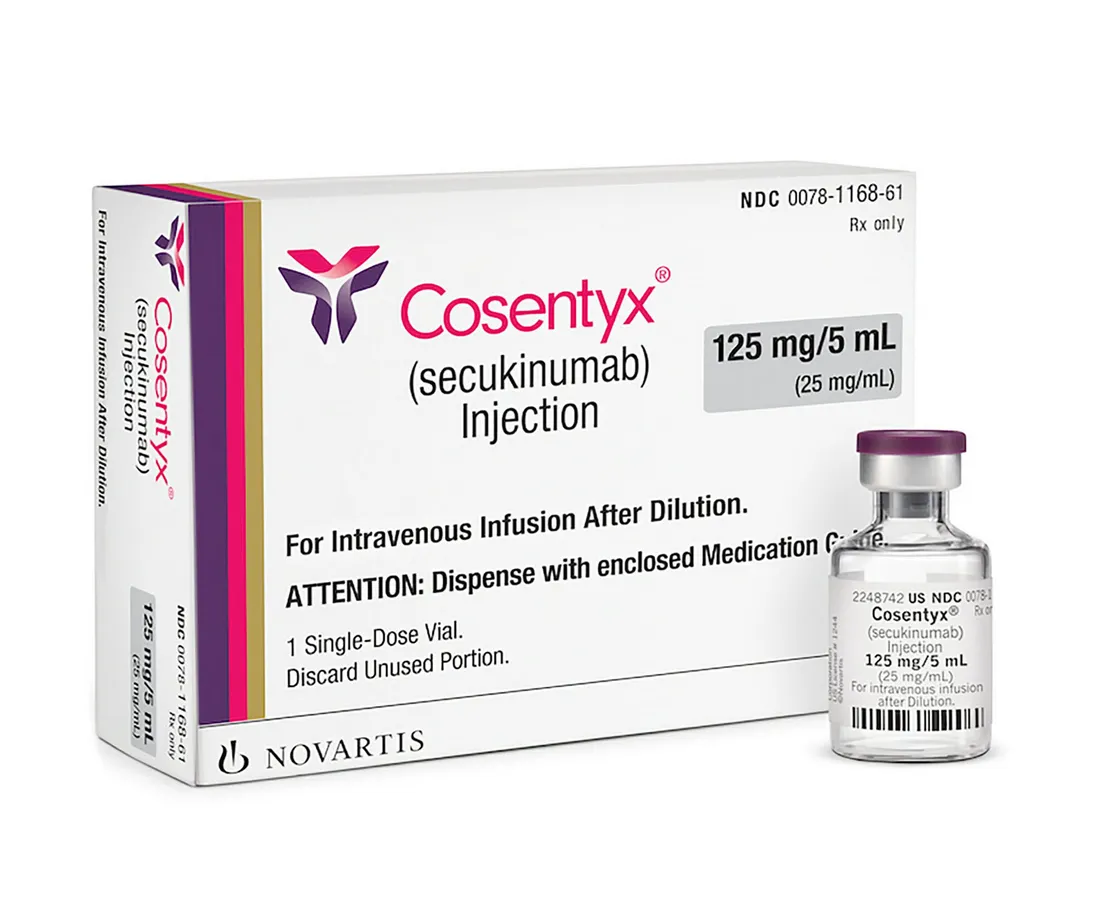
3. Indications and Uses of Secukinumab
Secukinumab is indicated for inflammatory and autoimmune conditions, leveraging its IL-17A inhibition to reduce disease activity:
- Moderate to Severe Plaque Psoriasis: Treats plaque psoriasis in adults and children (6+ years) who are candidates for systemic therapy or phototherapy, improving skin clearance, supported by clinical trials like CLEAR and FIXTURE.
- Psoriatic Arthritis: Manages active psoriatic arthritis in adults, reducing joint pain and swelling, often with or without methotrexate, per rheumatology guidelines.
- Ankylosing Spondylitis: Controls active ankylosing spondylitis in adults, alleviating spinal stiffness and improving mobility, with evidence from MEASURE trials.
- Non-Radiographic Axial Spondyloarthritis: Used off-label to treat non-radiographic axial spondyloarthritis, reducing inflammation in early-stage disease, supported by rheumatology research.
- Juvenile Idiopathic Arthritis (JIA): Investigated off-label for JIA with enthesitis-related arthritis, improving joint function in children, with pediatric rheumatology data.
- Hidradenitis Suppurativa: Explored off-label to manage moderate to severe hidradenitis suppurativa, reducing abscesses and nodules, with dermatology evidence.
- Psoriasis-Associated Comorbidities: Employed off-label to address psoriasis-related conditions like uveitis or inflammatory bowel disease (IBD) flares, with cautious use under specialist care.
- Rheumatoid Arthritis (RA): Investigated off-label as an adjunct in RA resistant to TNF inhibitors, improving outcomes, supported by rheumatology studies.
- Chronic Plaque Psoriasis in Pregnancy: Used off-label with caution in pregnant women with severe psoriasis, balancing maternal and fetal risks, per obstetric dermatology protocols.
- Palmoplantar Psoriasis: Managed off-label for palmoplantar psoriasis, reducing localized plaques, with emerging data from dermatologic trials.
Note: This drug requires screening for infections and tuberculosis; consult a healthcare provider for long-term management.
4. Dosage of Secukinumab
Important Note: The dosage of this IL-17A inhibitor must be prescribed by a healthcare provider. Dosing varies by indication, age, and response, with adjustments based on clinical evaluation.
Dosage for Adults
- Moderate to Severe Plaque Psoriasis:
- Initial: 300 mg (two 150 mg injections) at weeks 0, 1, 2, 3, and 4, followed by 300 mg every 4 weeks.
- Maintenance: 150–300 mg every 4 weeks, based on response.
- Psoriatic Arthritis:
- 150 mg at weeks 0, 1, 2, 3, and 4, then 150–300 mg every 4 weeks, with or without methotrexate.
- Ankylosing Spondylitis:
- 150 mg at weeks 0, 1, 2, 3, and 4, then 150 mg every 4 weeks; may increase to 300 mg if needed.
Dosage for Children
- Plaque Psoriasis (6–17 years, weight-based):
- 15–<50 kg: 75 mg at weeks 0, 1, 2, 3, and 4, then 75 mg every 4 weeks.
- 50 kg or more: 150 mg at weeks 0, 1, 2, 3, and 4, then 150 mg every 4 weeks, under pediatric dermatologist supervision.
- Not recommended under 6 years.
Dosage for Pregnant Women
- Pregnancy Category B: Limited data; use only if benefits outweigh risks (e.g., severe psoriasis). Consult an obstetrician, with fetal monitoring.
Dosage Adjustments
- Renal Impairment: No adjustment needed; monitor in severe cases (CrCl <30 mL/min).
- Hepatic Impairment: No specific adjustment; use caution in severe cases.
- Elderly: Start with 150 mg; increase to 300 mg if tolerated.
- Concomitant Immunosuppressants: Adjust if combined with other biologics, increasing infection risk.
Additional Considerations
- Administer this active ingredient via subcutaneous injection, rotating sites (e.g., thigh, abdomen).
- Train patients on self-injection or use healthcare settings for administration.
5. How to Use Secukinumab
- Administration:
- Inject subcutaneously using a prefilled syringe or pen after allowing it to reach room temperature (15–30 minutes); avoid shaking.
- Rotate injection sites (e.g., abdomen, thigh) to prevent irritation.
- Timing: Use at weeks 0, 1, 2, 3, and 4, then every 4 weeks, maintaining consistency.
- Monitoring: Watch for injection site reactions, fever, or signs of infection (e.g., cough).
- Additional Tips:
- Store at 2–8°C (36–46°F); do not freeze; protect from light.
- Keep out of reach of children due to medication error risk.
- Report severe redness, swelling, or signs of allergic reaction immediately.
6. Contraindications for Secukinumab
This drug is contraindicated in:
- Hypersensitivity: Patients with a known allergy to Secukinumab or its components.
- Active Tuberculosis: Contraindicated until treated due to reactivation risk.
- Active Severe Infections: Avoid during acute bacterial, fungal, or viral infections.
- Severe Immunosuppression: Contraindicated in patients with significant immune compromise.
7. Warnings & Precautions for Secukinumab
General Warnings
- Infections: Increased risk of bacterial, fungal (e.g., candidiasis), and viral infections; screen for tuberculosis and hepatitis before use.
- Hypersensitivity Reactions: Risk of anaphylaxis or angioedema; discontinue if severe.
- Inflammatory Bowel Disease (IBD): May exacerbate Crohn’s disease or ulcerative colitis; monitor closely.
- Immunizations: Avoid live vaccines during therapy; plan vaccinations before starting.
- Malignancy: Slight increased risk of lymphoma; long-term monitoring advised.
Additional Warnings
- Neutropenia: Rare reduction in neutrophil count; monitor blood work.
- Cardiovascular Events: Rare risk in patients with pre-existing heart disease; assess risk factors.
- Neurological Effects: Rare reports of demyelinating disorders; report neurological symptoms.
- Injection Site Reactions: Common redness or pain; manage with site rotation.
- Pregnancy and Lactation: Limited data; use caution and monitor outcomes.
Use in Specific Populations
- Pregnancy: Category B; use only if essential with fetal monitoring.
- Breastfeeding: Excreted in breast milk; monitor infant for effects.
- Elderly: Higher risk of infections; start with standard dosing.
- Children: Limited to 6+ years; supervise closely.
- Renal/Hepatic Impairment: No adjustment needed; monitor in severe cases.
Additional Precautions
- Inform your doctor about infections, IBD history, or vaccination status before starting this medication.
- Avoid abrupt cessation; consult for tapering if needed.
8. Overdose and Management of Secukinumab
Overdose Symptoms
Overdose may cause:
- Injection site reactions, fatigue, or mild infection symptoms.
- Severe cases: Severe hypersensitivity, neutropenia, or systemic infection.
- Headache, dizziness, or fever as early signs.
- Rare systemic inflammatory response with extremely high doses.
Immediate Actions
- Contact the Medical Team: Seek immediate medical help.
- Supportive Care: Monitor vital signs, provide hydration, and manage infections if present.
- Specific Treatment: No antidote; manage symptoms and monitor immune function.
- Monitor: Check white blood cell counts, liver function, and infection signs for 24–48 hours.
Additional Notes
- Overdose risk is low with proper dosing; store securely.
- Report persistent symptoms (e.g., fever, severe rash) promptly.
9. Side Effects of Secukinumab
Common Side Effects
- Upper Respiratory Infections (10–20%, manageable with rest)
- Injection Site Reactions (5–15%, reduced with site rotation)
- Diarrhea (3–10%, transient)
- Nasopharyngitis (2–8%, treated with hydration)
- Headache (2–7%, relieved with rest)
These effects may subside with continued use.
Serious Side Effects
Seek immediate medical attention for:
- Infectious: Severe infections (e.g., tuberculosis reactivation, candidiasis).
- Gastrointestinal: IBD flares (e.g., Crohn’s disease worsening).
- Hematologic: Neutropenia or leukopenia.
- Allergic: Anaphylaxis, angioedema, or severe rash.
- Malignancy: New or worsening lymphoma or skin cancer.
Additional Notes
- Regular monitoring for infections, liver function, and blood counts is advised.
- Report any unusual symptoms (e.g., persistent cough, abdominal pain) immediately to a healthcare provider.
10. Drug Interactions with Secukinumab
This active ingredient may interact with:
- Live Vaccines: Increases infection risk; avoid during therapy.
- Immunosuppressants: Enhances immunosuppression (e.g., methotrexate); monitor.
- CYP450 Substrates: Minimal effect; no major adjustment needed.
- Antibiotics: May alter infection management; adjust timing.
- TNF Inhibitors: Increases infection risk if combined; avoid concurrent use.
Action: Provide your healthcare provider with a complete list of medications.
11. Patient Education or Lifestyle
- Medication Adherence: Take this IL-17A inhibitor as prescribed for autoimmune conditions, following the exact schedule.
- Monitoring: Report infections, injection site issues, or gastrointestinal changes immediately.
- Lifestyle: Avoid crowded places during active infections; maintain good hygiene.
- Diet: Take with or without food; avoid irritants during IBD flares.
- Emergency Awareness: Know signs of severe infection or allergic reaction; seek care if present.
- Follow-Up: Schedule regular check-ups every 3–6 months to monitor disease activity, infections, and blood work.
12. Pharmacokinetics of Secukinumab
- Absorption: Well-absorbed subcutaneously (peak at 5–6 days); bioavailability ~60–77%.
- Distribution: Volume of distribution ~7.1–8.6 L; binds to IL-17A in tissues.
- Metabolism: Degraded via proteolysis into small peptides, no hepatic metabolism.
- Excretion: Eliminated via catabolism; half-life 22–31 days.
- Half-Life: 22–31 days, with sustained anti-inflammatory effects.
13. Pharmacodynamics of Secukinumab
This drug exerts its effects by:
- Neutralizing IL-17A, blocking downstream inflammatory pathways (e.g., TNF-α, IL-6).
- Reducing keratinocyte proliferation in psoriasis and joint inflammation in arthritis.
- Demonstrating dose-dependent efficacy and infection risk.
- Exhibiting prolonged pharmacodynamic activity due to its long half-life.
14. Storage of Secukinumab
- Temperature: Store at 2–8°C (36–46°F); do not freeze; protect from light.
- Protection: Keep in original carton until use, away from heat.
- Safety: Store in a locked refrigerator out of reach of children.
- Disposal: Dispose of used syringes per sharps regulations or consult a pharmacist.
15. Frequently Asked Questions (FAQs) About Secukinumab
Q: What does Secukinumab treat?
A: This medication treats psoriasis, psoriatic arthritis, and ankylosing spondylitis.
Q: Can this active ingredient cause infections?
A: Yes, infections may occur; report persistent symptoms.
Q: Is Secukinumab safe for children?
A: Yes, for 6+ years with a doctor’s guidance.
Q: How is this drug taken?
A: Via subcutaneous injection, as directed.
Q: How long is Secukinumab treatment?
A: Long-term for chronic conditions with monitoring.
Q: Can I use Secukinumab if pregnant?
A: Yes, with caution; consult a doctor.
16. Regulatory Information for Secukinumab
This medication is approved by:
- U.S. Food and Drug Administration (FDA): Approved in 2015 (Cosentyx) for psoriasis, psoriatic arthritis, and ankylosing spondylitis.
- European Medicines Agency (EMA): Approved for multiple autoimmune conditions.
- Other Agencies: Approved globally for inflammatory diseases; consult local guidelines.
17. References
- U.S. Food and Drug Administration (FDA). (2023). Cosentyx (Secukinumab) Prescribing Information.
- Official FDA documentation detailing the drug’s approved uses, dosage, and safety.
- European Medicines Agency (EMA). (2023). Secukinumab Summary of Product Characteristics.
- EMA’s comprehensive information on the medication’s indications and precautions in Europe.
- National Institutes of Health (NIH). (2023). Secukinumab: MedlinePlus Drug Information.
- NIH resource providing detailed information on the drug’s uses, side effects, and precautions.
- World Health Organization (WHO). (2023). WHO Guidelines on Psoriasis Management: Secukinumab.
- WHO’s recommendations for Secukinumab in autoimmune disease care.
- Journal of the American Academy of Dermatology. (2022). Secukinumab in Psoriatic Arthritis.
- Peer-reviewed article on Secukinumab efficacy (note: access may require a subscription).
