
Comprehensive Guide to Risperidone: Uses, Dosage, Side Effects, and More
1. What is Risperidone?
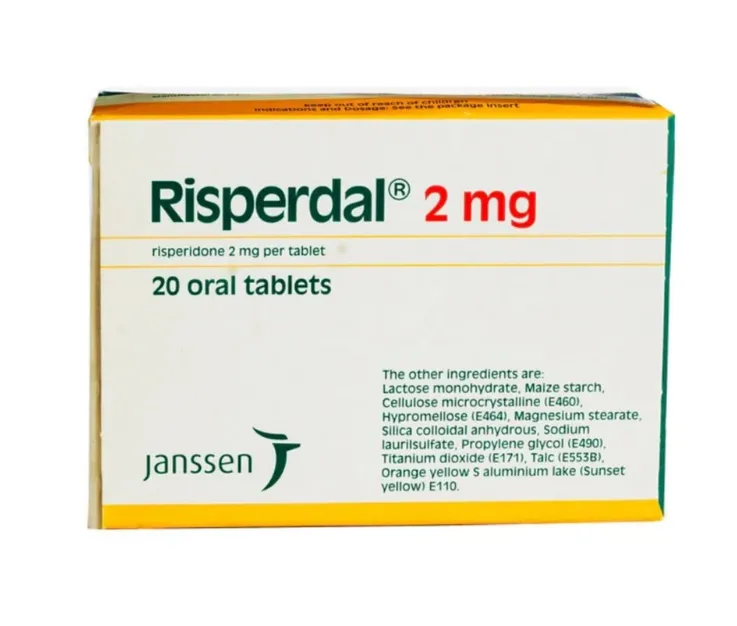
2. Overview of Risperidone
Generic Name
Risperidone
Brand Name
Risperdal, generics
Drug Group
Atypical antipsychotic
Commonly Used For
This medication is used to:
- Treat schizophrenia.
- Manage bipolar disorder.
- Address irritability in autism spectrum disorder (ASD).
Key Characteristics
- Form: Oral tablets (0.25 mg, 0.5 mg, 1 mg, 2 mg, 3 mg, 4 mg), orally disintegrating tablets, oral solution (1 mg/mL), and long-acting injectable (12.5 mg–50 mg) (detailed in Dosage section).
- Mechanism: Antagonizes D2 and 5-HT2 receptors, reducing psychotic symptoms.
- Approval: FDA-approved (1993 for Risperdal) and EMA-approved for psychiatric conditions.
3. Indications and Uses of Risperidone
Risperidone is indicated for a range of psychiatric and behavioral conditions, leveraging its receptor-blocking properties:
- Schizophrenia: Treats acute and chronic schizophrenia in adults and adolescents (13+ years), reducing hallucinations and delusions, supported by extensive clinical trials.
- Bipolar Disorder: Manages acute manic or mixed episodes in bipolar I disorder, stabilizing mood as monotherapy or with mood stabilizers, per psychiatric guidelines.
- Irritability Associated with Autism Spectrum Disorder (ASD): Addresses aggression, self-injury, and tantrums in children and adolescents (5–17 years), improving social functioning, backed by pediatric psychiatry studies.
- Major Depressive Disorder (MDD) with Psychotic Features: Used off-label as an adjunct to antidepressants for MDD with psychosis, enhancing remission rates, with evidence from mood disorder research.
- Post-Traumatic Stress Disorder (PTSD): Investigated off-label to reduce nightmares and hyperarousal in PTSD, improving sleep quality, supported by trauma studies.
- Obsessive-Compulsive Disorder (OCD): Explored off-label as an adjunct to SSRIs for treatment-resistant OCD, reducing obsessive thoughts, with data from neuropsychiatric trials.
- Tourette Syndrome: Manages tics and vocal outbursts in Tourette’s, used off-label in children and adults, with promising results from movement disorder research.
- Dementia-Related Psychosis: Employed off-label for psychosis and agitation in dementia (e.g., Alzheimer’s), improving behavioral symptoms, though with caution due to stroke risk, noted in geriatric psychiatry.
- Borderline Personality Disorder (BPD): Investigated off-label to control emotional instability and impulsivity in BPD, with emerging evidence from personality disorder studies.
- Severe Anxiety Disorders: Used off-label in severe generalized anxiety disorder (GAD) or social anxiety disorder resistant to first-line treatments, stabilizing symptoms, supported by anxiety research.
Note: This drug requires careful monitoring for metabolic and neurological effects; consult a healthcare provider for individualized treatment plans.
4. Dosage of Risperidone
Important Note: The dosage of this antipsychotic must be prescribed by a healthcare provider. Dosing varies by indication, age, and response, with adjustments based on clinical evaluation.
Dosage for Adults
- Schizophrenia:
- Initial: 1–2 mg once daily or twice daily, increased by 1–2 mg/day.
- Maintenance: 4–8 mg/day, maximum 16 mg/day, taken once or divided.
- Bipolar Mania:
- Initial: 2–3 mg once daily, increased by 1 mg/day.
- Maintenance: 1–6 mg/day, maximum 12 mg/day.
- Long-Acting Injectable (Risperdal Consta):
- 25 mg every 2 weeks, titrated to 37.5–50 mg based on response.
Dosage for Children and Adolescents
- Schizophrenia (13–17 years):
- Initial: 0.5 mg once daily, increased to 3 mg/day by day 2.
- Maintenance: 1–6 mg/day, maximum 12 mg/day.
- Bipolar Mania (10–17 years):
- Initial: 0.5 mg once daily, increased to 2.5 mg/day.
- Maintenance: 1–6 mg/day, maximum 12 mg/day.
- Irritability in ASD (5–17 years):
- Initial: 0.25 mg/day (weight <20 kg) or 0.5 mg/day (weight ≥20 kg), increased by 0.25–0.5 mg/day.
- Maintenance: 0.5–3 mg/day, maximum 3 mg/day, under pediatric supervision.
Dosage for Pregnant Women
- Pregnancy Category C: Limited data; use only if benefits outweigh risks. Consult an obstetrician, with fetal monitoring.
Dosage Adjustments
- Renal Impairment: Start with 0.5 mg twice daily; increase cautiously (CrCl <30 mL/min).
- Hepatic Impairment:
- Mild to moderate (Child-Pugh A/B): Reduce initial dose by 50%; severe (Child-Pugh C): Avoid.
- Elderly: Start with 0.5 mg twice daily; titrate slowly to 1–2 mg/day.
- Concomitant Medications: Adjust if combined with CYP2D6 inhibitors (e.g., fluoxetine), reducing dose by 50%.
Additional Considerations
- Take this active ingredient with or without food, using water for oral forms; shake oral solution well.
- Administer injectable form by a healthcare provider every 2 weeks.
5. How to Use Risperidone
- Administration:
- Swallow tablets or disintegrating tablets with water, or use oral solution with a calibrated dropper; avoid alcohol.
- Injectable form administered intramuscularly by a healthcare provider.
- Timing: Use once or twice daily for oral forms, or every 2 weeks for injectable, maintaining consistency.
- Monitoring: Watch for drowsiness, muscle stiffness, or signs of metabolic changes (e.g., weight gain).
- Additional Tips:
- Store at 20–25°C (68–77°F), protecting from moisture (tablets) or freezing (solution).
- Keep out of reach of children due to overdose risk.
- Report severe agitation, tremors, or signs of allergic reaction immediately.
6. Contraindications for Risperidone
This drug is contraindicated in:
- Hypersensitivity: Patients with a known allergy to Risperidone or its components.
- Severe Central Nervous System Depression: Contraindicated due to additive sedative effects.
- Comatose States: Avoid due to risk of respiratory depression.
- Severe Hepatic Impairment: Contraindicated in Child-Pugh Class C.
7. Warnings & Precautions for Risperidone
General Warnings
- Extrapyramidal Symptoms (EPS): Risk of tardive dyskinesia, parkinsonism, or akathisia; monitor movement disorders.
- Neuroleptic Malignant Syndrome (NMS): Rare but life-threatening; watch for fever and muscle rigidity.
- Metabolic Changes: Risk of weight gain, diabetes, and dyslipidemia; monitor glucose and lipids.
- Orthostatic Hypotension: Risk of fainting, especially in elderly; rise slowly.
- Seizure Risk: Increased in patients with a history of seizures; use cautiously.
Additional Warnings
- Cerebrovascular Events: Increased stroke risk in elderly with dementia; avoid in this population.
- Hyperprolactinemia: May cause galactorrhea or sexual dysfunction; monitor hormone levels.
- QT Prolongation: Rare risk of arrhythmias; avoid with other QT-prolonging drugs.
- Priapism: Rare prolonged erection; seek immediate care.
- Hypersensitivity Reactions: Rare anaphylaxis; discontinue if swelling occurs.
Use in Specific Populations
- Pregnancy: Category C; use only if essential with fetal monitoring.
- Breastfeeding: Excreted in breast milk; monitor infant for sedation.
- Elderly: Higher risk of EPS and stroke; start with lower doses.
- Children: Limited to 5+ years for ASD; supervise closely.
- Renal/Hepatic Impairment: Adjust dose; avoid in severe cases.
Additional Precautions
- Inform your doctor about seizure history, diabetes, or medication use before starting this medication.
- Avoid abrupt cessation; taper gradually to minimize withdrawal effects.
8. Overdose and Management of Risperidone
Overdose Symptoms
Overdose may cause:
- Drowsiness, sedation, or tachycardia.
- Severe cases: EPS, hypotension, or cardiac arrest.
- Confusion, agitation, or muscle rigidity as early signs.
- Respiratory depression with extremely high doses.
Immediate Actions
- Contact the Medical Team: Seek immediate medical help.
- Supportive Care: Administer activated charcoal if ingested recently, monitor vital signs, and provide IV fluids.
- Specific Treatment: Manage EPS with anticholinergics (e.g., benztropine), correct hypotension; no specific antidote.
- Monitor: Check ECG, blood pressure, and neurological status for 24–48 hours.
Additional Notes
- Overdose risk is moderate; store securely.
- Report persistent symptoms (e.g., severe stiffness, fainting) promptly.
9. Side Effects of Risperidone
Common Side Effects
- Drowsiness (20–30%, manageable with dose adjustment)
- Weight Gain (15–25%, monitor diet)
- Insomnia (10–20%, relieved with timing changes)
- Anxiety (8–15%, decreases with tolerance)
- Headache (5–12%, relieved with rest)
These effects may subside with dose optimization.
Serious Side Effects
Seek immediate medical attention for:
- Neurological: Tardive dyskinesia, NMS, or seizures.
- Metabolic: Hyperglycemia, diabetes, or dyslipidemia.
- Cardiovascular: Orthostatic hypotension or QT prolongation.
- Endocrine: Hyperprolactinemia or gynecomastia.
- Allergic: Rash, angioedema, or anaphylaxis.
Additional Notes
- Regular monitoring for weight, glucose, lipids, and movement disorders is advised.
- Report any unusual symptoms (e.g., muscle stiffness, excessive thirst) immediately to a healthcare provider.
10. Drug Interactions with Risperidone
This active ingredient may interact with:
- CYP2D6 Inhibitors: Increases levels (e.g., fluoxetine); reduce dose by 50%.
- Antihypertensives: Enhances hypotension; monitor blood pressure.
- Anticonvulsants: Alters metabolism (e.g., carbamazepine); adjust dose.
- CNS Depressants: Potentiates sedation (e.g., alcohol, benzodiazepines); avoid.
- QT-Prolonging Drugs: Increases arrhythmia risk (e.g., amiodarone); monitor ECG.
Action: Provide your healthcare provider with a complete list of medications.
11. Patient Education or Lifestyle
- Medication Adherence: Take this antipsychotic as prescribed to manage psychiatric conditions, following the exact schedule.
- Monitoring: Report drowsiness, weight gain, or muscle stiffness immediately.
- Lifestyle: Avoid alcohol; engage in regular exercise to mitigate weight gain.
- Diet: Take with or without food; limit high-sugar foods to manage metabolic risks.
- Emergency Awareness: Know signs of NMS or severe EPS; seek care if present.
- Follow-Up: Schedule regular check-ups every 3–6 months to monitor weight, glucose, lipids, and mental health.
12. Pharmacokinetics of Risperidone
- Absorption: Well-absorbed orally (peak at 1–2 hours); unaffected by food.
- Distribution: Volume of distribution ~1–2 L/kg; 90% protein-bound.
- Metabolism: Hepatic via CYP2D6 to active metabolite 9-hydroxyrisperidone.
- Excretion: Primarily renal (70%) as metabolites; half-life 3–20 hours (varies by CYP2D6 status).
- Half-Life: 3–20 hours, with active metabolite extending effect to 20–30 hours.
13. Pharmacodynamics of Risperidone
This drug exerts its effects by:
- Antagonizing D2 dopamine and 5-HT2 serotonin receptors, reducing positive and negative psychotic symptoms.
- Stabilizing mood in bipolar disorder through receptor modulation.
- Demonstrating dose-dependent EPS and metabolic side effects.
- Exhibiting efficacy in pediatric behavioral disorders via receptor blockade.
14. Storage of Risperidone
- Temperature: Store at 20–25°C (68–77°F); protect from moisture (tablets) or freezing (solution).
- Protection: Keep in original container, away from light.
- Safety: Store in a locked container out of reach of children due to overdose risk.
- Disposal: Dispose of unused tablets or solution per local regulations or consult a pharmacist.
15. Frequently Asked Questions (FAQs) About Risperidone
Q: What does Risperidone treat?
A: This medication treats schizophrenia, bipolar disorder, and ASD irritability.
Q: Can this active ingredient cause weight gain?
A: Yes, weight gain may occur; monitor diet and exercise.
Q: Is Risperidone safe for children?
A: Yes, for 5+ years with a doctor’s guidance.
Q: How is this drug taken?
A: Orally as tablets or solution, or via injection, as directed.
Q: How long is Risperidone treatment?
A: Long-term for chronic conditions with monitoring.
Q: Can I use Risperidone if pregnant?
A: Yes, with caution; consult a doctor.
16. Regulatory Information for Risperidone
This medication is approved by:
- U.S. Food and Drug Administration (FDA): Approved in 1993 (Risperdal) for schizophrenia, bipolar disorder, and ASD.
- European Medicines Agency (EMA): Approved for psychiatric conditions.
- Other Agencies: Approved globally for mental health; consult local guidelines.
17. References
- U.S. Food and Drug Administration (FDA). (2023). Risperdal (Risperidone) Prescribing Information.
- Official FDA documentation detailing the drug’s approved uses, dosage, and safety.
- European Medicines Agency (EMA). (2023). Risperidone Summary of Product Characteristics.
- EMA’s comprehensive information on the medication’s indications and precautions in Europe.
- National Institutes of Health (NIH). (2023). Risperidone: MedlinePlus Drug Information.
- NIH resource providing detailed information on the drug’s uses, side effects, and precautions.
- World Health Organization (WHO). (2023). WHO Model List of Essential Medicines: Risperidone.
- WHO’s inclusion of Risperidone for psychiatric care.
- Journal of Clinical Psychiatry. (2022). Risperidone in Autism Spectrum Disorder.
- Peer-reviewed article on Risperidone efficacy (note: access may require a subscription).
