
Comprehensive Guide to Praziquantel: Uses, Dosage, Side Effects, and More
What is Praziquantel?
Overview of Praziquantel
Generic Name: Praziquantel
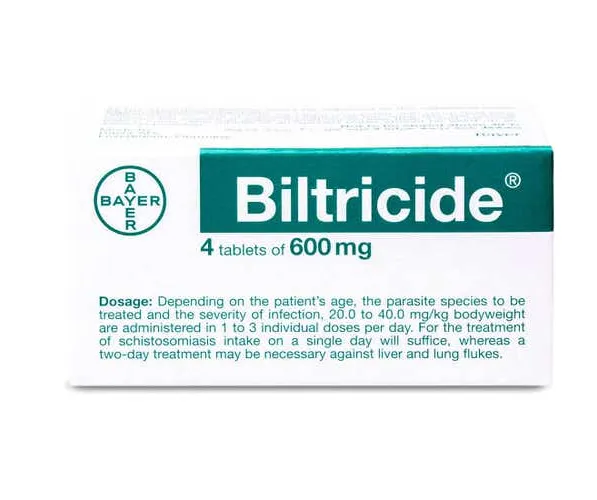
Brand Name: Biltricide, generics
Drug Group: Anthelmintic (anti-parasitic)
Commonly Used For
- Treat schistosomiasis.
- Manage liver fluke infections.
- Control tapeworm infections.
Key Characteristics
Form: Oral tablets (600 mg) (detailed in Dosage section).
Mechanism: Disrupts parasite cell integrity by altering calcium influx, causing paralysis and death.
Approval: FDA-approved (1982 for Biltricide) and EMA-approved for parasitic infections.
Indications and Uses of Praziquantel
Praziquantel is indicated for a variety of parasitic infections, leveraging its broad-spectrum activity against flatworms:
Schistosomiasis: Treats all major species (S. haematobium, S. mansoni, S. japonicum), reducing egg production and organ damage, a cornerstone of WHO’s mass drug administration (MDA) programs in endemic areas like sub-Saharan Africa and parts of South America.
Liver Fluke Infections: Manages infections by Opisthorchis viverrini and Clonorchis sinensis, preventing cholangiocarcinoma and liver fibrosis, supported by hepatology and tropical medicine research.
Taeniasis: Controls infections by Taenia solium and Taenia saginata (pork and beef tapeworms), reducing intestinal burden, per parasitology guidelines.
Neurocysticercosis: Treats cerebral cysticercosis caused by T. solium larvae, often with corticosteroids to manage inflammation, under neurologist supervision, with evidence from global health studies.
Cattle and Sheep Tapeworm Infections: Used off-label for Dipylidium caninum in pets or humans, improving zoonotic control, with veterinary and public health data.
Fascioliasis: Investigated off-label for Fasciola hepatica (liver fluke) infections resistant to triclabendazole, offering an alternative, supported by parasitology trials.
Echinococcosis: Explored off-label as an adjunct to albendazole for alveolar or cystic echinococcosis, reducing cyst viability, with data from infectious disease research.
Paragonimiasis: Employed off-label for Paragonimus westermani (lung fluke) infections, alleviating respiratory symptoms, noted in tropical medicine cohorts.
Mixed Parasitic Infections: Used off-label in co-infections (e.g., schistosomiasis with soil-transmitted helminths), enhancing treatment efficacy, supported by global health initiatives.
Dosage of Praziquantel
Dosage for Adults
Schistosomiasis: 40–60 mg/kg orally as a single dose or divided into two doses (20–30 mg/kg twice daily), taken with food or water.
Liver Fluke Infections (Opisthorchis/Clonorchis): 25 mg/kg orally three times daily for 1–2 days, with meals.
Taeniasis: 5–10 mg/kg as a single oral dose, with food.
Dosage for Children
Schistosomiasis (≥4 years): 40–60 mg/kg as a single dose or divided, under pediatric supervision.
Liver Fluke Infections: 25 mg/kg three times daily for 1–2 days, adjusted for weight (>4 years).
Taeniasis: 5–10 mg/kg as a single dose, with food, for children >4 years.
Dosage for Pregnant Women
Pregnancy Category B: Limited data; use only if benefits outweigh risks (e.g., severe schistosomiasis). Consult an obstetrician, with fetal monitoring.
Dosage Adjustments
Renal Impairment: No adjustment needed; monitor in severe cases (CrCl <30 mL/min).
Hepatic Impairment: Use caution; reduce dose by 50% if severe (Child-Pugh C).
Elderly: Start with lower end of range (e.g., 40 mg/kg); increase if tolerated.
Concomatic Medications: Avoid with CYP450 inducers (e.g., rifampin), which may reduce efficacy.
Additional Considerations
- Take this active ingredient with food or a light meal to improve absorption and reduce gastrointestinal discomfort.
- Use a weight-based calculator for accurate pediatric dosing.
How to Use Praziquantel
Administration:
- Swallow tablets whole with water and food; crush and mix with soft food (e.g., applesauce) for children if needed, avoiding chewing due to bitter taste.
- Take as a single dose or divided doses per prescription, ensuring full intake.
Timing: Administer with meals to enhance bioavailability and reduce side effects, following the scheduled regimen.
Monitoring: Watch for dizziness, abdominal pain, or signs of allergic reaction (e.g., rash).
Additional Tips:
- Store at 20–25°C (68–77°F), protecting from moisture and heat.
- Keep out of reach of children due to overdose risk.
- Report severe headache, seizures, or signs of neurocysticercosis immediately.
Contraindications for Praziquantel
Hypersensitivity: Patients with a known allergy to Praziquantel or related anthelmintics.
Ocular Cysticercosis: Contraindicated due to risk of retinal damage.
Severe Hepatic Impairment: Avoid in Child-Pugh Class C.
Pregnancy (First Trimester): Avoid unless critical, per limited safety data.
Side Effects of Praziquantel
Common Side Effects
- Dizziness (15–30%, manageable with rest)
- Abdominal Pain (10–25%, reduced with food)
- Nausea (10–20%, relieved with antiemetics)
- Headache (5–15%, alleviated with hydration)
- Fatigue (5–10%, decreases with tolerance)
These effects may subside within 24 hours.
Serious Side Effects
Seek immediate medical attention for:
- Neurological: Seizures, intracranial hypertension, or confusion (in neurocysticercosis).
- Hepatic: Jaundice, hepatotoxicity, or liver failure.
- Gastrointestinal: Severe vomiting, diarrhea, or bowel obstruction.
- Allergic: Rash, angioedema, or anaphylaxis.
- Cardiac: Arrhythmias or palpitations.
Additional Notes
- Regular monitoring for liver function and neurological status is advised, especially in neurocysticercosis.
- Report any unusual symptoms (e.g., severe headache, yellow skin) immediately to a healthcare provider.
Warnings & Precautions for Praziquantel
General Warnings
Neurocysticercosis: Risk of seizures or intracranial hypertension; use corticosteroids and anticonvulsants as adjuncts.
Hepatotoxicity: Mild liver enzyme elevation; monitor in chronic use.
Allergic Reactions: Risk of hypersensitivity, especially in heavy parasite loads; premedicate if needed.
Dizziness: Common side effect; avoid driving until tolerated.
Drug Resistance: Emerging resistance in some schistosome strains; monitor efficacy.
Additional Warnings
Gastrointestinal Distress: Severe nausea or abdominal pain; use antiemetics if persistent.
Cardiac Effects: Rare arrhythmias in overdose; monitor ECG if symptomatic.
Renal Impairment: Monitor in severe cases; adjust if necessary.
Immune Response: Risk of paradoxical reactions in neurocysticercosis; manage inflammation.
Hypersensitivity Reactions: Rare anaphylaxis; discontinue if swelling occurs.
Use in Specific Populations
- Pregnancy: Category B; avoid first trimester unless essential; monitor fetus.
- Breastfeeding: Excreted in breast milk; monitor infant for effects.
- Elderly: Higher risk of side effects; start with lower doses.
- Children: Limited to 4+ years; supervise closely.
- Renal/Hepatic Impairment: Adjust dose; avoid in severe cases.
Additional Precautions
- Inform your doctor about liver disease, seizures, or medication history before starting this medication.
- Avoid alcohol during treatment to prevent enhanced side effects.
Overdose and Management of Praziquantel
Overdose Symptoms
- Dizziness, nausea, or severe abdominal pain.
- Severe cases: Seizures, liver dysfunction, or cardiac arrhythmias.
- Headache, vomiting, or fatigue as early signs.
- Respiratory depression with extremely high doses.
Immediate Actions
Contact the Medical Team: Seek immediate medical help.
Supportive Care: Administer activated charcoal if ingested recently, monitor vital signs, and provide IV fluids.
Specific Treatment: Manage seizures with benzodiazepines, support liver function; no specific antidote.
Monitor: Check liver enzymes, kidney function, and neurological status for 24–48 hours.
Additional Notes
- Overdose risk is moderate; store securely.
- Report persistent symptoms (e.g., confusion, severe weakness) promptly.
Drug Interactions with Praziquantel
This active ingredient may interact with:
- CYP450 Inducers: Reduces levels (e.g., rifampin, carbamazepine); increase dose if needed.
- CYP450 Inhibitors: Increases levels (e.g., ketoconazole); reduce dose.
- Anticonvulsants: Alters metabolism (e.g., phenytoin); monitor levels.
- Antacids: May reduce absorption; space doses by 2 hours.
- Alcohol: Enhances side effects; avoid during treatment.
Action: Provide your healthcare provider with a complete list of medications.
Patient Education or Lifestyle
Medication Adherence: Take this anthelmintic as prescribed to treat parasitic infections, following the exact schedule.
Monitoring: Report dizziness, seizures, or abdominal pain immediately.
Lifestyle: Avoid alcohol; stay hydrated to reduce side effects.
Diet: Take with food to improve tolerance; avoid spicy foods during treatment.
Emergency Awareness: Know signs of neurocysticercosis or allergic reaction; seek care if present.
Follow-Up: Schedule regular check-ups every 1–3 months to monitor liver health, parasite clearance, and neurological status, especially in endemic areas.
Pharmacokinetics of Praziquantel
Absorption: Well-absorbed orally (peak at 1–3 hours); enhanced with food.
Distribution: Volume of distribution ~0.9–1.5 L/kg; 80–85% protein-bound.
Metabolism: Hepatic via CYP3A4 and CYP1A2 to inactive metabolites.
Excretion: Primarily renal (70–80%) as metabolites; half-life 1–3 hours.
Half-Life: 1–3 hours, with rapid clearance but sustained parasite effect.
Pharmacodynamics of Praziquantel
This drug exerts its effects by:
- Increasing calcium permeability in parasite cells, causing tetanic contraction and vacuolization.
- Disrupting tegument integrity, exposing parasites to host immune attack.
- Demonstrating broad efficacy against trematodes and cestodes.
- Exhibiting dose-dependent neurotoxicity risks in high parasite loads.
Storage of Praziquantel
Temperature: Store at 20–25°C (68–77°F); protect from moisture.
Protection: Keep in original container, away from light.
Safety: Store in a locked container out of reach of children due to overdose risk.
Disposal: Dispose of unused tablets per local regulations or consult a pharmacist.
Frequently Asked Questions (FAQs)
Q: What does Praziquantel treat?
A: This medication treats schistosomiasis and tapeworm infections.
Q: Can this active ingredient cause dizziness?
A: Yes, dizziness may occur; rest until it subsides.
Q: Is Praziquantel safe for children?
A: Yes, for 4+ years with a doctor’s guidance.
Q: How is this drug taken?
A: Orally as tablets with food, as directed.
Q: How long is Praziquantel treatment?
A: Typically a single dose or 1–2 days, depending on infection.
Q: Can I use Praziquantel if pregnant?
A: Yes, with caution after the first trimester; consult a doctor.
Regulatory Information
This medication is approved by:
U.S. Food and Drug Administration (FDA): Approved in 1982 (Biltricide) for schistosomiasis and other fluke infections.
European Medicines Agency (EMA): Approved for parasitic infections.
Other Agencies: Approved globally, included in WHO’s Essential Medicines List; consult local guidelines.
References
- U.S. Food and Drug Administration (FDA). (2023). Biltricide (Praziquantel) Prescribing Information.
- Official FDA documentation detailing the drug’s approved uses, dosage, and safety.
- European Medicines Agency (EMA). (2023). Praziquantel Summary of Product Characteristics.
- EMA’s comprehensive information on the medication’s indications and precautions in Europe.
- National Institutes of Health (NIH). (2023). Praziquantel: MedlinePlus Drug Information.
- NIH resource providing detailed information on the drug’s uses, side effects, and precautions.
- World Health Organization (WHO). (2023). WHO Guidelines on Neglected Tropical Diseases: Praziquantel.
- WHO’s recommendations for Praziquantel in schistosomiasis control.
- The Lancet Infectious Diseases. (2022). Praziquantel in Schistosomiasis Management.
- Peer-reviewed article on Praziquantel efficacy (note: access may require a subscription).
