
Comprehensive Guide to Perindopril: Uses, Dosage, Side Effects, and More
What is Perindopril?
Overview of Perindopril
Generic Name: Perindopril
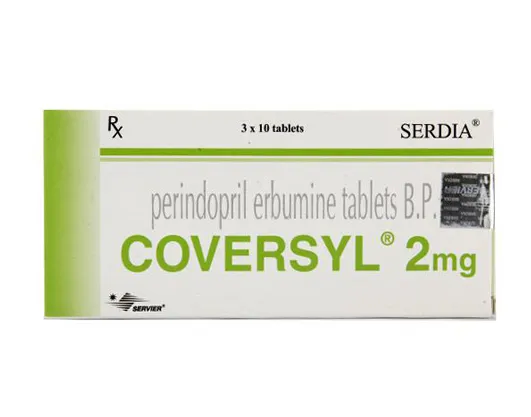
Brand Name: Aceon, Coversyl, generics
Drug Group: ACE inhibitor (antihypertensive)
Commonly Used For
- Treat hypertension (high blood pressure).
- Manage heart failure.
- Reduce cardiovascular events post-myocardial infarction.
Key Characteristics
Form: Oral tablets (2 mg, 4 mg, 8 mg) (detailed in Dosage section).
Mechanism: Inhibits ACE, reducing angiotensin II and aldosterone levels.
Approval: FDA-approved (1993 for Aceon) and EMA-approved for hypertension and heart failure.
Indications and Uses of Perindopril
Perindopril is indicated for a range of cardiovascular and renal conditions, leveraging its vasodilatory and cardioprotective effects:
Hypertension: Treats essential hypertension in adults, lowering blood pressure to reduce stroke and heart attack risk, supported by long-term trials like EUROPA.
Heart Failure: Manages symptomatic heart failure (NYHA Class II-IV) with reduced ejection fraction, improving exercise tolerance and survival, per cardiology guidelines.
Post-Myocardial Infarction: Reduces morbidity and mortality in stable patients post-MI with left ventricular dysfunction, enhancing cardiac remodeling, supported by clinical studies.
Stable Coronary Artery Disease: Used to prevent cardiovascular events in patients with documented CAD, reducing ischemic events, with evidence from the EUROPA trial.
Diabetic Nephropathy: Treats nephropathy in type 2 diabetes patients with microalbuminuria, slowing progression to end-stage renal disease, per nephrology protocols.
Chronic Kidney Disease (CKD): Employed off-label to manage CKD progression in non-diabetic patients, reducing proteinuria, with emerging data from renal research.
Left Ventricular Hypertrophy: Investigated off-label to reverse LVH in hypertensive patients, improving cardiac function, supported by echocardiography studies.
Peripheral Artery Disease (PAD): Explored off-label to improve outcomes in PAD patients with hypertension, reducing claudication, with vascular medicine evidence.
Migraine Prophylaxis: Used off-label in hypertensive patients with migraines, reducing frequency, with preliminary data from neurology and hypertension cohorts.
Preeclampsia Prevention: Investigated off-label in high-risk pregnancies to mitigate preeclampsia risk, requiring careful monitoring, supported by obstetric research.
Dosage of Perindopril
Dosage for Adults
Hypertension:
- Initial: 4 mg once daily, taken in the morning.
- Maintenance: Increase to 8 mg once daily if tolerated after 1–2 weeks, maximum 8 mg/day.
Heart Failure:
- Initial: 2 mg once daily, titrated to 4 mg after 1–2 weeks, maximum 8 mg/day, with diuretics.
Post-Myocardial Infarction:
- Initial: 2 mg once daily, increased to 4 mg after 1 week, then to 8 mg if tolerated, started 2–7 days post-MI.
Dosage for Children
Hypertension (off-label, 6–16 years):
- 0.1 mg/kg once daily, titrated to 0.2–0.4 mg/kg (maximum 8 mg/day), under pediatric cardiologist supervision.
Not recommended under 6 years.
Dosage for Pregnant Women
Pregnancy Category D: Avoid unless benefits outweigh risks (e.g., severe hypertension). Consult an obstetrician, with fetal monitoring.
Dosage Adjustments
Renal Impairment:
- Mild (CrCl 30–60 mL/min): Start with 2 mg/day; maximum 4 mg/day.
- Moderate (CrCl 15–30 mL/min): Start with 2 mg every other day; maximum 2 mg/day.
- Severe (CrCl <15 mL/min): Avoid.
Hepatic Impairment: No adjustment needed; monitor in severe cases.
Elderly: Start with 2 mg once daily; increase cautiously to 4–8 mg if tolerated.
Concomitant Medications: Adjust if combined with diuretics or potassium-sparing drugs, increasing hyperkalemia risk.
Additional Considerations
- Take this active ingredient in the morning with or without food, using a glass of water.
- Monitor blood pressure and kidney function regularly.
How to Use Perindopril
Administration:
Swallow tablets whole with water, with or without food; avoid grapefruit juice.
Take at the same time daily, preferably in the morning, for consistency.
Timing: Use once daily, with dose adjustments based on response.
Monitoring: Watch for dizziness, swelling, or signs of kidney issues (e.g., reduced urine output).
Additional Tips:
- Store at 20–25°C (68–77°F), protecting from moisture and heat.
- Keep out of reach of children due to toxicity risk.
- Report severe cough, fainting, or signs of allergic reaction immediately.
Contraindications for Perindopril
Hypersensitivity: Patients with a known allergy to Perindopril or other ACE inhibitors.
Angioedema History: Contraindicated due to risk of recurrence.
Severe Renal Artery Stenosis: Avoid due to potential renal failure.
Pregnancy: Contraindicated in second and third trimesters (Category D).
Side Effects of Perindopril
Common Side Effects
- Cough (10–20%, persistent but benign)
- Dizziness (5–15%, reduced with hydration)
- Headache (4–12%, relieved with rest)
- Fatigue (3–10%, decreases with tolerance)
- Nausea (2–8%, manageable with food)
These effects may subside with dose adjustment.
Serious Side Effects
Seek immediate medical attention for:
- Cardiovascular: Severe hypotension or syncope.
- Renal: Acute kidney injury or oliguria.
- Allergic: Angioedema, rash, or anaphylaxis.
- Metabolic: Hyperkalemia or hyponatremia.
- Hepatic: Jaundice or liver failure.
Additional Notes
- Regular monitoring for kidney function, electrolytes, and blood pressure is advised.
- Report any unusual symptoms (e.g., swelling, severe dizziness) immediately to a healthcare provider.
Warnings & Precautions for Perindopril
General Warnings
Hypotension: Risk of first-dose hypotension, especially with diuretics; monitor blood pressure.
Angioedema: Rare but severe swelling; discontinue if present.
Renal Impairment: Risk of acute kidney injury in bilateral renal artery stenosis; monitor creatinine.
Hyperkalemia: Increased potassium levels with potassium supplements; check electrolytes.
Cough: Persistent dry cough; consider alternative if intolerable.
Additional Warnings
Neutropenia: Rare in patients with collagen vascular disease; monitor white blood cells.
Hepatic Failure: Rare liver dysfunction; assess liver enzymes.
Aortic Stenosis: Risk of hypotension; use cautiously.
Desensitization: Avoid during allergen immunotherapy due to anaphylaxis risk.
Hypersensitivity Reactions: Rare anaphylaxis; discontinue if swelling occurs.
Use in Specific Populations
- Pregnancy: Category D; avoid unless critical; use alternatives if possible.
- Breastfeeding: Excreted in breast milk; monitor infant for effects.
- Elderly: Higher risk of hypotension; start with lower doses.
- Children: Limited to 6+ years off-label; supervise closely.
- Renal/Hepatic Impairment: Adjust dose; avoid in severe cases.
Additional Precautions
- Inform your doctor about kidney disease, diabetes, or medication history before starting this medication.
- Avoid abrupt cessation; taper if needed for long-term use.
Overdose and Management of Perindopril
Overdose Symptoms
- Hypotension, dizziness, or fainting.
- Severe cases: Renal failure, hyperkalemia, or shock.
- Weakness, nausea, or rapid heartbeat as early signs.
- Respiratory distress with extremely high doses.
Immediate Actions
Contact the Medical Team: Seek immediate medical help.
Supportive Care: Administer IV fluids, monitor vital signs, and correct electrolytes.
Specific Treatment: Use vasopressors (e.g., norepinephrine) for severe hypotension; no specific antidote.
Monitor: Check blood pressure, kidney function, and potassium levels for 24–48 hours.
Additional Notes
- Overdose risk is moderate; store securely.
- Report persistent symptoms (e.g., severe weakness, irregular heartbeat) promptly.
Drug Interactions with Perindopril
This active ingredient may interact with:
- Potassium-Sparing Diuretics: Increases hyperkalemia risk (e.g., spironolactone); monitor levels.
- NSAIDs: Reduces antihypertensive effect (e.g., ibuprofen); adjust dose.
- Lithium: Increases toxicity; monitor lithium levels.
- Antidiabetics: Enhances hypoglycemia risk (e.g., insulin); adjust dose.
- Aliskiren: Increases renal risk in diabetics; avoid combination.
Action: Provide your healthcare provider with a complete list of medications.
Patient Education or Lifestyle
Medication Adherence: Take this ACE inhibitor as prescribed to manage hypertension, following the exact schedule.
Monitoring: Report dizziness, swelling, or persistent cough immediately.
Lifestyle: Reduce salt intake; engage in regular moderate exercise (e.g., 30 minutes daily).
Diet: Take with or without food; avoid excessive potassium-rich foods (e.g., bananas) if monitored.
Emergency Awareness: Know signs of angioedema or kidney issues; seek care if present.
Follow-Up: Schedule regular check-ups every 3–6 months to monitor blood pressure, kidney function, and electrolyte levels.
Pharmacokinetics of Perindopril
Absorption: Well-absorbed orally (peak at 1–2 hours); enhanced with food.
Distribution: Volume of distribution ~0.2–0.3 L/kg; 10–20% protein-bound (active metabolite perindoprilat 10–20%).
Metabolism: Hepatic via esterases to active perindoprilat, with minor CYP involvement.
Excretion: Primarily renal (75% as metabolites); half-life of perindopril 1–2 hours, perindoprilat 3–10 hours.
Half-Life: Effective half-life of perindoprilat 3–10 hours, with sustained antihypertensive effect.
Pharmacodynamics of Perindopril
This drug exerts its effects by:
- Inhibiting ACE, reducing angiotensin II and aldosterone production.
- Promoting vasodilation and decreasing preload and afterload in heart failure.
- Protecting renal function by reducing glomerular pressure in diabetic nephropathy.
- Exhibiting dose-dependent risks of hypotension and cough.
Storage of Perindopril
Temperature: Store at 20–25°C (68–77°F); protect from moisture.
Protection: Keep in original container, away from light.
Safety: Store out of reach of children due to toxicity risk.
Disposal: Dispose of unused tablets per local regulations or consult a pharmacist.
Frequently Asked Questions (FAQs)
Q: What does Perindopril treat?
A: This medication treats hypertension and heart failure.
Q: Can this active ingredient cause cough?
A: Yes, a persistent dry cough may occur; report if bothersome.
Q: Is Perindopril safe for children?
A: Yes, for 6+ years off-label with a doctor’s guidance.
Q: How is this drug taken?
A: Orally as tablets once daily, as directed.
Q: How long is Perindopril treatment?
A: Long-term for hypertension or heart failure.
Q: Can I use Perindopril if pregnant?
A: No, avoid unless critical; consult a doctor.
Regulatory Information
This medication is approved by:
U.S. Food and Drug Administration (FDA): Approved in 1993 (Aceon) for hypertension, later expanded to heart failure.
European Medicines Agency (EMA): Approved for hypertension, heart failure, and post-MI care.
Other Agencies: Approved globally for cardiovascular conditions; consult local guidelines.
References
- U.S. Food and Drug Administration (FDA). (2023). Aceon (Perindopril) Prescribing Information.
- Official FDA documentation detailing the drug’s approved uses, dosage, and safety.
- European Medicines Agency (EMA). (2023). Perindopril Summary of Product Characteristics.
- EMA’s comprehensive information on the medication’s indications and precautions in Europe.
- National Institutes of Health (NIH). (2023). Perindopril: MedlinePlus Drug Information.
- NIH resource providing detailed information on the drug’s uses, side effects, and precautions.
- World Health Organization (WHO). (2023). WHO Model List of Essential Medicines: Perindopril.
- WHO’s inclusion of Perindopril for cardiovascular therapy.
- European Heart Journal. (2022). Perindopril in Coronary Artery Disease.
- Peer-reviewed article on Perindopril efficacy (note: access may require a subscription).
