
Comprehensive Guide to Pentazocine: Uses, Dosage, Side Effects, and More
What is Pentazocine?
Overview of Pentazocine
Generic Name: Pentazocine
Brand Name: Talwin, generics
Drug Group: Opioid analgesic (mixed agonist-antagonist)
Commonly Used For
- Relieve moderate to severe pain.
- Manage postoperative pain.
- Treat chronic pain conditions.
Key Characteristics
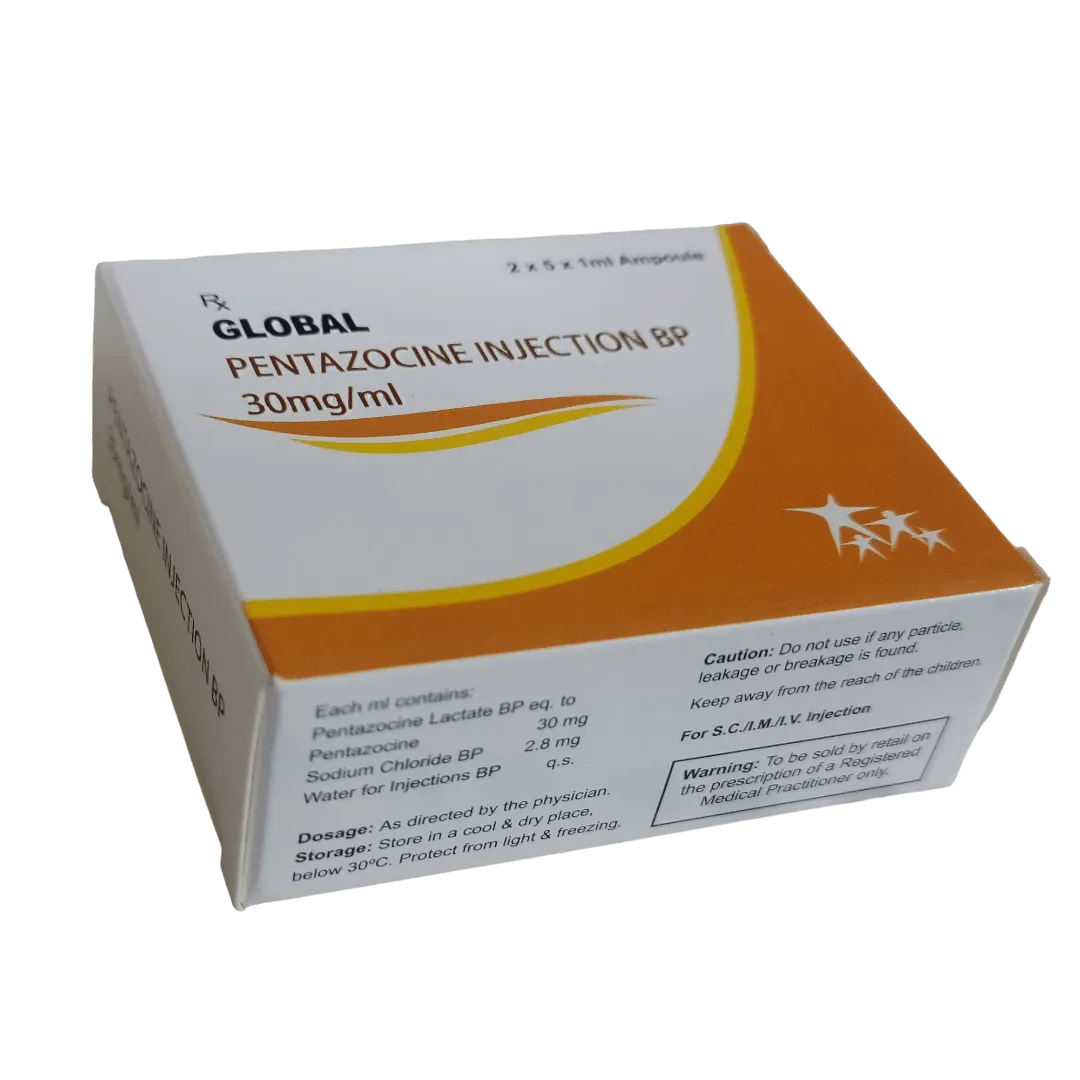
Form: Oral tablets (50 mg), injectable solution (30 mg/mL) (detailed in Dosage section).
Mechanism: Agonist at kappa receptors and partial antagonist at mu receptors, providing analgesia with reduced euphoria risk.
Approval: FDA-approved (1967 for Talwin) and EMA-approved for pain relief.
Indications and Uses of Pentazocine
Pentazocine is indicated for various pain-related conditions, leveraging its unique opioid receptor activity:
Moderate to Severe Pain: Treats acute pain (e.g., postoperative, trauma-related), offering rapid relief, per pain management guidelines, with efficacy comparable to morphine in controlled studies.
Postoperative Pain: Manages pain after surgical procedures (e.g., orthopedic, abdominal), reducing recovery discomfort, supported by anesthesiology research.
Chronic Pain: Used for chronic conditions (e.g., cancer pain, arthritis), providing an alternative to full agonists, with long-term monitoring, per rheumatology and oncology protocols.
Labor Pain: Employed off-label for pain relief during labor, reducing maternal discomfort while preserving fetal safety, with obstetric data supporting cautious use.
Migraine: Investigated off-label for severe migraine attacks unresponsive to standard therapies, improving symptom control, supported by neurology studies.
Sickle Cell Crisis: Used off-label to manage acute pain in sickle cell disease, reducing vaso-occlusive crisis severity, with hematology evidence.
Burn Pain: Explored off-label for burn-related pain management, enhancing patient comfort during dressing changes, with data from burn care research.
Renal Colic: Managed off-label for acute renal colic pain, offering relief from ureteral stones, supported by urology studies.
Palliative Care: Administered off-label in end-of-life care for cancer patients, improving quality of life, with palliative care guidelines endorsing its use.
Opioid Withdrawal: Investigated off-label as an adjunct in opioid detoxification, reducing withdrawal symptoms, with addiction medicine research showing mixed results.
Dosage of Pentazocine
Dosage for Adults
Oral (Moderate to Severe Pain): 50–100 mg every 3–4 hours as needed, maximum 600 mg/day.
Injectable (Acute Pain): 30–60 mg IM or IV every 3–4 hours, maximum 360 mg/day.
Postoperative Pain: 30 mg IM or IV every 3–4 hours, titrated to response, with monitoring.
Dosage for Children
6–12 years (Injectable, off-label): 0.5–1 mg/kg IM or IV every 3–4 hours, maximum 15 mg/dose, under pediatric supervision.
Not recommended under 6 years.
Dosage for Pregnant Women
Pregnancy Category C: Use only if benefits outweigh risks (e.g., severe pain). Consult an obstetrician, with fetal monitoring, avoiding use near delivery.
Dosage Adjustments
Renal Impairment: Reduce dose by 25–50% if CrCl <30 mL/min; monitor closely.
Hepatic Impairment: Reduce dose by 25–50% in moderate to severe cases (Child-Pugh B/C); avoid if severe.
Elderly: Start with 25–50 mg orally or 15–30 mg IM/IV; increase cautiously.
Concomitant Medications: Adjust if combined with CNS depressants (e.g., benzodiazepines), reducing dose to avoid overdose.
Additional Considerations
- Take this active ingredient with or without food for oral use; inject slowly IV to minimize adverse effects.
- Use a pain diary to track dosing and response.
How to Use Pentazocine
Administration:
Swallow tablets whole with water, with or without food; inject IM or IV by a healthcare provider, avoiding rapid IV push.
Use with antiemetics if nausea occurs during injection.
Timing: Administer every 3–4 hours as needed, maintaining consistent intervals.
Monitoring: Watch for drowsiness, shallow breathing, or signs of withdrawal (e.g., anxiety).
Additional Tips:
- Store at 20–25°C (68–77°F), protecting from moisture and light.
- Keep out of reach of children due to overdose risk.
- Report severe sedation, confusion, or signs of allergic reaction immediately.
Contraindications for Pentazocine
Hypersensitivity: Patients with a known allergy to Pentazocine or opioids.
Severe Respiratory Depression: Contraindicated due to risk of fatal outcome.
Acute Bronchial Asthma: Avoid due to potential airway obstruction.
Paralytic Ileus: Contraindicated due to gastrointestinal motility inhibition.
Side Effects of Pentazocine
Common Side Effects
- Drowsiness (20–40%, manageable with rest)
- Nausea (15–30%, reduced with antiemetics)
- Dizziness (10–25%, decreases with tolerance)
- Sweating (5–15%, transient)
- Headache (5–10%, relieved with hydration)
These effects may subside with dose adjustment.
Serious Side Effects
Seek immediate medical attention for:
- Respiratory: Depression, apnea, or hypoxia.
- Neurological: Confusion, hallucinations, or seizures.
- Cardiovascular: Hypotension, bradycardia, or cardiac arrest.
- Gastrointestinal: Ileus or severe constipation.
- Allergic: Rash, angioedema, or anaphylaxis.
Additional Notes
- Regular monitoring for respiratory function, mental status, and bowel activity is advised.
- Report any unusual symptoms (e.g., severe breathing difficulty, chest pain) immediately to a healthcare provider.
Warnings & Precautions for Pentazocine
General Warnings
Respiratory Depression: Risk with high doses or in opioid-naïve patients; monitor breathing closely.
Addiction, Abuse, and Misuse: High potential for dependence; use only as prescribed.
Withdrawal Symptoms: May precipitate withdrawal in opioid-dependent patients; taper if needed.
Central Nervous System Depression: Enhanced with alcohol or sedatives; avoid combinations.
Hepatotoxicity: Rare liver injury; monitor liver function in long-term use.
Additional Warnings
Cardiovascular Effects: Rare hypotension or tachycardia; monitor in at-risk patients.
Psychotomimetic Effects: Hallucinations or dysphoria, especially at high doses; assess mental status.
Gastrointestinal Obstruction: Risk of ileus; monitor bowel function.
Renal Impairment: Monitor in severe cases; adjust dose if necessary.
Hypersensitivity Reactions: Rare anaphylaxis; discontinue if swelling occurs.
Use in Specific Populations
- Pregnancy: Category C; avoid near delivery; use alternatives if possible.
- Breastfeeding: Excreted in breast milk; monitor infant for sedation.
- Elderly: Higher risk of side effects; start with lower doses.
- Children: Limited to 6+ years off-label; supervise closely.
- Renal/Hepatic Impairment: Adjust dose; avoid in severe cases.
Additional Precautions
- Inform your doctor about respiratory issues, addiction history, or medication use before starting this medication.
- Avoid abrupt cessation; taper gradually to prevent withdrawal.
Overdose and Management of Pentazocine
Overdose Symptoms
- Respiratory depression, pinpoint pupils, or extreme drowsiness.
- Severe cases: Coma, seizures, or cardiovascular collapse.
- Nausea, confusion, or shallow breathing as early signs.
- Death with extremely high doses.
Immediate Actions
Contact the Medical Team: Seek immediate medical help.
Supportive Care: Administer naloxone for reversal, provide oxygen, and monitor vital signs.
Specific Treatment: Support ventilation if needed; no specific antidote beyond naloxone.
Monitor: Check respiratory rate, oxygen saturation, and mental status for 24–72 hours.
Additional Notes
- Overdose risk is high; store securely and dispose of unused doses.
- Report persistent symptoms (e.g., severe lethargy, blue lips) promptly.
Drug Interactions with Pentazocine
This active ingredient may interact with:
- CNS Depressants: Enhances sedation (e.g., benzodiazepines, alcohol); reduce dose.
- MAO Inhibitors: Increases risk of hypertensive crisis; avoid within 14 days.
- Opioid Agonists: May precipitate withdrawal (e.g., morphine); use cautiously.
- Antihistamines: Potentiates drowsiness; monitor closely.
- Antidepressants: Alters effects (e.g., SSRIs); adjust dose if needed.
Action: Provide your healthcare provider with a complete list of medications.
Patient Education or Lifestyle
Medication Adherence: Take this opioid analgesic as prescribed to manage pain, following the exact schedule.
Monitoring: Report drowsiness, breathing changes, or mood swings immediately.
Lifestyle: Avoid alcohol and driving; maintain a safe environment.
Diet: Take with or without food; increase fiber to prevent constipation.
Emergency Awareness: Know signs of overdose or withdrawal; seek care if present.
Follow-Up: Schedule regular check-ups every 1–3 months to monitor pain control, respiratory function, and addiction risk.
Pharmacokinetics of Pentazocine
Absorption: Well-absorbed orally (peak at 1–3 hours); IM absorption faster (15–30 minutes); enhanced with food.
Distribution: Volume of distribution ~4–5 L/kg; 60–70% protein-bound.
Metabolism: Hepatic via CYP2D6 and CYP3A4 to inactive metabolites.
Excretion: Primarily renal (85–90%) as glucuronides; half-life 2–3 hours.
Half-Life: 2–3 hours, with prolonged effects in overdose.
Pharmacodynamics of Pentazocine
This drug exerts its effects by:
- Acting as a kappa opioid receptor agonist and mu receptor partial antagonist, providing analgesia.
- Reducing pain perception while minimizing respiratory depression compared to full agonists.
- Inducing psychotomimetic effects (e.g., dysphoria) at higher doses.
- Exhibiting dose-dependent risks of dependence and withdrawal.
Storage of Pentazocine
Temperature: Store at 20–25°C (68–77°F); protect from moisture and light.
Protection: Keep in original container, away from heat sources.
Safety: Store in a locked container out of reach of children due to overdose risk.
Disposal: Dispose of unused tablets or vials per controlled substance regulations or consult a pharmacist.
Frequently Asked Questions (FAQs)
Q: What does Pentazocine treat?
A: This medication treats moderate to severe pain.
Q: Can this active ingredient cause drowsiness?
A: Yes, drowsiness may occur; avoid driving.
Q: Is Pentazocine safe for children?
A: Yes, for 6+ years off-label with a doctor’s guidance.
Q: How is this drug taken?
A: Orally or via injection, as directed by a healthcare provider.
Q: How long is Pentazocine treatment?
A: Short-term for acute pain; long-term with monitoring for chronic pain.
Q: Can I use Pentazocine if pregnant?
A: Yes, with caution; consult a doctor.
Regulatory Information
This medication is approved by:
U.S. Food and Drug Administration (FDA): Approved in 1967 (Talwin) for pain relief, classified as a Schedule IV controlled substance.
European Medicines Agency (EMA): Approved for pain management.
Other Agencies: Approved globally for analgesia; consult local guidelines.
References
- U.S. Food and Drug Administration (FDA). (2023). Talwin (Pentazocine) Prescribing Information.
- Official FDA documentation detailing the drug’s approved uses, dosage, and safety.
- European Medicines Agency (EMA). (2023). Pentazocine Summary of Product Characteristics.
- EMA’s comprehensive information on the medication’s indications and precautions in Europe.
- National Institutes of Health (NIH). (2023). Pentazocine: MedlinePlus Drug Information.
- NIH resource providing detailed information on the drug’s uses, side effects, and precautions.
- World Health Organization (WHO). (2023). WHO Model List of Essential Medicines: Pentazocine.
- WHO’s inclusion of Pentazocine for pain relief.
- Pain. (2022). Pentazocine in Chronic Pain Management.
- Peer-reviewed article on Pentazocine efficacy (note: access may require a subscription).
