
Comprehensive Guide to Pantoprazole: Uses, Dosage, Side Effects, and More
What is Pantoprazole?
Overview of Pantoprazole
Generic Name: Pantoprazole
Brand Name: Protonix, generics
Drug Group: Proton pump inhibitor (PPI, anti-ulcer)
Commonly Used For
- Treat gastroesophageal reflux disease (GERD).
- Heal and prevent peptic ulcers.
- Manage Zollinger-Ellison syndrome.
Key Characteristics
Form: Delayed-release tablets (20 mg, 40 mg), oral suspension (40 mg), and IV injection (40 mg) (detailed in Dosage section).
Mechanism: Blocks acid production at the final step, providing long-lasting relief.
Approval: FDA-approved (2000 for Protonix) and EMA-approved for acid-related conditions.
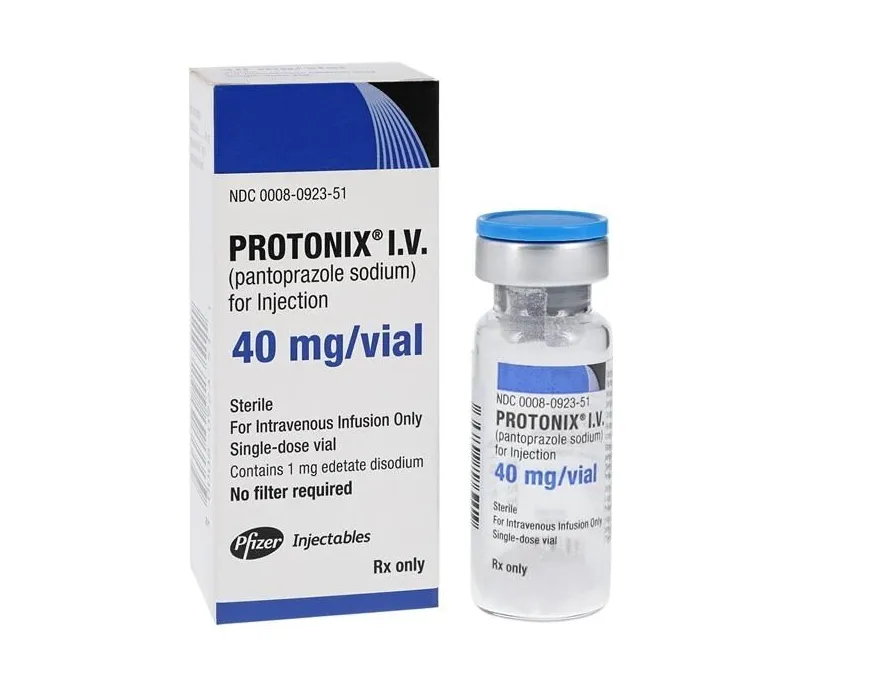
Indications and Uses of Pantoprazole
Pantoprazole is indicated for a broad spectrum of gastrointestinal conditions, leveraging its potent acid-suppressive effects:
Gastroesophageal Reflux Disease (GERD): Treats erosive esophagitis and symptomatic GERD, promoting mucosal healing and symptom relief, supported by randomized controlled trials over 8 weeks.
Peptic Ulcer Disease (PUD): Heals gastric and duodenal ulcers, preventing recurrence when used with antibiotics for H. pylori eradication, per gastroenterology guidelines.
Zollinger-Ellison Syndrome: Manages hypersecretory conditions, controlling acid hypersecretion in gastrinomas, with long-term data from endocrine studies.
Helicobacter pylori Eradication: Used as part of triple therapy (with clarithromycin and amoxicillin) to eradicate H. pylori, reducing ulcer recurrence, supported by infectious disease research.
NSAID-Induced Ulcers: Prevents and heals ulcers in patients on long-term nonsteroidal anti-inflammatory drugs (NSAIDs), improving gastrointestinal safety, per rheumatology protocols.
Barrett’s Esophagus: Employed off-label to reduce acid exposure in Barrett’s esophagus, potentially slowing progression to dysplasia, with evidence from esophageal cancer studies.
Eosinophilic Esophagitis (EoE): Investigated off-label as a proton pump inhibitor-responsive esophageal eosinophilia (PPI-REE) treatment, reducing inflammation, supported by allergology research.
Stress Ulcer Prophylaxis: Used off-label in critically ill patients (e.g., ICU settings) to prevent stress ulcers, with data from critical care medicine.
Laryngopharyngeal Reflux (LPR): Explored off-label to manage LPR symptoms (e.g., hoarseness, throat clearing), improving voice quality, with otolaryngology evidence.
Functional Dyspepsia: Investigated off-label for functional dyspepsia with predominant acid-related symptoms, enhancing patient comfort, supported by gastroenterology cohorts.
Dosage of Pantoprazole
Dosage for Adults
GERD (Erosive Esophagitis):
- Oral: 40 mg once daily for 8 weeks; maintenance at 40 mg daily if needed.
- IV: 40 mg once daily for up to 7–10 days if oral intake is not possible.
Peptic Ulcer Disease: Oral: 40 mg once daily for 4–8 weeks; with H. pylori therapy, 40 mg twice daily.
Zollinger-Ellison Syndrome: Oral: 40 mg twice daily, titrated up to 240 mg/day based on acid output, under specialist care.
Dosage for Children
GERD (5–16 years):
- 15–40 kg: 20 mg once daily for up to 8 weeks.
- 40 kg: 40 mg once daily for up to 8 weeks, under pediatric gastroenterologist supervision.
- Not recommended under 5 years.
Dosage for Pregnant Women
Pregnancy Category B: Limited data; use only if benefits outweigh risks (e.g., severe GERD). Consult an obstetrician, with fetal monitoring.
Dosage Adjustments
Renal Impairment: No adjustment needed; monitor in severe cases (CrCl <30 mL/min).
Hepatic Impairment: Mild (Child-Pugh A): No adjustment; moderate (Child-Pugh B): Maximum 20 mg/day; severe (Child-Pugh C): Avoid.
Elderly: Start with 20 mg once daily; increase to 40 mg if tolerated.
Concomitant Medications: Adjust if combined with CYP2C19 inhibitors (e.g., fluvoxamine), reducing dose.
Additional Considerations
- Take this active ingredient before a meal (preferably breakfast) for optimal effect.
- Swallow tablets whole or mix oral suspension with apple juice; avoid crushing.
How to Use Pantoprazole
Administration:
- Take delayed-release tablets or oral suspension 30 minutes before a meal, using water or apple juice; avoid antacids within 1 hour.
- IV administration requires slow infusion over 15 minutes by a healthcare provider.
Timing: Use once or twice daily, as directed, maintaining consistency.
Monitoring: Watch for abdominal pain, diarrhea, or signs of low magnesium (e.g., muscle cramps).
Additional Tips:
- Store at 20–25°C (68–77°F), protecting from moisture and heat.
- Keep out of reach of children due to overdose risk.
- Report severe headache, dizziness, or signs of allergic reaction immediately.
Contraindications for Pantoprazole
Hypersensitivity: Patients with a known allergy to Pantoprazole or other PPIs.
Severe Hepatic Impairment: Contraindicated in Child-Pugh Class C due to accumulation risk.
Concurrent Use with Certain Drugs: Avoid with rilpivirine due to reduced efficacy.
Side Effects of Pantoprazole
Common Side Effects
- Headache (5–15%, relieved with rest)
- Diarrhea (4–10%, transient)
- Nausea (3–8%, manageable with food)
- Abdominal Pain (2–6%, decreases with tolerance)
- Flatulence (1–5%, reduced with dietary adjustments)
These effects may subside with dose adjustment.
Serious Side Effects
Seek immediate medical attention for:
- Metabolic: Hypomagnesemia, hypocalcemia, or vitamin B12 deficiency.
- Renal: Acute interstitial nephritis or kidney injury.
- Musculoskeletal: Osteoporosis-related fractures or muscle spasms.
- Infectious: Clostridium difficile-associated diarrhea.
- Allergic: Rash, angioedema, or anaphylaxis.
Additional Notes
- Regular monitoring for magnesium, B12, and bone density is advised with long-term use.
- Report any unusual symptoms (e.g., severe joint pain, persistent diarrhea) immediately to a healthcare provider.
Warnings & Precautions for Pantoprazole
General Warnings
Hypomagnesemia: Risk with long-term use (>1 year); monitor magnesium levels.
Fracture Risk: Increased risk of osteoporosis-related fractures with prolonged use; assess bone health.
Clostridium difficile Infection: Higher risk with extended therapy; watch for diarrhea.
Vitamin B12 Deficiency: Risk with long-term use; monitor levels in at-risk patients.
Acute Interstitial Nephritis: Rare kidney inflammation; discontinue if symptoms arise.
Additional Warnings
Cutaneous Lupus Erythematosus: Rare risk of subacute cutaneous lupus; monitor skin changes.
Cyanocobalamin Deficiency: May reduce B12 absorption; supplement if needed.
Fundic Gland Polyps: Increased risk with long-term use; perform endoscopy if symptomatic.
Hypokalemia: Rare electrolyte imbalance; monitor in critical care settings.
Hypersensitivity Reactions: Rare anaphylaxis; discontinue if swelling occurs.
Use in Specific Populations
- Pregnancy: Category B; use only if essential with fetal monitoring.
- Breastfeeding: Excreted in breast milk; monitor infant for effects.
- Elderly: Higher risk of side effects; start with lower doses.
- Children: Limited to 5+ years; supervise closely.
- Renal/Hepatic Impairment: Adjust dose; avoid in severe cases.
Additional Precautions
- Inform your doctor about kidney disease, osteoporosis, or medication history before starting this medication.
- Limit use to the shortest duration necessary for long-term therapy.
Overdose and Management of Pantoprazole
Overdose Symptoms
- Nausea, vomiting, or abdominal discomfort.
- Severe cases: Confusion, drowsiness, or blurred vision.
- Headache, dry mouth, or fatigue as early signs.
- Seizures or hypotension with extremely high doses.
Immediate Actions
Contact the Medical Team: Seek immediate medical help.
Supportive Care: Administer activated charcoal if ingested recently, monitor vital signs, and provide IV fluids.
Specific Treatment: Manage symptoms; no specific antidote.
Monitor: Check magnesium, kidney function, and mental status for 24–48 hours.
Additional Notes
- Overdose risk is low; store securely.
- Report persistent symptoms (e.g., severe weakness, irregular heartbeat) promptly.
Drug Interactions with Pantoprazole
This active ingredient may interact with:
- Clopidogrel: Reduces antiplatelet effect; use alternatives if possible.
- Methotrexate: Increases levels; monitor closely during high-dose therapy.
- Antifungals: Alters absorption (e.g., ketoconazole); take 2 hours apart.
- Iron Supplements: Reduces absorption; take 2–4 hours apart.
- Warfarin: Enhances bleeding risk; monitor INR.
Action: Provide your healthcare provider with a complete list of medications.
Patient Education or Lifestyle
Medication Adherence: Take this PPI as prescribed to manage acid-related conditions, following the exact schedule.
Monitoring: Report muscle cramps, diarrhea, or bone pain immediately.
Lifestyle: Avoid trigger foods (e.g., spicy, fatty); elevate head during sleep for GERD.
Diet: Take before meals; increase calcium-rich foods with long-term use.
Emergency Awareness: Know signs of magnesium deficiency or kidney issues; seek care if present.
Follow-Up: Schedule regular check-ups every 6–12 months to monitor magnesium, B12, and bone health.
Pharmacokinetics of Pantoprazole
Absorption: Well-absorbed orally (peak at 2–3 hours); delayed-release formulation enhances bioavailability.
Distribution: Volume of distribution ~0.15 L/kg; 98% protein-bound.
Metabolism: Hepatic via CYP2C19 and CYP3A4 to inactive metabolites.
Excretion: Primarily renal (71%) as metabolites; half-life 1–2 hours (effect lasts 24 hours).
Half-Life: 1–2 hours, with prolonged acid suppression due to enzyme inhibition.
Pharmacodynamics of Pantoprazole
This drug exerts its effects by:
- Irreversibly inhibiting the H+/K+-ATPase enzyme, reducing gastric acid secretion by up to 95%.
- Promoting healing of erosive esophagitis and ulcers through acid suppression.
- Demonstrating dose-dependent efficacy and long-term safety risks (e.g., hypomagnesemia).
- Exhibiting enhanced effects with H. pylori eradication therapy.
Storage of Pantoprazole
Temperature: Store at 20–25°C (68–77°F); protect from moisture.
Protection: Keep in original container, away from light.
Safety: Store in a locked container out of reach of children due to overdose risk.
Disposal: Dispose of unused tablets per local regulations or consult a pharmacist.
Frequently Asked Questions (FAQs)
Q: What does Pantoprazole treat?
A: This medication treats GERD and peptic ulcers.
Q: Can this active ingredient cause diarrhea?
A: Yes, diarrhea may occur; report if persistent.
Q: Is Pantoprazole safe for children?
A: Yes, for 5+ years with a doctor’s guidance.
Q: How is this drug taken?
A: Orally before meals, as directed.
Q: How long is Pantoprazole treatment?
A: Short-term (4–8 weeks) or long-term based on condition.
Q: Can I use Pantoprazole if pregnant?
A: Yes, with caution; consult a doctor.
Regulatory Information
This medication is approved by:
U.S. Food and Drug Administration (FDA): Approved in 2000 (Protonix) for GERD and ulcers.
European Medicines Agency (EMA): Approved for acid-related disorders.
Other Agencies: Approved globally for gastrointestinal conditions; consult local guidelines.
References
- U.S. Food and Drug Administration (FDA). (2023). Protonix (Pantoprazole) Prescribing Information.
- Official FDA documentation detailing the drug’s approved uses, dosage, and safety.
- European Medicines Agency (EMA). (2023). Pantoprazole Summary of Product Characteristics.
- EMA’s comprehensive information on the medication’s indications and precautions in Europe.
- National Institutes of Health (NIH). (2023). Pantoprazole: MedlinePlus Drug Information.
- NIH resource providing detailed information on the drug’s uses, side effects, and precautions.
- World Health Organization (WHO). (2023). WHO Model List of Essential Medicines: Pantoprazole.
- WHO’s inclusion of Pantoprazole for gastrointestinal therapy.
- American Journal of Gastroenterology. (2022). Pantoprazole in GERD Management.
- Peer-reviewed article on Pantoprazole efficacy (note: access may require a subscription).
