
Comprehensive Guide to Palbociclib: Uses, Dosage, Side Effects, and More
What is Palbociclib?
Overview of Palbociclib
Generic Name: Palbociclib
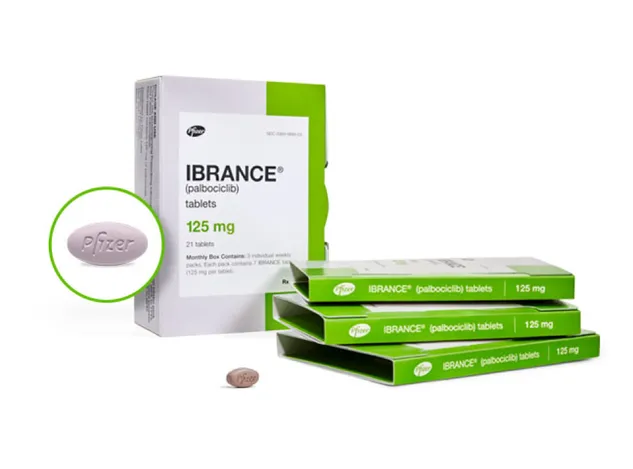
Brand Name: Ibrance, generics
Drug Group: CDK4/6 inhibitor (antineoplastic)
Commonly Used For
- Treat HR+/HER2- advanced breast cancer.
- Manage metastatic breast cancer.
- Enhance endocrine therapy efficacy.
Key Characteristics
Form: Oral capsules (75 mg, 100 mg, 125 mg) or tablets (detailed in Dosage section).
Mechanism: Inhibits CDK4/6, preventing phosphorylation of Rb protein and arresting cancer cell proliferation.
Approval: FDA-approved (2015 for Ibrance) and EMA-approved for breast cancer.
Indications and Uses of Palbociclib
Palbociclib is indicated for breast cancer and other potential oncologic applications, leveraging its cell cycle inhibition:
HR+/HER2- Advanced or Metastatic Breast Cancer: Treats postmenopausal women with HR+/HER2- advanced or metastatic breast cancer, combined with letrozole as initial endocrine-based therapy, improving progression-free survival (PFS), per PALOMA-1 trial data.
HR+/HER2- Breast Cancer with Fulvestrant: Manages disease progression in HR+/HER2- advanced or metastatic breast cancer in combination with fulvestrant, extending PFS, supported by PALOMA-3 trial results.
Pre-/Perimenopausal Breast Cancer: Used with ovarian suppression and an aromatase inhibitor or fulvestrant in pre- or perimenopausal women with HR+/HER2- metastatic breast cancer, enhancing outcomes, per endocrine oncology guidelines.
Early-Stage HR+/HER2- Breast Cancer: Investigated off-label in adjuvant settings for high-risk early-stage HR+/HER2- breast cancer, reducing recurrence risk, with emerging data from adjuvant therapy studies.
Male Breast Cancer: Employed off-label for HR+/HER2- metastatic breast cancer in men, combined with endocrine therapy, supported by case reports and oncology research.
Endometrial Cancer: Explored off-label for advanced or recurrent endometrial cancer with CDK4/6 amplification, improving response rates, with gynecologic oncology evidence.
Liposarcoma: Used off-label in well-differentiated or dedifferentiated liposarcoma with CDK4 amplification, reducing tumor growth, supported by sarcoma research.
Mantle Cell Lymphoma: Investigated off-label for relapsed or refractory mantle cell lymphoma with CDK4/6 overexpression, enhancing remission, with hematology data.
Glioblastoma: Studied off-label in recurrent glioblastoma with CDK4/6 pathway activation, improving survival in select cases, noted in neuro-oncology trials.
Pancreatic Neuroendocrine Tumors: Explored off-label for advanced pancreatic neuroendocrine tumors with CDK4/6 alterations, with preliminary data from endocrine tumor studies.
Dosage of Palbociclib
Dosage for Adults
HR+/HER2- Advanced or Metastatic Breast Cancer (with Letrozole): 125 mg once daily for 21 days, followed by 7 days off (28-day cycle), taken with food.
HR+/HER2- Breast Cancer (with Fulvestrant): 125 mg once daily for 21 days, followed by 7 days off, with fulvestrant on days 1 and 15 of cycle 1, then every 28 days.
Pre-/Perimenopausal Women: 125 mg once daily for 21 days, followed by 7 days off, with ovarian suppression and an aromatase inhibitor.
Dosage for Children
Not Recommended: No approved pediatric use; off-label use requires specialist oversight.
Dosage for Pregnant Women
Pregnancy Category D: Avoid unless benefits outweigh risks (e.g., life-threatening cancer). Consult an obstetrician, with fetal monitoring.
Dosage Adjustments
Neutropenia: Reduce to 100 mg/day, then 75 mg/day if ANC <1,000/mm³; interrupt if severe.
Hepatic Impairment: Mild (Child-Pugh A): No adjustment; moderate (Child-Pugh B): Reduce to 75 mg/day; severe (Child-Pugh C): Avoid.
Renal Impairment: No adjustment needed; monitor in severe cases (CrCl <30 mL/min).
Elderly: Start with 100 mg/day; increase to 125 mg if tolerated.
Concomitant Medications: Avoid strong CYP3A inhibitors/inducers (e.g., ketoconazole, rifampin); adjust dose if co-administered.
Additional Considerations
- Take this active ingredient with food to improve bioavailability (e.g., a meal or snack).
- Use a pill organizer for consistent 21-day on/7-day off scheduling.
How to Use Palbociclib
Administration:
- Swallow capsules or tablets whole with a meal or snack, using water; avoid grapefruit juice.
- Take at the same time daily for 21 days, followed by 7 days off, with endocrine therapy.
Timing: Use once daily, preferably in the morning or evening, maintaining consistency.
Monitoring: Watch for signs of infection (e.g., fever), fatigue, or liver issues (e.g., yellowing skin).
Additional Tips:
- Store at 20–25°C (68–77°F), protecting from moisture and heat.
- Keep out of reach of children due to toxicity risk.
- Report severe weakness, bruising, or signs of allergic reaction immediately.
Contraindications for Palbociclib
Hypersensitivity: Patients with a known allergy to Palbociclib or its components.
Severe Hepatic Impairment: Contraindicated in Child-Pugh Class C due to toxicity risk.
Concurrent Use with Strong CYP3A Inducers: Avoid with drugs like rifampin due to reduced efficacy.
Side Effects of Palbociclib
Common Side Effects
- Neutropenia (60–70%, managed with dose interruption)
- Fatigue (40–55%, relieved with rest)
- Nausea (30–45%, reduced with food)
- Hair Loss (20–35%, reversible post-treatment)
- Diarrhea (15–30%, transient)
These effects may subside with dose adjustment or cycle breaks.
Serious Side Effects
Seek immediate medical attention for:
- Hematologic: Severe neutropenia, thrombocytopenia, or anemia.
- Hepatic: Jaundice, hepatotoxicity, or liver failure.
- Pulmonary: Interstitial lung disease or pulmonary embolism.
- Infectious: Sepsis or opportunistic infections.
- Allergic: Rash, angioedema, or anaphylaxis.
Additional Notes
- Regular monitoring for blood counts, liver function, and respiratory status is advised.
- Report any unusual symptoms (e.g., fever, shortness of breath) immediately to a healthcare provider.
Warnings & Precautions for Palbociclib
General Warnings
Neutropenia: Risk of severe neutropenia; monitor absolute neutrophil count (ANC) every 2 weeks for the first 2 months, then monthly.
Hepatotoxicity: Risk of elevated liver enzymes; check liver function tests regularly.
Pulmonary Embolism: Rare risk; monitor for shortness of breath or chest pain.
Infections: Increased susceptibility; use prophylactic antibiotics if needed.
Embryofetal Toxicity: Potential harm to fetus; avoid pregnancy.
Additional Warnings
Thrombocytopenia: Risk of low platelets; monitor blood counts.
Fatigue and Weakness: Common; assess for anemia or other causes.
Interstitial Lung Disease (ILD): Rare pneumonitis; monitor respiratory symptoms.
QT Prolongation: Rare cardiac risk; monitor ECG in at-risk patients.
Hypersensitivity Reactions: Rare anaphylaxis; discontinue if swelling occurs.
Use in Specific Populations
- Pregnancy: Category D; avoid unless critical; use contraception.
- Breastfeeding: Avoid due to potential toxicity; monitor infant.
- Elderly: Higher risk of neutropenia; start with lower doses.
- Children: Not recommended; off-label use requires caution.
- Renal/Hepatic Impairment: Adjust dose; avoid in severe cases.
Additional Precautions
- Inform your doctor about liver disease, infections, or medication history before starting this medication.
- Avoid abrupt cessation; taper if combined with other agents.
Overdose and Management of Palbociclib
Overdose Symptoms
- Nausea, vomiting, or severe neutropenia.
- Severe cases: Liver failure, infection, or cardiac arrest.
- Fatigue, bruising, or fever as early signs.
- Seizures with extremely high doses.
Immediate Actions
Contact the Medical Team: Seek immediate medical help.
Supportive Care: Administer IV fluids, blood transfusions, and antibiotics if infected.
Specific Treatment: No antidote; manage symptoms and monitor organ function.
Monitor: Check blood counts, liver enzymes, and vital signs for 7–14 days.
Additional Notes
- Overdose risk is low; store securely.
- Report persistent symptoms (e.g., jaundice, severe weakness) promptly.
Drug Interactions with Palbociclib
This active ingredient may interact with:
- CYP3A Inhibitors: Increases levels (e.g., ketoconazole); reduce dose to 75 mg/day.
- CYP3A Inducers: Reduces levels (e.g., rifampin); avoid co-administration.
- Anticoagulants: Alters bleeding risk (e.g., warfarin); monitor INR.
- Hormonal Therapies: Enhances efficacy (e.g., letrozole); no adjustment needed.
- Grapefruit Juice: Inhibits CYP3A; avoid consumption.
Action: Provide your healthcare provider with a complete list of medications.
Patient Education or Lifestyle
Medication Adherence: Take this CDK4/6 inhibitor as prescribed in 28-day cycles, following the exact schedule.
Monitoring: Report fever, bruising, or yellowing skin immediately.
Lifestyle: Avoid alcohol; maintain a balanced diet to support immunity.
Diet: Take with food; avoid grapefruit or high-fat meals if possible.
Emergency Awareness: Know signs of infection, liver issues, or pulmonary problems; seek care if present.
Follow-Up: Schedule regular check-ups every 2–4 weeks during therapy to monitor blood counts, liver health, and tumor response.
Pharmacokinetics of Palbociclib
Absorption: Well-absorbed orally (peak at 6–12 hours); enhanced with food (up to 21% increase in AUC).
Distribution: Volume of distribution ~2,583 L; 85% protein-bound.
Metabolism: Hepatic via CYP3A and SULT2A1 to inactive metabolites.
Excretion: Primarily fecal (74%) as metabolites; renal (17%); half-life 29 hours.
Half-Life: 29 hours, with steady-state reached after 5 days.
Pharmacodynamics of Palbociclib
This drug exerts its effects by:
- Selectively inhibiting CDK4/6, preventing retinoblastoma protein phosphorylation and G1-to-S phase transition.
- Inducing cell cycle arrest in HR+ breast cancer cells.
- Enhancing endocrine therapy efficacy by sensitizing cancer cells to hormonal agents.
- Exhibiting dose-dependent hematologic and hepatic toxicity risks.
Storage of Palbociclib
Temperature: Store at 20–25°C (68–77°F); protect from moisture.
Protection: Keep in original container, away from light and heat.
Safety: Store in a locked container out of reach of children due to toxicity risk.
Disposal: Dispose of unused capsules/tablets per local regulations or consult a pharmacist.
Frequently Asked Questions (FAQs)
Q: What does Palbociclib treat?
A: This medication treats HR+/HER2- advanced breast cancer.
Q: Can this active ingredient cause hair loss?
A: Yes, hair loss may occur; it’s usually temporary.
Q: Is Palbociclib safe for children?
A: No, not recommended; consult a doctor for off-label use.
Q: How is this drug taken?
A: Orally as capsules/tablets once daily for 21 days, as directed.
Q: How long is Palbociclib treatment?
A: Long-term in cycles, depending on cancer response.
Q: Can I use Palbociclib if pregnant?
A: No, avoid unless life-saving; consult a doctor.
Regulatory Information
This medication is approved by:
U.S. Food and Drug Administration (FDA): Approved in 2015 (Ibrance) for HR+/HER2- breast cancer.
European Medicines Agency (EMA): Approved for advanced breast cancer.
Other Agencies: Approved globally for oncology; consult local guidelines.
References
- U.S. Food and Drug Administration (FDA). (2025). Ibrance (Palbociclib) Prescribing Information.
- Official FDA documentation detailing the drug’s approved uses, dosage, and safety.
- European Medicines Agency (EMA). (2025). Palbociclib Summary of Product Characteristics.
- EMA’s comprehensive information on the medication’s indications and precautions in Europe.
- National Institutes of Health (NIH). (2025). Palbociclib: MedlinePlus Drug Information.
- NIH resource providing detailed information on the drug’s uses, side effects, and precautions.
- World Health Organization (WHO). (2025). WHO Model List of Essential Medicines: Palbociclib.
- WHO’s consideration of Palbociclib for cancer therapy.
- New England Journal of Medicine. (2024). Palbociclib in Breast Cancer.
- Peer-reviewed article on Palbociclib efficacy (note: access may require a subscription).
