
Comprehensive Guide to Nitroprusside: Uses, Dosage, Side Effects, and More
What is Nitroprusside?
Overview of Nitroprusside
Generic Name: Nitroprusside
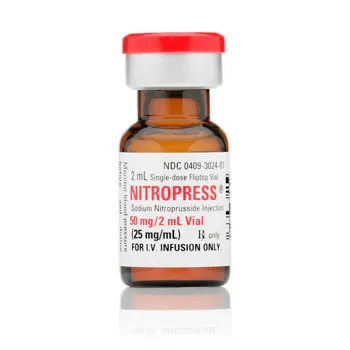
Brand Name: Nitropress, generics
Drug Group: Vasodilator (nitric oxide donor)
Commonly Used For
- Treat hypertensive emergencies.
- Manage acute heart failure.
- Control blood pressure during surgery.
Key Characteristics
Form: Lyophilized powder for IV infusion (50 mg/vial) (detailed in Dosage section).
Mechanism: Releases nitric oxide, causing vasodilation of arteries and veins.
Approval: FDA-approved (1980 for Nitropress) and EMA-approved for hypertensive crises.
Indications and Uses of Nitroprusside
Nitroprusside is indicated for cardiovascular and critical care conditions, leveraging its rapid vasodilatory effects:
Hypertensive Emergency: Treats severe hypertension (e.g., >180/120 mmHg) with organ damage (e.g., stroke, myocardial infarction), rapidly lowering blood pressure, per American Heart Association guidelines.
Acute Heart Failure: Manages acute decompensated heart failure with pulmonary edema, reducing preload and afterload, improving cardiac output, supported by cardiology trials.
Aortic Dissection: Controls blood pressure in acute aortic dissection (Stanford Type A or B), stabilizing the aorta, used in surgical and medical management, per vascular surgery protocols.
Perioperative Hypertension: Manages blood pressure spikes during cardiac or major surgery, ensuring hemodynamic stability, widely adopted in anesthesiology.
Pulmonary Hypertension Crisis: Used off-label to treat acute pulmonary hypertension in critical care, reducing right heart strain, with evidence from pulmonary hypertension studies.
Refractory Angina: Investigated off-label for refractory angina unresponsive to nitrates, improving coronary perfusion, supported by cardiology research.
Septic Shock with Hypertension: Employed off-label to manage paradoxical hypertension in septic shock, balancing vasodilation and perfusion, with data from critical care cohorts.
Post-Cardiac Surgery Hypertension: Controls blood pressure post-coronary artery bypass grafting (CABG) or valve replacement, preventing complications, noted in cardiac surgery literature.
Intracranial Hypertension: Explored off-label to reduce intracranial pressure in traumatic brain injury or stroke, improving cerebral perfusion, with neurology evidence.
Pre-Eclampsia/Eclampsia: Used off-label in severe cases to manage hypertensive crises in pregnancy, with careful fetal monitoring, supported by obstetric research.
Dosage of Nitroprusside
Dosage for Adults
Hypertensive Emergency:
- Initial: 0.3–0.5 mcg/kg/min IV infusion, titrated to 1–10 mcg/kg/min, targeting a 10–30% blood pressure reduction.
- Maximum: 10 mcg/kg/min for no more than 10 minutes; avoid prolonged high doses.
Acute Heart Failure: 0.5–2 mcg/kg/min IV, adjusted to maintain cardiac index and reduce pulmonary pressures.
Aortic Dissection: 0.5–3 mcg/kg/min IV, combined with beta-blockers (e.g., esmolol), to control systolic pressure below 120 mmHg.
Dosage for Children
Hypertensive Emergency: 0.3–1 mcg/kg/min IV, titrated to 8 mcg/kg/min, under pediatric critical care supervision.
Not recommended under 1 month unless critical.
Dosage for Pregnant Women
Pregnancy Category C: Use only if benefits outweigh risks (e.g., severe pre-eclampsia). Consult an obstetrician, with fetal monitoring and minimal effective dose.
Dosage Adjustments
Renal Impairment: No adjustment needed; monitor for thiocyanate accumulation in severe cases (CrCl <30 mL/min).
Hepatic Impairment: Reduce initial dose (e.g., 0.1–0.3 mcg/kg/min); avoid if severe (Child-Pugh C).
Elderly: Start with 0.1–0.3 mcg/kg/min; increase cautiously with monitoring.
Concomitant Medications: Adjust if combined with other antihypertensives, enhancing hypotension risk.
Additional Considerations
- Administer this active ingredient via IV infusion with an infusion pump, using a dedicated line.
- Protect from light using opaque covering during administration.
How to Use Nitroprusside
Administration:
- Reconstitute with dextrose 5% (D5W), dilute to 50–200 mcg/mL, and infuse via pump over a controlled rate; avoid saline alone due to instability.
- Administer in an ICU with continuous blood pressure monitoring (e.g., arterial line).
Timing: Use as a continuous infusion, titrated every 5–10 minutes based on response.
Monitoring: Watch for headache, dizziness, or signs of cyanide toxicity (e.g., metabolic acidosis).
Additional Tips:
- Store at 20–25°C (68–77°F) before reconstitution; use within 24 hours once prepared.
- Keep out of reach of children due to toxicity risk.
- Report severe chest pain, confusion, or signs of allergic reaction immediately.
Contraindications for Nitroprusside
Hypersensitivity: Patients with a known allergy to Nitroprusside or sodium nitroprusside.
Compensatory Hypertension: Contraindicated in hypertension due to aortic coarctation or arteriovenous shunt.
Severe Hepatic/Renal Impairment: Avoid in severe liver or kidney failure due to thiocyanate/cyanide accumulation.
Acute Myocardial Infarction with Low Cardiac Output: Contraindicated due to risk of worsening ischemia.
Side Effects of Nitroprusside
Common Side Effects
- Headache (10–30%, relieved with rest)
- Nausea (5–20%, manageable with antiemetics)
- Vomiting (5–15%, reduced with hydration)
- Flushing (3–10%, transient)
- Dizziness (2–8%, decreases with dose adjustment)
These effects may subside with careful titration.
Serious Side Effects
Seek immediate medical attention for:
- Metabolic: Cyanide toxicity, thiocyanate toxicity, or lactic acidosis.
- Cardiovascular: Severe hypotension, myocardial ischemia, or rebound hypertension.
- Neurological: Altered mental status, seizures, or coma.
- Respiratory: Hypoxia or respiratory depression.
- Allergic: Rash, angioedema, or anaphylaxis.
Additional Notes
- Regular monitoring for cyanide/thiocyanate levels, blood pressure, and oxygen saturation is advised.
- Report any unusual symptoms (e.g., severe weakness, blue lips) immediately to a healthcare provider.
Warnings & Precautions for Nitroprusside
General Warnings
Cyanide Toxicity: Risk with prolonged use (>72 hours) or high doses (>10 mcg/kg/min); monitor thiocyanate and cyanide levels.
Hypotension: Excessive blood pressure drop; titrate slowly and monitor continuously.
Methemoglobinemia: Rare risk with high doses; assess oxygen saturation.
Thiocyanate Toxicity: Accumulation in renal impairment; check levels after 48 hours.
Rebound Hypertension: Risk upon abrupt discontinuation; taper infusion.
Additional Warnings
Intracranial Pressure: May increase pressure in traumatic brain injury; use cautiously.
Hypothyroidism: Risk due to thiocyanate interference with iodine uptake; monitor thyroid function.
Coronary Steal Syndrome: Potential worsening of myocardial ischemia; assess cardiac status.
Vitamin B12 Deficiency: Enhanced risk with long-term use; monitor neurological symptoms.
Hypersensitivity Reactions: Rare anaphylaxis; discontinue if swelling occurs.
Use in Specific Populations
- Pregnancy: Category C; use only if essential with fetal monitoring.
- Breastfeeding: Excreted in breast milk; monitor infant for effects.
- Elderly: Higher risk of hypotension; start with lower doses.
- Children: Limited to 1 month+; supervise closely.
- Renal/Hepatic Impairment: Adjust dose; avoid in severe cases.
Additional Precautions
- Inform your doctor about kidney disease, liver conditions, or vitamin B12 deficiency before starting this medication.
- Ensure ICU monitoring with cyanide antidote (e.g., hydroxocobalamin) availability.
Overdose and Management of Nitroprusside
Overdose Symptoms
- Severe hypotension, headache, or dizziness.
- Severe cases: Cyanide poisoning (e.g., lactic acidosis, altered mental status), thiocyanate toxicity, or cardiac arrest.
- Nausea, vomiting, or flushing as early signs.
- Respiratory depression with extremely high doses.
Immediate Actions
Contact the Medical Team: Seek immediate medical help.
Supportive Care: Administer IV fluids, vasopressors (e.g., norepinephrine) for hypotension, and oxygen.
Specific Treatment: Use hydroxocobalamin or sodium thiosulfate for cyanide toxicity; monitor cyanide/thiocyanate levels.
Monitor: Check blood pressure, arterial blood gases, and metabolic status for 24–72 hours.
Additional Notes
- Overdose risk is high with prolonged infusion; store securely.
- Report persistent symptoms (e.g., confusion, cherry-red skin) promptly.
Drug Interactions with Nitroprusside
This active ingredient may interact with:
- Phosphodiesterase Inhibitors: Enhances hypotension (e.g., sildenafil); avoid combination.
- Antihypertensives: Potentiates blood pressure drop (e.g., beta-blockers); monitor closely.
- Ganglionic Blockers: Increases vasodilatory effects (e.g., trimethaphan); adjust dose.
- Volatile Anesthetics: Enhances hypotension during surgery; reduce dose.
- Cimetidine: May increase levels; monitor for toxicity.
Action: Provide your healthcare provider with a complete list of medications.
Patient Education or Lifestyle
Medication Adherence: Take this vasodilator as prescribed in a controlled ICU setting, following the exact infusion protocol.
Monitoring: Report headache, dizziness, or signs of toxicity (e.g., confusion) immediately.
Lifestyle: Avoid sudden position changes; stay hydrated.
Diet: No specific dietary restrictions; maintain electrolyte balance.
Emergency Awareness: Know signs of cyanide toxicity or severe hypotension; seek care if present.
Follow-Up: Schedule regular check-ups during infusion to monitor blood pressure, cyanide levels, and organ function.
Pharmacokinetics of Nitroprusside
Absorption: Not orally bioavailable; administered IV (peak effect within 1–2 minutes).
Distribution: Volume of distribution ~0.4 L/kg; rapidly distributes to tissues.
Metabolism: Non-enzymatic release of nitric oxide and cyanide in red blood cells, converted to thiocyanate by liver rhodanese.
Excretion: Primarily renal (50–70%) as thiocyanate; half-life 10 minutes (active drug), 3–7 days (thiocyanate).
Half-Life: 10 minutes for nitroprusside, with thiocyanate accumulation over time.
Pharmacodynamics of Nitroprusside
This drug exerts its effects by:
- Releasing nitric oxide, activating guanylate cyclase to increase cGMP, relaxing vascular smooth muscle.
- Causing balanced arterial and venous dilation, reducing preload and afterload.
- Demonstrating rapid onset (seconds) and offset (minutes), ideal for acute control.
- Exhibiting dose-dependent risks of cyanide/thiocyanate toxicity and hypotension.
Storage of Nitroprusside
Temperature: Store at 20–25°C (68–77°F) before reconstitution; refrigerate reconstituted solution at 2–8°C (36–46°F).
Protection: Keep in original amber vial or cover infusion with opaque material to protect from light.
Safety: Store in a locked container out of reach of children due to toxicity risk.
Disposal: Dispose of unused vials and infusion waste per hazardous drug regulations or consult a pharmacist.
Frequently Asked Questions (FAQs)
Q: What does Nitroprusside treat?
A: This medication treats hypertensive emergencies and heart failure.
Q: Can this active ingredient cause headache?
A: Yes, headache may occur; report if severe.
Q: Is Nitroprusside safe for children?
A: Yes, for 1 month+ with a doctor’s guidance.
Q: How is this drug taken?
A: Via IV infusion in a hospital setting, as directed.
Q: How long is Nitroprusside treatment?
A: Short-term, typically 24–72 hours, under monitoring.
Q: Can I use Nitroprusside if pregnant?
A: Yes, with caution; consult a doctor.
Regulatory Information
This medication is approved by:
U.S. Food and Drug Administration (FDA): Approved in 1980 (Nitropress) for hypertensive emergencies.
European Medicines Agency (EMA): Approved for hypertensive crises and heart failure.
Other Agencies: Approved globally for critical care; consult local guidelines.
References
- U.S. Food and Drug Administration (FDA). (2023). Nitropress (Nitroprusside) Prescribing Information.
- Official FDA documentation detailing the drug’s approved uses, dosage, and safety.
- European Medicines Agency (EMA). (2023). Nitroprusside Summary of Product Characteristics.
- EMA’s comprehensive information on the medication’s indications and precautions in Europe.
- National Institutes of Health (NIH). (2023). Nitroprusside: MedlinePlus Drug Information.
- NIH resource providing detailed information on the drug’s uses, side effects, and precautions.
- American Heart Association (AHA). (2023). Guidelines on Hypertensive Emergencies: Nitroprusside.
- AHA recommendations for Nitroprusside in hypertension management.
- Critical Care Medicine. (2022). Nitroprusside in Acute Heart Failure.
- Peer-reviewed article on Nitroprusside efficacy (note: access may require a subscription).
