
Comprehensive Guide to Nitrofurantoin: Uses, Dosage, Side Effects, and More
What is Nitrofurantoin?
Overview of Nitrofurantoin
Generic Name: Nitrofurantoin
Brand Name: Macrobid, Macrodantin, generics
Drug Group: Nitrofuran antibiotic
Commonly Used For
- Treat urinary tract infections (UTIs).
- Prevent recurrent UTIs.
- Manage bacterial cystitis.
Key Characteristics
Form: Oral capsules (50 mg, 100 mg Macrobid; 25 mg, 50 mg, 100 mg Macrodantin) and oral suspension (detailed in Dosage section).
Mechanism: Disrupts bacterial carbohydrate metabolism and protein synthesis.
Approval: FDA-approved (1953 for Macrodantin) and EMA-approved for UTIs.
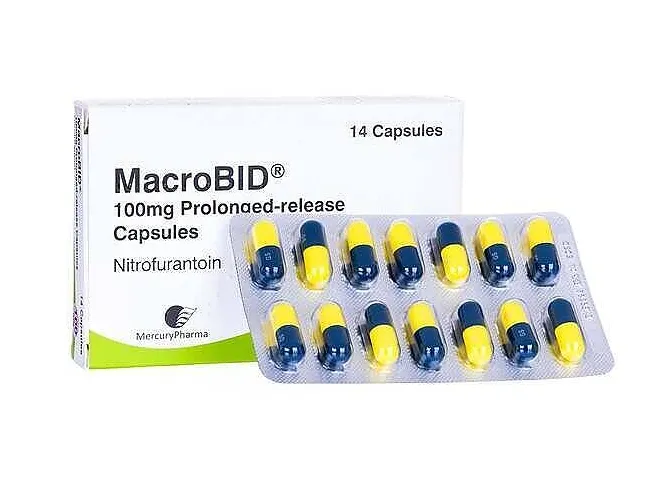
Indications and Uses of Nitrofurantoin
Nitrofurantoin is indicated for urinary tract-related infections, leveraging its bactericidal properties:
Uncomplicated Urinary Tract Infections (UTIs): Treats acute uncomplicated UTIs caused by Escherichia coli, Enterococcus faecalis, and Staphylococcus saprophyticus, with a 5-day course improving symptom relief, per urology guidelines.
Recurrent Urinary Tract Infections (UTIs): Prevents recurrent UTIs in women with frequent episodes (≥2 in 6 months or ≥3 in 12 months), reducing recurrence rates, supported by infectious disease studies.
Bacterial Cystitis: Manages acute cystitis, alleviating dysuria and urgency, effective against susceptible strains, per clinical trials.
Pyelonephritis (Mild Cases): Used off-label for mild pyelonephritis in outpatient settings, with caution due to limited renal penetration, supported by nephrology research.
Prophylaxis in Catheterized Patients: Employed off-label to prevent UTIs in patients with indwelling catheters, reducing infection rates, with evidence from urologic care studies.
Post-Surgical UTI Prevention: Investigated off-label for UTI prophylaxis after urologic procedures (e.g., cystoscopy), minimizing postoperative infections, per surgical guidelines.
Pediatric UTI Management: Treats UTIs in children (1 month–12 years) with age-adjusted dosing, improving outcomes, supported by pediatric infectious disease data.
Chronic Prostatitis (Adjunct): Explored off-label as an adjunct in chronic bacterial prostatitis, targeting urinary pathogens, with preliminary urology evidence.
Travel-Related UTI Prevention: Used off-label by travelers to prevent UTIs in high-risk settings (e.g., poor hygiene areas), with emerging travel medicine insights.
Dosage of Nitrofurantoin
Dosage for Adults
Uncomplicated UTI (Acute):
- Macrobid: 100 mg twice daily for 5 days.
- Macrodantin: 50–100 mg four times daily for 7 days.
Recurrent UTI Prophylaxis:
- Macrobid: 100 mg once daily at bedtime.
- Macrodantin: 50–100 mg once daily at bedtime.
Long-Term Suppression:
- Macrodantin: 50–100 mg once daily, with monitoring.
Dosage for Children
1 month–12 years (UTI Treatment): 5–7 mg/kg/day in divided doses (e.g., 25 mg four times daily for a 10 kg child), using oral suspension, for 7 days, under pediatric supervision.
Not recommended under 1 month.
Prophylaxis: 1–2 mg/kg once daily at bedtime, maximum 100 mg/day.
Dosage for Pregnant Women
Pregnancy Category B: Safe in the second and third trimesters; avoid near term (38–42 weeks) due to neonatal hemolysis risk. Consult an obstetrician, using 100 mg twice daily for 5 days for UTIs.
Dosage Adjustments
Renal Impairment: Avoid if CrCl <30 mL/min or eGFR <45 mL/min/1.73 m² due to accumulation risk; monitor in mild cases.
Hepatic Impairment: No adjustment needed; monitor in severe cases.
Elderly: Start with 50 mg four times daily; increase to 100 mg if tolerated.
Concomitant Medications: Adjust if combined with antacids (e.g., magnesium trisilicate), reducing absorption.
Additional Considerations
- Take this active ingredient with food to enhance absorption and reduce stomach upset.
- Complete the full course to prevent resistance.
How to Use Nitrofurantoin
Administration:
- Swallow capsules or take oral suspension with food or milk; shake suspension well before use.
- Avoid antacids within 2 hours of dosing to prevent reduced efficacy.
Timing: Use as prescribed (e.g., twice daily for Macrobid, four times daily for Macrodantin), maintaining consistency.
Monitoring: Watch for shortness of breath, yellowing skin, or signs of neuropathy (e.g., tingling).
Additional Tips:
- Store at 20–25°C (68–77°F), protecting from moisture and light.
- Keep out of reach of children due to toxicity risk.
- Report persistent cough, fatigue, or signs of allergic reaction immediately.
Contraindications for Nitrofurantoin
Hypersensitivity: Patients with a known allergy to Nitrofurantoin or nitrofurans.
Severe Renal Impairment: Contraindicated if CrCl <30 mL/min or eGFR <45 mL/min/1.73 m².
Infants <1 Month: Due to risk of hemolytic anemia.
Pregnancy at Term (38–42 weeks): Avoid due to neonatal hemolysis risk.
Side Effects of Nitrofurantoin
Common Side Effects
- Nausea (10–20%, manageable with food)
- Headache (5–15%, relieved with rest)
- Rash (3–10%, monitor for severity)
- Diarrhea (2–8%, transient)
- Drowsiness (1–5%, decreases with tolerance)
These effects may subside with dose adjustment.
Serious Side Effects
Seek immediate medical attention for:
- Pulmonary: Acute pneumonitis, chronic fibrosis, or dyspnea.
- Neurological: Peripheral neuropathy or paresthesia.
- Hepatic: Hepatitis, cholestasis, or jaundice.
- Hematologic: Hemolytic anemia or agranulocytosis.
- Allergic: Rash, angioedema, or anaphylaxis.
Additional Notes
- Regular monitoring for lung function, liver enzymes, and neurological status is advised.
- Report any unusual symptoms (e.g., persistent cough, yellow skin) immediately to a healthcare provider.
Warnings & Precautions for Nitrofurantoin
General Warnings
Pulmonary Toxicity: Risk of acute, subacute, or chronic pulmonary reactions (e.g., fibrosis); monitor respiratory symptoms.
Peripheral Neuropathy: Risk in renal impairment or prolonged use; discontinue if numbness occurs.
Hepatotoxicity: Risk of hepatitis or cholestatic jaundice; check liver function.
Hemolytic Anemia: Risk in G6PD deficiency; screen before use.
Superinfection: Risk of resistant organisms (e.g., Pseudomonas); monitor.
Additional Warnings
Pseudomembranous Colitis: Rare risk with Clostridium difficile; assess diarrhea.
Cardiac Effects: Rare pericarditis; monitor chest pain.
Allergic Reactions: Risk of anaphylaxis or lupus-like syndrome; discontinue if present.
Renal Function Decline: Monitor in chronic use; avoid in advanced renal disease.
Hypersensitivity Reactions: Rare severe skin reactions; stop if rash worsens.
Use in Specific Populations
- Pregnancy: Category B; avoid near term; monitor fetus.
- Breastfeeding: Excreted in breast milk; monitor infant for diarrhea or rash.
- Elderly: Higher risk of neuropathy; start with lower doses.
- Children: Limited to 1 month+; supervise closely.
- Renal/Hepatic Impairment: Avoid in severe cases; monitor function.
Additional Precautions
- Inform your doctor about kidney disease, G6PD deficiency, or medication history before starting this medication.
- Avoid abrupt cessation; taper if used long-term for prophylaxis.
Overdose and Management of Nitrofurantoin
Overdose Symptoms
- Nausea, vomiting, or abdominal pain.
- Severe cases: Neuropathy, pulmonary edema, or hemolytic anemia.
- Drowsiness, headache, or fever as early signs.
- Seizures with extremely high doses.
Immediate Actions
Contact the Medical Team: Seek immediate medical help.
Supportive Care: Administer activated charcoal if ingested recently, monitor vital signs, and provide IV fluids.
Specific Treatment: Manage neuropathy with supportive care, treat hemolysis if present; no specific antidote.
Monitor: Check lung function, blood counts, and neurological status for 24–48 hours.
Additional Notes
- Overdose risk is low; store securely.
- Report persistent symptoms (e.g., shortness of breath, confusion) promptly.
Drug Interactions with Nitrofurantoin
This active ingredient may interact with:
- Antacids: Reduces absorption (e.g., magnesium trisilicate); separate by 2 hours.
- Probenecid: Increases levels; avoid combination.
- Quinolones: May reduce efficacy; monitor.
- Uricosuric Agents: Alters renal excretion; adjust dose.
- Oral Contraceptives: Rare effect on efficacy; use backup if needed.
Action: Provide your healthcare provider with a complete list of medications.
Patient Education or Lifestyle
Medication Adherence: Take this antibiotic as prescribed to treat UTIs, completing the full course.
Monitoring: Report shortness of breath, numbness, or yellowing skin immediately.
Lifestyle: Avoid smoking; maintain hydration to support urinary health.
Diet: Take with food to enhance absorption; avoid dairy near dosing if using antacids.
Emergency Awareness: Know signs of lung issues or neuropathy; seek care if present.
Follow-Up: Schedule regular check-ups every 1–3 months during prophylaxis to monitor kidney and lung function.
Pharmacokinetics of Nitrofurantoin
Absorption: Well-absorbed orally (peak at 1–2 hours); enhanced with food; reduced by antacids.
Distribution: Concentrates in urine (200x plasma levels); 60–90% protein-bound.
Metabolism: Hepatic and tissue reduction to active and inactive metabolites.
Excretion: Primarily renal (30–50% unchanged); half-life 0.3–1 hour, prolonged in renal impairment.
Half-Life: 0.3–1 hour, with rapid urinary clearance but prolonged tissue effects.
Pharmacodynamics of Nitrofurantoin
This drug exerts its effects by:
- Inhibiting bacterial acetyl coenzyme A, disrupting carbohydrate metabolism.
- Damaging bacterial DNA and protein synthesis in susceptible strains.
- Offering concentration-dependent activity in urine, limiting systemic effects.
- Exhibiting dose-dependent risks of pulmonary and neurological toxicity.
Storage of Nitrofurantoin
Temperature: Store at 20–25°C (68–77°F); protect from moisture and light.
Protection: Keep in original container, away from heat.
Safety: Store in a locked container out of reach of children due to toxicity risk.
Disposal: Dispose of unused capsules per local regulations or consult a pharmacist.
Frequently Asked Questions (FAQs)
Q: What does Nitrofurantoin treat?
A: This medication treats urinary tract infections.
Q: Can this active ingredient cause shortness of breath?
A: Yes, pulmonary issues may occur; report if persistent.
Q: Is Nitrofurantoin safe for children?
A: Yes, for 1 month+ with a doctor’s guidance.
Q: How is this drug taken?
A: Orally with food, as directed, typically twice or four times daily.
Q: How long is Nitrofurantoin treatment?
A: 5–7 days for acute UTIs or long-term for prophylaxis.
Q: Can I use Nitrofurantoin if pregnant?
A: Yes, with caution; avoid near term; consult a doctor.
Regulatory Information
This medication is approved by:
U.S. Food and Drug Administration (FDA): Approved in 1953 (Macrodantin) for UTIs, later expanded to Macrobid.
European Medicines Agency (EMA): Approved for UTI treatment and prophylaxis.
Other Agencies: Approved globally for urinary infections; consult local guidelines.
References
- U.S. Food and Drug Administration (FDA). (2023). Macrobid (Nitrofurantoin) Prescribing Information.
- Official FDA documentation detailing the drug’s approved uses, dosage, and safety.
- European Medicines Agency (EMA). (2023). Nitrofurantoin Summary of Product Characteristics.
- EMA’s comprehensive information on the medication’s indications and precautions in Europe.
- National Institutes of Health (NIH). (2023). Nitrofurantoin: MedlinePlus Drug Information.
- NIH resource providing detailed information on the drug’s uses, side effects, and precautions.
- World Health Organization (WHO). (2023). WHO Model List of Essential Medicines: Nitrofurantoin.
- WHO’s inclusion of Nitrofurantoin for UTI management.
- Journal of Antimicrobial Chemotherapy. (2022). Nitrofurantoin in UTI Prophylaxis.
- Peer-reviewed article on Nitrofurantoin efficacy (note: access may require a subscription).
