
Comprehensive Guide to Neostigmine: Uses, Dosage, Side Effects, and More
What is Neostigmine?
Overview of Neostigmine
Generic Name: Neostigmine
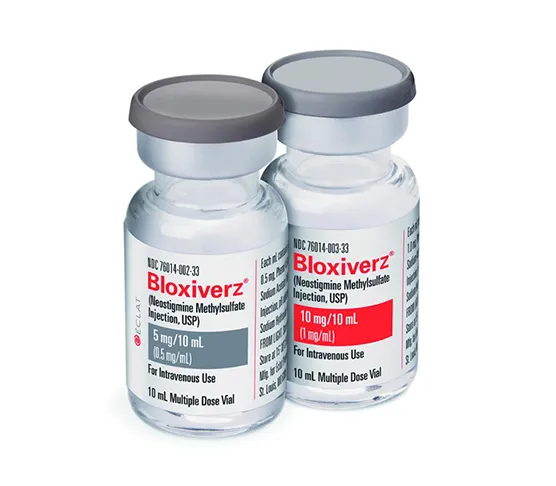
Brand Name: Bloxiverz, Prostigmin, generics
Drug Group: Cholinesterase inhibitor (anticholinesterase)
Commonly Used For
- Reverse non-depolarizing neuromuscular blockade.
- Treat myasthenia gravis.
- Manage urinary retention or postoperative ileus.
Key Characteristics
Form: Injection (0.5 mg/mL, 1 mg/mL), oral tablets (15 mg), and ophthalmic solution (detailed in Dosage section).
Mechanism: Inhibits acetylcholinesterase, increasing acetylcholine at neuromuscular junctions.
Approval: FDA-approved (1950s for Prostigmin) and EMA-approved for multiple indications.
Indications and Uses of Neostigmine
Neostigmine is indicated for neuromuscular and autonomic conditions, leveraging its ability to enhance cholinergic activity:
Reversal of Neuromuscular Blockade: Reverses the effects of non-depolarizing muscle relaxants (e.g., rocuronium, vecuronium) after surgery, restoring spontaneous respiration, per anesthesiology guidelines, with rapid onset within 1–2 minutes.
Myasthenia Gravis: Treats myasthenia gravis by improving muscle strength in adults and children, reducing fatigue and ptosis, supported by long-term neuromuscular studies.
Postoperative Urinary Retention: Manages urinary retention after surgery by stimulating bladder contraction, enhancing voiding, with evidence from urologic and surgical research.
Postoperative Ileus: Used off-label to promote gastrointestinal motility post-abdominal surgery, reducing recovery time, supported by gastroenterology data.
Orthostatic Hypotension: Investigated off-label to improve blood pressure regulation in autonomic dysfunction, with preliminary cardiology findings.
Alzheimer’s Disease: Explored off-label to enhance cognitive function in early Alzheimer’s by boosting acetylcholine, with ongoing neurologic research.
Snake Envenomation: Employed off-label as an adjunct in neurotoxic snake bites (e.g., cobra) to counteract paralysis, with emerging toxicology evidence.
Pediatric Myasthenia Gravis: Treats myasthenia gravis in children (2+ years) with adjusted dosing, improving quality of life, per pediatric neurology protocols.
Lambert-Eaton Myasthenic Syndrome (LEMS): Investigated off-label to support muscle strength in LEMS, with cautious use under specialist care, supported by neuromuscular studies.
Dosage of Neostigmine
Dosage for Adults
Reversal of Neuromuscular Blockade: 0.03–0.07 mg/kg IV, administered with an anticholinergic (e.g., glycopyrrolate 0.01 mg/kg) over 1–2 minutes, titrated to effect.
Myasthenia Gravis (Oral): 15–30 mg every 3–4 hours during the day, with a maximum of 150 mg/day, adjusted for symptom control.
Postoperative Urinary Retention: 0.5–1 mg IM or SC, repeated if needed after 1 hour, not exceeding 5 mg total.
Dosage for Children
Reversal of Neuromuscular Blockade: 0.025–0.07 mg/kg IV with glycopyrrolate, under anesthesiologist supervision.
Myasthenia Gravis (2–17 years): 0.3–2 mg/kg/day orally in divided doses (max 60 mg/day), titrated under pediatric neurologist care.
Not recommended under 2 years unless critical.
Dosage for Pregnant Women
Pregnancy Category C: Limited data; use only if benefits outweigh risks (e.g., myasthenia gravis). Consult an obstetrician, with fetal monitoring.
Dosage Adjustments
Renal Impairment: Reduce dose by 50% if CrCl <50 mL/min; avoid if <10 mL/min.
Hepatic Impairment: No adjustment needed; monitor in severe cases.
Elderly: Start with lower end of range (e.g., 0.03 mg/kg IV); increase cautiously.
Concomitant Medications: Adjust if combined with other cholinergic agents or beta-blockers, increasing bradycardia risk.
Additional Considerations
- Administer this active ingredient with an anticholinergic (e.g., atropine) to prevent bradycardia or excessive salivation.
- Use a syringe pump for precise IV titration in perioperative settings.
How to Use Neostigmine
Administration:
IV: Dilute in saline and infuse slowly over 1–2 minutes under monitoring; avoid rapid injection.
Oral: Swallow tablets with water, 30 minutes before meals for myasthenia gravis.
IM/SC: Inject into a large muscle or subcutaneous tissue, as directed.
Timing: Use as needed for reversal or on a scheduled basis for myasthenia gravis, maintaining consistency.
Monitoring: Watch for muscle weakness, bradycardia, or signs of cholinergic crisis (e.g., excessive salivation).
Additional Tips:
- Store at 20–25°C (68–77°F), protecting from light and freezing.
- Keep out of reach of children due to overdose risk.
- Report severe abdominal cramps, difficulty breathing, or signs of allergic reaction immediately.
Contraindications for Neostigmine
Hypersensitivity: Patients with a known allergy to Neostigmine or cholinesterase inhibitors.
Mechanical Intestinal or Urinary Obstruction: Contraindicated due to risk of rupture.
Peritonitis: Avoid due to potential worsening.
Severe Bradycardia: Contraindicated unless managed with anticholinergics.
Side Effects of Neostigmine
Common Side Effects
- Bradycardia (10–20%, managed with atropine)
- Nausea (5–15%, relieved with food)
- Diarrhea (5–12%, transient)
- Abdominal Cramps (3–10%, reduced with dose adjustment)
- Increased Salivation (2–8%, decreases with tolerance)
These effects may subside with dose optimization.
Serious Side Effects
Seek immediate medical attention for:
- Cardiovascular: Severe bradycardia, hypotension, or heart block.
- Respiratory: Bronchospasm, respiratory depression, or paralysis.
- Neurological: Seizures, cholinergic crisis, or confusion.
- Gastrointestinal: Severe cramps, vomiting, or intestinal obstruction.
- Allergic: Rash, angioedema, or anaphylaxis.
Additional Notes
- Regular monitoring for heart rate, respiratory function, and muscle strength is advised.
- Report any unusual symptoms (e.g., severe weakness, chest pain) immediately to a healthcare provider.
Warnings & Precautions for Neostigmine
General Warnings
Cholinergic Crisis: Risk of overdose leading to muscle weakness or respiratory depression; monitor closely.
Bradycardia: Risk of severe heart rate reduction; always co-administer with atropine.
Asthma: May exacerbate bronchospasm; use cautiously.
Seizures: Rare risk in high doses; assess neurological status.
Hypotension: Risk with rapid IV administration; titrate slowly.
Additional Warnings
Myasthenic Crisis: Difficulty distinguishing from cholinergic crisis; requires expert evaluation.
Cardiovascular Effects: Risk of atrioventricular block; monitor ECG.
Gastrointestinal Effects: Severe cramps or diarrhea; increase fiber intake cautiously.
Ocular Effects: Risk of miosis or blurred vision; avoid in glaucoma.
Hypersensitivity Reactions: Rare anaphylaxis; discontinue if swelling occurs.
Use in Specific Populations
Pregnancy: Category C; use only if essential with fetal monitoring.
Breastfeeding: Excreted in breast milk; monitor infant for effects.
Elderly: Higher risk of bradycardia; start with lower doses.
Children: Limited to 2+ years; supervise closely.
Renal/Hepatic Impairment: Adjust dose; avoid in severe cases.
Additional Precautions
- Inform your doctor about respiratory conditions, heart disease, or medication history before starting this medication.
- Avoid abrupt cessation; taper if used long-term for myasthenia gravis.
Overdose and Management of Neostigmine
Overdose Symptoms
- Excessive salivation, lacrimation, or sweating.
- Severe cases: Bradycardia, respiratory paralysis, or seizures.
- Muscle weakness, nausea, or vomiting as early signs.
- Cardiac arrest with extremely high doses.
Immediate Actions
Contact the Medical Team: Seek immediate medical help.
Supportive Care: Administer atropine (0.5–1 mg IV) to reverse cholinergic effects, provide mechanical ventilation if needed, and monitor vital signs.
Specific Treatment: Use pralidoxime in extreme cases; no specific antidote for Neostigmine alone.
Monitor: Check heart rate, respiratory function, and neurological status for 24–48 hours.
Additional Notes
- Overdose risk is significant; store securely.
- Report persistent symptoms (e.g., severe weakness, difficulty breathing) promptly.
Drug Interactions with Neostigmine
This active ingredient may interact with:
- Cholinergic Agents: Enhances effects (e.g., bethanechol); avoid combinations.
- Beta-Blockers: Increases bradycardia risk (e.g., propranolol); monitor closely.
- Anticholinergics: Reduces efficacy (e.g., atropine as antidote); adjust timing.
- Muscle Relaxants: Alters neuromuscular effects (e.g., succinylcholine); use cautiously.
- Corticosteroids: May exacerbate myasthenia gravis; monitor response.
Action: Provide your healthcare provider with a complete list of medications.
Patient Education or Lifestyle
Medication Adherence: Take this cholinesterase inhibitor as prescribed for myasthenia gravis or reversal, following the exact schedule.
Monitoring: Report bradycardia, muscle weakness, or excessive salivation immediately.
Lifestyle: Avoid strenuous activity during dose adjustment; stay hydrated.
Diet: Take oral doses 30 minutes before meals; avoid heavy meals if experiencing cramps.
Emergency Awareness: Know signs of cholinergic crisis or respiratory distress; seek care if present.
Follow-Up: Schedule regular check-ups every 1–3 months to monitor heart, respiratory, and neuromuscular function.
Pharmacokinetics of Neostigmine
Absorption: Well-absorbed orally (peak at 1–2 hours); IV onset within 1 minute.
Distribution: Volume of distribution ~0.7–2 L/kg; 15–25% protein-bound.
Metabolism: Hepatic via hydrolysis to inactive metabolites.
Excretion: Primarily renal (50–70%) as unchanged drug; half-life 0.5–2 hours.
Half-Life: 0.5–2 hours, with rapid clearance but prolonged neuromuscular effects.
Pharmacodynamics of Neostigmine
This drug exerts its effects by:
Inhibiting acetylcholinesterase, increasing acetylcholine at muscarinic and nicotinic receptors.
Enhancing neuromuscular transmission in myasthenia gravis and reversing blockade.
Demonstrating dose-dependent cholinergic overstimulation and cardiovascular effects.
Exhibiting synergistic effects with anticholinergics to mitigate adverse reactions.
Storage of Neostigmine
Temperature: Store at 20–25°C (68–77°F); protect from light and freezing.
Protection: Keep in original container, away from heat.
Safety: Store in a locked container out of reach of children due to overdose risk.
Disposal: Dispose of unused injections or tablets per local regulations or consult a pharmacist.
Frequently Asked Questions (FAQs)
Q: What does Neostigmine treat?
A: This medication treats myasthenia gravis and reverses neuromuscular blockade.
Q: Can this active ingredient cause bradycardia?
A: Yes, bradycardia may occur; report if severe.
Q: Is Neostigmine safe for children?
A: Yes, for 2+ years with a doctor’s guidance.
Q: How is this drug taken?
A: Via IV, IM, SC, or orally, as directed.
Q: How long is Neostigmine treatment?
A: Varies by condition, often long-term for myasthenia gravis.
Q: Can I use Neostigmine if pregnant?
A: Yes, with caution; consult a doctor.
Regulatory Information
This medication is approved by:
U.S. Food and Drug Administration (FDA): Approved in the 1950s (Prostigmin) for myasthenia gravis and neuromuscular reversal.
European Medicines Agency (EMA): Approved for multiple indications.
Other Agencies: Approved globally for neuromuscular and surgical use; consult local guidelines.
References
- U.S. Food and Drug Administration (FDA). (2023). Bloxiverz (Neostigmine) Prescribing Information.
- Official FDA documentation detailing the drug’s approved uses, dosage, and safety.
- European Medicines Agency (EMA). (2023). Neostigmine Summary of Product Characteristics.
- EMA’s comprehensive information on the medication’s indications and precautions in Europe.
- National Institutes of Health (NIH). (2023). Neostigmine: MedlinePlus Drug Information.
- NIH resource providing detailed information on the drug’s uses, side effects, and precautions.
- World Health Organization (WHO). (2023). WHO Model List of Essential Medicines: Neostigmine.
- WHO’s inclusion of Neostigmine for neuromuscular disorders.
- Journal of Neurology, Neurosurgery & Psychiatry. (2022). Neostigmine in Myasthenia Gravis Management.
- Peer-reviewed article on Neostigmine efficacy (note: access may require a subscription).
