
Comprehensive Guide to Naltrexone: Uses, Dosage, Side Effects, and More
What is Naltrexone?
Overview of Naltrexone
Generic Name: Naltrexone
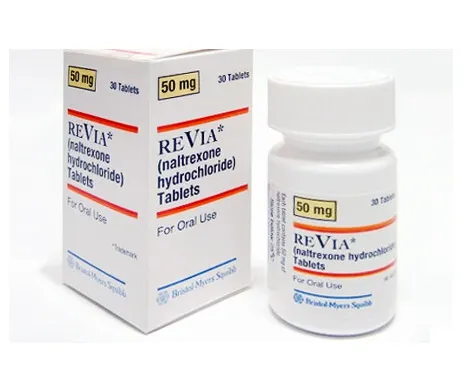
Brand Name: ReVia, Vivitrol (extended-release injection), generics
Drug Group: Opioid antagonist
Commonly Used For
- Treat opioid dependence.
- Manage alcohol use disorder.
- Support addiction recovery.
Key Characteristics
Form: Oral tablets (50 mg) and extended-release intramuscular injection (380 mg/4 mL) (detailed in Dosage section).
Mechanism: Blocks opioid receptors, reducing euphoria and cravings.
Approval: FDA-approved (1984 for oral, 2006 for Vivitrol) and EMA-approved for addiction treatment.
Indications and Uses of Naltrexone
Naltrexone is indicated for substance use disorders and related conditions, leveraging its opioid-blocking properties:
Opioid Dependence: Treats opioid addiction after detoxification, preventing relapse by blocking opioid effects, supported by SAMHSA and NIDA guidelines, with efficacy in maintaining abstinence.
Alcohol Use Disorder (AUD): Manages AUD by reducing alcohol cravings and consumption, improving treatment outcomes, per NIAAA recommendations, with data from randomized controlled trials.
Prevention of Opioid Overdose: Used off-label as an adjunct to prevent overdose in high-risk individuals post-detoxification, enhancing safety, supported by emergency medicine research.
Chronic Pain Management: Investigated off-label for chronic pain in opioid-tolerant patients, reducing reliance on opioids, with evidence from pain management studies.
Eating Disorders: Explored off-label to address binge eating disorder by modulating reward pathways, improving control, supported by psychiatric research.
Prader-Willi Syndrome: Employed off-label to manage hyperphagia (excessive hunger) in Prader-Willi syndrome, reducing food-seeking behavior, with pediatric endocrinology data.
Autism Spectrum Disorder (ASD): Investigated off-label for ASD to reduce self-injurious behavior linked to opioid-like peptides, with emerging neurodevelopmental evidence.
Fibromyalgia: Used off-label to alleviate fibromyalgia symptoms by modulating pain perception, with preliminary rheumatology findings.
Post-Traumatic Stress Disorder (PTSD): Explored off-label to reduce alcohol craving in PTSD patients with co-occurring AUD, supported by trauma-focused studies.
Dosage of Naltrexone
Dosage for Adults
Opioid Dependence (Oral):
- Initial: 25 mg once daily for 1–2 days to assess tolerance.
- Maintenance: 50 mg once daily, taken with or without food.
Alcohol Use Disorder (Oral):
- 50 mg once daily, with or without food, adjusted based on cravings.
Opioid Dependence (Extended-Release Injection):
- 380 mg intramuscularly every 4 weeks or monthly, administered by a healthcare provider.
Dosage for Children
Opioid Dependence or AUD (Off-label, 18+ years):
- Not typically recommended under 18; use only under specialist supervision with 25 mg initial dose, titrated to 50 mg if tolerated.
Dosage for Pregnant Women
Pregnancy Category C: Limited data; use only if benefits outweigh risks (e.g., severe AUD). Consult an obstetrician, with fetal monitoring.
Dosage Adjustments
Renal Impairment: No adjustment needed; monitor in severe cases (CrCl <30 mL/min).
Hepatic Impairment: Mild (Child-Pugh A): No adjustment; moderate (Child-Pugh B): Use caution; severe (Child-Pugh C): Avoid.
Elderly: Start with 25 mg once daily; increase to 50 mg if tolerated.
Concomitant Medications: Avoid with opioids; adjust if combined with hepatotoxic drugs (e.g., acetaminophen).
Additional Considerations
- Take this active ingredient consistently, with or without food for oral form; injection requires medical administration.
- Ensure opioid-free status (7–10 days) before starting.
How to Use Naltrexone
Administration (Oral):
- Swallow tablets whole with water, with or without food; avoid alcohol.
- Take at the same time daily for consistency.
Administration (Injection): Administered as a 380 mg intramuscular injection in the gluteal muscle every 4 weeks by a healthcare provider.
Monitoring: Watch for abdominal pain, fatigue, or signs of liver issues (e.g., yellowing skin).
Additional Tips:
- Store tablets at 20–25°C (68–77°F), protecting from moisture; injection at 2–8°C (36–46°F).
- Keep out of reach of children due to overdose risk.
- Report severe headache, confusion, or signs of allergic reaction immediately.
Contraindications for Naltrexone
Hypersensitivity: Patients with a known allergy to Naltrexone or its components.
Current Opioid Use: Contraindicated due to risk of precipitated withdrawal.
Acute Hepatitis or Liver Failure: Avoid due to hepatotoxicity risk.
Opioid Dependence Without Detoxification: Contraindicated until opioid-free.
Side Effects of Naltrexone
Common Side Effects
- Nausea (10–20%, manageable with food)
- Headache (7–15%, relieved with rest)
- Fatigue (5–12%, decreases with tolerance)
- Insomnia (4–10%, improved with sleep hygiene)
- Abdominal Pain (3–8%, transient)
These effects may subside with dose adjustment.
Serious Side Effects
Seek immediate medical attention for:
- Hepatic: Jaundice, hepatitis, or liver failure.
- Psychiatric: Depression, suicidal ideation, or mood changes.
- Gastrointestinal: Severe abdominal pain or pancreatitis.
- Allergic: Rash, angioedema, or anaphylaxis.
- Neurological: Seizures or confusion.
Additional Notes
- Regular monitoring for liver function, mental health, and injection site is advised.
- Report any unusual symptoms (e.g., yellow skin, severe mood swings) immediately to a healthcare provider.
Warnings & Precautions for Naltrexone
General Warnings
Precipitated Opioid Withdrawal: Risk if opioids are present; ensure detoxification.
Hepatotoxicity: Risk of liver injury; monitor liver enzymes monthly.
Depression/Suicide Risk: Increased in some patients; assess mental health.
Opioid Overdose Risk: After discontinuation, heightened sensitivity; educate patients.
Injection Site Reactions: Pain or necrosis with Vivitrol; monitor injection site.
Additional Warnings
Eosinophilic Pneumonia: Rare lung inflammation; report respiratory symptoms.
Hypersensitivity Reactions: Rare anaphylaxis; discontinue if swelling occurs.
Cardiovascular Effects: Rare hypertension or tachycardia; monitor in at-risk patients.
Renal Impairment: Monitor in severe cases; adjust if necessary.
Fatigue and Dizziness: Common; avoid driving if affected.
Use in Specific Populations
- Pregnancy: Category C; use only if essential with fetal monitoring.
- Breastfeeding: Excreted in breast milk; monitor infant for effects.
- Elderly: Higher risk of side effects; start with lower doses.
- Children: Not recommended under 18; use only off-label with caution.
- Renal/Hepatic Impairment: Adjust dose; avoid in severe cases.
Additional Precautions
- Inform your doctor about liver disease, opioid use, or mental health history before starting this medication.
- Carry a medical alert card indicating Naltrexone use.
Overdose and Management of Naltrexone
Overdose Symptoms
- Nausea, vomiting, or abdominal pain.
- Severe cases: Liver failure, seizures, or coma.
- Drowsiness, confusion, or irritability as early signs.
- Respiratory depression with extremely high doses.
Immediate Actions
Contact the Medical Team: Seek immediate medical help.
Supportive Care: Administer IV fluids, monitor vital signs, and provide symptomatic treatment.
Specific Treatment: No antidote; manage liver function and neurological symptoms.
Monitor: Check liver enzymes, kidney function, and mental status for 24–48 hours.
Additional Notes
- Overdose risk is low with oral form; injection overdose is rare but serious.
- Report persistent symptoms (e.g., jaundice, severe weakness) promptly.
Drug Interactions with Naltrexone
This active ingredient may interact with:
- Opioids: Precipitates withdrawal; avoid concurrent use.
- Hepatotoxic Drugs: Enhances liver damage (e.g., acetaminophen); monitor.
- Thioridazine: Increases sedation; use cautiously.
- Disulfiram: Potential additive effects; monitor closely.
- Antidepressants: Alters mood effects; adjust dose if needed.
Action: Provide your healthcare provider with a complete list of medications.
Patient Education or Lifestyle
Medication Adherence: Take this opioid antagonist as prescribed to manage addiction, following the exact schedule.
Monitoring: Report abdominal pain, yellowing skin, or mood changes immediately.
Lifestyle: Avoid alcohol and opioids; engage in support groups (e.g., AA, NA).
Diet: Take with food to reduce nausea; maintain a balanced diet.
Emergency Awareness: Know signs of liver failure or withdrawal; seek care if present.
Follow-Up: Schedule regular check-ups every 1–3 months to monitor liver function, mental health, and recovery progress.
Pharmacokinetics of Naltrexone
Absorption: Well-absorbed orally (peak at 1 hour); injection provides sustained release over 4 weeks.
Distribution: Volume of distribution ~18 L/kg; 21% protein-bound.
Metabolism: Hepatic via glucuronidation to 6-beta-naltrexol (active metabolite).
Excretion: Primarily renal (53–79%) as conjugates; half-life 4 hours (oral), 5–10 days (injection).
Half-Life: 4 hours (oral), with extended-release effect from injection.
Pharmacodynamics of Naltrexone
This drug exerts its effects by:
- Competitively binding to mu-, kappa-, and delta-opioid receptors, blocking opioid effects.
- Reducing alcohol cravings by modulating the endogenous opioid system.
- Demonstrating dose-dependent liver toxicity and withdrawal risks.
- Exhibiting sustained blockade with extended-release formulation.
Storage of Naltrexone
- Temperature: Store tablets at 20–25°C (68–77°F); injection at 2–8°C (36–46°F).
- Protection: Keep in original container, away from light and heat.
- Safety: Store out of reach of children due to overdose risk.
- Disposal: Dispose of unused tablets or injection per local regulations or consult a pharmacist.
Frequently Asked Questions (FAQs)
Q: What does Naltrexone treat?
A: This medication treats opioid dependence and alcohol use disorder.
Q: Can this active ingredient cause nausea?
A: Yes, nausea may occur; take with food.
Q: Is Naltrexone safe for children?
A: No, not recommended under 18; consult a doctor.
Q: How is this drug taken?
A: Orally as tablets daily or via injection monthly, as directed.
Q: How long is Naltrexone treatment?
A: Varies by condition, often 6–12 months or longer.
Q: Can I use Naltrexone if pregnant?
A: Yes, with caution; consult a doctor.
Regulatory Information
This medication is approved by:
U.S. Food and Drug Administration (FDA): Approved in 1984 (oral) and 2006 (Vivitrol) for addiction treatment.
European Medicines Agency (EMA): Approved for opioid and alcohol dependence.
Other Agencies: Approved globally for addiction; consult local guidelines.
References
- U.S. Food and Drug Administration (FDA). (2023). ReVia/Vivitrol (Naltrexone) Prescribing Information.
- Official FDA documentation detailing the drug’s approved uses, dosage, and safety.
- European Medicines Agency (EMA). (2023). Naltrexone Summary of Product Characteristics.
- EMA’s comprehensive information on the medication’s indications and precautions in Europe.
- National Institutes of Health (NIH). (2023). Naltrexone: MedlinePlus Drug Information.
- NIH resource providing detailed information on the drug’s uses, side effects, and precautions.
- National Institute on Alcohol Abuse and Alcoholism (NIAAA). (2023). Naltrexone in Alcohol Use Disorder.
- NIAAA guidelines on Naltrexone for AUD.
- Journal of Substance Abuse Treatment. (2022). Naltrexone in Opioid Dependence.
- Peer-reviewed article on Naltrexone efficacy (note: access may require a subscription).
