
Nabumetone: An Effective Anti-Inflammatory and Pain-Relieving Agent
What Is Nabumetone?
Nabumetone is a nonsteroidal anti-inflammatory drug (NSAID) belonging to the acetic acid derivative class. What makes Nabumetone distinct among NSAIDs is that it functions as a prodrug—an inactive compound that is metabolized in the liver into its pharmacologically active form, 6-methoxy-2-naphthylacetic acid (6-MNA).
Once converted to 6-MNA, the compound exerts its therapeutic effects primarily by inhibiting cyclooxygenase (COX) enzymes, particularly COX-2. These enzymes are crucial in the biosynthesis of prostaglandins, which are lipid mediators responsible for inflammation, pain, and fever. By blocking prostaglandin production, Nabumetone helps reduce inflammation, alleviate pain, and improve mobility in inflammatory joint conditions.
A notable pharmacological advantage of Nabumetone is that, unlike many traditional NSAIDs, it is less likely to cause gastric irritation. Because the parent compound is inactive until metabolized, it may pose a lower risk of gastrointestinal ulceration or bleeding, though this risk is not entirely eliminated.
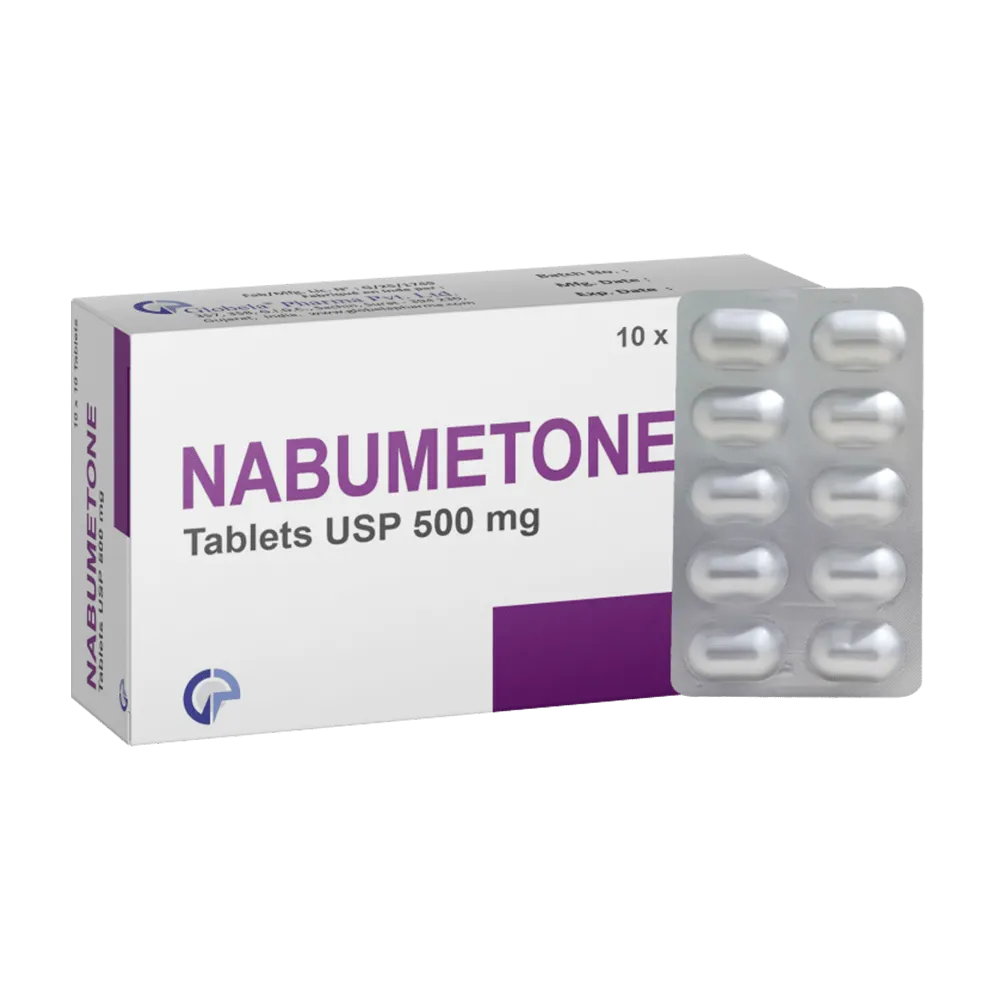
Indications for Nabumetone
Nabumetone is widely prescribed for inflammatory and painful musculoskeletal disorders. Its efficacy in relieving chronic pain and stiffness makes it a valuable option for various joint and connective tissue diseases.
1. Rheumatoid Arthritis (RA)
Rheumatoid arthritis is a chronic autoimmune disease that causes persistent joint inflammation, pain, and swelling. Nabumetone helps relieve these symptoms by reducing inflammatory mediators, improving mobility, and enhancing quality of life. It is often part of a comprehensive treatment plan that may include disease-modifying antirheumatic drugs (DMARDs).
2. Osteoarthritis (OA)
Osteoarthritis, a degenerative joint disease characterized by cartilage wear and joint stiffness, can cause significant discomfort. Nabumetone helps manage pain, swelling, and morning stiffness, thereby restoring functional movement and daily comfort.
3. Other Musculoskeletal and Soft Tissue Disorders
Ankylosing spondylitis: Reduces inflammation and pain in the spine and sacroiliac joints.
Bursitis: Eases inflammation of the bursae, the fluid-filled sacs cushioning joints.
Tendinitis: Relieves pain and swelling in inflamed tendons.
Other acute or chronic inflammatory pain conditions: Nabumetone may be prescribed off-label for a range of inflammatory or musculoskeletal pain syndromes.
Contraindications of Nabumetone
Nabumetone is not suitable for everyone. Certain medical conditions or histories may make its use unsafe or increase the risk of serious adverse effects.
- History of hypersensitivity: Do not use Nabumetone if you have ever experienced allergic reactions such as asthma, urticaria, angioedema, or allergic rhinitis after taking Nabumetone, aspirin, or any other NSAID.
- Active or recurrent peptic ulcer or gastrointestinal bleeding: Nabumetone can cause irritation, ulceration, or bleeding in the digestive tract. Patients with active or past GI ulcers or bleeding should avoid this medication.
- Severe heart failure, renal impairment, or hepatic dysfunction: Reduced drug clearance in these patients may lead to accumulation and increased toxicity.
- Third trimester of pregnancy: Nabumetone may cause premature closure of the fetal ductus arteriosus and other complications during labor.
- Children under 18 years of age: Nabumetone is generally not recommended unless specifically prescribed and closely supervised by a pediatric specialist.
If any of these apply to you, consult your doctor immediately to discuss safer alternative treatments.
Dosage and Administration of Nabumetone
To achieve maximum therapeutic benefit and ensure safety, Nabumetone should be used exactly as prescribed by your healthcare provider.
Recommended Dosage
- Initial dose (Adults): 1000 mg (1 g) once daily, usually taken at bedtime.
- Maintenance dose: May be increased to 1500–2000 mg daily, either as a single dose or divided into two doses (e.g., 1000 mg in the morning and 1000 mg at night).
- Maximum dose: Do not exceed 2000 mg per day, as higher doses increase the risk of adverse effects.
Administration Guidelines
- With water: Swallow the tablet whole with a full glass of water.
- With food: Nabumetone can be taken with or after meals to reduce stomach irritation.
- Do not crush or chew: Altering the tablet may affect absorption and increase the risk of side effects.
Special Populations
- Elderly patients: Older adults are more susceptible to gastrointestinal and renal side effects. A lower initial dose and close monitoring are advised.
- Patients with renal or hepatic impairment: Dosage adjustments may be necessary depending on the degree of organ dysfunction.
Side Effects of Nabumetone
Like all medications, Nabumetone can cause side effects. Most are mild and transient, but some may be serious and require medical attention.
Common (usually mild and temporary):
- Gastrointestinal: Abdominal pain, dyspepsia, nausea, vomiting, bloating, diarrhea, or constipation.
- Central nervous system: Headache, dizziness.
- Skin: Rash or itching.
Serious (seek medical attention immediately):
1. Gastrointestinal ulceration or bleeding: May present as severe abdominal pain, vomiting blood (hematemesis), coffee-ground vomitus, black tarry stools, or fresh rectal bleeding.
Risk increases in older adults or those taking corticosteroids, anticoagulants, or other NSAIDs.
2. Renal impairment: Acute kidney injury may occur, particularly in patients with pre-existing kidney disease, dehydration, or those taking diuretics. Signs include reduced urine output and swelling in the legs or ankles.
3. Hepatic dysfunction: Elevation of liver enzymes, hepatitis, or jaundice may occur. Watch for fatigue, nausea, dark urine, or yellowing of the skin or eyes.
4. Cardiovascular events: Fluid retention, edema, elevated blood pressure, and an increased risk of heart attack or stroke, especially in patients with cardiovascular disease or risk factors.
5. Severe allergic reactions: Anaphylaxis (difficulty breathing, facial swelling, hives, low blood pressure) or severe skin reactions such as Stevens–Johnson syndrome (SJS) or toxic epidermal necrolysis (TEN) with blistering and peeling of the skin.
6. Hematologic abnormalities: Anemia, leukopenia, or thrombocytopenia (manifesting as unusual fatigue, frequent infections, or easy bruising).
Precautions and Warnings
To ensure safe and effective use of Nabumetone, keep in mind the following precautions:
Always consult your physician before starting Nabumetone. It is a prescription-only medication and should not be used without professional supervision.
Monitor kidney, liver, and blood pressure regularly, especially in elderly patients or those with pre-existing conditions.
Use caution when driving or operating machinery if you experience dizziness, drowsiness, or visual disturbances.
Avoid combining Nabumetone with other NSAIDs, including high-dose aspirin, to prevent additive toxicity.
Do not increase the dose or duration beyond what is prescribed. Overuse increases the risk of gastrointestinal bleeding, renal failure, and cardiovascular complications.
Pregnancy and breastfeeding:
- Pregnancy: Not recommended during the third trimester due to risk of fetal harm. In earlier trimesters, use only if the potential benefit outweighs the risk.
- Breastfeeding: Small amounts may pass into breast milk; caution is advised, and temporary discontinuation of breastfeeding may be considered.
Medical history disclosure: Always inform your doctor of any pre-existing medical conditions (such as cardiovascular disease, hypertension, diabetes, kidney or liver disorders, ulcers, asthma, or allergies).
Overdose and Missed Dose Management
Overdose
If you suspect an overdose, seek emergency medical help immediately. Symptoms may include:
- Severe abdominal pain, nausea, vomiting
- Drowsiness or confusion
- Headache, dizziness, tinnitus (ringing in the ears)
- Seizures (rare)
- In severe cases: respiratory depression, acute renal failure, or coma
Hospital management may include:
- Gastric lavage if ingestion occurred within the previous hour
- Activated charcoal to limit absorption
- Supportive treatment for symptoms (antiemetics, blood pressure management, respiratory support as needed)
There is no specific antidote for Nabumetone overdose.
Missed Dose
- Take the missed dose as soon as you remember.
- If it is almost time for your next scheduled dose, skip the missed one—do not double the dose to make up for it.
Frequently Asked Questions (FAQ)
Is Nabumetone addictive?
No. Nabumetone is a nonsteroidal anti-inflammatory drug (NSAID) and does not cause dependence or addiction.
Can Nabumetone be used in children?
Its use in patients under 18 years of age is generally not recommended unless under strict medical supervision.
Do I need a prescription to buy Nabumetone?
Yes. Nabumetone is a prescription medication and must be used under medical guidance.
How long does it take for Nabumetone to work?
Pain relief usually begins within a few hours after taking the dose. However, full anti-inflammatory effects may take several days to develop.
Can I drink alcohol while taking Nabumetone?
No. Alcohol increases the risk of stomach irritation, ulcers, and liver strain when combined with Nabumetone.
Pharmacodynamics of Nabumetone
To understand why Nabumetone is such an effective anti-inflammatory agent, it’s essential to look at how it works inside the body. As mentioned earlier, Nabumetone is a prodrug—it has little or no pharmacological activity until it is metabolized by the liver.
Activation into 6-MNA
Once ingested, Nabumetone is absorbed into the bloodstream and converted into its active metabolite, 6-methoxy-2-naphthylacetic acid (6-MNA). This transformation is a key pharmacological step because 6-MNA is the compound responsible for the drug’s anti-inflammatory, analgesic, and mild antipyretic actions.
Mechanism of Action: COX Enzyme Inhibition
6-MNA works primarily by inhibiting cyclooxygenase (COX) enzymes, which catalyze the conversion of arachidonic acid into prostaglandins—key mediators of inflammation and pain.
There are two main forms of COX:
- COX-1: Involved in maintaining normal physiological functions, such as protecting the gastric mucosa, regulating renal blood flow, and supporting platelet aggregation.
- COX-2: Induced mainly at sites of inflammation and responsible for producing prostaglandins that mediate pain, fever, and swelling.
Nabumetone, through 6-MNA, shows relative COX-2 selectivity at therapeutic doses, which may explain its lower incidence of gastrointestinal irritation compared to nonselective NSAIDs like indomethacin or naproxen. However, at higher doses, this selectivity decreases and COX-1 inhibition may also occur, potentially increasing gastrointestinal risk.
Pharmacological Effects
The inhibition of prostaglandin synthesis produces several therapeutic outcomes:
- Anti-inflammatory: Reduces swelling, redness, heat, and pain in inflamed tissues.
- Analgesic: Relieves mild to moderate pain, particularly in inflammatory joint conditions.
- Antipyretic: Though not its main indication, Nabumetone can reduce fever by acting on the hypothalamic heat-regulating center.
⚠️ Clinical Warning: Despite its improved GI safety profile, Nabumetone can still cause gastrointestinal bleeding, peptic ulceration, or renal impairment, especially in older adults or patients using other NSAIDs, corticosteroids, or anticoagulants. Regular follow-up is crucial during long-term use.
Pharmacokinetics of Nabumetone
The journey of Nabumetone through the body—from ingestion to elimination—explains why it is typically prescribed once daily.
Absorption
Nabumetone is well absorbed after oral administration.
Food does not significantly affect its bioavailability, although a high-fat meal may delay absorption slightly.
The peak plasma concentration of the active metabolite 6-MNA is generally reached within 3 to 6 hours after dosing.
Distribution
6-MNA binds extensively (>99%) to plasma proteins, primarily albumin, leaving only a small fraction in the free, pharmacologically active form.
The active compound diffuses effectively into inflamed tissues and synovial fluid, where it exerts local anti-inflammatory effects.
Metabolism
Nabumetone undergoes hepatic oxidation to form 6-MNA.
6-MNA is then further metabolized by glucuronidation, forming inactive conjugates that are more easily excreted.
Excretion
The majority of Nabumetone’s metabolites, including 6-MNA and its glucuronide conjugates, are eliminated via the urine.
A smaller portion is excreted through the feces.
The elimination half-life of 6-MNA ranges from 22 to 24 hours, allowing once-daily dosing for most indications.
Drug Interactions of Nabumetone
Like other NSAIDs, Nabumetone may interact with a wide range of medications. These interactions can enhance toxicity or diminish therapeutic efficacy, so careful medical supervision is essential.
Anticoagulants (Warfarin, Heparin): Concomitant use increases the risk of bleeding due to additive effects on platelet inhibition and competition for plasma protein binding sites. Monitoring INR and coagulation parameters is recommended.
Diuretics, ACE inhibitors, ARBs, Beta-blockers: Nabumetone can blunt the antihypertensive effects of these agents and increase the risk of acute kidney injury, especially in dehydrated or elderly patients.
Lithium: Reduces renal clearance of lithium, potentially leading to lithium toxicity. Serum lithium levels should be closely monitored.
Methotrexate: May elevate plasma methotrexate levels, heightening the risk of bone marrow suppression or nephrotoxicity.
Corticosteroids: Combined use significantly raises the risk of gastrointestinal bleeding or ulceration.
Other NSAIDs or high-dose Aspirin: Should be avoided due to increased risk of GI and renal adverse effects without added clinical benefit.
Cyclosporine and Tacrolimus: Concurrent use may potentiate nephrotoxic effects, requiring renal function monitoring.
Antidiabetic agents (insulin or oral hypoglycemics): Nabumetone may alter glucose control in rare cases; blood glucose should be monitored.
Conclusion
Nabumetone is an effective nonsteroidal anti-inflammatory drug (NSAID) widely used to manage pain and inflammation associated with osteoarthritis and rheumatoid arthritis.
Through its active metabolite, 6-MNA, Nabumetone selectively inhibits COX enzymes, providing relief from pain and inflammation with a relatively lower risk of gastrointestinal side effects compared to many traditional NSAIDs.
However, it must be used responsibly — under medical supervision, in the correct dosage, and with awareness of potential interactions and adverse effects. By following your doctor’s instructions and reporting any unusual symptoms, you can safely incorporate Nabumetone into your treatment plan to improve joint mobility and overall quality of life.
