
Comprehensive Guide to Mycophenolic Acid: Uses, Dosage, Side Effects, and More
What is Mycophenolic Acid?
Overview of Mycophenolic Acid
Generic Name: Mycophenolic acid
Brand Name: Myfortic, CellCept (mycophenolate mofetil prodrug), generics
Drug Group: Immunosuppressant (antimetabolite)
Commonly Used For
- Prevent kidney, heart, or liver transplant rejection.
- Treat lupus nephritis.
- Manage autoimmune hepatitis.
Key Characteristics
Form: Delayed-release tablets (180 mg, 360 mg), oral suspension (200 mg/mL), or IV infusion (500 mg/vial) (detailed in Dosage section).
Mechanism: Inhibits purine synthesis, reducing lymphocyte activity.
Approval: FDA-approved (1995 for CellCept) and EMA-approved for transplantation.
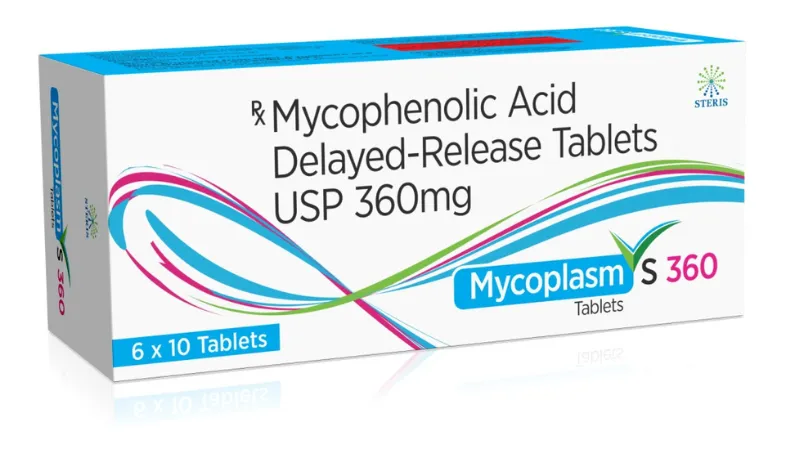
Indications and Uses of Mycophenolic Acid
Mycophenolic acid is indicated for a range of immunosuppressive and autoimmune conditions, leveraging its lymphocytotoxic effects:
Kidney Transplant Rejection Prophylaxis: Prevents acute rejection in renal transplant recipients, per transplant guidelines, supported by clinical trials showing a 50% reduction in rejection rates compared to azathioprine.
Heart Transplant Rejection Prophylaxis: Manages rejection in cardiac transplant patients, improving graft survival, recommended in cardiology-transplant protocols.
Liver Transplant Rejection Prophylaxis: Reduces rejection episodes in hepatic transplants, with hepatology-transplant evidence.
Lupus Nephritis: Treats severe systemic lupus erythematosus (SLE) with renal involvement, alleviating proteinuria, per rheumatology studies.
Autoimmune Hepatitis: Controls inflammation in AIH, preventing cirrhosis progression, with gastroenterology data.
Myasthenia Gravis: Investigated off-label to reduce antibody-mediated muscle weakness, with neurology evidence.
Pemphigus Vulgaris: Managed off-label to control blistering skin disease, with dermatology research.
Crohn’s Disease: Explored off-label for refractory cases, reducing intestinal inflammation, with gastroenterology studies.
Multiple Sclerosis: Initiated off-label to modulate immune activity, with neurology trials.
IgA Nephropathy: Used off-label to slow disease progression, with nephrology evidence.
Dosage of Mycophenolic Acid
Dosage for Adults
Kidney Transplant Rejection Prophylaxis:
- Oral (Myfortic): 720 mg twice daily (1,440 mg/day), starting within 72 hours post-transplant.
- IV (CellCept): 1 g twice daily (2 g/day) for up to 14 days, transitioning to oral.
Heart Transplant Rejection Prophylaxis:
- Oral: 1,080–1,440 mg twice daily, adjusted based on cyclosporine levels.
Liver Transplant Rejection Prophylaxis:
- Oral: 720 mg twice daily, with dose reduction if hepatotoxicity occurs.
Lupus Nephritis:
- Oral: 720–1,080 mg twice daily, in combination with corticosteroids, for 6–12 months.
Dosage for Children (≥5 years)
Kidney Transplant Rejection Prophylaxis:
- Oral (Myfortic): 400 mg/m² twice daily (up to 720 mg twice daily), under pediatric nephrology supervision.
Dosage for Pregnant Women
Pregnancy Category D: Use only if benefits outweigh risks; consult an obstetrician and transplant specialist, with fetal monitoring and dose adjustment.
Dosage Adjustments
Renal Impairment: Mild to moderate (CrCl 25–50 mL/min): No adjustment; severe (CrCl <25 mL/min): Reduce dose by 50% or avoid.
Hepatic Impairment: Mild to moderate (Child-Pugh A or B): Use cautiously; severe (Child-Pugh C): Avoid due to reduced metabolism.
Concomitant Medications: Adjust if combined with antacids, cholestyramine, or other immunosuppressants (e.g., tacrolimus); monitor levels.
Elderly: No specific adjustment; assess renal and hepatic function.
Infections: Temporarily reduce or suspend if severe infection occurs.
Additional Considerations
- Take this active ingredient on an empty stomach (1 hour before or 2 hours after meals) to enhance absorption.
- Use with caution in patients with active gastrointestinal ulcers due to perforation risk.
How to Use Mycophenolic Acid
Administration:
- Oral: Swallow tablets whole with water; do not crush or chew delayed-release forms.
- IV: Administer over 2 hours by a healthcare professional, using an in-line filter.
- Shake oral suspension well before measuring with a provided oral syringe.
Timing: Take twice daily at consistent intervals, avoiding food interference.
Monitoring: Watch for fever, diarrhea, or signs of infection (e.g., sore throat); report changes immediately.
Additional Tips:
- Store tablets at 15–30°C (59–86°F) and suspension at 20–25°C (68–77°F); protect from moisture.
- Keep out of reach of children; dispose of unused suspension after 60 days.
- Use sunscreen and protective clothing due to increased skin cancer risk with long-term use.
- Schedule regular blood tests (e.g., CBC, liver function) every 1–2 weeks during initial therapy.
- Educate patients on hand hygiene and avoiding live vaccines during treatment.
Contraindications for Mycophenolic Acid
Hypersensitivity: Patients with a known allergy to Mycophenolic acid, mycophenolate mofetil, or polysorbate 80.
Severe Renal Impairment: Contraindicated in CrCl <25 mL/min due to accumulation risk.
Active Digestive Ulcer Disease: Avoid due to perforation or hemorrhage risk.
Active Infections: Contraindicated in untreated systemic infections (e.g., tuberculosis, CMV).
Pregnancy: Contraindicated unless life-saving, due to teratogenic risk.
Live Vaccines: Avoid concurrent use due to immunosuppression risk.
Severe Hepatic Failure: Contraindicated in Child-Pugh Class C due to impaired clearance.
Side Effects of Mycophenolic Acid
Common Side Effects
- Diarrhea (20–30%, managed with loperamide)
- Nausea (15–25%, reduced with food timing)
- Abdominal Pain (10–20%, decreases with dose adjustment)
- Leukopenia (5–15%, monitored with CBC)
- Fatigue (5–10%, relieved with rest)
These effects may subside with adaptation or dose modification.
Serious Side Effects
Seek immediate medical attention for:
- Infectious: Opportunistic infections (e.g., CMV, tuberculosis) or sepsis.
- Gastrointestinal: Perforation, hemorrhage, or severe colitis.
- Hematologic: Severe neutropenia (<1,000/µL) or thrombocytopenia.
- Malignancy: Lymphoma or skin cancer (long-term risk).
- Allergic: Anaphylaxis or Stevens-Johnson syndrome (rare).
Additional Notes
Regular monitoring with CBC every 1–2 weeks and liver function tests every month is essential to detect bone marrow or hepatic toxicity early.
Patients with a history of gastrointestinal ulcers should be monitored for perforation, with endoscopy considered if symptoms worsen.
Infection prophylaxis (e.g., trimethoprim-sulfamethoxazole for Pneumocystis) is recommended for high-risk patients.
Report any unusual symptoms (e.g., persistent fever, bloody stools) immediately to a healthcare provider to address potential complications.
Long-term use (>6 months) requires skin exams and cancer screening due to malignancy risk.
Warnings & Precautions for Mycophenolic Acid
General Warnings
Infections: Increased risk of opportunistic infections (e.g., CMV, Pneumocystis); monitor with prophylaxis if needed.
Gastrointestinal Perforation: Risk with active ulcers or diverticulitis; assess symptoms like severe pain.
Bone Marrow Suppression: Risk of leukopenia, anemia, or thrombocytopenia; check CBC regularly.
Malignancy: Increased risk of lymphoma or skin cancer; advise sun protection.
Fetal Toxicity: Teratogenic risk; use contraception during and 6 weeks post-therapy.
Additional Warnings
Progressive Multifocal Leukoencephalopathy (PML): Rare JC virus infection; monitor for neurological changes.
Hypersensitivity Reactions: Rare anaphylaxis or angioedema; discontinue if severe.
Renal Impairment: Risk of toxicity; adjust dose or avoid in severe cases.
Hepatic Dysfunction: Risk of elevated liver enzymes; monitor function tests.
Hypogammaglobulinemia: Risk with long-term use; assess immunoglobulin levels.
Use in Specific Populations
- Pregnancy: Category D; avoid unless critical, with mandatory contraception.
- Breastfeeding: Contraindicated; discontinue nursing.
- Elderly: Higher infection risk; monitor closely.
- Children: Safe with pediatric oversight for transplantation.
- Renal/Hepatic Impairment: Adjust or avoid based on severity.
Additional Precautions
- Inform your doctor about infections, recent vaccinations, or gastrointestinal issues before starting this medication.
- Avoid live attenuated vaccines (e.g., MMR) during therapy.
- Use infection prevention strategies (e.g., handwashing, avoiding crowds).
Overdose and Management of Mycophenolic Acid
Overdose Symptoms
Nausea, vomiting, or diarrhea.
Severe cases: Bone marrow suppression (e.g., neutropenia), gastrointestinal hemorrhage, or multi-organ failure.
Fever, weakness, or abdominal pain as early signs.
Coma or profound immunosuppression with extremely high doses.
Immediate Actions
Contact the Medical Team: Seek immediate medical help if overdose is suspected.
Supportive Care: Administer IV fluids, monitor CBC, and manage symptoms (e.g., antiemetics for nausea).
Specific Treatment: No specific antidote; use activated charcoal if recent ingestion, and consider granulocyte colony-stimulating factor (G-CSF) for neutropenia.
Monitor: Check blood counts, liver function, and renal status for 24–72 hours; assess for infection risk.
Patient Education: Advise against doubling doses and to store securely.
Additional Notes
- Overdose risk is linked to dosing errors; store out of reach of children.
- Report persistent symptoms (e.g., severe diarrhea, fever) promptly to prevent complications.
Drug Interactions with Mycophenolic Acid
This active ingredient may interact with:
- Antacids: Reduces absorption (e.g., magnesium hydroxide); separate by 2 hours.
- Cholestyramine: Decreases bioavailability; avoid combination.
- Azathioprine: Increases myelosuppression risk; avoid concurrent use.
- Probenecid: Increases levels; monitor for toxicity.
- Live Vaccines: Enhances infection risk; avoid during therapy.
Action: Provide your healthcare provider with a complete list of medications.
Patient Education or Lifestyle
Medication Adherence: Use this immunosuppressant as prescribed for transplant or autoimmune disease, following the exact schedule.
Monitoring: Report fever, diarrhea, or signs of infection immediately.
Lifestyle: Avoid sun exposure; practice good hygiene.
Diet: Take on an empty stomach; avoid grapefruit juice.
Emergency Awareness: Know signs of severe infection or bleeding; seek care if present.
Follow-Up: Schedule regular check-ups every 1–2 weeks to monitor blood counts and organ function.
Pharmacokinetics of Mycophenolic Acid
Absorption: Oral, peak at 1–2 hours; bioavailability ~72% (delayed-release).
Distribution: Volume of distribution ~3.6 L/kg; 97% protein-bound.
Metabolism: Hepatic via glucuronidation to MPAG (inactive); enterohepatic recirculation.
Excretion: Primarily renal (93% as MPAG); half-life 16–18 hours.
Half-Life: 16–18 hours, prolonged in renal impairment.
Pharmacodynamics of Mycophenolic Acid
This drug exerts its effects by:
- Inhibiting IMPDH, blocking de novo purine synthesis in lymphocytes.
- Suppressing T- and B-cell proliferation, preventing immune-mediated damage.
- Exhibiting dose-dependent risks of infections and gastrointestinal toxicity.
Storage of Mycophenolic Acid
Temperature: Store tablets at 15–30°C (59–86°F) and suspension at 20–25°C (68–77°F); protect from moisture.
Protection: Keep in original container, away from heat and light.
Safety: Store in a secure location out of reach of children and pets due to immunosuppression risk.
Disposal: Dispose of unused medication per local regulations or consult a pharmacist.
Frequently Asked Questions (FAQs)
Q: What does Mycophenolic acid treat?
A: This medication prevents transplant rejection and treats autoimmune diseases.
Q: Can this active ingredient cause diarrhea?
A: Yes, diarrhea is common; report if severe.
Q: Is Mycophenolic acid safe for children?
A: Yes, for transplantation with supervision.
Q: How is this drug taken?
A: Orally or IV, as directed.
Q: How long is Mycophenolic acid treatment?
A: Often lifelong for transplants, or 6–12 months for autoimmune conditions.
Q: Can I use Mycophenolic acid if pregnant?
A: No, unless critical; consult a doctor.
Regulatory Information
This medication is approved by:
U.S. Food and Drug Administration (FDA): Approved in 1995 (CellCept) for transplant rejection.
European Medicines Agency (EMA): Approved for transplantation and lupus nephritis.
Other Agencies: Approved globally for immunosuppression; consult local guidelines.
References
- U.S. Food and Drug Administration (FDA). (2023). CellCept (Mycophenolate Mofetil) Prescribing Information.
- Official FDA documentation detailing the drug’s approved uses, dosage, and safety.
- European Medicines Agency (EMA). (2023). Mycophenolic Acid Summary of Product Characteristics.
- EMA’s comprehensive information on the medication’s indications and precautions in Europe.
- National Institutes of Health (NIH). (2023). Mycophenolic Acid: MedlinePlus Drug Information.
- NIH resource providing detailed information on the drug’s uses, side effects, and precautions.
- World Health Organization (WHO). (2023). WHO Model List of Essential Medicines: Mycophenolic Acid.
- WHO’s consideration of Mycophenolic acid for transplantation.
- American Journal of Transplantation. (2022). Mycophenolic Acid in Lupus Nephritis.
- Peer-reviewed article on Mycophenolic acid efficacy (note: access may require a subscription).
