
Comprehensive Guide to Lovastatin: Uses, Dosage, Side Effects, and More
What is Lovastatin?
Overview of Lovastatin
Generic Name: Lovastatin
Brand Name: Mevacor, generics
Drug Group: Statin (HMG-CoA reductase inhibitor, lipid-lowering agent)
Commonly Used For
- Treat high cholesterol (hyperlipidemia).
- Reduce the risk of heart attack.
- Prevent cardiovascular events in at-risk patients.
Key Characteristics
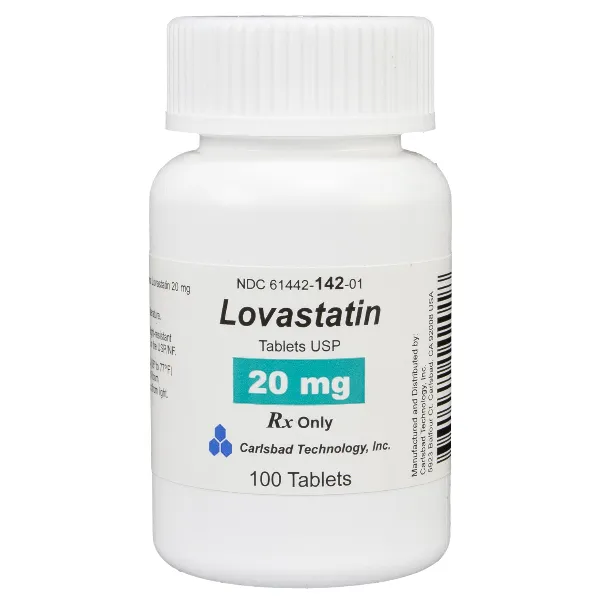
Form: Oral tablets (10 mg, 20 mg, 40 mg) (detailed in Dosage section).
Mechanism: Inhibits cholesterol biosynthesis, increasing LDL receptor activity.
Approval: FDA-approved (1987 for Mevacor) and EMA-approved for dyslipidemia.
Indications and Uses of Lovastatin
Lovastatin is indicated for a variety of lipid disorders and cardiovascular risk reduction, leveraging its cholesterol-lowering effects:
Primary Hypercholesterolemia: Lowers LDL cholesterol in patients with heterozygous familial or non-familial hypercholesterolemia, per cardiology guidelines, supported by trials showing a 21–34% LDL reduction.
Mixed Hyperlipidemia: Manages elevated LDL and triglycerides, improving lipid profiles, recommended in endocrinology protocols.
Secondary Prevention of Cardiovascular Events: Reduces risk of myocardial infarction and stroke in patients with coronary heart disease, with cardiovascular research evidence.
Hypertriglyceridemia: Investigated off-label to reduce triglyceride levels in combination with fibrates, with lipidology data.
Prevention in Diabetes: Explored off-label to mitigate cardiovascular risk in type 2 diabetes, with diabetology studies.
Pediatric Heterozygous Familial Hypercholesterolemia: Used off-label in children (10–17 years) with genetic lipid disorders, with pediatric cardiology evidence.
Non-Alcoholic Fatty Liver Disease (NAFLD): Managed off-label to reduce liver fat content, with hepatology research.
Chronic Kidney Disease (CKD): Initiated off-label to slow atherosclerosis progression, with nephrology data.
Post-Transplant Hyperlipidemia: Applied off-label in transplant patients on immunosuppressants, with transplant medicine studies.
Polycystic Ovary Syndrome (PCOS): Explored off-label to improve lipid profiles and insulin sensitivity, with endocrinology evidence.
Dosage of Lovastatin
Dosage for Adults
Hypercholesterolemia:
- Initial: 20 mg once daily with evening meal, titrated to 40 mg daily; maximum 80 mg daily in two divided doses if needed.
Mixed Hyperlipidemia:
- Initial: 20 mg once daily, adjusted to 40 mg based on triglyceride and LDL goals.
Secondary Prevention:
- 20–40 mg once daily, with or without other lipid-lowering agents, tailored to cardiovascular risk.
Dosage for Adolescents (10–17 years)
Heterozygous Familial Hypercholesterolemia:
- Initial: 10 mg once daily, titrated to 20–40 mg daily under pediatric cardiology supervision; maximum 40 mg.
Dosage for Pregnant Women
Pregnancy Category X: Contraindicated due to fetal harm; consult an obstetrician for alternative therapies.
Dosage Adjustments
Renal Impairment:
- Mild to moderate (CrCl 30–80 mL/min): No adjustment; monitor closely.
- Severe (CrCl <30 mL/min): Reduce to 10 mg daily; assess renal function.
Hepatic Impairment:
- Mild (Child-Pugh A): Use cautiously; moderate to severe (B or C): Avoid due to liver metabolism concerns.
Concomitant Medications: Adjust if combined with CYP3A4 inhibitors (e.g., itraconazole) or grapefruit juice, reducing dose to avoid toxicity.
Elderly: Start with 10–20 mg daily; monitor for muscle pain and liver enzymes.
High-Risk Patients: Limit to 20 mg daily if on fibrates or niacin to reduce rhabdomyolysis risk.
Additional Considerations
- Take this active ingredient with the evening meal to align with peak cholesterol synthesis; avoid high-fat meals to enhance absorption.
- Monitor lipid profiles every 4–12 weeks during titration.
How to Use Lovastatin
Administration:
- Oral: Swallow tablets whole with a full glass of water, preferably with the evening meal.
- Avoid crushing or chewing extended-release forms.
Timing: Take at a consistent time daily, ideally in the evening, to maximize efficacy.
Monitoring: Watch for muscle pain, dark urine, or signs of liver issues (e.g., jaundice); report changes immediately.
Additional Tips:
- Store at 20–25°C (68–77°F), protecting from moisture and light.
- Keep out of reach of children due to toxicity risk.
- Avoid grapefruit juice (>1 quart daily) to prevent CYP3A4 inhibition.
- Schedule liver function tests (ALT, AST) every 6–12 weeks for the first year, then annually.
- Encourage a low-cholesterol diet and exercise as adjuncts to therapy.
Contraindications for Lovastatin
Hypersensitivity: Patients with a known allergy to Lovastatin or other statins.
Active Liver Disease: Contraindicated in acute liver failure or unexplained persistent elevations of serum transaminases.
Pregnancy and Breastfeeding: Category X due to fetal skeletal malformations and unknown infant effects.
Concurrent Use with Certain Drugs: Avoid with strong CYP3A4 inhibitors (e.g., ketoconazole, HIV protease inhibitors) due to rhabdomyolysis risk.
Severe Renal Impairment: Contraindicated in CrCl <30 mL/min without dose adjustment monitoring.
Side Effects of Lovastatin
Common Side Effects
- Muscle Pain (5–10%, managed with rest or dose reduction)
- Digestive Issues (4–8%, nausea or constipation, relieved with diet)
- Headache (3–7%, decreases with time)
- Rash (2–5%, treated with antihistamines)
- Fatigue (1–4%, improves with rest)
These effects may subside with adaptation.
Serious Side Effects
Seek immediate medical attention for:
- Muscular: Rhabdomyolysis or myopathy with CK elevation (>10x ULN).
- Hepatic: Jaundice, hepatitis, or liver failure.
- Renal: Acute kidney injury from myoglobinuria.
- Neurological: Memory loss or peripheral neuropathy (rare).
- Allergic: Severe rash, angioedema, or anaphylaxis.
Additional Notes
Regular monitoring with liver function tests (ALT, AST) and CK levels every 6–12 weeks is advised.
Patients with a history of myopathy should report early muscle symptoms for dose adjustment.
Report any unusual symptoms (e.g., dark urine, severe weakness) immediately to a healthcare provider.
Long-term use (>1 year) requires periodic assessment of cognitive function and glucose tolerance.
Warnings & Precautions for Lovastatin
General Warnings
Rhabdomyolysis: Risk of severe muscle breakdown; monitor for myalgia or weakness.
Hepatotoxicity: Risk of liver injury; check liver enzymes at baseline and periodically.
Diabetes Mellitus: Risk of new-onset diabetes with high doses; monitor glucose.
Cognitive Impairment: Rare memory loss or confusion; assess if persistent.
Renal Failure: Risk with rhabdomyolysis; monitor creatinine kinase (CK).
Additional Warnings
Immune-Mediated Necrotizing Myopathy: Rare autoimmune muscle damage post-discontinuation; consult a specialist.
Hemorrhagic Stroke: Slight increased risk in secondary prevention; weigh benefits.
Proteinuria: Rare kidney injury; monitor renal function in long-term use.
Hypersensitivity Reactions: Rare rash or anaphylaxis; discontinue if severe.
Alcohol Use: Increases hepatotoxicity risk; advise moderation.
Use in Specific Populations
- Pregnancy: Category X; contraindicated.
- Breastfeeding: Contraindicated; avoid use.
- Elderly: Higher myopathy risk; start low and monitor closely.
- Children: Safe for heterozygous familial hypercholesterolemia (10–17 years) with oversight.
- Renal/Hepatic Impairment: Adjust or avoid based on severity.
Additional Precautions
- Inform your doctor about liver disease, muscle disorders, or medication allergies before starting this medication.
- Avoid excessive alcohol to protect liver health.
- Report unexplained muscle pain or dark urine promptly.
Overdose and Management of Lovastatin
Overdose Symptoms
- Muscle pain, weakness, or cramps.
- Severe cases: Rhabdomyolysis, acute renal failure, or liver failure.
- Nausea, diarrhea, or fatigue as early signs.
- Coma or profound electrolyte imbalance with extremely high doses.
Immediate Actions
Contact the Medical Team: Seek immediate medical help if overdose is suspected.
Supportive Care: Monitor vital signs, provide IV fluids, and manage renal function if needed.
Specific Treatment: No specific antidote; discontinue use and treat symptoms (e.g., statins for rhabdomyolysis).
Monitor: Check CK, liver enzymes, and creatinine for 24–48 hours.
Patient Education: Advise against self-adjusting doses and to store securely.
Additional Notes
- Overdose risk is low with therapeutic use; accidental ingestion requires urgent care.
- Report persistent symptoms (e.g., severe muscle pain, yellowing skin) promptly.
Drug Interactions with Lovastatin
This active ingredient may interact with:
- CYP3A4 Inhibitors: Increases myopathy risk (e.g., itraconazole, erythromycin); avoid or reduce dose.
- Fibrates: Enhances rhabdomyolysis risk (e.g., gemfibrozil); use lowest effective dose.
- Warfarin: Potentiates bleeding; monitor INR.
- Grapefruit Juice: Inhibits metabolism; limit to <1 quart daily.
- Digoxin: Slight increase in levels; monitor.
Action: Provide your healthcare provider with a complete list of medications.
Patient Education or Lifestyle
Medication Adherence: Take this statin as prescribed for cholesterol management, following the evening schedule.
Monitoring: Report muscle pain, jaundice, or signs of liver issues immediately.
Lifestyle: Maintain a heart-healthy diet (low saturated fat); exercise regularly.
Diet: Avoid grapefruit juice; limit alcohol.
Emergency Awareness: Know signs of rhabdomyolysis or liver failure; seek care if present.
Follow-Up: Schedule lipid panels and liver tests every 3–6 months.
Pharmacokinetics of Lovastatin
Absorption: Oral, peak at 2–4 hours; bioavailability ~5% (increased with food).
Distribution: Volume of distribution ~120 L; 95% protein-bound.
Metabolism: Hepatic via CYP3A4 to active metabolites (e.g., lovastatin acid).
Excretion: Primarily biliary (83% as metabolites); renal (10%); half-life 2–3 hours.
Half-Life: 2–3 hours, with prolonged effect due to active metabolites.
Pharmacodynamics of Lovastatin
This drug exerts its effects by:
- Inhibiting HMG-CoA reductase, reducing hepatic cholesterol production.
- Upregulating LDL receptors, enhancing cholesterol clearance.
- Reducing atherosclerotic plaque formation over months of therapy.
- Exhibiting dose-dependent risks of myopathy and hepatotoxicity.
Storage of Lovastatin
Temperature: Store at 20–25°C (68–77°F); protect from moisture and light.
Protection: Keep in original container, away from heat and humidity.
Safety: Store in a secure location out of reach of children and pets.
Disposal: Dispose of unused tablets per local regulations or consult a pharmacist.
Frequently Asked Questions (FAQs)
Q: What does Lovastatin treat?
A: This medication treats high cholesterol and prevents heart disease.
Q: Can this active ingredient cause muscle pain?
A: Yes, muscle pain is common; report if severe.
Q: Is Lovastatin safe for children?
A: Yes, for specific conditions with supervision.
Q: How is this drug taken?
A: Orally with the evening meal, as directed.
Q: How long is Lovastatin treatment?
A: Often lifelong, with periodic review.
Q: Can I use Lovastatin if pregnant?
A: No, it is contraindicated; consult a doctor.
Regulatory Information
This medication is approved by:
U.S. Food and Drug Administration (FDA): Approved in 1987 (Mevacor) for hypercholesterolemia.
European Medicines Agency (EMA): Approved for dyslipidemia and cardiovascular prevention.
Other Agencies: Approved globally for lipid management; consult local guidelines.
References
- U.S. Food and Drug Administration (FDA). (2023). Mevacor (Lovastatin) Prescribing Information.
- Official FDA documentation detailing the drug’s approved uses, dosage, and safety.
- European Medicines Agency (EMA). (2023). Lovastatin Summary of Product Characteristics.
- EMA’s comprehensive information on the medication’s indications and precautions in Europe.
- National Institutes of Health (NIH). (2023). Lovastatin: MedlinePlus Drug Information.
- NIH resource providing detailed information on the drug’s uses, side effects, and precautions.
- World Health Organization (WHO). (2023). WHO Model List of Essential Medicines: Lovastatin.
- WHO’s consideration of Lovastatin for cardiovascular health.
- Journal of the American College of Cardiology. (2022). Lovastatin in Hyperlipidemia.
- Peer-reviewed article on Lovastatin efficacy (note: access may require a subscription).
