
Comprehensive Guide to Losartan: Uses, Dosage, Side Effects, and More
What is Losartan?
Overview of Losartan
Generic Name: Losartan
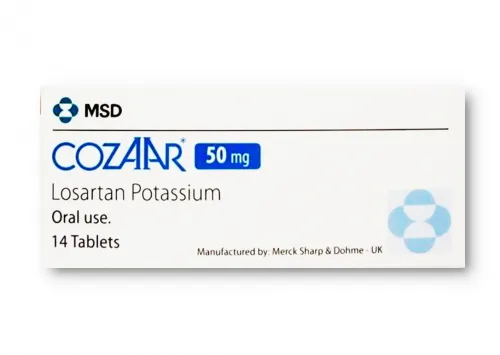
Brand Name: Cozaar, generics
Drug Group: Angiotensin II receptor blocker (antihypertensive, renoprotective)
Commonly Used For
- Treat hypertension (high blood pressure).
- Manage diabetic nephropathy.
- Reduce stroke risk in hypertensive patients with left ventricular hypertrophy.
Key Characteristics
Form: Oral tablets (25 mg, 50 mg, 100 mg) (detailed in Dosage section).
Mechanism: Blocks angiotensin II, reducing vasoconstriction and aldosterone secretion.
Approval: FDA-approved (1995 for Cozaar) and EMA-approved for hypertension and nephropathy.
Indications and Uses of Losartan
Losartan is indicated for a variety of cardiovascular and renal conditions, leveraging its antihypertensive and protective effects:
Hypertension: Lowers blood pressure in adults and children (6–16 years), per cardiology guidelines, supported by clinical trials showing a 10–15 mmHg systolic reduction.
Diabetic Nephropathy: Slows progression in type 2 diabetes patients with proteinuria, reducing end-stage renal disease risk, recommended in nephrology protocols with evidence of albuminuria decrease.
Stroke Risk Reduction: Decreases stroke incidence in hypertensive patients with left ventricular hypertrophy, with cardiovascular data.
Heart Failure: Investigated off-label as an adjunct in heart failure with reduced ejection fraction, improving symptoms, per cardiology studies.
Proteinuric Chronic Kidney Disease (CKD): Managed off-label in non-diabetic CKD to reduce proteinuria, with nephrology research.
Marfan Syndrome: Explored off-label to slow aortic root dilation, with genetic cardiology evidence.
Hypertensive Crisis (Oral): Used off-label for controlled reduction in severe hypertension, with emergency medicine data.
Left Ventricular Dysfunction Post-MI: Initiated off-label to improve outcomes, with post-myocardial infarction studies.
Alport Syndrome: Investigated off-label to delay renal decline, with pediatric nephrology data.
Preeclampsia Prevention: Applied off-label in high-risk pregnancies, with obstetrics research.
Dosage of Losartan
Dosage for Adults
Hypertension:
- Initial: 50 mg once daily, titrated to 100 mg daily based on response, or split into two doses (25–50 mg twice daily).
Diabetic Nephropathy:
- 50 mg once daily, increased to 100 mg daily if tolerated, with monitoring for proteinuria reduction.
Stroke Risk Reduction:
- 50 mg once daily, with a maximum of 100 mg daily, often combined with hydrochlorothiazide.
Dosage for Children (6–16 years)
Hypertension:
- 0.7 mg/kg once daily (up to 50 mg total), adjusted to 1.4 mg/kg (max 100 mg) based on blood pressure, under pediatric cardiology supervision.
Dosage for Pregnant Women
- Pregnancy Category D: Contraindicated in the second and third trimesters due to fetal toxicity; consult an obstetrician for alternatives in the first trimester.
Dosage Adjustments
Renal Impairment:
- Mild to moderate (CrCl 30–80 mL/min): No adjustment; monitor closely.
- Severe (CrCl <30 mL/min): Start with 25 mg daily; avoid in dialysis.
Hepatic Impairment: Mild to moderate (Child-Pugh A or B): Reduce to 25 mg once daily; severe (Child-Pugh C): Avoid.
Concomitant Medications: Adjust if combined with potassium-sparing diuretics (e.g., spironolactone) or NSAIDs; monitor potassium and renal function.
Elderly: Start with 25 mg daily; titrate cautiously based on tolerance.
Hypertensive Crisis: Use lower initial doses (e.g., 25 mg) under medical supervision.
Additional Considerations
- Take this active ingredient with or without food, preferably at the same time daily.
- Avoid abrupt discontinuation to prevent rebound hypertension.
- Monitor blood pressure weekly during initial therapy and monthly for chronic use.
How to Use Losartan
Administration:
- Oral: Swallow tablets whole with a glass of water, with or without food.
- Take consistently, preferably in the morning, to align with blood pressure monitoring.
Timing: Administer once or twice daily as prescribed, adjusting based on peak effect (6 hours post-dose).
Monitoring: Watch for dizziness, swelling, or signs of hyperkalemia (e.g., muscle weakness); report changes immediately.
Additional Tips:
- Store at 15–30°C (59–86°F), protecting from moisture and light.
- Keep out of reach of children due to cardiovascular risk.
- Use a blood pressure monitor at home to track response; record readings for provider review.
- Avoid excessive salt intake to enhance efficacy; consult a dietitian if needed.
- Schedule regular lab tests (e.g., creatinine, potassium) every 1–3 months during therapy.
Contraindications for Losartan
Hypersensitivity: Patients with a known allergy to Losartan or other ARBs.
Pregnancy (Second/Third Trimester): Contraindicated due to fetal renal and skull abnormalities.
Severe Renal Impairment: Avoid in CrCl <30 mL/min or on dialysis due to accumulation.
Bilateral Renal Artery Stenosis: Contraindicated due to risk of renal failure.
Severe Hepatic Impairment: Avoid in Child-Pugh Class C due to reduced clearance.
Hyperkalemia: Contraindicated in patients with potassium >5.5 mEq/L unless corrected.
Side Effects of Losartan
Common Side Effects
- Dizziness (5–10%, managed with hydration)
- Fatigue (3–8%, decreases with time)
- Hypotension (2–6%, monitored with BP checks)
- Hyperkalemia (2–5%, requires lab monitoring)
- Cough (1–4%, less frequent than ACE inhibitors)
These effects may subside with adaptation or dose adjustment.
Serious Side Effects
Seek immediate medical attention for:
- Renal: Acute kidney injury or worsening proteinuria.
- Cardiovascular: Severe hypotension or syncope.
- Metabolic: Hyperkalemia (>6.0 mEq/L) or hyponatremia.
- Allergic: Angioedema or anaphylaxis (rare).
- Hepatic: Jaundice or liver failure (rare).
Additional Notes
Regular monitoring with serum creatinine and potassium every 1–3 months is essential to detect renal or electrolyte changes.
Patients with diabetes should monitor glucose, as ARBs may alter insulin sensitivity.
Report any unusual symptoms (e.g., swelling, rapid heartbeat) immediately to a healthcare provider.
Long-term use (>6 months) requires periodic renal ultrasound to assess kidney structure.
Warnings & Precautions for Losartan
General Warnings
Hypotension: Risk of symptomatic hypotension, especially in volume-depleted patients; monitor blood pressure.
Hyperkalemia: Risk of elevated potassium; check levels every 1–2 months.
Renal Impairment: Risk of worsening kidney function; assess creatinine and eGFR regularly.
Fetal Toxicity: Risk of malformations; discontinue if pregnancy is detected.
Angioedema: Rare risk; discontinue if swelling occurs.
Additional Warnings
Liver Injury: Rare elevation of liver enzymes; monitor hepatic function in at-risk patients.
Orthostatic Hypotension: Risk in elderly; rise slowly from sitting or lying positions.
Aortic/Mitral Stenosis: Risk of reduced cardiac output; use cautiously.
Cough: Less common than ACE inhibitors but possible; assess if persistent.
Hypersensitivity Reactions: Rare anaphylaxis; stop if severe.
Use in Specific Populations
- Pregnancy: Category D; avoid in later trimesters; use alternatives if needed.
- Breastfeeding: Use caution; monitor infant for hypotension.
- Elderly: Higher risk of renal decline; start with lower doses.
- Children: Safe for hypertension (6–16 years) with monitoring.
- Renal/Hepatic Impairment: Adjust or avoid based on severity.
Additional Precautions
- Inform your doctor about kidney disease, liver conditions, or pregnancy plans before starting this medication.
- Avoid potassium supplements or salt substitutes without medical advice.
- Use caution during dehydration (e.g., vomiting, diarrhea) to prevent hypotension.
Overdose and Management of Losartan
Overdose Symptoms
- Dizziness, hypotension, or tachycardia.
- Severe cases: Shock, acute renal failure, or hyperkalemia.
- Weakness, nausea, or confusion as early signs.
- Coma or cardiac arrest with extremely high doses.
Immediate Actions
Contact the Medical Team: Seek immediate medical help if significant symptoms occur.
Supportive Care: Administer IV fluids and vasopressors for hypotension; monitor vital signs.
Specific Treatment: No specific antidote; use hemodialysis if renal function permits.
Monitor: Check blood pressure, potassium, and renal function for 24–48 hours.
Patient Education: Advise against doubling doses and to store securely.
Additional Notes
- Overdose risk is linked to renal impairment or dosing errors; limit access.
- Report persistent symptoms (e.g., severe dizziness, swelling) promptly.
Drug Interactions with Losartan
This active ingredient may interact with:
- Potassium-Sparing Diuretics: Increases hyperkalemia risk (e.g., spironolactone); monitor levels.
- NSAIDs: Reduces antihypertensive effect and risks renal impairment; use cautiously.
- Lithium: Increases lithium levels; monitor concentrations.
- ACE Inhibitors: Enhances hypotension risk; avoid combination.
- Rifampin: Decreases Losartan levels; adjust dose if needed.
Action: Provide your healthcare provider with a complete list of medications.
Patient Education or Lifestyle
Medication Adherence: Take this ARB as prescribed for hypertension, following the daily schedule.
Monitoring: Report dizziness, swelling, or signs of hyperkalemia immediately.
Lifestyle: Reduce salt intake; engage in moderate exercise to support blood pressure control.
Diet: Avoid potassium-rich foods (e.g., bananas) if hyperkalemia risk is high.
Emergency Awareness: Know signs of hypotension or renal issues; seek care if present.
Follow-Up: Schedule regular check-ups every 1–3 months to monitor BP, renal function, and electrolytes.
Pharmacokinetics of Losartan
Absorption: Oral, peak at 1–2 hours; bioavailability ~33% due to first-pass metabolism.
Distribution: Volume of distribution ~34 L; 99% protein-bound.
Metabolism: Hepatic via CYP2C9 and CYP3A4 to active metabolite (E-3174).
Excretion: Primarily renal (35% as metabolite, 4% unchanged); half-life 2 hours (metabolite 6–9 hours).
Half-Life: 2 hours (parent), 6–9 hours (metabolite), with prolonged effect.
Pharmacodynamics of Losartan
This drug exerts its effects by:
- Blocking AT1 receptors, inhibiting angiotensin II-mediated vasoconstriction.
- Reducing aldosterone release, decreasing sodium retention.
- Lowering blood pressure and protecting kidneys in diabetic nephropathy.
- Exhibiting dose-dependent risks of hypotension and hyperkalemia.
Storage of Losartan
Temperature: Store at 15–30°C (59–86°F); protect from moisture and light.
Protection: Keep in original container, away from heat and humidity.
Safety: Store in a secure location out of reach of children and pets due to cardiovascular risk.
Disposal: Dispose of unused tablets per local regulations or consult a pharmacist.
Frequently Asked Questions (FAQs)
Q: What does Losartan treat?
A: This medication treats high blood pressure and kidney issues.
Q: Can this active ingredient cause dizziness?
A: Yes, dizziness is common; report if severe.
Q: Is Losartan safe for children?
A: Yes, for hypertension (6–16 years) with supervision.
Q: How is this drug taken?
A: Orally as tablets, once or twice daily.
Q: How long is Losartan treatment?
A: Often lifelong for hypertension, with monitoring.
Q: Can I use Losartan if pregnant?
A: No, avoid in later trimesters; consult a doctor.
Regulatory Information
This medication is approved by:
U.S. Food and Drug Administration (FDA): Approved in 1995 (Cozaar) for hypertension and nephropathy.
European Medicines Agency (EMA): Approved for hypertension, diabetic nephropathy, and stroke prevention.
Other Agencies: Approved globally for cardiovascular therapy; consult local guidelines.
References
- U.S. Food and Drug Administration (FDA). (2023). Cozaar (Losartan) Prescribing Information.
- Official FDA documentation detailing the drug’s approved uses, dosage, and safety.
- European Medicines Agency (EMA). (2023). Losartan Summary of Product Characteristics.
- EMA’s comprehensive information on the medication’s indications and precautions in Europe.
- National Institutes of Health (NIH). (2023). Losartan: MedlinePlus Drug Information.
- NIH resource providing detailed information on the drug’s uses, side effects, and precautions.
- World Health Organization (WHO). (2023). WHO Model List of Essential Medicines: Losartan.
- WHO’s inclusion of Losartan for hypertension.
- Journal of the American College of Cardiology. (2022). Losartan in Heart Failure.
- Peer-reviewed article on Losartan efficacy (note: access may require a subscription).
