
Comprehensive Guide to Lithium: Uses, Dosage, Side Effects, and More
What is Lithium?
Overview of Lithium
Generic Name: Lithium (as lithium carbonate, lithium citrate)
Brand Name: Lithobid, Eskalith, generics
Drug Group: Mood stabilizer (antimanic agent)
Commonly Used For
This medication is used to:
- Treat acute mania in bipolar disorder.
- Prevent mood episode recurrence.
- Manage treatment-resistant depression.
Key Characteristics
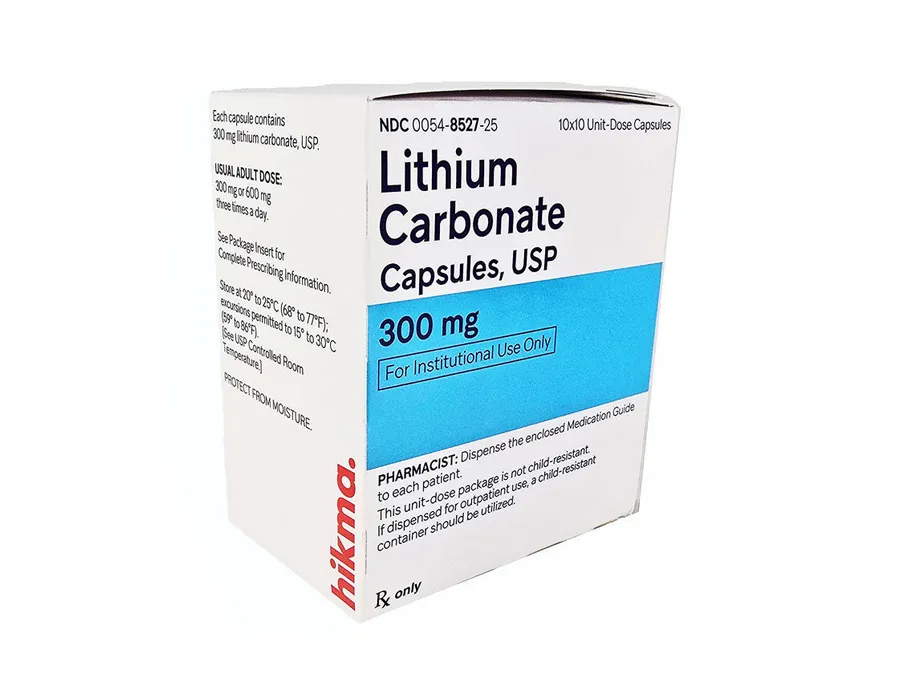
Form: Extended-release tablets (300 mg, 450 mg), capsules (150 mg, 300 mg, 600 mg), oral solution (8 mEq/5 mL) (detailed in Dosage section).
Mechanism: Modulates sodium transport, reduces inositol signaling, and enhances serotonin function.
Approval: FDA-approved (1970 for Eskalith) and EMA-approved for bipolar disorder.
Indications and Uses of Lithium
Lithium is indicated for psychiatric conditions, leveraging its neuroprotective and mood-regulating properties:
Bipolar I Disorder – Acute Mania: Rapidly controls manic symptoms (e.g., elevated mood, agitation), reducing hospitalization risk, per APA and NICE guidelines.
Bipolar I Disorder – Maintenance: Prevents recurrence of manic and depressive episodes, with 60–80% reduction in relapse rates over 1–2 years, supported by long-term trials.
Bipolar II Disorder: Used off-label for hypomania and depression prophylaxis, improving mood stability, with evidence from mood disorder research.
Treatment-Resistant Depression: Augments antidepressants (e.g., SSRIs) in unipolar depression, enhancing response in 40–50% of cases, per STAR*D study.
Schizoaffective Disorder (Bipolar Type): Manages mood symptoms in schizoaffective disorder, reducing affective instability, under psychiatric supervision.
Cyclothymia: Employed off-label to stabilize mild mood swings in cyclothymic disorder, preventing progression to bipolar disorder, with emerging data.
Aggression and Impulsivity: Used off-label in intermittent explosive disorder or borderline personality disorder to reduce impulsivity, supported by behavioral psychiatry studies.
Cluster Headaches: Investigated off-label as prophylaxis for chronic cluster headaches, reducing attack frequency, with neurology evidence.
Alcohol Use Disorder: Explored off-label to reduce relapse in alcohol dependence, improving abstinence rates, per addiction medicine research.
Neuroprotection in Neurodegenerative Diseases: Studied off-label in ALS and Alzheimer’s disease for anti-apoptotic effects, with preliminary neuroprotective data.
Dosage of Lithium
Dosage for Adults
Acute Mania:
- Initial: 600–900 mg/day (lithium carbonate) in 2–3 divided doses.
- Titration: Increase by 300–600 mg every 1–5 days to achieve serum level 0.8–1.2 mEq/L.
Maintenance Therapy: 300–600 mg/day (extended-release) or 900–1,200 mg/day (immediate-release), targeting 0.6–1.0 mEq/L.
Augmentation in Depression: 600–900 mg/day, targeting 0.5–0.8 mEq/L.
Dosage for Children
Bipolar Disorder (7–17 years, off-label): 15–30 mg/kg/day in 2–3 divided doses, titrated to serum level 0.6–1.0 mEq/L.
Not recommended under 7 years.
Dosage for Pregnant Women
Pregnancy Category D: Avoid unless essential (e.g., severe bipolar); use lowest effective dose with fetal echocardiography. Consult an obstetrician.
Dosage Adjustments
Renal Impairment: Reduce dose by 50–75% if CrCl <50 mL/min; avoid if CrCl <10 mL/min.
Hepatic Impairment: No adjustment needed.
Elderly: Start with 300 mg/day; titrate slowly to 0.4–0.8 mEq/L due to reduced clearance.
Dehydration or NSAIDs: Reduce dose to prevent toxicity.
Additional Considerations
- Take this active ingredient with food to reduce GI upset.
- Maintain consistent sodium and fluid intake.
How to Use Lithium
Administration:
- Swallow tablets/capsules whole with a full glass of water; avoid crushing extended-release forms.
- Take with meals to minimize nausea.
Timing: Use 2–3 times daily (immediate-release) or once daily (extended-release), maintaining consistency.
Monitoring: Watch for tremor, thirst, or signs of toxicity (e.g., vomiting, confusion).
Additional Tips:
- Store at 20–25°C (68–77°F), protecting from moisture.
- Keep out of reach of children due to overdose risk.
- Report severe diarrhea, dizziness, or muscle weakness immediately.
Contraindications for Lithium
This drug is contraindicated in:
Hypersensitivity: Patients with a known allergy to Lithium or its components.
Severe Renal Impairment: Contraindicated if CrCl <10 mL/min.
Dehydration or Sodium Depletion: Avoid due to toxicity risk.
Uncontrolled Cardiovascular Disease: Contraindicated in severe heart failure.
Warnings & Precautions for Lithium
General Warnings
Lithium Toxicity: Risk at serum levels >1.5 mEq/L; monitor levels every 3–6 months.
Nephrogenic Diabetes Insipidus: Long-term use may cause polyuria; monitor urine output.
Thyroid Dysfunction: Risk of hypothyroidism; check TSH every 6–12 months.
Renal Impairment: Progressive decline in GFR; annual renal function tests required.
Teratogenicity: Ebstein’s anomaly risk in first trimester; avoid if possible.
Additional Warnings
Cardiac Effects: Sinus node dysfunction or QT prolongation; monitor ECG in at-risk patients.
Cognitive Impairment: Rare memory issues; assess mental status.
Weight Gain: Common with long-term use; monitor BMI.
Hypercalcemia: Increases parathyroid hormone; check calcium levels.
Hypersensitivity Reactions: Rare rash or psoriasis exacerbation; discontinue if severe.
Use in Specific Populations
- Pregnancy: Category D; avoid unless critical; use contraception.
- Breastfeeding: Excreted in breast milk; monitor infant for toxicity.
- Elderly: Higher risk of toxicity; start with lower doses.
- Children: Limited to 7+ years off-label; supervise closely.
- Renal/Hepatic Impairment: Adjust dose; avoid in severe cases.
Additional Precautions
- Inform your doctor about kidney disease, heart conditions, or diuretic use before starting this medication.
- Avoid low-sodium diets or excessive caffeine.
Overdose and Management of Lithium
Overdose Symptoms
- Nausea, vomiting, or diarrhea.
- Severe cases: Tremor, confusion, seizures, or coma.
- Polyuria, ataxia, or slurred speech as early signs.
- Cardiac arrest with extremely high levels (>3.5 mEq/L).
Immediate Actions
Contact the Medical Team: Seek immediate medical help.
Supportive Care: Administer IV saline, monitor vital signs, and induce emesis if recent ingestion.
Specific Treatment: Hemodialysis for levels >2.5 mEq/L or severe symptoms.
Monitor: Check lithium levels every 2–4 hours until <1.0 mEq/L.
Additional Notes
- Overdose risk is high; store securely.
- Report persistent symptoms (e.g., confusion, muscle twitching) promptly.
Side Effects of Lithium
Common Side Effects
- Tremor (20–50%, dose-related)
- Polyuria/Polydipsia (20–40%, due to diabetes insipidus)
- Weight Gain (10–30%, monitor diet)
- Nausea (10–20%, reduced with food)
- Fatigue (5–15%, decreases with tolerance)
These effects may subside with dose adjustment.
Serious Side Effects
Seek immediate medical attention for:
- Neurological: Confusion, seizures, or coma.
- Renal: Nephrogenic diabetes insipidus or renal failure.
- Endocrine: Hypothyroidism or hyperparathyroidism.
- Cardiovascular: Arrhythmias or T-wave changes.
- Allergic: Rash, psoriasis flare, or anaphylaxis.
Additional Notes
- Regular monitoring for thyroid, renal, and electrolyte status is mandatory.
- Report any unusual symptoms (e.g., excessive thirst, confusion) immediately to a healthcare provider.
Drug Interactions with Lithium
This active ingredient may interact with:
- NSAIDs: Increases lithium levels (e.g., ibuprofen); monitor.
- Diuretics: Enhances toxicity (e.g., thiazides); avoid or reduce dose.
- ACE Inhibitors: Raises levels (e.g., lisinopril); monitor closely.
- Antipsychotics: Increases extrapyramidal symptoms; adjust dose.
- Caffeine: Reduces efficacy; maintain consistent intake.
Action: Provide your healthcare provider with a complete list of medications.
Patient Education or Lifestyle
Medication Adherence: Take this mood stabilizer as prescribed to prevent relapse, following the exact schedule.
Monitoring: Report tremor, thirst, or confusion immediately.
Lifestyle: Maintain consistent sodium (2–3 g/day) and fluid intake (2–3 L/day).
Diet: Take with food; avoid low-salt or fad diets.
Emergency Awareness: Know signs of toxicity or thyroid issues; seek care if present.
Follow-Up: Schedule blood tests every 3–6 months for lithium levels, renal, and thyroid function.
Pharmacokinetics of Lithium
Absorption: Rapidly absorbed orally (peak at 1–2 hours); enhanced with food.
Distribution: Volume of distribution ~0.7–0.9 L/kg; no protein binding.
Metabolism: Not metabolized; excreted unchanged.
Excretion: Primarily renal (95%) via glomerular filtration; half-life 18–24 hours.
Half-Life: 18–24 hours, prolonged in renal impairment.
Pharmacodynamics of Lithium
This drug exerts its effects by:
Inhibiting inositol monophosphatase, reducing PIP2 signaling.
Modulating GSK-3β, promoting neuroprotection and mood stability.
Enhancing serotonin release and reducing glutamate excitotoxicity.
Exhibiting dose-dependent renal and thyroid effects.
Storage of Lithium
Temperature: Store at 20–25°C (68–77°F); protect from moisture.
Protection: Keep in original container, away from light.
Safety: Store in a locked container out of reach of children due to toxicity risk.
Disposal: Dispose of unused tablets per local regulations or consult a pharmacist.
Frequently Asked Questions (FAQs)
Q: What does Lithium treat?
A: This medication treats bipolar disorder and prevents mood episodes.
Q: Can this active ingredient cause weight gain?
A: Yes, weight gain may occur; monitor diet and exercise.
Q: Is Lithium safe for children?
A: Yes, for 7+ years off-label with a doctor’s guidance.
Q: How is this drug taken?
A: Orally as tablets or solution, with food, as directed.
Q: How long is Lithium treatment?
A: Long-term for bipolar maintenance.
Q: Can I use Lithium if pregnant?
A: No, avoid unless critical; consult a doctor.
Regulatory Information
This medication is approved by:
U.S. Food and Drug Administration (FDA): Approved in 1970 (Eskalith) for bipolar disorder.
European Medicines Agency (EMA): Approved for mania and prophylaxis.
Other Agencies: Approved globally for mood disorders; consult local guidelines.
References
- U.S. Food and Drug Administration (FDA). (2023). Lithium Carbonate Prescribing Information.
- Official FDA documentation detailing the drug’s approved uses, dosage, and safety.
- European Medicines Agency (EMA). (2023). Lithium Summary of Product Characteristics.
- EMA’s comprehensive information on the medication’s indications and precautions in Europe.
- National Institutes of Health (NIH). (2023). Lithium: MedlinePlus Drug Information.
- NIH resource providing detailed information on the drug’s uses, side effects, and precautions.
- World Health Organization (WHO). (2023). WHO Model List of Essential Medicines: Lithium.
- WHO’s inclusion of Lithium for bipolar disorder.
- American Journal of Psychiatry. (2022). Long-Term Lithium Outcomes.
- Peer-reviewed article on Lithium efficacy (note: access may require a subscription).
