
Comprehensive Guide to Labetalol: Uses, Dosage, Side Effects, and More
What is Labetalol?
Overview of Labetalol
Generic Name: Labetalol
Brand Name: Trandate, Normodyne, generics
Drug Group: Alpha- and beta-adrenergic blocker (antihypertensive)
Commonly Used For
- Treat hypertension (high blood pressure).
- Manage hypertensive emergencies.
- Control preeclampsia in pregnancy.
Key Characteristics
Form: Oral tablets (100 mg, 200 mg, 300 mg), IV injection (5 mg/mL) (detailed in Dosage section).
Mechanism: Blocks alpha-1 receptors (vasodilation) and beta-1/beta-2 receptors (reduced heart rate and contractility).
Approval: FDA-approved (1984 for Trandate) and EMA-approved for hypertension.
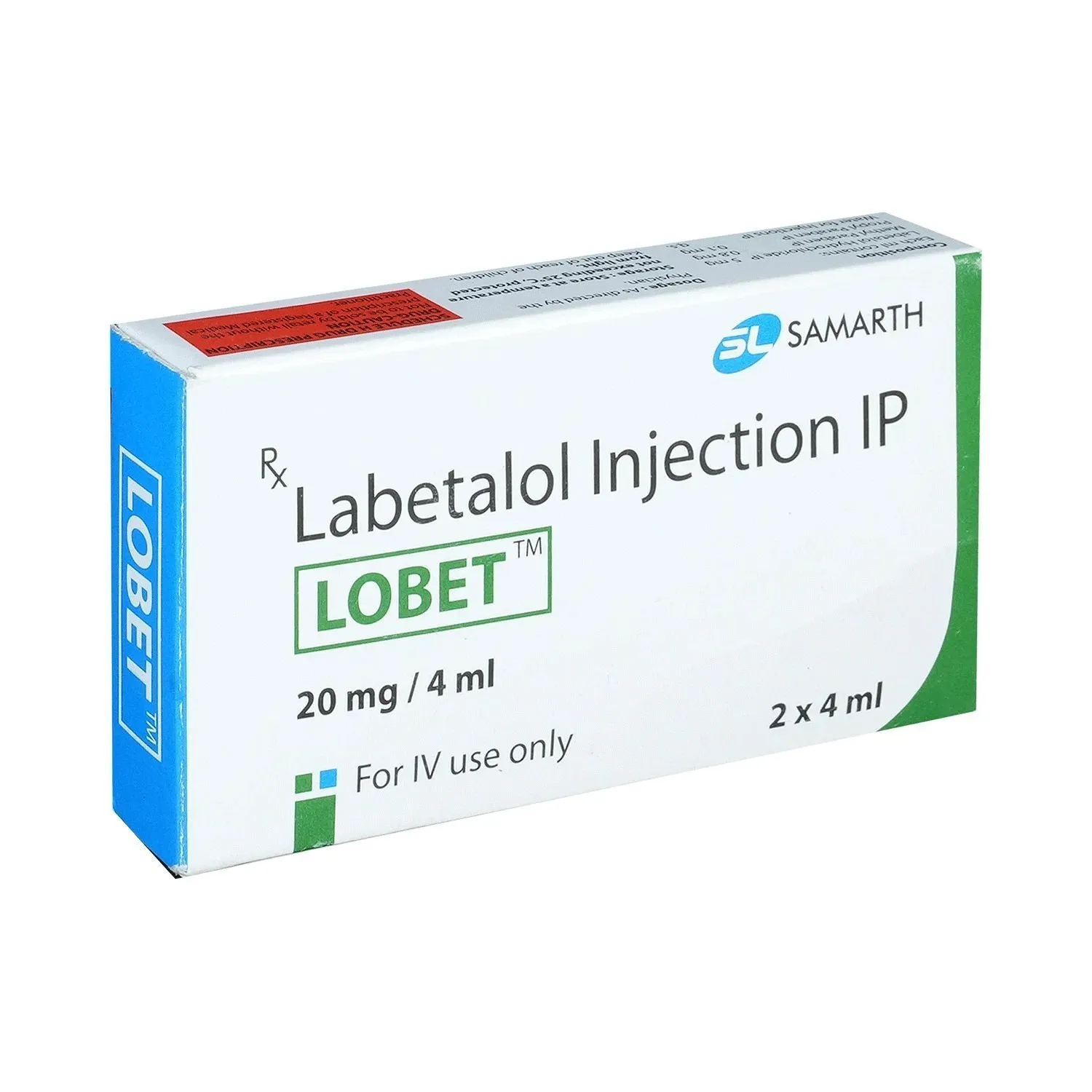
Indications and Uses of Labetalol
Labetalol is indicated for a variety of cardiovascular and obstetric conditions, leveraging its dual adrenergic blockade:
Hypertension: Lowers chronic high blood pressure, reducing stroke and heart attack risk, per cardiology guidelines, supported by clinical trials showing a 15–20% reduction in systolic pressure.
Hypertensive Emergencies: Manages acute severe hypertension (e.g., >180/120 mmHg), stabilizing patients, recommended in emergency medicine protocols with evidence of rapid onset.
Preeclampsia/Eclampsia: Controls blood pressure in pregnant women, preventing seizures and maternal/fetal complications, with obstetrics data.
Angina Pectoris: Investigated off-label to reduce myocardial oxygen demand, with cardiology evidence.
Heart Failure (Adjunct): Explored off-label in stable heart failure to improve hemodynamics, per heart failure studies.
Aortic Dissection: Managed off-label to decrease aortic wall stress, with vascular surgery research.
Thyrotoxicosis: Used off-label to control tachycardia and hypertension pre-surgery, with endocrinology data.
Post-Myocardial Infarction: Initiated off-label to prevent recurrent ischemia, with cardiology research.
Anxiety-Related Tachycardia: Investigated off-label to manage symptomatic tachycardia, with psychiatry evidence.
Intraoperative Hypertension: Applied off-label during surgery to stabilize blood pressure, with anesthesiology studies.
Dosage of Labetalol
Dosage for Adults
Hypertension (Oral): Initial: 100 mg twice daily, titrated to 200–400 mg twice daily (max 1200 mg/day) over 3–14 days.
Hypertensive Emergencies (IV): Initial: 10–20 mg over 2 minutes, followed by 20–80 mg every 10 minutes (max 300 mg/day) or infusion at 2 mg/min, titrated to blood pressure.
Preeclampsia (IV): Initial: 20 mg over 2 minutes, then 40–80 mg every 10 minutes (max 220 mg) or infusion at 1–2 mg/min.
Dosage for Children (≥1 year)
Hypertension (Off-Label, IV):
0.2–1 mg/kg/dose every 10 minutes (max 3 mg/kg or 40 mg/dose), under pediatric cardiology supervision.
Dosage for Pregnant Women
Pregnancy Category C: Use only if benefits outweigh risks; consult an obstetrician, with fetal heart rate and maternal blood pressure monitoring.
Dosage Adjustments
Renal Impairment: No adjustment needed; monitor in severe cases (CrCl <30 mL/min).
Hepatic Impairment: Mild to moderate (Child-Pugh A or B): Use cautiously; severe (Child-Pugh C): Avoid due to metabolism concerns.
Concomitant Medications: Adjust if combined with other antihypertensives (e.g., nifedipine) or inotropes; monitor heart rate and pressure.
Elderly: Start with 50 mg twice daily; titrate slowly to avoid hypotension.
Asthma/COPD: Use with caution; monitor for bronchospasm.
Additional Considerations
- Administer this active ingredient with food to enhance absorption and reduce gastric irritation.
- Monitor blood pressure and heart rate every 5–15 minutes during IV titration.
- Avoid abrupt discontinuation to prevent rebound hypertension.
How to Use Labetalol
Administration:
Oral: Swallow tablets whole with water, taken with or after meals.
IV: Administer slow push (over 2 minutes) or as a continuous infusion with a pump, under medical supervision.
Timing: Take oral doses twice daily at consistent times; IV doses as needed in emergencies.
Monitoring: Watch for dizziness, bradycardia, or signs of hypotension (e.g., fainting); report changes immediately.
Additional Tips:
- Store at 20–25°C (68–77°F), protecting from light and moisture.
- Keep out of reach of children; dispose of unused IV vials per regulations.
- Educate patients on rising slowly from sitting to prevent orthostatic hypotension.
- Use a blood pressure cuff at home for daily monitoring if prescribed for chronic use.
- Schedule regular ECGs during IV therapy to assess for heart block or conduction changes.
Contraindications for Labetalol
Hypersensitivity: Patients with a known allergy to Labetalol or other beta-blockers.
Bronchial Asthma: Contraindicated due to bronchospasm risk.
Severe Bradycardia: Avoid in heart rates <50 bpm due to further reduction risk.
Heart Block: Contraindicated in second- or third-degree AV block without a pacemaker.
Cardiogenic Shock: Avoid due to potential worsening of cardiac output.
Uncompensated Heart Failure: Contraindicated unless stabilized with inotropes.
Severe Peripheral Arterial Disease: Avoid due to exacerbation of claudication.
Pheochromocytoma: Contraindicated without alpha-blocker pretreatment.
Warnings & Precautions for Labetalol
General Warnings
Hypotension: Risk of severe drops in blood pressure; monitor closely during IV use.
Bradycardia: Risk of excessive heart rate reduction; check pulse regularly.
Heart Failure: Risk in patients with borderline cardiac function; monitor ejection fraction.
Bronchospasm: Risk in patients with reactive airway disease; use with caution.
Hepatic Injury: Rare risk of liver dysfunction; monitor liver enzymes.
Additional Warnings
Rebound Hypertension: Risk with abrupt withdrawal; taper over 1–2 weeks.
Hypoglycemia: Risk in diabetics; monitor glucose levels.
Peripheral Circulation: Risk of cold extremities; assess in vascular disease.
Anesthesia: Risk of interactions during surgery; inform anesthesiologist.
Hypersensitivity Reactions: Rare anaphylaxis; discontinue if severe.
Use in Specific Populations
Pregnancy: Category C; use with caution, monitoring fetal growth and maternal pressure.
Breastfeeding: Use caution; monitor infant for bradycardia.
Elderly: Higher risk of hypotension; start with low doses.
Children: Safe off-label with pediatric oversight.
Renal/Hepatic Impairment: Adjust or avoid in severe cases.
Additional Precautions
- Inform your doctor about asthma, heart conditions, or diabetes before starting this medication.
- Avoid alcohol to prevent additive hypotension.
- Use with a standing blood pressure check to guide dose adjustments.
Overdose and Management of Labetalol
Overdose Symptoms
Dizziness, bradycardia, or hypotension.
Severe cases: Heart block, cardiac arrest, or respiratory depression.
Nausea, confusion, or cold sweats as early signs.
Coma or profound shock with extremely high doses.
Immediate Actions
Contact the Medical Team: Seek immediate medical help.
Supportive Care: Monitor vital signs, administer IV fluids, and use atropine for bradycardia if needed.
Specific Treatment: Use glucagon (5–10 mg IV) for beta-blocker overdose or vasopressors (e.g., epinephrine) for hypotension.
Monitor: Check ECG, blood pressure, and glucose for 24–48 hours.
Patient Education: Advise against self-adjusting doses and to store securely.
Additional Notes
- Overdose risk is significant with IV misuse; keep out of reach of children.
- Report persistent symptoms (e.g., severe dizziness, chest pain) promptly.
Side Effects of Labetalol
Common Side Effects
- Dizziness (10–15%, managed by rising slowly)
- Fatigue (5–10%, decreases with time)
- Nausea (3–7%, relieved with food)
- Scalp Tingling (2–5%, temporary)
- Postural Hypotension (2–4%, monitored with position changes)
These effects may subside with adaptation.
Serious Side Effects
Seek immediate medical attention for:
- Cardiac: Bradycardia, heart block, or heart failure.
- Hypotensive: Severe hypotension or syncope.
- Hepatic: Jaundice or liver failure.
- Respiratory: Bronchospasm or wheezing.
- Allergic: Rash, angioedema, or anaphylaxis.
Additional Notes
Regular monitoring with ECG and liver function tests every 1–2 weeks is advised during chronic use.
Patients with diabetes should check glucose levels due to masked hypoglycemia symptoms.
Report any unusual symptoms (e.g., shortness of breath, yellowing skin) immediately to a healthcare provider.
Long-term use requires periodic pulmonary function tests in at-risk patients.
Drug Interactions with Labetalol
This active ingredient may interact with:
- Cimetidine: Increases Labetalol levels; monitor blood pressure.
- Halothane: Enhances hypotension risk; adjust during anesthesia.
- Insulin: Masks hypoglycemia; monitor glucose.
- Calcium Channel Blockers: Potentiates heart block; use cautiously.
- Tricyclic Antidepressants: Amplifies orthostatic hypotension; monitor.
Action: Provide your healthcare provider with a complete list of medications.
Patient Education or Lifestyle
Medication Adherence: Use this beta-blocker as prescribed for hypertension, following the schedule.
Monitoring: Report dizziness, slow pulse, or signs of liver issues immediately.
Lifestyle: Avoid sudden posture changes; engage in light exercise as tolerated.
Diet: Take with meals; limit salt intake.
Emergency Awareness: Know signs of overdose or heart failure; seek care if present.
Follow-Up: Schedule regular check-ups every 1–2 weeks to monitor pressure and heart function.
Pharmacokinetics of Labetalol
Absorption: Oral, peak at 1–2 hours; bioavailability ~25% (first-pass effect).
Distribution: Volume of distribution ~9 L/kg; 50% protein-bound.
Metabolism: Hepatic via glucuronidation to inactive metabolites.
Excretion: Primarily renal (55–60% as metabolites); half-life 5–8 hours.
Half-Life: 5–8 hours, prolonged in hepatic impairment.
Pharmacodynamics of Labetalol
This drug exerts its effects by:
Blocking alpha-1 receptors for vasodilation and beta-1/beta-2 receptors for reduced cardiac workload.
Lowering blood pressure in hypertension and emergencies.
Exhibiting dose-dependent risks of bradycardia and hypotension.
Storage
Temperature: Store at 20–25°C (68–77°F); protect from light and moisture.
Protection: Keep in original container, away from heat.
Safety: Store in a secure location out of reach of children and pets.
Disposal: Dispose of unused tablets or IV vials per local regulations or consult a pharmacist.
Frequently Asked Questions (FAQs)
Q: What does Labetalol treat?
A: This medication treats high blood pressure and preeclampsia.
Q: Can this active ingredient cause dizziness?
A: Yes, dizziness is common; rise slowly.
Q: Is Labetalol safe for children?
A: Yes, off-label with supervision.
Q: How is this drug taken?
A: Orally or IV, as directed.
Q: How long is Labetalol treatment?
A: Varies from days to lifelong, as prescribed.
Q: Can I use Labetalol if pregnant?
A: Yes, with caution; consult a doctor.
Regulatory Information
This medication is approved by:
U.S. Food and Drug Administration (FDA): Approved in 1984 (Trandate) for hypertension.
European Medicines Agency (EMA): Approved for hypertension and hypertensive emergencies.
Other Agencies: Approved globally for antihypertensive therapy; consult local guidelines.
References
- U.S. Food and Drug Administration (FDA). (2023). Trandate (Labetalol) Prescribing Information.
- Official FDA documentation detailing the drug’s approved uses, dosage, and safety.
- European Medicines Agency (EMA). (2023). Labetalol Summary of Product Characteristics.
- EMA’s comprehensive information on the medication’s indications and precautions in Europe.
- National Institutes of Health (NIH). (2023). Labetalol: MedlinePlus Drug Information.
- NIH resource providing detailed information on the drug’s uses, side effects, and precautions.
- World Health Organization (WHO). (2023). WHO Model List of Essential Medicines: Labetalol.
- WHO’s inclusion of Labetalol for hypertension.
- Journal of the American College of Cardiology. (2022). Labetalol in Hypertensive Emergencies.
- Peer-reviewed article on Labetalol efficacy (note: access may require a subscription).
