
Comprehensive Guide to Ketotifen: Uses, Dosage, Side Effects, and More
What is Ketotifen?
Overview of Ketotifen
Generic Name: Ketotifen
Brand Name: Zaditor, Alaway, generics (ophthalmic); Zaditen (oral)
Drug Group: Antihistamine, mast cell stabilizer (anti-allergic)
Commonly Used For
- Relieve allergic conjunctivitis symptoms.
- Manage seasonal allergic rhinitis.
- Prevent asthma attacks (oral form).
Key Characteristics
Form: Ophthalmic solution (0.025%), oral tablets (1 mg) (detailed in Dosage section).
Mechanism: Blocks H1 receptors and stabilizes mast cells, reducing allergic responses.
Approval: FDA-approved (1999 for Zaditor) and EMA-approved for allergic conditions.
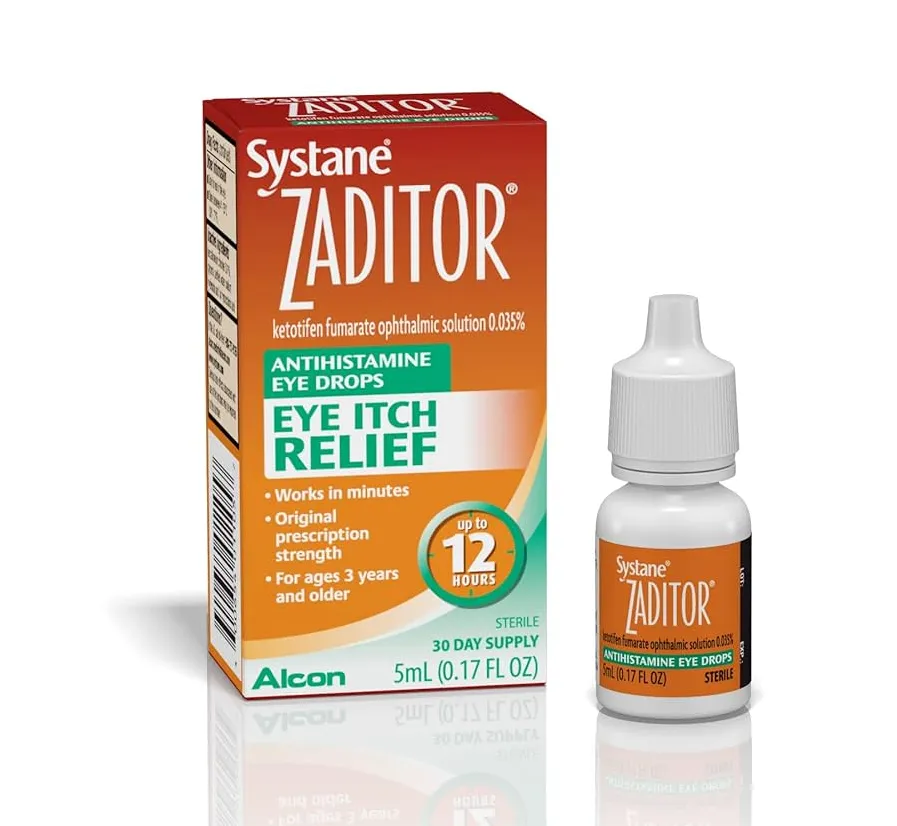
Indications and Uses of Ketotifen
Ketotifen is indicated for a variety of allergic and inflammatory conditions, leveraging its dual antihistamine and mast cell-stabilizing properties:
Allergic Conjunctivitis: Alleviates itching, redness, and watery eyes caused by seasonal or perennial allergens, per ophthalmology guidelines, supported by clinical trials showing symptom relief within 15–30 minutes.
Seasonal Allergic Rhinitis: Manages sneezing, runny nose, and nasal congestion, recommended in allergy protocols with evidence of reduced histamine levels.
Perennial Allergic Rhinitis: Treats year-round allergies, improving quality of life, with ENT and allergy research.
Vernal Keratoconjunctivitis: Investigated off-label to reduce severe ocular allergy symptoms in children, with pediatric ophthalmology data.
Atopic Dermatitis: Explored off-label to control itching and inflammation, with dermatology evidence.
Mild Asthma Prophylaxis: Used off-label to prevent exercise-induced bronchospasm, with pulmonary medicine studies.
Urticaria (Hives): Managed off-label to reduce chronic hives, supported by allergy-immunology research.
Allergic Rhinitis with Asthma: Initiated off-label to address coexisting respiratory allergies, with respiratory therapy data.
Ocular Surface Disease: Applied off-label to manage dry eye with allergic components, with optometry studies.
Food Allergy Symptoms: Investigated off-label to mitigate mild systemic allergic reactions, with allergy research.
Dosage of Ketotifen
Dosage for Adults
Allergic Conjunctivitis: Ophthalmic Solution (0.025%): 1 drop in affected eye(s) every 8–12 hours, up to twice daily for up to 6 weeks.
Seasonal Allergic Rhinitis: Oral Tablets (1 mg): 1 mg twice daily with meals, adjusted based on symptom control.
Perennial Allergic Rhinitis: Oral Tablets (1 mg): 1–2 mg twice daily, with a maximum of 4 mg/day.
Dosage for Children
Allergic Conjunctivitis (≥3 years):
Ophthalmic Solution (0.025%): 1 drop every 8–12 hours, under pediatric supervision.
Seasonal Allergic Rhinitis (≥6 months, Oral):
Oral Syrup (0.2 mg/mL): 0.25–0.5 mg twice daily, titrated to 1 mg twice daily by age 3.
Dosage for Pregnant Women
Pregnancy Category C: Use only if benefits outweigh risks; consult an obstetrician, with fetal monitoring.
Dosage Adjustments
Renal Impairment: No adjustment needed; monitor for rare systemic effects in severe cases (CrCl <30 mL/min).
Hepatic Impairment: Mild to moderate (Child-Pugh A or B): Use cautiously; severe (Child-Pugh C): Avoid due to limited data.
Concomitant Medications: Adjust if combined with CNS depressants (e.g., alcohol, sedatives); monitor for sedation.
Elderly: Start with lower doses (e.g., 0.5 mg twice daily orally); monitor for drowsiness.
Prolonged Use: Limit ophthalmic use to 6–8 weeks unless monitored for IOP changes or tolerance.
Additional Considerations
- Administer this active ingredient with food (oral) to reduce gastrointestinal upset.
- Shake ophthalmic solution well before use; avoid wearing contact lenses during application.
How to Use Ketotifen
Administration:
Ophthalmic Solution: Tilt head back, instill 1 drop into the conjunctival sac, blink gently, and close eyes for 1–2 minutes.
Oral Tablets: Swallow whole with water, preferably with meals to enhance absorption.
Timing: Apply eye drops every 8–12 hours or take oral dose twice daily at consistent times.
Monitoring: Watch for drowsiness, eye irritation, or signs of allergic reaction (e.g., swelling); report changes immediately.
Additional Tips:
- Store at 15–25°C (59–77°F), protecting from light and freezing; discard eye drops after 4 weeks once opened.
- Remove contact lenses before using eye drops and wait 10 minutes before reinserting.
- Use with caution while driving or operating machinery due to potential sedation.
- Educate patients on proper handwashing and dropper hygiene to prevent contamination.
- Schedule follow-ups every 2–4 weeks to assess ocular health and systemic effects, especially in chronic users.
Contraindications for Ketotifen
Hypersensitivity: Patients with a known allergy to Ketotifen or benzalkonium chloride (preservative in eye drops).
Acute Asthma Attack: Contraindicated for oral use during acute bronchospasm due to lack of bronchodilator effect.
Severe Hepatic Impairment: Avoid in Child-Pugh Class C due to potential accumulation.
Neonates (<6 months): Contraindicated for oral use due to immature metabolism.
Concurrent Use with MAOIs: Avoid within 14 days of MAOI therapy due to enhanced sedative effects.
Warnings & Precautions for Ketotifen
General Warnings
Sedation: Risk of drowsiness, especially with oral form; avoid driving until effects are known.
Ocular Irritation: Risk with eye drops; monitor for burning or redness.
Dry Mouth: Common side effect; encourage hydration.
Weight Gain: Risk with prolonged oral use; monitor in children.
Seizure Threshold: Rare risk in predisposed patients; use cautiously.
Additional Warnings
Glaucoma Risk: Minimal with eye drops, but monitor IOP in susceptible patients.
Cardiac Effects: Rare palpitations with oral use; assess in cardiac patients.
Hypersensitivity Reactions: Rare anaphylaxis; discontinue if severe.
Renal Impairment: Risk of accumulation; monitor in severe cases.
Drug Dependence: Potential for tolerance with long-term oral use; taper if needed.
Use in Specific Populations
Pregnancy: Category C; use with caution, monitoring fetal development.
Breastfeeding: Use caution; monitor infant for sedation.
Elderly: Higher sedation risk; start with lowest dose.
Children: Safe for ophthalmic use (≥3 years) and oral (≥6 months) with supervision.
Renal/Hepatic Impairment: Adjust or avoid in severe cases.
Additional Precautions
- Inform your doctor about epilepsy, glaucoma, or sedative use before starting this medication.
- Avoid alcohol to reduce sedative effects.
- Use protective eyewear if photophobia occurs with eye drops.
Overdose and Management of Ketotifen
Overdose Symptoms
Drowsiness, confusion, or dry mouth.
Severe cases: Seizures, tachycardia, or hypotension.
Disorientation, nausea, or irritability as early signs.
Coma or respiratory depression with extremely high doses.
Immediate Actions
Contact the Medical Team: Seek immediate medical help if overdose is suspected.
Supportive Care: Monitor vital signs, provide IV fluids, and manage seizures with benzodiazepines if needed.
Specific Treatment: No specific antidote; use activated charcoal if ingestion is recent.
Monitor: Check ECG, sedation levels, and respiratory function for 24–48 hours.
Patient Education: Advise against self-adjusting doses and to store safely away from children.
Additional Notes
- Overdose risk is higher with oral form; systemic absorption from eye drops is minimal.
- Report persistent symptoms (e.g., severe drowsiness, rapid heartbeat) promptly.
Side Effects of Ketotifen
Common Side Effects
- Drowsiness (10–20%, managed with rest or dose adjustment)
- Eye Irritation (5–15%, relieved with artificial tears)
- Dry Mouth (3–10%, managed with hydration)
- Headache (2–8%, decreases with time)
- Mild Burning (Ophthalmic) (2–6%, subsides with use)
These effects may subside with adaptation.
Serious Side Effects
Seek immediate medical attention for:
- Neurological: Seizures or severe sedation.
- Ocular: Increased IOP or vision changes (rare).
- Cardiac: Tachycardia or arrhythmias (rare with oral use).
- Allergic: Anaphylaxis or severe rash.
- Respiratory: Wheezing or bronchospasm (rare).
Additional Notes
Regular monitoring for sedation and ocular health is advised, especially in children or elderly patients.
Patients with a history of seizures should be closely watched, with EEG considered if symptoms arise.
Report any unusual symptoms (e.g., persistent headache, eye pain) immediately to a healthcare provider.
Long-term use (>6 weeks) requires ophthalmologic exams to assess for rare IOP elevation.
Drug Interactions with Ketotifen
This active ingredient may interact with:
- CNS Depressants: Increases sedation (e.g., alcohol, benzodiazepines); avoid combination.
- Anticholinergics: Enhances dry mouth and urinary retention; use cautiously.
- MAOIs: Potentiates sedative effects; avoid within 14 days.
- Beta-Blockers: May mask hypoglycemic symptoms; monitor in diabetics.
- Oral Antihistamines: Increases drowsiness risk; adjust doses.
Action: Provide your healthcare provider with a complete list of medications.
Patient Education or Lifestyle
Medication Adherence: Use this antihistamine as prescribed for allergies, following the schedule.
Monitoring: Report drowsiness, eye irritation, or signs of overdose immediately.
Lifestyle: Avoid driving until sedation effects are known; wear sunglasses if photophobia occurs.
Diet: Take oral form with food; no specific restrictions.
Emergency Awareness: Know signs of severe allergic reaction or sedation; seek care if present.
Follow-Up: Schedule regular check-ups every 2–4 weeks to monitor ocular and systemic effects.
Pharmacokinetics of Ketotifen
Absorption: Oral, peak at 2–4 hours; ophthalmic, minimal systemic absorption.
Distribution: Volume of distribution ~5.2 L/kg; 75% protein-bound.
Metabolism: Hepatic via CYP450 to inactive metabolites.
Excretion: Primarily renal (60–70% as metabolites); half-life 12–22 hours.
Half-Life: 12–22 hours, with steady-state at 3–7 days.
Pharmacodynamics of Ketotifen
This drug exerts its effects by:
Blocking H1 histamine receptors, reducing allergic symptoms like itching.
Stabilizing mast cells, preventing histamine and leukotriene release.
Exhibiting dose-dependent risks of sedation and tolerance.
Storage
Temperature: Store at 15–25°C (59–77°F); protect from light and freezing.
Protection: Keep in original container, away from heat and humidity.
Safety: Store in a secure location out of reach of children due to sedation risk.
Disposal: Dispose of unused eye drops or tablets per local regulations or consult a pharmacist.
Frequently Asked Questions (FAQs)
Q: What does Ketotifen treat?
A: This medication treats eye allergies and rhinitis.
Q: Can this active ingredient cause drowsiness?
A: Yes, drowsiness is common; avoid driving.
Q: Is Ketotifen safe for children?
A: Yes, with supervision (≥3 years for eyes, ≥6 months orally).
Q: How is this drug taken?
A: As eye drops or oral tablets, as directed.
Q: How long is Ketotifen treatment?
A: Typically 1–6 weeks, depending on condition.
Q: Can I use Ketotifen if pregnant?
A: Yes, with caution; consult a doctor.
Regulatory Information
This medication is approved by:
- U.S. Food and Drug Administration (FDA): Approved in 1999 (Zaditor) for allergic conjunctivitis.
- European Medicines Agency (EMA): Approved for allergic rhinitis and conjunctivitis.
- Other Agencies: Approved globally for anti-allergic therapy; consult local guidelines.
References
- U.S. Food and Drug Administration (FDA). (2023). Zaditor (Ketotifen) Prescribing Information.
- Official FDA documentation detailing the drug’s approved uses, dosage, and safety.
- European Medicines Agency (EMA). (2023). Ketotifen Summary of Product Characteristics.
- EMA’s comprehensive information on the medication’s indications and precautions in Europe.
- National Institutes of Health (NIH). (2023). Ketotifen: MedlinePlus Drug Information.
- NIH resource providing detailed information on the drug’s uses, side effects, and precautions.
- World Health Organization (WHO). (2023). WHO Model List of Essential Medicines: Ketotifen.
- WHO’s consideration of Ketotifen for allergic conditions.
- Journal of Allergy and Clinical Immunology. (2022). Ketotifen in Allergic Conjunctivitis.
- Peer-reviewed article on Ketotifen efficacy (note: access may require a subscription).
