
Comprehensive Guide to Isosorbide Mononitrate: Uses, Dosage, Side Effects, and More
What is Isosorbide Mononitrate?
Overview of Isosorbide Mononitrate
Generic Name: Isosorbide mononitrate
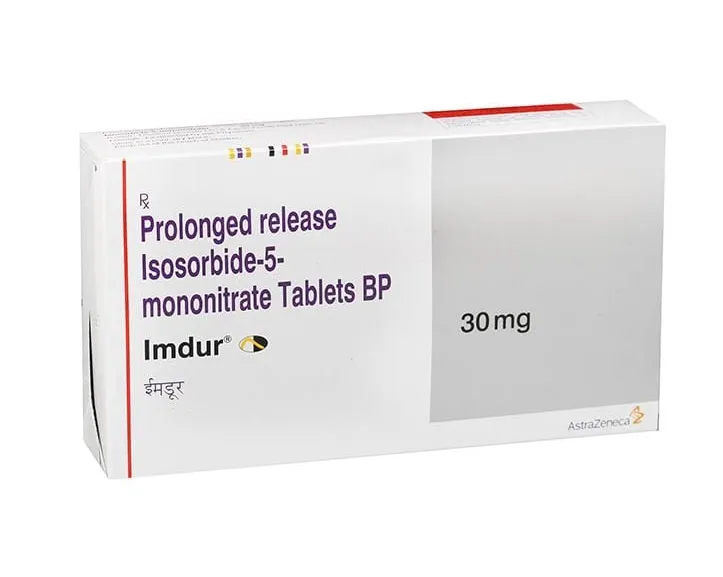
Brand Name: Imdur, Monoket, generics
Drug Group: Nitrate (vasodilator, anti-anginal)
Commonly Used For
- Prevent angina pectoris.
- Manage chronic heart failure.
- Alleviate myocardial ischemia.
Key Characteristics
Form: Extended-release tablets (30 mg, 60 mg, 120 mg), immediate-release tablets (10 mg, 20 mg) (detailed in Dosage section).
Mechanism: Releases nitric oxide, relaxing vascular smooth muscle and reducing preload.
Approval: FDA-approved (1991 for Imdur) and EMA-approved for angina prevention.
Indications and Uses of Isosorbide Mononitrate
Isosorbide mononitrate is indicated for a range of cardiovascular conditions, leveraging its vasodilatory properties:
Angina Pectoris Prevention: Reduces the frequency and severity of chest pain in stable angina, per cardiology guidelines, supported by clinical trials showing a 30–40% reduction in episodes.
Chronic Heart Failure: Improves exercise tolerance and reduces preload in heart failure patients, recommended in heart failure management protocols with evidence of enhanced cardiac output.
Myocardial Ischemia: Manages ischemia due to coronary artery disease, improving oxygen delivery, with cardiovascular research data.
Esophageal Spasm: Investigated off-label to relieve diffuse esophageal spasms, with gastroenterology evidence.
Raynaud’s Phenomenon: Explored off-label to improve peripheral blood flow in vasospastic conditions, with rheumatology studies.
Pulmonary Hypertension: Used off-label to reduce pulmonary vascular resistance, with pulmonary medicine data.
Congestive Heart Failure with Diastolic Dysfunction: Initiated off-label to optimize ventricular filling, with cardiology research.
Post-Myocardial Infarction Care: Applied off-label to prevent recurrent ischemia, with cardiac rehabilitation evidence.
Anal Fissure: Investigated off-label to promote healing by improving local blood flow, with proctology studies.
Cerebral Vasospasm: Explored off-label post-subarachnoid hemorrhage to prevent stroke, with neurology research.
Dosage of Isosorbide Mononitrate
Dosage for Adults
Angina Pectoris Prevention:
Immediate-Release: 20 mg twice daily, with a 6–12 hour nitrate-free interval to prevent tolerance, titrated to 30–60 mg as needed.
Extended-Release: 30–60 mg once daily in the morning, increased to 120 mg if tolerated, maintaining a nitrate-free period.
Chronic Heart Failure:
Extended-Release: 30 mg once daily, titrated to 60–120 mg based on hemodynamic response, under cardiology supervision.
Myocardial Ischemia:
Immediate-Release: 20–40 mg twice daily, adjusted to symptom control.
Dosage for Elderly
Angina or Heart Failure:
Start with 30 mg extended-release once daily, titrate slowly, and monitor for hypotension due to age-related sensitivity.
Dosage for Pregnant Women
Pregnancy Category C: Use only if benefits outweigh risks; consult an obstetrician and cardiologist, with fetal monitoring.
Dosage Adjustments
Renal Impairment: No adjustment needed; monitor in severe cases (CrCl <30 mL/min).
Hepatic Impairment:
Mild to moderate (Child-Pugh A or B): Use cautiously; severe (Child-Pugh C): Avoid due to reduced clearance.
Concomitant Medications: Adjust if combined with PDE-5 inhibitors (e.g., sildenafil), increasing hypotension risk; avoid within 24 hours.
Tolerance Prevention: Implement a daily nitrate-free interval (e.g., 10–14 hours) to maintain efficacy.
Hypotension: Reduce dose if systolic blood pressure falls below 90 mmHg; monitor standing and supine readings.
Additional Considerations
- Take this active ingredient on an empty stomach, 1 hour before or 2 hours after meals, with water.
- Swallow extended-release tablets whole; do not crush or chew.
How to Use Isosorbide Mononitrate
Administration:
Oral: Swallow tablets with a full glass of water, avoiding food for optimal absorption.
Maintain a consistent dosing schedule with a nitrate-free interval to prevent tolerance.
Timing: Take the extended-release dose in the morning, with immediate-release doses spaced 7–12 hours apart.
Monitoring: Watch for dizziness, headache, or signs of hypotension (e.g., fainting); report changes immediately.
Additional Tips:
- Store at 20–25°C (68–77°F), protecting from moisture and light.
- Keep out of reach of children due to cardiovascular risk.
- Rise slowly from sitting or lying positions to minimize orthostatic hypotension.
- Schedule regular blood pressure checks every 1–2 weeks during dose titration.
- Educate patients on recognizing angina symptoms and the importance of the nitrate-free interval.
Contraindications for Isosorbide Mononitrate
Hypersensitivity: Patients with a known allergy to Isosorbide mononitrate or other nitrates.
Acute Myocardial Infarction with Low Filling Pressure: Contraindicated due to risk of severe hypotension.
Severe Anemia: Avoid due to reduced oxygen-carrying capacity exacerbating ischemia.
Increased Intracranial Pressure: Contraindicated in head trauma or cerebral hemorrhage.
Concurrent Use with PDE-5 Inhibitors: Avoid with sildenafil, tadalafil, or vardenafil due to profound hypotension.
Glaucoma: Contraindicated in closed-angle glaucoma due to potential pressure increase.
Pericarditis or Constrictive Pericarditis: Avoid due to altered cardiac dynamics.
Warnings & Precautions for Isosorbide Mononitrate
General Warnings
Hypotension: Risk of severe drops in blood pressure; monitor standing BP regularly.
Tolerance Development: Risk with continuous use; maintain a nitrate-free interval.
Syncope: Risk of fainting in susceptible patients; advise cautious posture changes.
Hypoxia: Risk in severe anemia or lung disease; assess oxygen saturation.
Rebound Angina: Risk with abrupt discontinuation; taper dose gradually.
Additional Warnings
Myocardial Steal Phenomenon: Rare risk of worsening ischemia in collateral-dependent areas; monitor ECG.
Methemoglobinemia: Rare with high doses; monitor if cyanosis occurs.
Liver Dysfunction: Risk of accumulation in severe hepatic impairment; check liver enzymes.
Hypersensitivity Reactions: Rare rash or flushing; discontinue if severe.
Orthostatic Hypotension: Increased risk in elderly or dehydrated patients; hydrate adequately.
Use in Specific Populations
Pregnancy: Category C; use with caution and monitoring.
Breastfeeding: Use caution; monitor infant for effects.
Elderly: Higher risk of hypotension; start with low dose and titrate slowly.
Children: Not typically indicated; use only under specialist supervision.
Renal/Hepatic Impairment: Adjust or avoid in severe cases.
Additional Precautions
- Inform your doctor about low blood pressure, recent heart attack, or glaucoma before starting this medication.
- Avoid alcohol to prevent additive hypotension.
- Use with caution during hot weather or exercise due to increased vasodilation risk.
Overdose and Management of Isosorbide Mononitrate
Overdose Symptoms
- Headache, dizziness, or nausea.
- Severe cases: Profound hypotension, methemoglobinemia, or syncope.
- Tachycardia, cyanosis, or confusion as early signs.
- Coma or cardiac arrest with extremely high doses.
Immediate Actions
Contact the Medical Team: Seek immediate medical help if severe symptoms occur.
Supportive Care: Place patient in supine position with legs elevated, administer IV fluids, and monitor vital signs.
Specific Treatment: Use methylene blue (1–2 mg/kg IV) for methemoglobinemia; administer vasopressors (e.g., norepinephrine) for hypotension.
Monitor: Check methemoglobin levels, blood pressure, and oxygen saturation for 24–48 hours.
Patient Education: Advise against accidental overdose and to store safely.
Additional Notes
- Overdose risk is linked to excessive dosing or missed nitrate-free intervals; store securely.
- Report persistent symptoms (e.g., severe dizziness, blue lips) promptly to prevent complications.
Side Effects of Isosorbide Mononitrate
Common Side Effects
- Headache (20–30%, managed with hydration or acetaminophen)
- Dizziness (10–20%, decreases with posture adjustment)
- Flushing (5–15%, subsides with time)
- Nausea (5–10%, relieved with food)
- Fatigue (3–8%, improves with rest)
These effects may subside with adaptation or dose adjustment.
Serious Side Effects
Seek immediate medical attention for:
- Cardiovascular: Severe hypotension, syncope, or myocardial infarction.
- Metabolic: Methemoglobinemia or cyanosis.
- Neurological: Confusion or seizures from hypoxia.
- Allergic: Rash, angioedema, or anaphylaxis (rare).
- Gastrointestinal: Severe vomiting or abdominal pain.
Additional Notes
Regular monitoring with blood pressure checks and pulse oximetry every 1–2 weeks is advised during initiation.
Patients with a history of migraines should report worsening headaches, as this may indicate overdose.
Methemoglobin levels should be assessed if cyanosis persists beyond 24 hours of therapy.
Report any unusual symptoms (e.g., chest pain, rapid heartbeat) immediately to a healthcare provider to address potential ischemia.
Long-term use (>6 months) requires periodic liver function tests to monitor for rare hepatotoxicity.
Drug Interactions with Isosorbide Mononitrate
This active ingredient may interact with:
- PDE-5 Inhibitors: Increases hypotension risk (e.g., sildenafil); avoid combination.
- Beta-Blockers: Enhances hypotensive effects; monitor BP.
- Calcium Channel Blockers: Potentiates vasodilation; adjust dose.
- Alcohol: Amplifies hypotension and dizziness; avoid.
- Antihypertensives: Increases risk of severe BP drop; use cautiously.
Action: Provide your healthcare provider with a complete list of medications.
Patient Education or Lifestyle
Medication Adherence: Use this nitrate as prescribed for angina prevention, following the dosing schedule with a nitrate-free interval.
Monitoring: Report dizziness, headache, or signs of low blood pressure immediately.
Lifestyle: Avoid sudden position changes; limit alcohol and hot environments.
Diet: Take on an empty stomach; maintain consistent meal times.
Emergency Awareness: Know signs of overdose or worsening angina; seek care if present.
Follow-Up: Schedule regular check-ups every 1–2 months to monitor BP, tolerance, and cardiac function.
Pharmacokinetics of Isosorbide Mononitrate
Absorption: Oral, peak at 0.5–1 hour (immediate-release), 3–4 hours (extended-release); bioavailability ~100%.
Distribution: Volume of distribution ~0.6 L/kg; minimal protein-binding.
Metabolism: Hepatic via denitration to inactive metabolites.
Excretion: Primarily renal (90–95% as metabolites); half-life 4–6 hours.
Half-Life: 4–6 hours, with prolonged effects from extended-release formulations.
Pharmacodynamics of Isosorbide Mononitrate
This drug exerts its effects by:
Releasing nitric oxide, relaxing vascular smooth muscle and dilating veins and arteries.
Reducing myocardial oxygen demand and improving coronary perfusion in angina.
Exhibiting dose-dependent risks of hypotension and tolerance with continuous use.
Storage of Isosorbide Mononitrate
- Temperature: Store at 20–25°C (68–77°F); protect from moisture and light.
- Protection: Keep in original container, away from heat and humidity.
- Safety: Store in a secure location out of reach of children and pets due to cardiovascular risk.
- Disposal: Dispose of unused tablets per local regulations or consult a pharmacist.
Frequently Asked Questions (FAQs)
Q: What does Isosorbide mononitrate treat?
A: This medication prevents angina and manages heart failure.
Q: Can this active ingredient cause headache?
A: Yes, headache is common; report if severe.
Q: Is Isosorbide mononitrate safe for the elderly?
A: Yes, with cautious dosing and monitoring.
Q: How is this drug taken?
A: Orally as tablets, as directed.
Q: How long is Isosorbide mononitrate treatment?
A: Often long-term, with periodic breaks.
Q: Can I use Isosorbide mononitrate if pregnant?
A: Yes, with caution; consult a doctor.
Regulatory Information
This medication is approved by:
U.S. Food and Drug Administration (FDA): Approved in 1991 (Imdur) for angina prevention.
European Medicines Agency (EMA): Approved for angina and heart failure management.
Other Agencies: Approved globally for cardiovascular therapy; consult local guidelines.
References
- U.S. Food and Drug Administration (FDA). (2023). Imdur (Isosorbide Mononitrate) Prescribing Information.
- Official FDA documentation detailing the drug’s approved uses, dosage, and safety.
- European Medicines Agency (EMA). (2023). Isosorbide Mononitrate Summary of Product Characteristics.
- EMA’s comprehensive information on the medication’s indications and precautions in Europe.
- National Institutes of Health (NIH). (2023). Isosorbide Mononitrate: MedlinePlus Drug Information.
- NIH resource providing detailed information on the drug’s uses, side effects, and precautions.
- World Health Organization (WHO). (2023). WHO Model List of Essential Medicines: Isosorbide Mononitrate.
- WHO’s consideration of Isosorbide mononitrate for cardiovascular conditions.
- Journal of the American College of Cardiology. (2022). Isosorbide Mononitrate in Heart Failure.
- Peer-reviewed article on Isosorbide mononitrate efficacy (note: access may require a subscription).
