
Comprehensive Guide to Hyoscyamine: Uses, Dosage, Side Effects, and More
What is Hyoscyamine?
Overview of Hyoscyamine
Generic Name: Hyoscyamine
Brand Name: Levsin, Anaspaz, generics
Drug Group: Anticholinergic (antispasmodic)
Commonly Used For
- Treat irritable bowel syndrome (IBS).
- Manage bladder spasms.
- Reduce excessive salivation.
Key Characteristics
Form: Oral tablets (0.125 mg, 0.375 mg), sublingual tablets (0.125 mg), extended-release capsules (0.375 mg), or injectable solution (0.5 mg/mL) (detailed in Dosage section).
Mechanism: Blocks muscarinic receptors, decreasing smooth muscle contractions and glandular secretions.
Approval: FDA-approved (1950s for Levsin) and EMA-approved for specific spastic conditions.
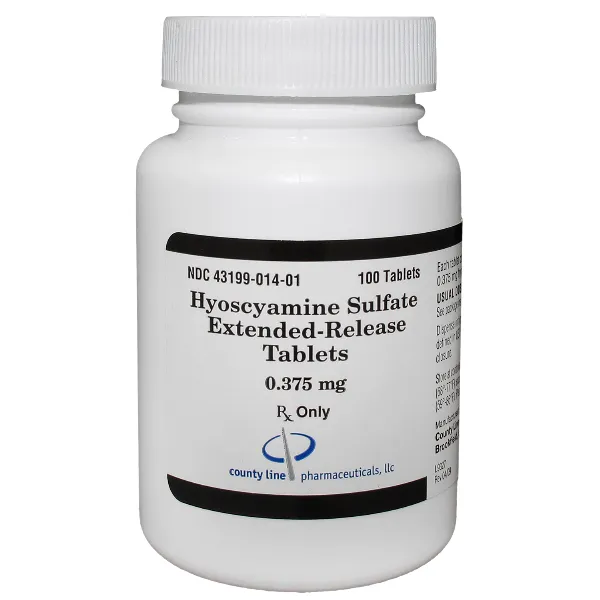
Indications and Uses of Hyoscyamine
Hyoscyamine is indicated for a variety of spastic and hypersecretory conditions, leveraging its anticholinergic properties:
Irritable Bowel Syndrome (IBS): Alleviates abdominal pain and cramping, improving bowel function, per gastroenterology guidelines, supported by clinical trials showing symptom relief in 60–70% of patients within 1–2 weeks.
Bladder Spasms: Manages overactive bladder and neurogenic bladder, reducing urgency and incontinence, recommended in urology protocols with evidence of decreased detrusor pressure.
Excessive Salivation (Sialorrhea): Controls drooling in neurological disorders (e.g., Parkinson’s disease), with neurology data.
Peptic Ulcer Disease: Reduces gastric acid secretion and motility, aiding healing, per gastroenterology studies.
Renal or Biliary Colic: Investigated off-label to relieve ureteral or gallbladder spasms, with emergency medicine evidence.
Motion Sickness: Used off-label to prevent nausea and vomiting, with travel medicine research.
Parkinson’s Disease Tremors: Explored off-label to reduce tremor severity, with movement disorder studies.
Chronic Pancreatitis: Managed off-label to decrease pancreatic secretions, with gastroenterology data.
Infantile Colic: Initiated off-label in infants to reduce crying episodes, with pediatric studies.
Preoperative Antispasmodic: Applied off-label to minimize bowel motility before surgery, with anesthesiology evidence.
Dosage of Hyoscyamine
Dosage for Adults
Irritable Bowel Syndrome (IBS):
- Oral: 0.125–0.25 mg every 4 hours or as needed (max 1.5 mg/day).
- Extended-Release: 0.375 mg every 12 hours.
Bladder Spasms:
- Oral/Sublingual: 0.15–0.3 mg every 6 hours, adjusted based on symptom control.
Excessive Salivation:
- Sublingual: 0.125 mg every 4 hours, titrated to effect (max 1 mg/day).
Dosage for Children (≥2 years)
IBS or Bladder Spasms:
- Oral: 0.0625–0.125 mg every 4–6 hours, not exceeding 0.75 mg/day, under pediatric supervision.
- Sublingual: 0.0625 mg as needed, adjusted by weight (0.005–0.01 mg/kg).
Dosage for Pregnant Women
Pregnancy Category C: Use only if benefits outweigh risks; consult an obstetrician, with fetal monitoring.
Dosage Adjustments
Renal Impairment: Reduce dose in severe cases (CrCl <30 mL/min); monitor for toxicity.
Hepatic Impairment:
Mild to moderate (Child-Pugh A or B): Use cautiously; severe (Child-Pugh C): Avoid.
Concomitant Medications: Adjust if combined with other anticholinergics (e.g., atropine) or sedatives; monitor for additive effects.
Elderly: Start with 0.125 mg every 6 hours; monitor for confusion or urinary retention.
Heat Exposure: Reduce dose in hot climates to avoid heatstroke risk due to reduced sweating.
Additional Considerations
- Take this active ingredient 30–60 minutes before meals for optimal gastrointestinal effect.
- Use sublingual form if swallowing is difficult; avoid chewing extended-release capsules.
How to Use Hyoscyamine
Administration:
Oral: Swallow tablets with water, or place sublingual tablets under the tongue until dissolved.
Injectable: Administer intramuscularly or intravenously by a healthcare professional.
Avoid crushing or chewing extended-release forms.
Timing: Take 30–60 minutes before meals or at bedtime, as prescribed, to maximize antispasmodic effect.
Monitoring: Watch for dry mouth, blurred vision, or signs of overdose (e.g., delirium); report changes immediately.
Additional Tips:
- Store at 20–25°C (68–77°F), protecting from moisture and light.
- Keep out of reach of children due to toxicity risk.
- Use sugar-free gum or lozenges to relieve dry mouth; wear sunglasses if photophobia occurs.
- Schedule regular follow-ups every 1–2 weeks to assess efficacy and adjust dose.
- Educate patients on avoiding overheating and maintaining hydration to mitigate anticholinergic effects.
Contraindications for Hyoscyamine
Hypersensitivity: Patients with a known allergy to Hyoscyamine or other belladonna alkaloids.
Glaucoma: Contraindicated in narrow-angle glaucoma due to IOP elevation risk.
Myasthenia Gravis: Avoid due to worsening muscle weakness.
Severe Ulcerative Colitis: Contraindicated due to risk of toxic megacolon.
Obstructive Uropathy: Avoid in urinary retention or prostatic hyperplasia.
Unstable Cardiovascular Disease: Contraindicated in recent myocardial infarction or tachycardia.
Reflux Esophagitis: Avoid due to delayed gastric emptying.
Hyperthyroidism: Contraindicated due to increased heart rate risk.
Warnings & Precautions for Hyoscyamine
General Warnings
Anticholinergic Toxicity: Risk of delirium, hallucinations, or seizures with overdose; monitor cognitive status.
Intraocular Pressure (IOP) Increase: Risk of glaucoma; perform eye exams in at-risk patients.
Heatstroke: Risk due to reduced sweating; avoid in hot environments.
Urinary Retention: Risk in elderly or prostatic hypertrophy; check post-void residual volume.
Tachycardia: Risk in cardiac patients; monitor heart rate.
Additional Warnings
Gastrointestinal Obstruction: Risk of ileus or obstruction; assess bowel sounds.
Central Nervous System Effects: Risk of confusion or agitation in the elderly; adjust dose.
Dry Mouth Complications: Risk of dental caries or candidiasis; encourage oral hygiene.
Allergic Reactions: Rare anaphylaxis or rash; discontinue if severe.
Hypersensitivity Reactions: Rare angioedema; stop if swelling occurs.
Use in Specific Populations
Pregnancy: Category C; use with caution, monitoring fetal heart rate.
Breastfeeding: Use caution; monitor infant for sedation or feeding issues.
Elderly: Higher risk of confusion and urinary retention; start low and titrate slowly.
Children: Safe for short-term use with pediatric oversight.
Renal/Hepatic Impairment: Adjust or avoid in severe cases.
Additional Precautions
- Inform your doctor about glaucoma, heart disease, or urinary issues before starting this medication.
- Avoid alcohol to reduce sedation and confusion risk.
- Use with caution in patients with a history of psychosis or dementia.
Overdose and Management of Hyoscyamine
Overdose Symptoms
- Dry mouth, blurred vision, or tachycardia.
- Severe cases: Delirium, seizures, or coma.
- Flushed skin, fever, or urinary retention as early signs.
- Respiratory depression or cardiovascular collapse with extremely high doses.
Immediate Actions
Contact the Medical Team: Seek immediate medical help.
Supportive Care: Monitor vital signs, provide IV fluids, and control hyperthermia with cooling measures.
Specific Treatment: Administer physostigmine (0.5–2 mg IV) under specialist guidance for severe anticholinergic effects.
Monitor: Check ECG, temperature, and mental status for 24–48 hours.
Patient Education: Advise against hoarding medication and to report accidental ingestion immediately.
Additional Notes
- Overdose risk is high in children; store securely and use child-resistant packaging.
- Report persistent symptoms (e.g., severe confusion, rapid heartbeat) promptly.
Side Effects of Hyoscyamine
Common Side Effects
- Dry Mouth (20–30%, managed with hydration or lozenges)
- Blurred Vision (15–25%, temporary, resolves with rest)
- Constipation (10–20%, relieved with fiber)
- Drowsiness (5–15%, decreases with time)
- Urinary Hesitancy (5–10%, monitored in at-risk patients)
These effects may subside with adaptation or dose adjustment.
Serious Side Effects
Seek immediate medical attention for:
- Neurological: Delirium, hallucinations, or seizures.
- Ocular: Acute glaucoma or vision loss.
- Cardiovascular: Tachycardia or arrhythmias.
- Gastrointestinal: Paralytic ileus or toxic megacolon.
- Allergic: Rash, angioedema, or anaphylaxis.
Additional Notes
Regular monitoring with eye exams every 6–12 months is advised for long-term users to detect glaucoma.
Patients with a history of urinary retention should have post-void residual volume checked weekly.
Report any unusual symptoms (e.g., severe abdominal pain, rapid pulse) immediately to a healthcare provider.
Long-term use (>3 months) requires baseline and follow-up ECGs to assess cardiac effects.
Drug Interactions with Hyoscyamine
This active ingredient may interact with:
- Other Anticholinergics: Increases toxicity (e.g., atropine); avoid combination.
- Antidepressants: Enhances sedation (e.g., amitriptyline); monitor.
- Antihistamines: Potentiates drowsiness (e.g., diphenhydramine); use cautiously.
- Opioids: Increases constipation risk; adjust dose.
- Antacids: Delays absorption; separate administration by 1 hour.
Action: Provide your healthcare provider with a complete list of medications.
Patient Education or Lifestyle
Medication Adherence: Use this anticholinergic as prescribed for spasms or secretions, following the schedule.
Monitoring: Report dry mouth, blurred vision, or signs of overdose immediately.
Lifestyle: Avoid overheating; wear sunglasses if photophobic.
Diet: Increase fiber and fluids to prevent constipation.
Emergency Awareness: Know signs of toxicity or glaucoma; seek care if present.
Follow-Up: Schedule regular check-ups every 1–2 weeks to monitor efficacy and side effects.
Pharmacokinetics of Hyoscyamine
Absorption: Oral, peak at 0.5–2 hours; bioavailability ~50%.
Distribution: Volume of distribution ~1.3 L/kg; 50% protein-bound.
Metabolism: Hepatic via hydrolysis to tropic acid and tropine.
Excretion: Primarily renal (80–90% as metabolites); half-life 3–5 hours.
Half-Life: 3–5 hours, prolonged in renal impairment.
Pharmacodynamics of Hyoscyamine
This drug exerts its effects by:
Blocking muscarinic receptors, reducing smooth muscle spasms and glandular secretions.
Decreasing gastrointestinal motility and urinary tract contractions.
Exhibiting dose-dependent risks of anticholinergic syndrome and tachycardia.
Storage of Hyoscyamine
Temperature: Store at 20–25°C (68–77°F); protect from moisture and light.
Protection: Keep in original container, away from heat and humidity.
Safety: Store in a secure location out of reach of children and pets due to toxicity risk.
Disposal: Dispose of unused tablets or solution per local regulations or consult a pharmacist.
Frequently Asked Questions (FAQs)
Q: What does Hyoscyamine treat?
A: This medication treats IBS and bladder spasms.
Q: Can this active ingredient cause dry mouth?
A: Yes, dry mouth is common; use lozenges if needed.
Q: Is Hyoscyamine safe for children?
A: Yes, with supervision for short-term use.
Q: How is this drug taken?
A: Orally, sublingually, or via injection, as directed.
Q: How long is Hyoscyamine treatment?
A: Typically 1–2 weeks, or as prescribed.
Q: Can I use Hyoscyamine if pregnant?
A: Yes, with caution; consult a doctor.
Regulatory Information
This medication is approved by:
U.S. Food and Drug Administration (FDA): Approved in the 1950s (Levsin) for spastic conditions.
European Medicines Agency (EMA): Approved for gastrointestinal and urinary spasms.
Other Agencies: Approved globally for anticholinergic therapy; consult local guidelines.
References
- U.S. Food and Drug Administration (FDA). (2023). Levsin (Hyoscyamine) Prescribing Information.
- Official FDA documentation detailing the drug’s approved uses, dosage, and safety.
- European Medicines Agency (EMA). (2023). Hyoscyamine Summary of Product Characteristics.
- EMA’s comprehensive information on the medication’s indications and precautions in Europe.
- National Institutes of Health (NIH). (2023). Hyoscyamine: MedlinePlus Drug Information.
- NIH resource providing detailed information on the drug’s uses, side effects, and precautions.
- World Health Organization (WHO). (2023). WHO Model List of Essential Medicines: Hyoscyamine.
- WHO’s consideration of Hyoscyamine for spastic conditions.
- American Journal of Gastroenterology. (2022). Hyoscyamine in IBS.
- Peer-reviewed article on Hyoscyamine efficacy (note: access may require a subscription).
