
Comprehensive Guide to Hydroxyurea: Uses, Dosage, Side Effects, and More
What is Hydroxyurea?
Overview of Hydroxyurea
Generic Name: Hydroxyurea
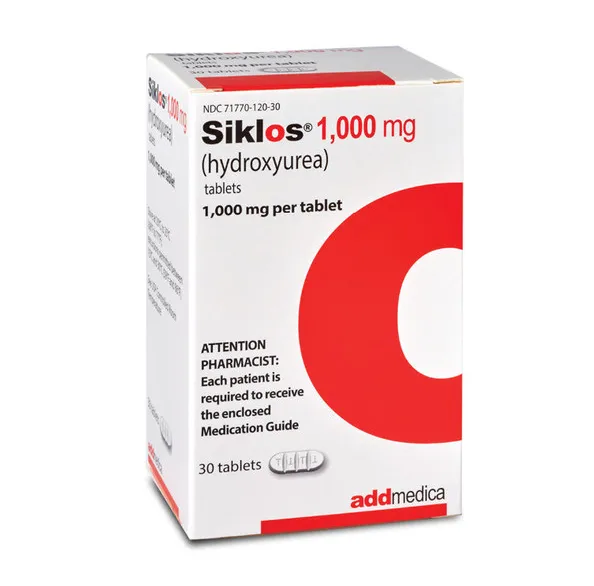
Brand Name: Hydrea, Droxia, Siklos, generics
Drug Group: Antimetabolite (cytotoxic, sickle cell disease modifier)
Commonly Used For
- Reduce sickle cell disease complications.
- Treat chronic myelogenous leukemia (CML).
- Manage polycythemia vera (PV).
Key Characteristics
Form: Oral capsules (500 mg), tablets (100 mg, 1000 mg) (detailed in Dosage section).
Mechanism: Inhibits DNA replication, decreasing abnormal cell proliferation.
Approval: FDA-approved (1967 for Hydrea) and EMA-approved for sickle cell disease and myeloproliferative disorders.
Indications and Uses of Hydroxyurea
Hydroxyurea is indicated for a variety of hematologic and oncologic conditions, leveraging its cytoreductive and anti-sickling properties:
Sickle Cell Disease (SCD): Reduces painful crises, acute chest syndrome, and transfusion needs in adults and children, per hematology guidelines, supported by trials showing a 44% decrease in crisis frequency.
Chronic Myelogenous Leukemia (CML): Controls white blood cell counts in chronic phase, improving survival, recommended in oncology protocols with cytogenetic evidence.
Polycythemia Vera (PV): Manages erythrocytosis and thrombotic risk, reducing hematocrit levels, with hematology-oncology data.
Essential Thrombocythemia (ET): Investigated off-label to lower platelet counts and prevent thrombosis, with myeloproliferative disorder studies.
Acute Myeloid Leukemia (AML): Used off-label in combination therapy to induce remission, with oncology research.
Head and Neck Cancer: Explored off-label with radiation to enhance tumor response, with radiation oncology evidence.
HIV-Associated Lymphoma: Managed off-label to reduce tumor burden, with infectious disease-oncology data.
Thalassemia: Initiated off-label to improve hemoglobin F levels, with hematology studies.
Ovarian Cancer: Investigated off-label as a sensitizer for chemotherapy, with gynecologic oncology research.
Psoriasis: Applied off-label for severe cases resistant to other therapies, with dermatology evidence.
Dosage of Hydroxyurea
Dosage for Adults
Sickle Cell Disease (SCD):
- Initial: 15 mg/kg once daily, titrated by 5 mg/kg every 8–12 weeks to a maximum of 35 mg/kg/day, based on neutrophil and platelet counts.
Chronic Myelogenous Leukemia (CML):
- Initial: 20–30 mg/kg once daily, adjusted to maintain white blood cell count (WBC) at 5,000–10,000/µL.
Polycythemia Vera (PV):
- Initial: 15–20 mg/kg once daily, titrated to keep hematocrit <45%, with monitoring every 2 weeks.
Dosage for Children (≥2 years)
Sickle Cell Disease (SCD):
- Initial: 20 mg/kg once daily, adjusted based on hemoglobin F levels and blood counts, under pediatric hematology supervision.
- Maximum: 35 mg/kg/day, with dose holds if neutrophils <2,000/µL.
Dosage for Pregnant Women
Pregnancy Category D: Use only if benefits outweigh risks; consult an obstetrician and hematologist, with fetal monitoring and dose reduction if needed.
Dosage Adjustments
Renal Impairment:
- Mild (CrCl 60–90 mL/min): No adjustment; monitor closely.
- Moderate (CrCl 30–60 mL/min): Reduce by 50%; severe (CrCl <30 mL/min): Avoid.
Hepatic Impairment:
- Mild to moderate (Child-Pugh A or B): Use cautiously; severe (Child-Pugh C): Avoid due to limited data.
Bone Marrow Suppression: Hold if neutrophils <2,000/µL or platelets <80,000/µL; resume at reduced dose after recovery.
Elderly: Start with 10–15 mg/kg daily; monitor renal function and blood counts.
Concomitant Medications: Adjust if combined with myelosuppressive agents (e.g., radiation); monitor for additive toxicity.
Additional Considerations
- Take this active ingredient orally with a glass of water, with or without food, at the same time daily.
- Use gloves when handling capsules to avoid skin exposure; do not crush or open capsules.
- Monitor blood counts weekly during dose titration and monthly during maintenance.
How to Use Hydroxyurea
Administration:
Oral: Swallow capsules whole with water; do not chew or break.
Take consistently at the same time daily to maintain steady levels.
Timing: Administer as prescribed, with dose adjustments based on blood count monitoring.
Monitoring: Watch for signs of infection (e.g., fever), bruising, or fatigue; report changes immediately.
Additional Tips:
- Store at 20–25°C (68–77°F), protecting from light and moisture.
- Keep out of reach of children; dispose of unused capsules per local regulations.
- Use sunscreen and protective clothing due to photosensitivity risk.
- Schedule regular blood tests (CBC, reticulocyte count) every 1–2 weeks during initiation and monthly thereafter.
- Educate patients on recognizing myelosuppression symptoms and avoiding alcohol to reduce liver strain.
Contraindications for Hydroxyurea
Hypersensitivity: Patients with a known allergy to Hydroxyurea or its components.
Severe Bone Marrow Suppression: Contraindicated if neutrophils <2,000/µL or platelets <80,000/µL.
Severe Renal Impairment: Avoid in CrCl <30 mL/min due to accumulation risk.
Severe Hepatic Impairment: Contraindicated in Child-Pugh Class C due to hepatotoxicity risk.
Pregnancy: Contraindicated in the first trimester unless life-saving, due to teratogenic potential.
Breastfeeding: Contraindicated due to potential excretion in breast milk.
Active Infections: Avoid in uncontrolled bacterial, viral, or fungal infections due to immunosuppression risk.
Warnings & Precautions for Hydroxyurea
General Warnings
Myelosuppression: Risk of neutropenia, thrombocytopenia, or anemia; monitor CBC weekly during titration.
Secondary Malignancies: Increased risk of leukemia or skin cancer with long-term use; perform skin exams every 6 months.
Hepatotoxicity: Risk of liver injury; check LFTs every 2–3 months.
Cutaneous Ulcers: Risk of leg or mouth ulcers; assess regularly in sickle cell patients.
Fetal Harm: Teratogenic risk; use contraception during and for at least 6 months after therapy.
Additional Warnings
Pulmonary Toxicity: Rare interstitial lung disease; monitor for dyspnea or cough.
Renal Toxicity: Risk of renal impairment with chronic use; assess CrCl periodically.
Macrocytosis: Common benign effect; differentiate from megaloblastic anemia.
Photosensitivity: Increased risk of skin reactions; use sun protection.
Hypersensitivity Reactions: Rare severe reactions (e.g., anaphylaxis); discontinue if severe.
Use in Specific Populations
Pregnancy: Category D; avoid unless critical, with fetal monitoring.
Breastfeeding: Contraindicated; advise against nursing.
Elderly: Higher myelosuppression risk; start with lower doses.
Children: Safe for SCD with hematology oversight.
Renal/Hepatic Impairment: Contraindicated or adjusted based on severity.
Additional Precautions
- Inform your doctor about liver disease, recent infections, or pregnancy plans before starting this medication.
- Avoid live vaccines during therapy due to immunosuppression.
- Use moisturizers to prevent cutaneous ulcers in sickle cell patients.
Overdose and Management of Hydroxyurea
Overdose Symptoms
- Nausea, vomiting, or diarrhea.
- Severe cases: Myelosuppression (neutropenia, thrombocytopenia), mucositis, or seizures.
- Fatigue, skin rash, or fever as early signs.
- Coma or profound pancytopenia with extremely high doses.
Immediate Actions
Contact the Medical Team: Seek immediate medical help if overdose is suspected.
Supportive Care: Monitor blood counts, provide hydration, and manage infections with antibiotics if needed.
Specific Treatment: No specific antidote; use granulocyte colony-stimulating factor (G-CSF) for severe neutropenia and blood transfusions for anemia.
Monitor: Check CBC, LFTs, and renal function for 7–14 days; assess for secondary infections.
Patient Education: Advise against self-adjusting doses and to store securely.
Additional Notes
- Overdose risk is linked to dosing errors; use calibrated devices for dose preparation.
- Report persistent symptoms (e.g., severe fatigue, bleeding) promptly to prevent complications.
Side Effects of Hydroxyurea
Common Side Effects
- Nausea (15–25%, managed with food)
- Fatigue (10–20%, improves with rest)
- Skin Rash (5–15%, treated with moisturizers)
- Hair Loss (5–10%, reversible post-therapy)
- Diarrhea (3–8%, controlled with diet)
These effects may subside with adaptation or dose adjustment.
Serious Side Effects
Seek immediate medical attention for:
- Hematologic: Severe neutropenia (<1,000/µL), thrombocytopenia (<50,000/µL), or aplastic anemia.
- Oncologic: Secondary leukemia or skin cancer (e.g., basal cell carcinoma).
- Hepatic: Jaundice or liver failure.
- Cutaneous: Leg ulcers or severe dermatologic reactions.
- Allergic: Anaphylaxis or Stevens-Johnson syndrome (rare).
Additional Notes
Regular monitoring with CBC every 1–2 weeks during titration and monthly thereafter is essential to detect myelosuppression early.
Skin exams every 6 months are recommended to screen for secondary malignancies.
Patients with sickle cell disease should monitor for leg ulcers, with wound care initiated if present.
Report any unusual symptoms (e.g., persistent fever, yellowing skin) immediately to a healthcare provider to address toxicity.
Long-term use (>5 years) requires annual bone marrow biopsies to assess leukemia risk.
Drug Interactions with Hydroxyurea
This active ingredient may interact with:
- Myelosuppressive Agents: Increases toxicity (e.g., radiation, chemotherapy); adjust doses.
- Live Vaccines: Reduces efficacy and increases infection risk; avoid during therapy.
- Antiretrovirals: Potentiates hematologic toxicity in HIV patients; monitor closely.
- NSAIDs: Enhances gastrointestinal irritation; use cautiously.
- CYP2B6 Inhibitors: May alter metabolism (e.g., ketoconazole); monitor blood counts.
Action: Provide your healthcare provider with a complete list of medications.
Patient Education or Lifestyle
Medication Adherence: Use this antimetabolite as prescribed for sickle cell disease or cancer, following the daily schedule.
Monitoring: Report fever, bruising, or signs of infection immediately.
Lifestyle: Avoid sun exposure; maintain hydration to support kidney function.
Diet: No specific restrictions; avoid alcohol to reduce liver strain.
Emergency Awareness: Know signs of myelosuppression or secondary cancer; seek care if present.
Follow-Up: Schedule regular check-ups every 1–2 weeks to monitor blood counts and liver function.
Pharmacokinetics of Hydroxyurea
Absorption: Oral, peak at 1–2 hours; bioavailability ~80–100%.
Distribution: Volume of distribution ~0.9 L/kg; crosses blood-brain barrier.
Metabolism: Hepatic and erythrocyte via urease to CO2 and urea.
Excretion: Primarily renal (40–80% unchanged); half-life 2–6 hours.
Half-Life: 2–6 hours, with prolonged effects in renal impairment.
Pharmacodynamics of Hydroxyurea
This drug exerts its effects by:
Inhibiting ribonucleotide reductase, depleting deoxynucleotide pools for DNA synthesis.
Increasing fetal hemoglobin (HbF) in sickle cell disease, reducing sickling.
Suppressing bone marrow activity in myeloproliferative disorders.
Exhibiting dose-dependent risks of myelosuppression and secondary cancers.
Storage of Hydroxyurea
Temperature: Store at 20–25°C (68–77°F); protect from light and moisture.
Protection: Keep in original container, away from heat and humidity.
Safety: Store in a secure location out of reach of children and pets due to cytotoxic risk.
Disposal: Dispose of unused capsules per local hazardous waste regulations or consult a pharmacist.
Frequently Asked Questions (FAQs)
Q: What does Hydroxyurea treat?
A: This medication treats sickle cell disease and certain leukemias.
Q: Can this active ingredient cause nausea?
A: Yes, nausea is common; take with food if needed.
Q: Is Hydroxyurea safe for children?
A: Yes, for SCD with supervision.
Q: How is this drug taken?
A: Orally as capsules, as directed.
Q: How long is Hydroxyurea treatment?
A: Often months to years, with monitoring.
Q: Can I use Hydroxyurea if pregnant?
A: No, unless critical; consult a doctor.
Regulatory Information
This medication is approved by:
U.S. Food and Drug Administration (FDA): Approved in 1967 (Hydrea) for CML, expanded for SCD in 1998.
European Medicines Agency (EMA): Approved for SCD, CML, and PV.
Other Agencies: Approved globally for hematologic conditions; consult local guidelines.
References
- U.S. Food and Drug Administration (FDA). (2023). Hydrea (Hydroxyurea) Prescribing Information.
- Official FDA documentation detailing the drug’s approved uses, dosage, and safety.
- European Medicines Agency (EMA). (2023). Hydroxyurea Summary of Product Characteristics.
- EMA’s comprehensive information on the medication’s indications and precautions in Europe.
- National Institutes of Health (NIH). (2023). Hydroxyurea: MedlinePlus Drug Information.
- NIH resource providing detailed information on the drug’s uses, side effects, and precautions.
- World Health Organization (WHO). (2023). WHO Model List of Essential Medicines: Hydroxyurea.
- WHO’s inclusion of Hydroxyurea for sickle cell disease.
- Blood. (2022). Hydroxyurea in Sickle Cell Disease.
- Peer-reviewed article on Hydroxyurea efficacy (note: access may require a subscription).
