
Comprehensive Guide to Guanfacine: Uses, Dosage, Side Effects, and More
What is Guanfacine?
Overview of Guanfacine
Generic Name: Guanfacine
Brand Name: Intuniv (extended-release), Tenex (immediate-release), generics
Drug Group: Alpha-2 adrenergic agonist (central-acting antihypertensive, ADHD agent)
Commonly Used For
This medication is used to:
- Treat attention-deficit/hyperactivity disorder (ADHD).
- Manage hypertension (primarily immediate-release form).
- Support behavioral regulation in neurodevelopmental disorders.
Key Characteristics
Form:
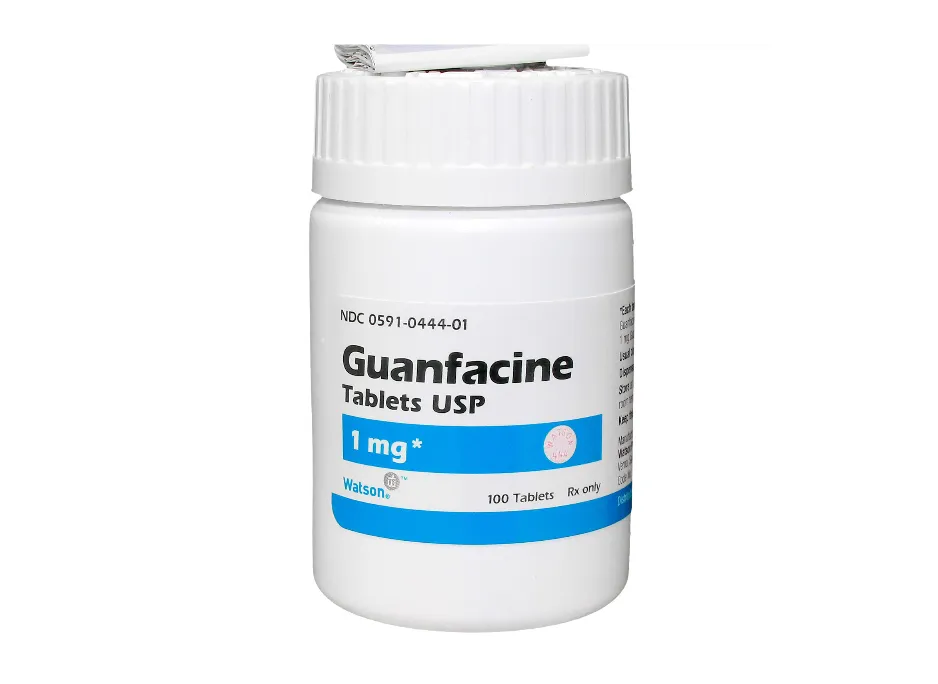
- Extended-release tablets (1 mg, 2 mg, 3 mg, 4 mg) – Intuniv
- Immediate-release tablets (1 mg, 2 mg) – Tenex
Mechanism: Stimulates presynaptic alpha-2A receptors in the prefrontal cortex, enhancing norepinephrine signaling and executive function.
Approval:
- FDA-approved (1986 for Tenex in hypertension; 2009 for Intuniv in ADHD)
- EMA-approved for ADHD in children and adolescents (6–17 years)
Indications and Uses of Guanfacine
Guanfacine is indicated for neurobehavioral and cardiovascular conditions, leveraging its central alpha-2 agonism:
Attention-Deficit/Hyperactivity Disorder (ADHD): Treats ADHD in children (6–17 years) and adults (off-label), reducing hyperactivity, impulsivity, and inattention. Improves executive function via prefrontal cortex modulation, supported by randomized controlled trials (e.g., SPD503-315, SPD503-316).
Hypertension (Immediate-Release): Manages essential hypertension in adults, often as adjunct therapy, reducing systolic and diastolic blood pressure by 10–20 mmHg, per cardiology guidelines.
Tourette Syndrome (Off-Label): Reduces motor and vocal tics in children and adolescents with Tourette’s, especially when stimulants are contraindicated, with evidence from child psychiatry studies.
Oppositional Defiant Disorder (ODD): Used off-label to manage aggression and defiance in pediatric ODD, improving behavioral compliance, supported by developmental psychology research.
Autism Spectrum Disorder (ASD): Employed off-label to reduce irritability, hyperactivity, and sensory overload in ASD, enhancing social functioning, with data from autism clinical trials.
Post-Traumatic Stress Disorder (PTSD): Investigated off-label in pediatric and adult PTSD to reduce hyperarousal and nightmares, improving sleep architecture, supported by trauma psychiatry studies.
Substance Use Disorder (SUD): Explored off-label in opioid and stimulant withdrawal to reduce cravings and anxiety, with preliminary addiction medicine evidence.
Traumatic Brain Injury (TBI): Used off-label in cognitive rehabilitation post-TBI to improve attention and working memory, with emerging neurology data.
Sleep-Wake Disorders: Administered off-label in children with ADHD-related insomnia to promote sleep onset without sedation, supported by pediatric sleep medicine research.
Anxiety Disorders: Investigated off-label in generalized anxiety disorder (GAD) in children to reduce physiological arousal, with cautious use under child psychiatry guidance.
Dosage of Guanfacine
Dosage for ADHD (Extended-Release – Intuniv)
Children and Adolescents (6–17 years)
- Initial: 1 mg once daily in the morning or evening.
- Titration: Increase by 1 mg/week based on response and tolerability.
- Maintenance: 1–4 mg once daily (maximum 4 mg/day for ≤45 kg; 7 mg/day for >45 kg in some trials).
- Target: Optimal dose improves symptoms with minimal sedation.
Adults (Off-Label)
- Initial: 1 mg once daily at bedtime.
- Titration: Increase by 1 mg every 1–2 weeks.
- Maintenance: 1–3 mg once daily (rarely up to 4 mg).
Dosage for Hypertension (Immediate-Release – Tenex)
Adults
- Initial: 1 mg once daily at bedtime.
- Maintenance: 1–3 mg once daily (maximum 3 mg/day), often split into two doses.
Dosage for Children
- ADHD: See extended-release dosing above.
- Tourette/ODD/ASD (Off-Label): 0.5–4 mg once daily (extended-release), titrated slowly.
- Not recommended under 6 years for any indication.
Dosage for Pregnant Women
Pregnancy Category B: Limited data; use only if benefits outweigh risks (e.g., severe ADHD with functional impairment). Consult an obstetrician and psychiatrist.
Dosage Adjustments
Renal Impairment: No adjustment needed; monitor in severe cases (CrCl <30 mL/min).
Hepatic Impairment:
- Mild to moderate: No adjustment.
- Severe: Use caution; consider lower starting dose.
Elderly: Start with 0.5–1 mg once daily; titrate slowly due to hypotension risk.
Concomitant CNS Depressants: Reduce dose to avoid additive sedation.
Additional Considerations
Take extended-release with or without food but not with high-fat meals (increases absorption by ~40%).
Do not crush, chew, or break extended-release tablets.
Taper gradually (over 1–2 weeks) to avoid rebound hypertension.
How to Use Guanfacine
Administration:
- Swallow extended-release tablets whole with water; avoid grapefruit juice.
- Take at the same time daily for consistency.
- Immediate-release may be taken with or without food.
Timing: Once daily (morning or bedtime); bedtime preferred to minimize daytime sedation.
Monitoring: Watch for dizziness, dry mouth, or signs of low blood pressure (e.g., fainting).
Additional Tips:
- Store at 20–25°C (68–77°F), protecting from moisture and heat.
- Keep out of reach of children due to overdose risk.
- Report severe drowsiness, slow heartbeat, or fainting immediately.
Contraindications for Guanfacine
Hypersensitivity: Known allergy to Guanfacine or alpha-2 agonists.
Severe Bradycardia or Heart Block: Risk of worsening conduction.
Hypotension: Contraindicated in symptomatic low blood pressure.
Recent Myocardial Infarction: Avoid due to negative inotropic effects.
Warnings & Precautions for Guanfacine
General Warnings
Hypotension and Bradycardia: Risk of significant blood pressure and heart rate reduction; monitor weekly during titration.
Sedation and Somnolence: Common in first weeks; avoid driving or operating machinery if affected.
Rebound Hypertension: Abrupt discontinuation may cause BP spike; taper slowly.
Syncope: Risk of fainting, especially in children; ensure hydration.
Suicidal Ideation: Monitor mood in ADHD patients, especially adolescents.
Additional Warnings
Cardiac Conduction Abnormalities: Rare QT prolongation; use caution in heart disease.
Hepatic Effects: Rare transaminitis; monitor LFTs in long-term use.
Growth Suppression: Monitor height/weight in pediatric ADHD patients.
Cognitive Blunting: Excessive doses may impair alertness; adjust downward.
Hypersensitivity Reactions: Rare rash or angioedema; discontinue if present.
Use in Specific Populations
- Pregnancy: Category B; use only if essential.
- Breastfeeding: Excreted in breast milk; monitor infant for sedation.
- Elderly: Higher risk of hypotension; start low, go slow.
- Children: Approved 6+ years for ADHD; supervise closely.
- Renal/Hepatic Impairment: Use caution; avoid in severe cases.
Additional Precautions
- Inform your doctor about heart conditions, depression, or medication history.
- Avoid alcohol and CNS depressants.
Overdose and Management of Guanfacine
Overdose Symptoms
- Severe hypotension, bradycardia, or lethargy.
- Severe cases: Coma, respiratory depression, or seizures.
- Dizziness, blurred vision, or dry mouth as early signs.
Immediate Actions
Contact the Medical Team: Seek immediate medical help.
Supportive Care: Administer IV fluids, atropine for bradycardia, and vasopressors if needed.
Specific Treatment: No antidote; hemodialysis not effective.
Monitor: Check BP, heart rate, and mental status for 24–72 hours.
Additional Notes
- Overdose risk higher in children; store securely.
- Report persistent symptoms promptly.
Side Effects of Guanfacine
Common Side Effects
- Somnolence (30–40%, peaks in week 1–2)
- Headache (20–25%, transient)
- Fatigue (15–20%, decreases with time)
- Abdominal Pain (10–15%, manageable)
- Dry Mouth (5–10%, relieved with hydration)
These effects often improve with continued use.
Serious Side Effects
Seek immediate medical attention for:
- Cardiovascular: Severe hypotension, bradycardia, or syncope.
- Neurological: Seizures, confusion, or coma.
- Psychiatric: Depression, hallucinations, or suicidal thoughts.
- Allergic: Rash, swelling, or anaphylaxis.
- Growth: Significant weight loss or growth delay in children.
Additional Notes
- Regular monitoring for BP, heart rate, and growth is advised.
- Report any unusual symptoms immediately.
Drug Interactions with Guanfacine
This active ingredient may interact with:
- CYP3A4 Inhibitors: Increases levels (e.g., ketoconazole); reduce dose.
- CYP3A4 Inducers: Decreases efficacy (e.g., rifampin); monitor response.
- Antihypertensives: Additive hypotension; adjust dose.
- CNS Depressants: Enhances sedation (e.g., benzodiazepines); avoid.
- Valproic Acid: May increase guanfacine levels; monitor.
Action: Provide your healthcare provider with a complete medication list.
Patient Education or Lifestyle
Medication Adherence: Take this alpha-2 agonist as prescribed; do not stop abruptly.
Monitoring: Report dizziness, slow pulse, or mood changes immediately.
Lifestyle: Avoid alcohol; rise slowly from sitting/lying.
Diet: Take extended-release with light meal; avoid high-fat foods.
Emergency Awareness: Know signs of low BP or overdose; seek care if present.
Follow-Up: Schedule regular check-ups every 1–3 months to monitor BP, growth, and symptoms.
Pharmacokinetics of Guanfacine
Absorption: Well-absorbed orally; extended-release peak at 6 hours.
Distribution: Volume of distribution ~6 L/kg; 70% protein-bound.
Metabolism: Hepatic via CYP3A4 to inactive metabolites.
Excretion: Renal (50% unchanged), fecal (50%); half-life 16–18 hours.
Half-Life: 16–18 hours (extended-release), allowing once-daily dosing.
Pharmacodynamics of Guanfacine
This drug exerts its effects by:
Stimulating alpha-2A receptors in the prefrontal cortex, enhancing working memory and impulse control.
Reducing norepinephrine release in the locus coeruleus, decreasing arousal.
Lowering peripheral sympathetic tone, reducing blood pressure.
Exhibiting dose-dependent sedation and hypotension.
Storage of Guanfacine
Temperature: Store at 20–25°C (68–77°F); protect from moisture.
Protection: Keep in original container, away from light.
Safety: Store out of reach of children due to overdose risk.
Disposal: Dispose of unused tablets per local regulations.
Frequently Asked Questions (FAQs)
Q: What does Guanfacine treat?
A: This medication treats ADHD and hypertension.
Q: Can this active ingredient cause drowsiness?
A: Yes, sedation is common; take at bedtime if possible.
Q: Is Guanfacine safe for children?
A: Yes, for 6+ years in ADHD with a doctor’s guidance.
Q: How is this drug taken?
A: Orally once daily, as directed.
Q: How long is Guanfacine treatment?
A: Long-term for ADHD or hypertension.
Q: Can I use Guanfacine if pregnant?
A: Only if essential; consult a doctor.
Regulatory Information
This medication is approved by:
U.S. Food and Drug Administration (FDA):
- Tenex (1986) for hypertension
- Intuniv (2009) for ADHD (6–17 years)
European Medicines Agency (EMA): Approved for ADHD in children/adolescents.
Other Agencies: Approved globally; consult local guidelines.
References
- U.S. Food and Drug Administration (FDA). (2023). Intuniv (Guanfacine) Prescribing Information.
- European Medicines Agency (EMA). (2023). Guanfacine Summary of Product Characteristics.
- National Institutes of Health (NIH). (2023). Guanfacine: MedlinePlus Drug Information.
- World Health Organization (WHO). (2023). WHO Model List of Essential Medicines.
- Journal of the American Academy of Child & Adolescent Psychiatry. (2022). Guanfacine in ADHD.
