
Comprehensive Guide to Griseofulvin: Uses, Dosage, Side Effects, and More
What is Griseofulvin?
Overview of Griseofulvin
Generic Name: Griseofulvin
Brand Name: Grifulvin V, Gris-PEG, generics
Drug Group: Antifungal (antimitotic)
Commonly Used For
- Treat ringworm (tinea corporis).
- Manage athlete’s foot (tinea pedis).
- Cure fungal nail infections (tinea unguium).
Key Characteristics
Form: Oral tablets (250 mg, 500 mg), microsize or ultramicrosize capsules (detailed in Dosage section).
Mechanism: Disrupts mitotic spindle formation in dermatophytes, halting fungal growth.
Approval: FDA-approved (1959 for Grifulvin V) and EMA-approved for dermatophytosis.
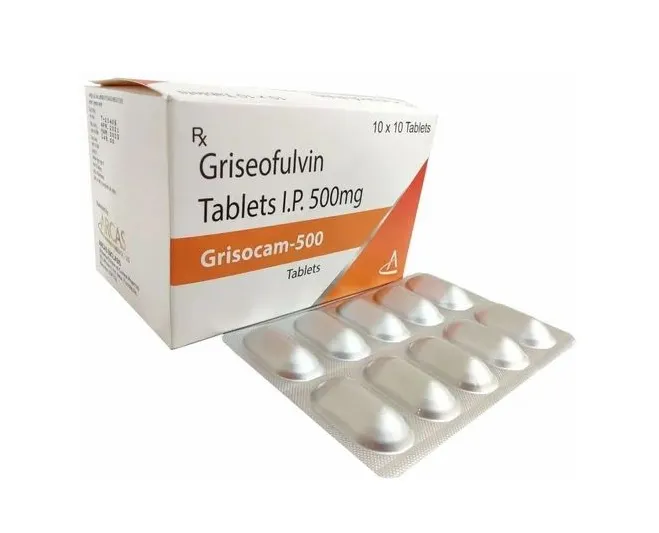
Indications and Uses of Griseofulvin
Griseofulvin is indicated for a variety of fungal infections caused by dermatophytes, leveraging its unique antifungal mechanism:
Tinea Corporis (Ringworm): Treats skin infections caused by Trichophyton, Microsporum, or Epidermophyton, per dermatology guidelines, supported by clinical trials showing cure rates of 70–90% within 4–6 weeks.
Tinea Pedis (Athlete’s Foot): Manages foot infections, reducing scaling and itching, recommended in podiatry protocols with evidence of resolution in 6–8 weeks.
Tinea Unguium (Onychomycosis): Cures nail infections, improving nail clarity, with mycology data supporting 6–12 months of therapy.
Tinea Capitis: Treats scalp infections in children, preventing hair loss, per pediatric dermatology studies.
Tinea Barbae: Investigated off-label for beard area infections, with dermatologic evidence.
Tinea Cruris (Jock Itch): Managed off-label to alleviate groin infections, with infectious disease research.
Tinea Versicolor (Off-Label): Explored off-label for Malassezia-related infections, with limited efficacy data.
Chronic Mucocutaneous Candidiasis: Used off-label in immunocompromised patients, with infectious disease studies.
Fungal Kerion: Initiated off-label for severe inflammatory tinea capitis, with pediatric dermatology evidence.
Prevention of Recurrence: Applied off-label post-treatment to prevent reinfection, with mycology research.
Dosage of Griseofulvin
Dosage for Adults
Tinea Corporis or Tinea Pedis:
- Microsize: 500 mg daily in single or divided doses, for 4–6 weeks.
- Ultramicrosize: 330–375 mg daily, for 4–6 weeks.
Tinea Unguium:
- Microsize: 750–1000 mg daily, for 6–12 months depending on nail growth.
- Ultramicrosize: 500–750 mg daily, for 6–12 months.
Tinea Capitis:
- Microsize: 500–1000 mg daily, for 6–8 weeks.
Dosage for Children (≥2 years)
Tinea Capitis:
- Microsize: 10–20 mg/kg/day in single or divided doses, for 6–8 weeks, under pediatric supervision.
- Ultramicrosize: 5–10 mg/kg/day, for 6–8 weeks.
Other Infections: Adjusted based on weight, typically 10–15 mg/kg/day, for 4–6 weeks.
Dosage for Pregnant Women
Pregnancy Category C: Avoid unless benefits outweigh risks; consult an obstetrician and dermatologist, with fetal monitoring.
Dosage Adjustments
Renal Impairment: No adjustment needed; monitor for rare systemic effects.
Hepatic Impairment:
Mild to moderate (Child-Pugh A or B): Use cautiously with reduced dose; severe (Child-Pugh C): Avoid due to hepatotoxicity risk.
Concomitant Medications: Adjust if combined with CYP450 inducers (e.g., phenobarbital), increasing metabolism; monitor efficacy.
Elderly: Start with lower dose (e.g., 250 mg daily); monitor liver function.
Prolonged Use: Limit to 6–12 months unless monitored for liver and hematologic effects.
Additional Considerations
- Take this active ingredient with a fatty meal to enhance absorption (e.g., with milk or peanut butter).
- Use for full prescribed duration, even if symptoms improve, to prevent relapse.
How to Use Griseofulvin
Administration:
Oral: Swallow tablets or capsules whole with a high-fat meal, avoiding crushing or chewing unless specified.
Take with 8 oz of water to aid dissolution and absorption.
Timing: Administer once daily or in divided doses as prescribed, preferably with breakfast or dinner.
Monitoring: Watch for rash, jaundice, or signs of leukopenia (e.g., sore throat); report changes immediately.
Additional Tips:
- Store at 20–25°C (68–77°F), protecting from moisture and light.
- Keep out of reach of children; avoid use near heat sources.
- Use antifungal soap or cream as an adjunct if recommended by a provider.
- Schedule liver function tests (e.g., ALT, AST) every 2–4 weeks during therapy.
- Educate patients on avoiding alcohol to reduce hepatotoxicity risk.
Contraindications for Griseofulvin
Hypersensitivity: Patients with a known allergy to Griseofulvin or related antifungals.
Severe Hepatic Disease: Contraindicated in active liver failure (e.g., cirrhosis) due to hepatotoxicity risk.
Porphyria: Avoid in patients with porphyria or a family history due to exacerbation risk.
Pregnancy: Contraindicated in pregnant women due to teratogenic effects.
Severe Blood Disorders: Avoid in patients with leukopenia or agranulocytosis.
Systemic Lupus Erythematosus (SLE): Contraindicated due to potential lupus flare risk.
Warnings & Precautions for Griseofulvin
General Warnings
Hepatotoxicity: Risk of liver injury; monitor liver enzymes (ALT, AST) every 2–4 weeks.
Bone Marrow Suppression: Risk of leukopenia or aplastic anemia; check CBC regularly.
Photosensitivity: Risk of severe sunburn; advise sun protection.
Lupus Exacerbation: Risk in SLE patients; avoid unless benefits outweigh risks.
Teratogenicity: Risk of fetal harm; use contraception during and for 1 month after therapy.
Additional Warnings
Neurological Effects: Rare risk of headache or confusion; discontinue if severe.
Skin Reactions: Risk of severe rash or Stevens-Johnson syndrome; stop if peeling occurs.
Drug Interactions: Risk of reduced efficacy with CYP450 inducers; monitor response.
Renal Impairment: Rare risk of accumulation; monitor in severe cases.
Hypersensitivity Reactions: Rare anaphylaxis; discontinue if swelling or difficulty breathing occurs.
Use in Specific Populations
Pregnancy: Category C; contraindicated due to fetal risk.
Breastfeeding: Use caution; monitor infant for effects.
Elderly: Higher risk of hepatotoxicity; start with lower dose.
Children: Safe for tinea capitis with supervision.
Renal/Hepatic Impairment: Avoid or adjust in severe cases.
Additional Precautions
- Inform your doctor about liver disease, porphyria, or pregnancy plans before starting this medication.
- Avoid excessive sun exposure; use sunscreen (SPF 30+) and protective clothing.
- Use barrier contraception during therapy due to potential teratogenic effects.
Overdose and Management of Griseofulvin
Overdose Symptoms
- Nausea, vomiting, or diarrhea.
- Severe cases: Hepatotoxicity, leukopenia, or confusion.
- Headache, dizziness, or rash as early signs.
- Coma or severe liver failure with extremely high doses.
Immediate Actions
Contact the Medical Team: Seek immediate medical help if overdose is suspected.
Supportive Care: Administer activated charcoal if ingestion is recent, monitor liver function, and provide IV fluids if needed.
Specific Treatment: No specific antidote; manage symptoms (e.g., N-acetylcysteine for liver support if severe).
Monitor: Check liver enzymes, CBC, and neurological status for 24–48 hours.
Patient Education: Advise against exceeding prescribed doses and to store securely.
Additional Notes
- Overdose risk is low with proper use; accidental ingestion by children is a concern.
- Report persistent symptoms (e.g., yellowing skin, severe fatigue) promptly.
Side Effects of Griseofulvin
Common Side Effects
- Headache (10–20%, managed with rest or analgesics)
- Nausea (5–15%, reduced with food)
- Rash (5–10%, monitored for severity)
- Fatigue (3–8%, improves with time)
- Diarrhea (2–6%, controlled with hydration)
These effects may subside with adaptation.
Serious Side Effects
Seek immediate medical attention for:
- Hepatic: Jaundice, hepatomegaly, or liver failure.
- Hematologic: Leukopenia, agranulocytosis, or aplastic anemia.
- Dermatologic: Stevens-Johnson syndrome or toxic epidermal necrolysis.
- Neurological: Confusion, peripheral neuropathy, or seizures.
- Allergic: Anaphylaxis or angioedema.
Additional Notes
Regular monitoring with liver function tests (LFTs) and CBC every 2–4 weeks is essential to detect hepatotoxicity or bone marrow suppression early.
Patients with a history of photosensitivity should be monitored for severe sunburn or rash progression.
Report any unusual symptoms (e.g., dark urine, persistent headache) immediately to a healthcare provider.
Long-term use (>6 months) requires periodic neurological assessments to check for peripheral neuropathy.
Drug Interactions with Griseofulvin
This active ingredient may interact with:
- CYP450 Inducers: Reduces levels (e.g., phenobarbital, rifampin); increase dose if needed.
- Oral Contraceptives: Decreases efficacy; use backup contraception.
- Warfarin: Enhances anticoagulant effect; monitor INR.
- Cyclosporine: Reduces levels; adjust dose.
- Alcohol: Increases hepatotoxicity risk; avoid combination.
Action: Provide your healthcare provider with a complete list of medications.
Patient Education or Lifestyle
Medication Adherence: Use this antifungal as prescribed for fungal infections, following the full course.
Monitoring: Report rash, jaundice, or signs of infection immediately.
Lifestyle: Avoid sun exposure; use protective clothing and sunscreen.
Diet: Take with fatty meals; avoid alcohol.
Emergency Awareness: Know signs of liver damage or severe rash; seek care if present.
Follow-Up: Schedule regular check-ups every 2–4 weeks to monitor liver and blood parameters.
Pharmacokinetics of Griseofulvin
Absorption: Oral, peak at 4–6 hours; bioavailability 25–70% (enhanced by fat).
Distribution: Volume of distribution ~0.74 L/kg; 80–85% protein-bound.
Metabolism: Hepatic via CYP450 to inactive metabolites.
Excretion: Primarily biliary (as metabolites); renal (minor); half-life 9–24 hours.
Half-Life: 9–24 hours, prolonged in hepatic impairment.
Pharmacodynamics of Griseofulvin
This drug exerts its effects by:
Binding to fungal microtubules, inhibiting mitosis and cell division.
Accumulating in keratinized tissues (skin, hair, nails), eradicating dermatophytes.
Exhibiting dose-dependent risks of hepatotoxicity and photosensitivity.
Storage of Griseofulvin
- Temperature: Store at 20–25°C (68–77°F); protect from moisture and light.
- Protection: Keep in original container, away from heat and humidity.
- Safety: Store in a secure location out of reach of children and pets.
- Disposal: Dispose of unused tablets per local regulations or consult a pharmacist.
Frequently Asked Questions (FAQs)
Q: What does Griseofulvin treat?
A: This medication treats fungal skin and nail infections.
Q: Can this active ingredient cause headache?
A: Yes, headache is common; report if persistent.
Q: Is Griseofulvin safe for children?
A: Yes, for tinea capitis with supervision.
Q: How is this drug taken?
A: Orally with a fatty meal, as directed.
Q: How long is Griseofulvin treatment?
A: 4–12 months, depending on infection.
Q: Can I use Griseofulvin if pregnant?
A: No, avoid; consult a doctor.
Regulatory Information
This medication is approved by:
U.S. Food and Drug Administration (FDA): Approved in 1959 (Grifulvin V) for dermatophytosis.
European Medicines Agency (EMA): Approved for tinea infections.
Other Agencies: Approved globally for antifungal therapy; consult local guidelines.
References
- U.S. Food and Drug Administration (FDA). (2023). Grifulvin V (Griseofulvin) Prescribing Information.
- Official FDA documentation detailing the drug’s approved uses, dosage, and safety.
- European Medicines Agency (EMA). (2023). Griseofulvin Summary of Product Characteristics.
- EMA’s comprehensive information on the medication’s indications and precautions in Europe.
- National Institutes of Health (NIH). (2023). Griseofulvin: MedlinePlus Drug Information.
- NIH resource providing detailed information on the drug’s uses, side effects, and precautions.
- World Health Organization (WHO). (2023). WHO Model List of Essential Medicines: Griseofulvin.
- WHO’s inclusion of Griseofulvin for fungal infections.
- Journal of the American Academy of Dermatology. (2022). Griseofulvin in Tinea Capitis.
- Peer-reviewed article on Griseofulvin efficacy (note: access may require a subscription).
