
Comprehensive Guide to Granisetron: Uses, Dosage, Side Effects, and More
What is Granisetron?
Overview of Granisetron
Generic Name: Granisetron
Brand Name: Kytril, Sancuso, generics
Drug Group: Antiemetic (5-HT3 receptor antagonist)
Commonly Used For
- Prevent chemotherapy-induced nausea and vomiting (CINV).
- Manage postoperative nausea and vomiting (PONV).
- Treat radiation-induced nausea.
Key Characteristics
Form: Oral tablets (1 mg), intravenous injection (1 mg/mL), transdermal patch (3.1 mg/24 hours) (detailed in Dosage section).
Mechanism: Blocks 5-HT3 receptors, inhibiting serotonin-mediated emetic reflex.
Approval: FDA-approved (1993 for Kytril) and EMA-approved for CINV and PONV.
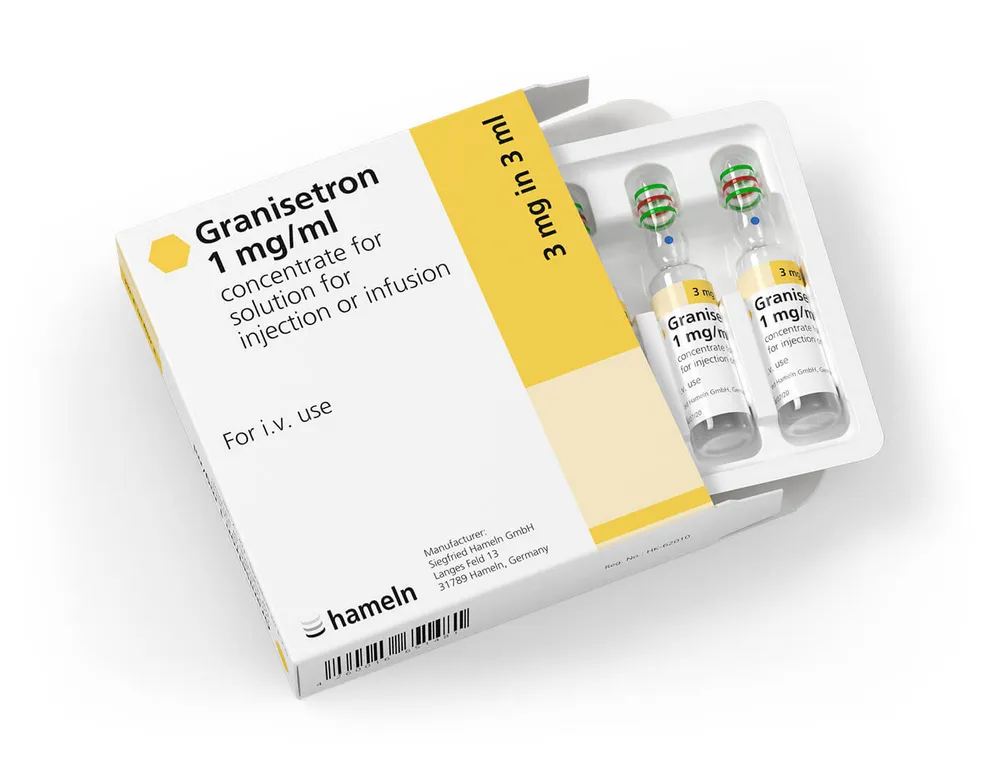
Indications and Uses of Granisetron
Granisetron is indicated for a variety of nausea and vomiting conditions, leveraging its antiemetic properties:
Chemotherapy-Induced Nausea and Vomiting (CINV): Prevents acute and delayed emesis in patients receiving moderately or highly emetogenic chemotherapy, per oncology guidelines, supported by clinical trials showing 60–80% response rates.
Postoperative Nausea and Vomiting (PONV): Manages nausea and vomiting after surgery, reducing recovery time, recommended in anesthesiology protocols with evidence of efficacy within 2 hours.
Radiation-Induced Nausea and Vomiting: Treats nausea from radiation therapy, particularly abdominal or pelvic irradiation, with radiation oncology data.
Gastroparesis: Investigated off-label to alleviate nausea in diabetic gastroparesis, with gastroenterology evidence.
Cyclic Vomiting Syndrome (CVS): Managed off-label in children and adults, reducing episode frequency, per pediatric gastroenterology studies.
Pregnancy-Related Nausea: Explored off-label for hyperemesis gravidarum, with obstetrics research.
Postoperative Ileus: Used off-label to reduce nausea associated with delayed gastrointestinal motility, with surgical data.
Migraine-Associated Nausea: Initiated off-label to control nausea in migraine patients, with neurology evidence.
Palliative Care Nausea: Applied off-label in terminal illness to improve quality of life, with hospice care studies.
Opioid-Induced Nausea: Investigated off-label in pain management, with anesthesiology research.
Dosage of Granisetron
Dosage for Adults
CINV:
- Oral: 1–2 mg within 1 hour before chemotherapy, then 1 mg twice daily or 2 mg once daily for 1–7 days.
- IV: 1–3 mg as a single dose 30 minutes before chemotherapy.
- Transdermal Patch: Apply one patch (3.1 mg) 24–48 hours before chemotherapy, worn for up to 7 days.
PONV:
- IV: 1 mg as a single dose immediately before induction of anesthesia.
Radiation-Induced Nausea:
- Oral: 2 mg once daily, starting 1 hour before radiation and continuing daily during treatment.
Dosage for Children (≥1 month)
CINV:
- IV: 10–40 mcg/kg as a single dose 30 minutes before chemotherapy, under pediatric oncology supervision.
- Oral: 20–40 mcg/kg twice daily, adjusted based on tolerance.
Dosage for Pregnant Women
Pregnancy Category B: Use only if benefits outweigh risks; consult an obstetrician, with fetal monitoring.
Dosage Adjustments
Renal Impairment:
- Mild to moderate (CrCl 30–60 mL/min): No adjustment; monitor closely.
- Severe (CrCl <30 mL/min): Reduce IV dose to 50% or avoid oral use.
Hepatic Impairment: Mild to moderate (Child-Pugh A or B): Use cautiously; severe (Child-Pugh C): Avoid due to limited data.
Concomitant Medications: Adjust if combined with other 5-HT3 antagonists or serotonin-modulating drugs (e.g., SSRIs); monitor for serotonin syndrome.
Elderly: No specific adjustment; monitor for QT prolongation.
Additional Considerations
- Administer this active ingredient as prescribed, with IV doses diluted and given over 5 minutes.
- Remove transdermal patch after 7 days or if skin irritation occurs; avoid cutting the patch.
How to Use Granisetron
Administration:
Oral: Swallow tablets whole with water, taken 1 hour before chemotherapy or as directed.
IV: Administer diluted solution over 5 minutes by healthcare professional.
Transdermal Patch: Apply to clean, dry, intact skin on the upper outer arm, avoiding red or irritated areas.
Timing: Use before emetogenic triggers (e.g., chemotherapy, surgery), with consistent daily dosing if required.
Monitoring: Watch for headache, constipation, or signs of serotonin syndrome (e.g., agitation, sweating); report changes immediately.
Additional Tips:
- Store at 20–25°C (68–77°F), protecting from light; keep patches in original pouch until use.
- Keep out of reach of children; dispose of used patches carefully.
- Educate patients on patch application and removal techniques; avoid exposure to heat sources (e.g., saunas).
- Schedule ECG monitoring if used with other QT-prolonging drugs, especially in patients over 65.
- Encourage hydration and dietary adjustments (e.g., small meals) to support gastrointestinal tolerance.
Contraindications for Granisetron
Hypersensitivity: Patients with a known allergy to Granisetron or other 5-HT3 antagonists.
Severe Hepatic Impairment: Contraindicated in Child-Pugh Class C due to potential toxicity.
Concurrent Use with Apomorphine: Avoid due to profound hypotension and loss of consciousness risk.
Uncontrolled Arrhythmias: Contraindicated in patients with prolonged QT syndrome or recent myocardial infarction.
Severe Renal Failure: Avoid in CrCl <30 mL/min unless benefits outweigh risks, due to accumulation.
Warnings & Precautions for Granisetron
General Warnings
QT Prolongation: Risk of torsades de pointes; monitor ECG in patients with cardiac risk factors.
Serotonin Syndrome: Risk with serotonergic drugs (e.g., SSRIs, MAOIs); watch for confusion or tremors.
Constipation: Risk of severe bowel obstruction; monitor bowel movements.
Hepatic Dysfunction: Risk of elevated liver enzymes; check LFTs in at-risk patients.
Hypersensitivity Reactions: Rare anaphylaxis; discontinue if severe.
Additional Warnings
Bradycardia: Rare risk; monitor heart rate in elderly patients.
Headache: Common side effect; manage with rest or analgesics.
Electrolyte Imbalance: Risk with prolonged use; check potassium and magnesium levels.
Skin Reactions: Risk with patch use (e.g., dermatitis); remove if irritation persists.
Neurological Effects: Rare extrapyramidal symptoms; assess if motor changes occur.
Use in Specific Populations
Pregnancy: Category B; use with caution and monitoring.
Breastfeeding: Use caution; monitor infant for sedation.
Elderly: Higher risk of QT prolongation; start with lower doses.
Children: Safe for CINV with pediatric oversight.
Renal/Hepatic Impairment: Adjust or avoid in severe cases.
Additional Precautions
- Inform your doctor about heart conditions, liver disease, or medication allergies before starting this medication.
- Avoid overheating patch application sites to prevent increased absorption.
Overdose and Management of Granisetron
Overdose Symptoms
- Mild headache, dizziness, or constipation.
- Severe cases: QT prolongation, serotonin syndrome, or hypotension.
- Agitation, sweating, or nausea as early signs.
- Coma or cardiac arrest with extremely high doses.
Immediate Actions
Contact the Medical Team: Seek immediate medical help if severe symptoms occur.
Supportive Care: Monitor vital signs, provide IV fluids, and manage arrhythmias if needed.
Specific Treatment: No specific antidote; use benzodiazepines for serotonin syndrome or antiarrhythmics for QT issues.
Monitor: Check ECG, serotonin levels, and mental status for 24–48 hours.
Additional Notes
- Overdose risk is low with proper dosing; store securely and limit access.
- Report persistent symptoms (e.g., irregular heartbeat, severe agitation) promptly.
Side Effects of Granisetron
Common Side Effects
- Headache (10–20%, managed with hydration)
- Constipation (5–15%, relieved with laxatives)
- Asthenia (5–10%, decreases with rest)
- Diarrhea (3–8%, controlled with diet)
- Insomnia (2–6%, reduced with evening dosing)
These effects may subside with adaptation.
Serious Side Effects
Seek immediate medical attention for:
- Cardiac: QT prolongation or torsades de pointes.
- Neurological: Serotonin syndrome or seizures.
- Gastrointestinal: Severe constipation or bowel obstruction.
- Allergic: Anaphylaxis or rash.
- Hepatic: Jaundice or liver dysfunction (rare).
Additional Notes
- Regular monitoring with ECG and liver function tests is advised if used beyond 7 days.
- Patients with a history of arrhythmias should have baseline and follow-up ECGs.
- Report any unusual symptoms (e.g., chest pain, confusion) immediately to a healthcare provider.
- Long-term use requires assessment for electrolyte imbalances and gastrointestinal motility.
Drug Interactions with Granisetron
This active ingredient may interact with:
- Serotonergic Drugs: Increases serotonin syndrome risk (e.g., SSRIs, tramadol); monitor closely.
- QT-Prolonging Drugs: Amplifies arrhythmia risk (e.g., amiodarone); avoid combination.
- Anticholinergics: Enhances constipation risk; use cautiously.
- CYP3A4 Inhibitors: May raise levels (e.g., ketoconazole); adjust dose.
- Opioids: Potentiates sedation; monitor respiratory status.
Action: Provide your healthcare provider with a complete list of medications.
Patient Education or Lifestyle
Medication Adherence: Use this antiemetic as prescribed for nausea prevention, following the schedule.
Monitoring: Report headache, constipation, or signs of serotonin syndrome immediately.
Lifestyle: Avoid alcohol; maintain light activity to aid digestion.
Diet: Eat small, bland meals; stay hydrated.
Emergency Awareness: Know signs of arrhythmias or severe nausea; seek care if present.
Follow-Up: Schedule regular check-ups every 3–7 days to monitor cardiac and gastrointestinal health.
Pharmacokinetics of Granisetron
Absorption: Oral, peak at 1–2 hours; IV immediate; transdermal steady over 24–48 hours; bioavailability ~60% (oral).
Distribution: Volume of distribution ~3 L/kg; 65% protein-bound.
Metabolism: Hepatic via CYP3A4 to inactive metabolites.
Excretion: Primarily renal (12% unchanged); half-life 4–6 hours.
Half-Life: 4–6 hours, prolonged in renal impairment.
Pharmacodynamics of Granisetron
This drug exerts its effects by:
Blocking 5-HT3 receptors in the chemoreceptor trigger zone and vagal nerve terminals.
Preventing nausea and vomiting from chemotherapy and surgery.
Exhibiting dose-dependent risks of QT prolongation and constipation.
Storage of Granisetron
- Temperature: Store at 20–25°C (68–77°F); protect from light.
- Protection: Keep in original packaging, away from heat and humidity.
- Safety: Store in a secure location out of reach of children and pets.
- Disposal: Dispose of used patches or vials per local regulations or consult a pharmacist.
Frequently Asked Questions (FAQs)
Q: What does Granisetron treat?
A: This medication prevents chemotherapy and postoperative nausea.
Q: Can this active ingredient cause constipation?
A: Yes, constipation is common; use laxatives if needed.
Q: Is Granisetron safe for children?
A: Yes, for CINV with supervision.
Q: How is this drug taken?
A: Orally, IV, or via patch, as directed.
Q: How long is Granisetron treatment?
A: Typically 1–7 days, depending on therapy.
Q: Can I use Granisetron if pregnant?
A: Yes, with caution; consult a doctor.
Regulatory Information
This medication is approved by:
U.S. Food and Drug Administration (FDA): Approved in 1993 (Kytril) for CINV and PONV.
European Medicines Agency (EMA): Approved for chemotherapy, postoperative, and radiation-induced nausea.
Other Agencies: Approved globally for antiemetic use; consult local guidelines.
References
- U.S. Food and Drug Administration (FDA). (2023). Kytril (Granisetron) Prescribing Information.
- Official FDA documentation detailing the drug’s approved uses, dosage, and safety.
- European Medicines Agency (EMA). (2023). Granisetron Summary of Product Characteristics.
- EMA’s comprehensive information on the medication’s indications and precautions in Europe.
- National Institutes of Health (NIH). (2023). Granisetron: MedlinePlus Drug Information.
- NIH resource providing detailed information on the drug’s uses, side effects, and precautions.
- World Health Organization (WHO). (2023). WHO Model List of Essential Medicines: Granisetron.
- WHO’s consideration of Granisetron for nausea management.
- Supportive Care in Cancer. (2022). Granisetron in CINV.
- Peer-reviewed article on Granisetron efficacy (note: access may require a subscription).
