
Comprehensive Guide to Gonadorelin: Uses, Dosage, Side Effects, and More
What is Gonadorelin?
Overview of Gonadorelin
Generic Name: Gonadorelin
Brand Name: Factrel, Lutrepulse, generics
Drug Group: Gonadotropin-releasing hormone (GnRH) analog
Commonly Used For
- Diagnose hypothalamic-pituitary dysfunction.
- Treat infertility due to hypogonadotropic hypogonadism.
- Stimulate ovulation in assisted reproductive technologies.
Key Characteristics
Form: Vials for injection (100 mcg, 500 mcg) or pulsatile pump delivery (detailed in Dosage section).
Mechanism: Binds to GnRH receptors, triggering LH and FSH release to regulate gonadal function.
Approval: FDA-approved (1980s for Factrel) and EMA-approved for diagnostic and therapeutic use.
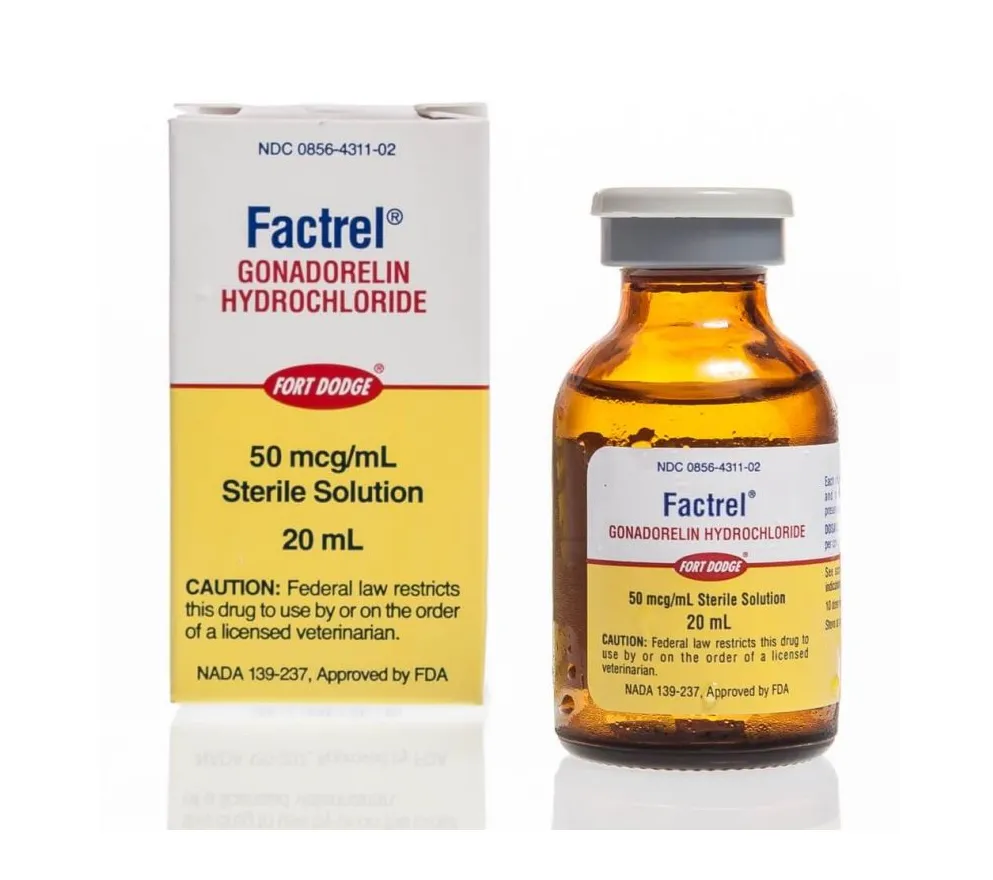
Indications and Uses of Gonadorelin
Gonadorelin is indicated for a variety of endocrine and reproductive conditions, leveraging its ability to modulate gonadotropin release:
Hypothalamic-Pituitary Dysfunction Diagnosis: Assesses pituitary responsiveness in amenorrhea or delayed puberty, per endocrinology guidelines, supported by clinical trials showing LH/FSH peak within 30 minutes.
Hypogonadotropic Hypogonadism: Treats infertility in men and women by restoring gonadal function, recommended in reproductive medicine protocols with evidence of increased testosterone and ovulation rates.
Ovulation Induction: Stimulates follicular development and ovulation in assisted reproductive technologies (ART) like IVF, improving pregnancy rates, with fertility clinic data.
Precocious Puberty Evaluation: Investigated off-label to differentiate central from peripheral causes, with pediatric endocrinology studies.
Cryptorchidism Management: Explored off-label to induce testicular descent in boys, with urology-endocrinology evidence.
Endometriosis Support: Used off-label in combination therapies to suppress ectopic endometrial growth, with gynecology research.
Male Hypogonadism: Managed off-label to enhance spermatogenesis in secondary hypogonadism, with andrology data.
Polycystic Ovary Syndrome (PCOS): Initiated off-label to regulate ovulation in resistant cases, with endocrinology-fertility studies.
Pituitary Tumor Assessment: Applied off-label to evaluate gonadotropin-secreting adenomas, with neurosurgery-endocrinology research.
Delayed Puberty Induction: Explored off-label in adolescents with constitutional delay, with pediatric growth studies.
Dosage of Gonadorelin
Dosage for Adults
Diagnostic Use (Hypothalamic-Pituitary Function):
- IV or Subcutaneous: 100 mcg as a single bolus, with LH/FSH levels measured at 0, 15, 30, and 60 minutes.
Hypogonadotropic Hypogonadism Treatment:
- Subcutaneous or IV: 5–20 mcg every 90–120 minutes via pulsatile pump, adjusted based on testosterone or estradiol levels, for 2–6 months.
Ovulation Induction (ART):
- Subcutaneous: 10–20 mcg every 90 minutes, starting on day 2 of the menstrual cycle, continued until ovulation is confirmed (typically 10–14 days).
Dosage for Children (≥12 years for Diagnosis)
Precocious Puberty or Delayed Puberty Evaluation:
- IV or Subcutaneous: 2.5 mcg/kg (max 100 mcg) as a single dose, with hormone monitoring under pediatric endocrinology supervision.
Dosage for Pregnant Women
Pregnancy Category B: Contraindicated during pregnancy; use only pre-conception for infertility, with fetal monitoring and cessation upon confirmation.
Dosage Adjustments
Renal Impairment: No adjustment needed for diagnostic use; reduce frequency in treatment if CrCl <50 mL/min, with monitoring.
Hepatic Impairment: Mild to moderate (Child-Pugh A or B): Use cautiously; severe (Child-Pugh C): Avoid due to potential metabolism issues.
Concomitant Medications: Adjust if combined with GnRH antagonists (e.g., cetrorelix), which may block effects; monitor response.
Elderly: No specific adjustment; assess for comorbidities affecting hormone metabolism.
Overstimulation: Reduce dose or frequency if OHSS symptoms (e.g., abdominal pain) occur.
Additional Considerations
Administer this active ingredient via a calibrated pump for pulsatile therapy or single injection with sterile technique.
Store reconstituted solution at 2–8°C (36–46°F) and use within 24 hours.
Monitor LH/FSH, estradiol, and testosterone levels weekly during treatment to guide adjustments.
How to Use Gonadorelin
Administration:
Subcutaneous: Inject into the abdominal fat or thigh using a fine needle, rotating sites to avoid irritation.
IV: Administer as a slow bolus over 1–2 minutes via a peripheral line, with saline flush.
Pulsatile Pump: Program for 90–120 minute intervals, ensuring consistent delivery.
Timing: Administer at consistent intervals (e.g., every 90 minutes for treatment), with diagnostic doses given in a controlled setting.
Monitoring: Watch for abdominal distension, headache, or signs of OHSS (e.g., nausea, shortness of breath); report changes immediately.
Additional Tips:
- Store at 2–8°C (36–46°F) before reconstitution; protect from light.
- Keep out of reach of children; dispose of used syringes in a sharps container.
- Educate patients on pump maintenance and recognition of overstimulation signs; provide a diary for symptom tracking.
- Schedule ultrasound monitoring every 3–5 days during ovulation induction to assess follicular growth.
- Avoid strenuous activity if OHSS is suspected to reduce ovarian strain.
Contraindications for Gonadorelin
Hypersensitivity: Patients with a known allergy to Gonadorelin or GnRH analogs.
Pregnancy: Contraindicated due to risk of fetal harm or miscarriage.
Breastfeeding: Avoid due to potential hormonal effects on the infant.
Androgen-Dependent Tumors: Contraindicated in prostate or breast cancer due to stimulation risk.
Uncontrolled Pituitary Disorders: Avoid in active pituitary tumors or hyperprolactinemia.
Severe Renal or Hepatic Failure: Contraindicated in CrCl <30 mL/min or Child-Pugh C due to clearance issues.
Ovarian Cysts: Avoid in pre-existing ovarian enlargement to prevent rupture.
Recent OHSS Episode: Contraindicated within 3 months of a severe hyperstimulation event.
Warnings & Precautions for Gonadorelin
General Warnings
Ovarian Hyperstimulation Syndrome (OHSS): Risk of abdominal pain, ascites, or thromboembolism; monitor with ultrasound and hormone levels.
Multiple Pregnancies: Increased risk with ART; counsel patients on risks.
Pituitary Apoplexy: Rare risk in pituitary adenoma patients; assess pre-treatment.
Hormonal Imbalance: Risk of overstimulation or suppression; monitor LH/FSH ratios.
Thromboembolic Events: Rare risk during ovulation induction; assess clotting factors.
Additional Warnings
Gynecomastia: Risk in men with prolonged use; monitor breast tissue.
Allergic Reactions: Rare anaphylaxis or local irritation; discontinue if severe.
Adrenal Insufficiency: Risk with long-term use; monitor cortisol levels.
Bone Density Loss: Potential risk with chronic therapy; assess in adolescents.
Hypersensitivity Reactions: Rare skin rash or swelling; stop if present.
Use in Specific Populations
Pregnancy: Category B; contraindicated once pregnancy is confirmed.
Breastfeeding: Contraindicated; assess alternative therapies.
Elderly: Use cautiously; monitor for hormonal side effects.
Children: Safe for diagnostic use with supervision; avoid long-term treatment.
Renal/Hepatic Impairment: Adjust or avoid based on severity.
Additional Precautions
- Inform your doctor about pituitary tumors, ovarian cysts, or recent surgeries before starting this medication.
- Avoid self-adjusting pump settings to prevent dosing errors.
- Use contraception during treatment until ovulation cessation is confirmed.
Overdose and Management of Gonadorelin
Overdose Symptoms
- Mild headache, flushing, or nausea from excessive LH/FSH release.
- Severe cases: OHSS (e.g., ovarian enlargement, respiratory distress), pituitary overstimulation, or thromboembolism.
- Abdominal pain or dizziness as early signs.
- Coma or profound hormonal imbalance with extremely high doses.
Immediate Actions
Contact the Medical Team: Seek immediate medical help if severe symptoms occur.
Supportive Care: Monitor vital signs, provide IV fluids, and manage OHSS with paracentesis if needed.
Specific Treatment: No specific antidote; discontinue use and administer GnRH antagonists (e.g., ganirelix) to block overstimulation under specialist guidance.
Monitor: Check LH/FSH, estradiol, and ultrasound findings for 24–72 hours; assess renal function.
Patient Education: Advise against doubling doses and to report pump malfunctions immediately.
Additional Notes
- Overdose risk is linked to pump errors or miscalculation; store securely and verify settings.
- Report persistent symptoms (e.g., severe abdominal pain, leg swelling) promptly to prevent complications.
Side Effects of Gonadorelin
Common Side Effects
- Headache (10–20%, managed with rest)
- Abdominal Discomfort (5–15%, decreases with dose adjustment)
- Nausea (5–10%, relieved with food)
- Flushing (3–8%, temporary)
- Injection Site Reaction (2–6%, reduced with rotation)
These effects may subside with adaptation or dose adjustment.
Serious Side Effects
Seek immediate medical attention for:
- Reproductive: OHSS (e.g., ovarian enlargement, ascites) or multiple pregnancies.
- Cardiovascular: Thromboembolism or hypertension.
- Endocrine: Pituitary apoplexy or adrenal crisis.
- Allergic: Anaphylaxis or severe rash.
- Neurological: Seizures from hormonal imbalance (rare).
Additional Notes
Regular monitoring with transvaginal ultrasound and hormone levels (e.g., estradiol <4000 pg/mL) every 2–3 days during ART is essential to detect OHSS early.
Patients with a history of clotting disorders should be screened for thrombophilia before treatment.
Report any unusual symptoms (e.g., sudden vision changes, severe pelvic pain) immediately to an endocrinologist to address potential complications.
Long-term use (>3 months) requires bone density and pituitary MRI assessments to monitor for adverse effects.
Drug Interactions with Gonadorelin
This active ingredient may interact with:
- GnRH Antagonists: Blocks effects (e.g., cetrorelix); avoid combination.
- Sex Hormones: Alters response (e.g., estrogen, testosterone); monitor levels.
- Corticosteroids: May suppress pituitary response; use cautiously.
- Anticonvulsants: Affects metabolism (e.g., phenytoin); adjust dose.
- Dopamine Agonists: Reduces efficacy (e.g., cabergoline); monitor.
Action: Provide your healthcare provider with a complete list of medications.
Patient Education or Lifestyle
Medication Adherence: Use this GnRH analog as prescribed for infertility or diagnosis, following the pump or injection schedule.
Monitoring: Report abdominal pain, headache, or signs of OHSS immediately.
Lifestyle: Avoid strenuous exercise during ovulation induction; maintain hydration.
Diet: No specific restrictions; avoid excessive caffeine.
Emergency Awareness: Know signs of OHSS or thromboembolism; seek care if present.
Follow-Up: Schedule regular check-ups every 1–2 weeks to monitor hormone levels and ovarian response.
Pharmacokinetics of Gonadorelin
Absorption: Subcutaneous or IV, peak at 15–30 minutes; bioavailability ~90%.
Distribution: Volume of distribution ~0.4 L/kg; minimal protein-binding.
Metabolism: Hepatic via peptidase enzymes to inactive fragments.
Excretion: Primarily renal (as metabolites); half-life 4–12 minutes.
Half-Life: 4–12 minutes, with pulsatile effects sustained by pump delivery.
Pharmacodynamics of Gonadorelin
This drug exerts its effects by:
- Binding to GnRH receptors on the pituitary, triggering LH and FSH pulsatile release.
- Regulating gonadal steroidogenesis and gametogenesis in hypogonadism.
- Exhibiting dose-dependent risks of OHSS and hormonal overstimulation.
Storage of Gonadorelin
Temperature: Store at 2–8°C (36–46°F) before reconstitution; protect from light.
Protection: Keep in original packaging, away from heat and freezing.
Safety: Store in a secure location out of reach of children and pets due to hormonal risk.
Disposal: Dispose of unused vials or pump components per local regulations or consult a pharmacist.
Frequently Asked Questions (FAQs)
Q: What does Gonadorelin treat?
A: This medication treats infertility and diagnoses pituitary issues.
Q: Can this active ingredient cause headache?
A: Yes, headache is common; report if persistent.
Q: Is Gonadorelin safe for children?
A: Yes, for diagnostic use with supervision.
Q: How is this drug taken?
A: Via injection or pulsatile pump, as directed.
Q: How long is Gonadorelin treatment?
A: Varies from a single dose to 6 months, depending on use.
Q: Can I use Gonadorelin if pregnant?
A: No, it’s contraindicated; consult a doctor.
Regulatory Information
This medication is approved by:
U.S. Food and Drug Administration (FDA): Approved in the 1980s (Factrel) for diagnostic use.
European Medicines Agency (EMA): Approved for hypogonadism and diagnostic evaluation.
Other Agencies: Approved globally for endocrine therapy; consult local guidelines.
References
- U.S. Food and Drug Administration (FDA). (2023). Factrel (Gonadorelin) Prescribing Information.
- Official FDA documentation detailing the drug’s approved uses, dosage, and safety.
- European Medicines Agency (EMA). (2023). Gonadorelin Summary of Product Characteristics.
- EMA’s comprehensive information on the medication’s indications and precautions in Europe.
- National Institutes of Health (NIH). (2023). Gonadorelin: MedlinePlus Drug Information.
- NIH resource providing detailed information on the drug’s uses, side effects, and precautions.
- World Health Organization (WHO). (2023). WHO Model List of Essential Medicines: Gonadorelin.
- WHO’s consideration of Gonadorelin for reproductive health.
- Journal of Clinical Endocrinology & Metabolism. (2022). Gonadorelin in Hypogonadism.
- Peer-reviewed article on Gonadorelin efficacy (note: access may require a subscription).
