
Comprehensive Guide to Glycopyrrolate: Uses, Dosage, Side Effects, and More
What is Glycopyrrolate?
Overview of Glycopyrrolate
Generic Name: Glycopyrrolate
Brand Name: Robinul, Cuvposa, Seebri, generics
Drug Group: Anticholinergic (antimuscarinic)
Commonly Used For
- Reduce excessive salivation (sialorrhea).
- Manage peptic ulcer symptoms.
- Treat chronic obstructive pulmonary disease (COPD) symptoms.
Key Characteristics
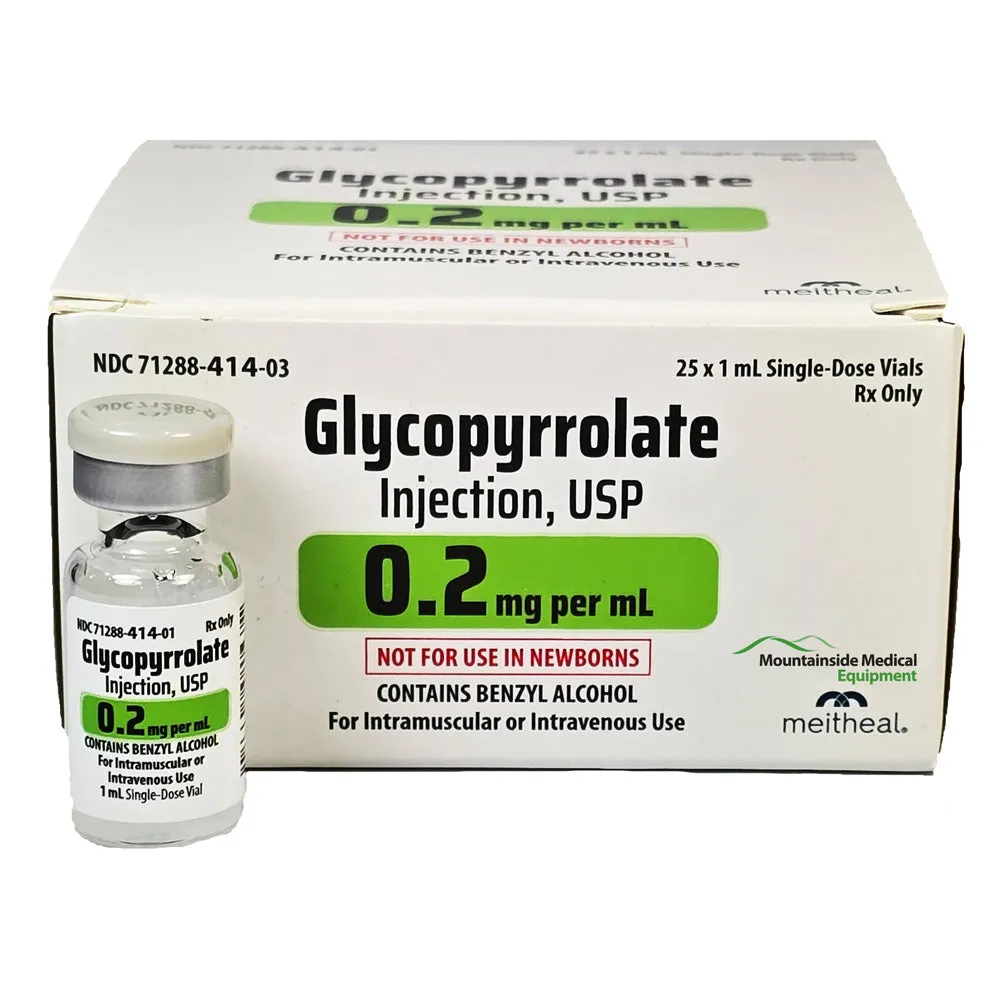
Form: Oral tablets (1 mg, 2 mg), oral solution (1 mg/5 mL), injectable (0.2 mg/mL), or inhalation powder (detailed in Dosage section).
Mechanism: Blocks muscarinic receptors, decreasing secretions and smooth muscle contractions.
Approval: FDA-approved (1961 for Robinul) and EMA-approved for specific indications.
Indications and Uses of Glycopyrrolate
Glycopyrrolate is indicated for a range of conditions involving excessive secretions, motility issues, and respiratory symptoms, leveraging its anticholinergic effects:
Sialorrhea (Excessive Salivation): Reduces drooling in patients with neurological disorders (e.g., cerebral palsy, Parkinson’s), per neurology guidelines, supported by clinical trials showing a 60–70% reduction in saliva production.
Peptic Ulcer Disease: Manages gastric acid secretion and motility, alleviating pain, recommended in gastroenterology protocols with evidence of improved healing rates.
Chronic Obstructive Pulmonary Disease (COPD): Relieves bronchospasm as an inhaled long-acting muscarinic antagonist (LAMA), improving lung function, with pulmonary medicine data.
Hyperhidrosis: Treats excessive sweating, particularly in axillary or palmar regions, with dermatology evidence.
Irritable Bowel Syndrome (IBS): Investigated off-label to reduce abdominal cramping, with gastroenterology studies.
Neurogenic Bladder: Managed off-label to decrease urinary frequency, with urology research.
Motion Sickness: Explored off-label to prevent nausea, with travel medicine data.
Parkinson’s Disease Symptoms: Used off-label to control tremors and drooling, with neurology evidence.
Anesthesia Adjunct: Initiated off-label to reduce secretions during surgery, with anesthesiology studies.
Cystic Fibrosis-Related Airway Clearance: Investigated off-label to enhance mucus clearance, with pulmonology research.
Dosage of Glycopyrrolate
Dosage for Adults
Sialorrhea:
- Oral Solution (Cuvposa): 1–2 mg (5–10 mL) 2–3 times daily, adjusted based on saliva reduction.
- Injectable: 0.1–0.2 mg every 4–6 hours, not exceeding 0.8 mg in 24 hours.
Peptic Ulcer Disease:
- Oral Tablets (Robinul): 1–2 mg three times daily, taken 30–60 minutes before meals, for up to 4 weeks.
COPD (Inhaled):
- Inhalation Powder (Seebri): 50 mcg twice daily via Neohaler device.
Dosage for Children (≥3 years)
Sialorrhea:
- Oral Solution: 0.02 mg/kg (up to 1–3 mg) 2–3 times daily, titrated under pediatric supervision.
- Maximum: 3 mg/day for children <12 years, 6 mg/day for ≥12 years.
Dosage for Pregnant Women
Pregnancy Category B: Use only if benefits outweigh risks; consult an obstetrician, with fetal monitoring.
Dosage Adjustments
Renal Impairment:
- Mild (CrCl 50–80 mL/min): No adjustment; monitor closely.
- Moderate to Severe (CrCl <50 mL/min): Reduce dose by 50% or avoid, depending on indication.
Hepatic Impairment:
- Mild to moderate (Child-Pugh A or B): Use cautiously; severe (Child-Pugh C): Avoid due to limited data.
Concomitant Medications: Adjust if combined with other anticholinergics (e.g., atropine) to avoid toxicity; monitor response.
Elderly: Start with lower doses (e.g., 0.5 mg orally); monitor for confusion or urinary retention.
Heat Exposure: Reduce dose in hot climates to prevent heat stroke risk.
Additional Considerations
- Take this active ingredient before meals for oral forms to enhance absorption.
- Inhale powder with proper technique using the Neohaler device; rinse mouth after use.
- Avoid abrupt cessation to prevent rebound hypersecretion.
How to Use Glycopyrrolate
Administration:
Oral: Swallow tablets whole with water, or measure solution with a calibrated device.
Injectable: Administer intramuscularly or intravenously by a healthcare professional.
Inhalation: Use Seebri Neohaler by inhaling deeply after loading the capsule.
Timing: Take or administer at consistent intervals, typically before meals for oral forms.
Monitoring: Watch for dry mouth, blurred vision, or signs of heat stroke (e.g., fever, dizziness); report changes immediately.
Additional Tips:
- Store at 20–25°C (68–77°F), protecting from moisture and light; keep solution refrigerated.
- Keep out of reach of children; use child-resistant caps for oral forms.
- Encourage hydration and sugar-free gum to manage dry mouth; wear sunglasses if photophobia occurs.
- Schedule regular follow-ups every 1–2 weeks to assess efficacy and side effects, especially in elderly or pediatric patients.
- Educate patients on avoiding hot environments and recognizing overdose symptoms.
Contraindications for Glycopyrrolate
Hypersensitivity: Patients with a known allergy to Glycopyrrolate or other anticholinergics.
Glaucoma: Contraindicated in narrow-angle glaucoma due to increased IOP risk.
Myasthenia Gravis: Avoid due to worsening muscle weakness.
Severe Ulcerative Colitis: Contraindicated due to risk of toxic megacolon.
Obstructive Uropathy: Avoid in urinary retention or bladder neck obstruction.
Severe Hepatic Impairment: Contraindicated in Child-Pugh Class C.
Tachycardia: Avoid in uncontrolled rapid heart rate conditions.
Gastrointestinal Obstruction: Contraindicated in paralytic ileus or pyloric stenosis.
Warnings & Precautions for Glycopyrrolate
General Warnings
Anticholinergic Toxicity: Risk of delirium, hallucinations, or seizures with overdose; monitor closely.
Heat Stroke: Risk in hot weather due to reduced sweating; advise hydration and cooling.
Increased Intraocular Pressure (IOP): Risk of glaucoma exacerbation; perform eye exams.
Urinary Retention: Risk in elderly or prostate enlargement; assess bladder function.
Gastrointestinal Motility Issues: Risk of constipation or ileus; monitor bowel habits.
Additional Warnings
Cognitive Impairment: Risk of confusion in elderly; assess mental status.
Cardiac Arrhythmias: Rare risk of tachycardia; monitor ECG in at-risk patients.
Dental Caries: Risk from dry mouth; recommend oral hygiene.
Respiratory Depression: Risk in COPD patients with excessive dosing; titrate carefully.
Hypersensitivity Reactions: Rare anaphylaxis; discontinue if swelling occurs.
Use in Specific Populations
Pregnancy: Category B; use with caution, monitoring fetal outcomes.
Breastfeeding: Use caution; monitor infant for anticholinergic effects.
Elderly: Higher risk of side effects; start with lowest effective dose.
Children: Safe for sialorrhea with pediatric oversight.
Renal/Hepatic Impairment: Adjust or avoid based on severity.
Additional Precautions
- Inform your doctor about glaucoma, urinary issues, or heat sensitivity before starting this medication.
- Avoid alcohol or hot tubs to reduce heat stroke risk.
- Use with caution in patients with Down syndrome due to increased sensitivity.
Overdose and Management of Glycopyrrolate
Overdose Symptoms
- Dry mouth, tachycardia, or blurred vision.
- Severe cases: Seizures, coma, or hyperthermia.
- Dilated pupils, urinary retention, or agitation as early signs.
- Respiratory failure or cardiovascular collapse with extremely high doses.
Immediate Actions
Contact the Medical Team: Seek immediate medical help if overdose is suspected.
Supportive Care: Provide cooling measures for hyperthermia, monitor vital signs, and support ventilation if needed.
Specific Treatment: Administer physostigmine (0.5–2 mg IV) under specialist guidance to reverse anticholinergic effects.
Monitor: Check temperature, heart rate, and mental status for 24–48 hours; assess renal function.
Patient Education: Advise against hoarding medication and to report accidental ingestion immediately.
Additional Notes
- Overdose risk is higher in children or the elderly; store securely.
- Report persistent symptoms (e.g., severe confusion, fever) promptly to prevent complications.
Side Effects of Glycopyrrolate
Common Side Effects
- Dry Mouth (20–40%, managed with hydration or gum)
- Constipation (10–20%, relieved with fiber or laxatives)
- Blurred Vision (5–15%, decreases with adaptation)
- Drowsiness (5–10%, reduced with rest)
- Urinary Hesitation (3–8%, monitored in at-risk patients)
These effects may subside with dose adjustment.
Serious Side Effects
Seek immediate medical attention for:
- Neurological: Confusion, hallucinations, or seizures.
- Cardiovascular: Tachycardia or arrhythmias.
- Thermoregulatory: Heat stroke or hyperthermia.
- Gastrointestinal: Paralytic ileus or toxic megacolon.
- Allergic: Rash, angioedema, or anaphylaxis (rare).
Additional Notes
Regular monitoring with ECG and temperature checks is advised in prolonged use (>2 weeks).
Patients with a history of glaucoma should undergo IOP measurements every 1–2 weeks.
Report any unusual symptoms (e.g., rapid heartbeat, severe dry mouth) immediately to a healthcare provider.
Long-term use requires dental evaluations to prevent caries and oral assessments for dryness-related damage.
Drug Interactions with Glycopyrrolate
This active ingredient may interact with:
- Other Anticholinergics: Increases toxicity (e.g., atropine); avoid combination.
- Antihistamines: Enhances sedation and dry mouth; use cautiously.
- Tricyclic Antidepressants: Potentiates anticholinergic effects; monitor.
- Opioids: Increases constipation risk; adjust doses.
- Beta-Blockers: May mask tachycardia; monitor heart rate.
Action: Provide your healthcare provider with a complete list of medications.
Patient Education or Lifestyle
Medication Adherence: Use this anticholinergic as prescribed for salivation or COPD, following the schedule.
Monitoring: Report dry mouth, confusion, or signs of heat stroke immediately.
Lifestyle: Avoid hot climates; use sunscreen and stay hydrated.
Diet: Increase fiber intake to prevent constipation.
Emergency Awareness: Know signs of overdose or severe side effects; seek care if present.
Follow-Up: Schedule regular check-ups every 1–2 weeks to monitor side effects and efficacy.
Pharmacokinetics of Glycopyrrolate
Absorption: Oral, peak at 1–2 hours; bioavailability ~10–25% (first-pass effect).
Distribution: Volume of distribution ~0.4 L/kg; 50–60% protein-bound.
Metabolism: Minimal hepatic metabolism; excreted unchanged.
Excretion: Primarily renal (85% unchanged); half-life 2–4 hours.
Half-Life: 2–4 hours, prolonged in renal impairment.
Pharmacodynamics of Glycopyrrolate
This drug exerts its effects by:
- Blocking muscarinic receptors, reducing salivary and bronchial secretions.
- Decreasing gastrointestinal motility and bladder contractions.
- Improving COPD symptoms via bronchodilation.
- Exhibiting dose-dependent risks of anticholinergic toxicity.
Storage of Glycopyrrolate
Temperature: Store at 20–25°C (68–77°F); protect from moisture and light; refrigerate oral solution.
Protection: Keep in original container, away from heat and humidity.
Safety: Store in a secure location out of reach of children and pets due to toxicity risk.
Disposal: Dispose of unused medication per local regulations or consult a pharmacist.
Frequently Asked Questions (FAQs)
Q: What does Glycopyrrolate treat?
A: This medication treats excessive salivation and COPD.
Q: Can this active ingredient cause dry mouth?
A: Yes, dry mouth is common; use hydration or gum.
Q: Is Glycopyrrolate safe for children?
A: Yes, for sialorrhea with supervision.
Q: How is this drug taken?
A: Orally, by injection, or inhalation, as directed.
Q: How long is Glycopyrrolate treatment?
A: Varies by condition, typically 1–4 weeks.
Q: Can I use Glycopyrrolate if pregnant?
A: Yes, with caution; consult a doctor.
Regulatory Information
This medication is approved by:
U.S. Food and Drug Administration (FDA): Approved in 1961 (Robinul) for peptic ulcer and later indications.
European Medicines Agency (EMA): Approved for sialorrhea and COPD (Seebri).
Other Agencies: Approved globally for anticholinergic use; consult local guidelines.
References
- U.S. Food and Drug Administration (FDA). (2023). Robinul (Glycopyrrolate) Prescribing Information.
- Official FDA documentation detailing the drug’s approved uses, dosage, and safety.
- European Medicines Agency (EMA). (2023). Glycopyrrolate Summary of Product Characteristics.
- EMA’s comprehensive information on the medication’s indications and precautions in Europe.
- National Institutes of Health (NIH). (2023). Glycopyrrolate: MedlinePlus Drug Information.
- NIH resource providing detailed information on the drug’s uses, side effects, and precautions.
- World Health Organization (WHO). (2023). WHO Model List of Essential Medicines: Glycopyrrolate.
- WHO’s consideration of Glycopyrrolate for specific conditions.
- Journal of Clinical Pharmacology. (2022). Glycopyrrolate in Sialorrhea.
- Peer-reviewed article on Glycopyrrolate efficacy (note: access may require a subscription).
