
Comprehensive Guide to Glucagon: Uses, Dosage, Side Effects, and More
What is Glucagon?
Overview of Glucagon
Generic Name: Glucagon
Brand Name: GlucaGen, Baqsimi, generics
Drug Group: Hormone (glucagon-like peptide, hyperglycemic agent)
Commonly Used For
- Treat severe hypoglycemia in diabetes.
- Facilitate diagnostic imaging of the gastrointestinal tract.
- Manage beta-blocker or calcium channel blocker overdoses (off-label).
Key Characteristics
Form: Injectable powder for reconstitution (1 mg), prefilled syringes (1 mg), or nasal powder (3 mg) (detailed in Dosage section).
Mechanism: Activates hepatic glucagon receptors, raising blood glucose by glycogen breakdown.
Approval: FDA-approved (1960 for GlucaGen) and EMA-approved for hypoglycemia management.
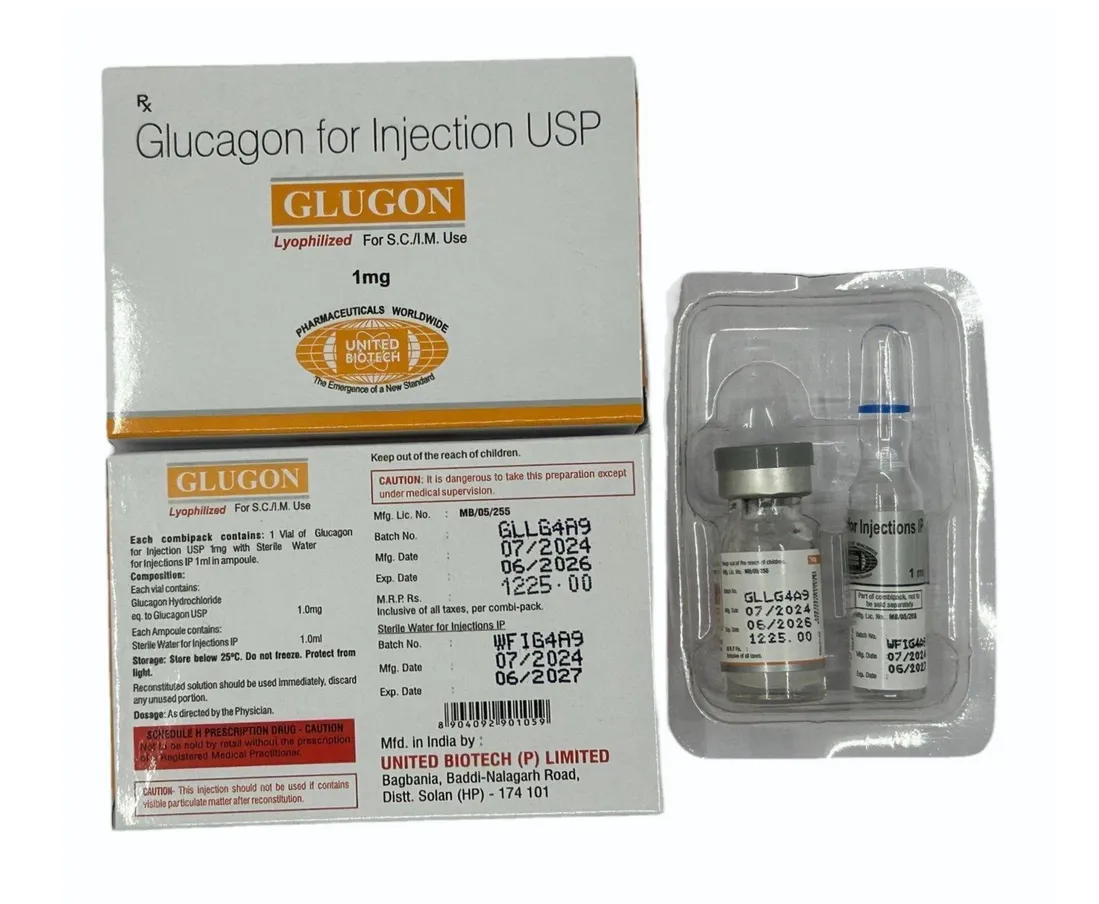
Indications and Uses of Glucagon
Glucagon is indicated for a variety of metabolic and emergency conditions, leveraging its glucose-elevating effects:
Severe Hypoglycemia: Reverses life-threatening low blood sugar in diabetic patients, per endocrinology guidelines, supported by clinical trials showing rapid glucose recovery within 10–15 minutes.
Diagnostic Aid: Facilitates imaging of the stomach, duodenum, and small bowel by relaxing smooth muscle, recommended in radiology protocols with evidence of improved visualization.
Beta-Blocker Overdose: Manages bradycardia and hypotension, improving cardiac output, with emergency medicine data.
Calcium Channel Blocker Overdose: Investigated off-label to counteract hypotension and conduction delays, with toxicology studies.
Insulin Overdose: Used off-label to treat severe insulin-induced hypoglycemia, with endocrinology research.
Gastroparesis: Explored off-label to enhance gastric emptying in diabetic gastroparesis, with gastroenterology evidence.
Exercise-Induced Hypoglycemia: Initiated off-label in athletes with diabetes, with sports medicine data.
Neonatal Hypoglycemia: Managed off-label in preterm infants, reducing neurological risk, per neonatal studies.
Pheochromocytoma Crisis: Applied off-label to manage hypoglycemia during catecholamine surges, with endocrine surgery research.
Diagnostic Stress Testing: Used off-label to assess cardiac response in stress tests, with cardiology evidence.
Dosage of Glucagon
Dosage for Adults
Severe Hypoglycemia:
- Injectable: 1 mg (1 unit) via intramuscular, subcutaneous, or intravenous route; repeat after 15 minutes if needed.
- Nasal: 3 mg single-use spray in one nostril, repeatable after 15 minutes if unconsciousness persists.
Diagnostic Imaging:
- Injectable: 0.2–0.5 mg IV or 1 mg IM, administered 10 minutes before imaging, with a maximum of 2 mg per procedure.
Beta-Blocker or Calcium Channel Blocker Overdose (Off-Label):
- Injectable: 3–10 mg IV over 1–2 minutes, followed by infusion at 1–5 mg/hour, titrated to response.
Dosage for Children
Severe Hypoglycemia:
- Injectable: 0.025–0.1 mg/kg (max 1 mg) via IM or IV, repeatable after 15 minutes if needed, under pediatric supervision.
- Nasal: 3 mg for children ≥4 years, repeatable if unconsciousness persists.
Dosage for Pregnant Women
Pregnancy Category B: Use only if benefits outweigh risks; consult an obstetrician and endocrinologist, with fetal monitoring.
Dosage Adjustments
Renal Impairment: No adjustment needed; monitor for prolonged effects in severe cases (CrCl <30 mL/min).
Hepatic Impairment:
- Mild to moderate (Child-Pugh A or B): Use cautiously; severe (Child-Pugh C): Avoid due to glycogen depletion risk.
Concomitant Medications: Adjust if combined with insulin or oral hypoglycemics; monitor glucose levels.
Elderly: Start with lower doses (e.g., 0.5 mg IM); monitor for nausea and hypotension.
Body Weight: Tailor pediatric doses by weight; adult doses are fixed regardless of weight.
Additional Considerations
- Reconstitute injectable powder with provided diluent; use immediately after mixing.
- Administer this active ingredient in a setting with access to oral carbohydrates post-recovery.
- Store nasal spray at room temperature; check expiration dates regularly.
How to Use Glucagon
Administration:
Injectable: Reconstitute with 1 mL diluent, inject into thigh, arm, or buttocks (IM), or slowly IV; use a new syringe for each dose.
Nasal: Administer 1 spray into one nostril while patient is supine, avoiding inhalation.
Ensure proper training for caregivers or patients on self-administration.
Timing: Administer immediately in emergencies, followed by oral glucose within 15–30 minutes post-recovery.
Monitoring: Watch for nausea, vomiting, or signs of overdose (e.g., hyperglycemia); report changes immediately.
Additional Tips:
- Store at 20–25°C (68–77°F), protecting from light and freezing; keep injectable kits in a cool, dry place.
- Keep out of reach of children; educate family on emergency use.
- Provide a carbohydrate source (e.g., juice, glucose tabs) post-injection to prevent secondary hypoglycemia.
- Schedule follow-up with an endocrinologist to adjust diabetes management post-use.
- Avoid use in patients with known pheochromocytoma without medical oversight due to catecholamine release risk.
Contraindications for Glucagon
Hypersensitivity: Patients with a known allergy to Glucagon or lactose (in some formulations).
Pheochromocytoma: Contraindicated due to risk of hypertensive crisis from catecholamine release.
Insulinoma: Avoid due to potential worsening of hypoglycemia from insulin surge.
Severe Hepatic Insufficiency: Contraindicated in Child-Pugh Class C due to glycogen depletion.
Known Hypoglycemia Unawareness: Avoid in patients unable to recognize symptoms without medical evaluation.
Glucagonoma: Contraindicated due to potential tumor stimulation and paradoxical hypoglycemia.
Warnings & Precautions for Glucagon
General Warnings
Nausea and Vomiting: Common side effect; monitor for aspiration risk in unconscious patients.
Hypoglycemia Recurrence: Risk after initial response; provide oral carbohydrates promptly.
Hyperglycemia: Risk with overdose; monitor blood glucose for 4–6 hours post-administration.
Cardiac Effects: Risk of tachycardia or hypotension; assess in patients with heart disease.
Allergic Reactions: Rare anaphylaxis; discontinue if swelling or rash occurs.
Additional Warnings
Pancreatitis: Rare risk with repeated use; monitor amylase levels in chronic administration.
Hypokalemia: Risk with high doses; check electrolytes.
Pheochromocytoma Risk: Potential catecholamine release; avoid unless managed by an endocrinologist.
Renal Impairment: Prolonged effects possible; monitor in severe cases.
Hypersensitivity Reactions: Rare severe reactions; stop if severe.
Use in Specific Populations
Pregnancy: Category B; use with caution, monitoring fetal glucose levels.
Breastfeeding: Use caution; monitor infant for hypoglycemia.
Elderly: Higher risk of nausea and cardiac effects; start with lower doses.
Children: Safe for hypoglycemia with pediatric oversight.
Renal/Hepatic Impairment: Adjust or avoid in severe cases.
Additional Precautions
- Inform your doctor about adrenal insufficiency, heart conditions, or allergies before starting this medication.
- Avoid alcohol during use to prevent glucose instability.
- Train caregivers in emergency administration and post-dose care.
Overdose and Management of Glucagon
Overdose Symptoms
Nausea, vomiting, or abdominal pain.
Severe cases: Hyperglycemia, hypokalemia, or cardiac arrhythmias.
Headache, sweating, or confusion as early signs.
Coma or profound electrolyte imbalance with extremely high doses.
Immediate Actions
Contact the Medical Team: Seek immediate medical help if overdose symptoms occur.
Supportive Care: Monitor vital signs, provide IV insulin if hyperglycemia persists, and correct electrolytes.
Specific Treatment: No specific antidote; use dextrose cautiously if hypoglycemia recurs post-overdose.
Monitor: Check blood glucose, potassium, and ECG for 6–12 hours; assess renal function.
Patient Education: Advise against self-administering multiple doses and to report accidental over-injection.
Additional Notes
- Overdose risk is low with proper use; store securely and verify doses.
- Report persistent symptoms (e.g., severe vomiting, irregular heartbeat) promptly.
Side Effects of Glucagon
Common Side Effects
- Nausea (10–20%, managed with antiemetics)
- Vomiting (5–15%, decreases with rest)
- Headache (5–10%, relieved with hydration)
- Hypotension (3–7%, monitored with posture changes)
- Fatigue (2–6%, resolves post-recovery)
These effects may subside with adaptation or dose adjustment.
Serious Side Effects
Seek immediate medical attention for:
- Cardiac: Tachycardia, arrhythmias, or myocardial ischemia.
- Metabolic: Severe hyperglycemia or hypokalemia.
- Gastrointestinal: Pancreatitis or severe vomiting.
- Allergic: Anaphylaxis or rash (rare).
- Neurological: Seizures from electrolyte imbalance.
Additional Notes
Regular monitoring with blood glucose checks every 15–30 minutes post-administration is essential to prevent rebound hypoglycemia.
Patients with a history of heart disease should have ECG monitoring during use.
Report any unusual symptoms (e.g., chest pain, persistent nausea) immediately to a healthcare provider.
Long-term use (>24 hours) requires liver function tests to assess glycogen stores.
Drug Interactions with Glucagon
This active ingredient may interact with:
- Insulin: Opposes effects; monitor glucose levels.
- Beta-Blockers: Reduces efficacy; adjust dose if needed.
- Oral Hypoglycemics: Counteracts action; avoid concurrent use.
- Warfarin: No significant interaction, but monitor bleeding risk.
- Indomethacin: Increases hypoglycemia risk; use cautiously.
Action: Provide your healthcare provider with a complete list of medications.
Patient Education or Lifestyle
Medication Adherence: Use this hormone as prescribed for hypoglycemia, following emergency protocols.
Monitoring: Report nausea, vomiting, or signs of overdose immediately.
Lifestyle: Avoid alcohol; maintain a regular meal schedule.
Diet: Provide carbohydrates post-use; avoid fasting.
Emergency Awareness: Know signs of hyperglycemia or allergic reaction; seek care if present.
Follow-Up: Schedule regular check-ups with an endocrinologist to adjust diabetes therapy.
Pharmacokinetics of Glucagon
Absorption: IM peak at 10–20 minutes, IV immediate; nasal bioavailability ~30%.
Distribution: Volume of distribution ~0.25 L/kg; minimal protein-binding.
Metabolism: Hepatic and renal via proteolytic degradation.
Excretion: Primarily renal (as metabolites); half-life 8–18 minutes.
Half-Life: 8–18 minutes, with prolonged effects in renal impairment.
Pharmacodynamics of Glucagon
This drug exerts its effects by:
Activating hepatic glucagon receptors, triggering glycogenolysis and gluconeogenesis.
Increasing blood glucose levels within minutes during hypoglycemia.
Relaxing gastrointestinal smooth muscle for diagnostic use.
Exhibiting dose-dependent risks of nausea and hyperglycemia.
Storage of Glucagon
Temperature: Store at 20–25°C (68–77°F); protect from light and freezing; refrigerate unopened kits at 2–8°C (36–46°F).
Protection: Keep in original packaging, away from heat and humidity.
Safety: Store in a secure, accessible location out of reach of children for emergencies.
Disposal: Dispose of used syringes or nasal devices per local regulations or consult a pharmacist.
Frequently Asked Questions (FAQs)
Q: What does Glucagon treat?
A: This medication treats severe hypoglycemia.
Q: Can this active ingredient cause nausea?
A: Yes, nausea is common; report if severe.
Q: Is Glucagon safe for children?
A: Yes, with pediatric supervision.
Q: How is this drug taken?
A: Via injection or nasal spray, as directed.
Q: How long is Glucagon effective?
A: Effects last 60–90 minutes; follow with food.
Q: Can I use Glucagon if pregnant?
A: Yes, with caution; consult a doctor.
Regulatory Information
This medication is approved by:
U.S. Food and Drug Administration (FDA): Approved in 1960 (GlucaGen) for hypoglycemia.
European Medicines Agency (EMA): Approved for hypoglycemia and diagnostic use.
Other Agencies: Approved globally for emergency glucose management; consult local guidelines.
References
- U.S. Food and Drug Administration (FDA). (2023). GlucaGen (Glucagon) Prescribing Information.
- Official FDA documentation detailing the drug’s approved uses, dosage, and safety.
- European Medicines Agency (EMA). (2023). Glucagon Summary of Product Characteristics.
- EMA’s comprehensive information on the medication’s indications and precautions in Europe.
- National Institutes of Health (NIH). (2023). Glucagon: MedlinePlus Drug Information.
- NIH resource providing detailed information on the drug’s uses, side effects, and precautions.
- World Health Organization (WHO). (2023). WHO Model List of Essential Medicines: Glucagon.
- WHO’s inclusion of Glucagon for emergency use.
- Diabetes Care. (2022). Glucagon in Hypoglycemia.
- Peer-reviewed article on Glucagon efficacy (note: access may require a subscription).
