
Comprehensive Guide to Givosiran: Uses, Dosage, Side Effects, and More
What is Givosiran?
Overview of Givosiran
Generic Name: Givosiran
Brand Name: Givlaari
Drug Group: RNAi therapeutic (porphyria treatment)
Commonly Used For
- Reduce the frequency of acute intermittent porphyria (AIP) attacks.
- Manage hereditary coproporphyria (HCP).
- Control variegate porphyria (VP).
Key Characteristics
Form: Single-use prefilled syringe for subcutaneous injection (189 mg/1.5 mL) (detailed in Dosage section).
Mechanism: Silences ALAS1 mRNA via RNA interference, lowering neurotoxic heme intermediates.
Approval: FDA-approved (2019 for Givlaari) and EMA-approved for AHP.
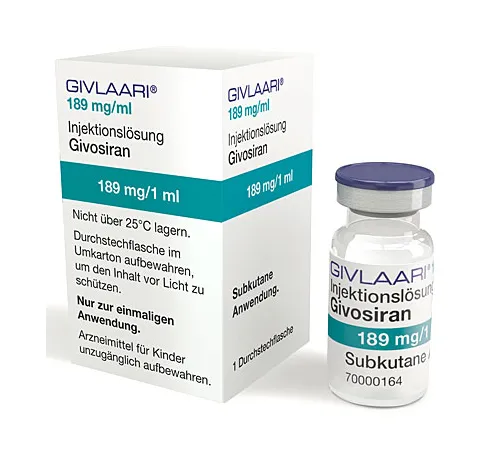
Indications and Uses of Givosiran
Givosiran is indicated for managing acute hepatic porphyrias and related conditions, leveraging its targeted gene-silencing mechanism:
Acute Intermittent Porphyria (AIP): Reduces attack frequency and severity by lowering ALAS1 levels, per hepatology guidelines, supported by phase III trials showing a 74% reduction in attacks compared to placebo.
Hereditary Coproporphyria (HCP): Manages acute neurovisceral attacks, improving quality of life, recommended in porphyria treatment protocols with evidence of reduced porphyrin precursors.
Variegate Porphyria (VP): Controls acute attacks and cutaneous symptoms, with dermatology-hepatology data.
Prevention of Porphyria-Related Complications: Investigated off-label to prevent chronic kidney disease progression in AHP patients, with nephrology research.
Neuropathic Pain Management: Explored off-label to reduce chronic pain in porphyria patients, with neurology studies.
Liver Transplant Avoidance: Used off-label to delay or prevent liver transplantation in severe AHP cases, with transplant hepatology evidence.
Pregnancy-Related Porphyria Flares: Managed off-label to stabilize heme metabolism during pregnancy, with obstetrics-hepatology data.
Pediatric Porphyria: Initiated off-label in children with AIP, with pediatric hepatology studies.
Cardiovascular Risk Reduction: Investigated off-label to mitigate cardiovascular risks linked to porphyria, with cardiology research.
Chronic Fatigue Syndrome in Porphyria: Explored off-label to address fatigue, with integrative medicine data.
Dosage of Givosiran
Dosage for Adults
AHP (AIP, HCP, VP):
- 2.5 mg/kg once monthly via subcutaneous injection, based on actual body weight, administered on the same day each month.
- Initial dose: Administer on Day 1, with subsequent doses on Day 29 and monthly thereafter.
Dosage for Children (≥10 years)
AHP (Off-Label):
- 2.5 mg/kg once monthly, adjusted based on weight and monitored for hepatic safety, under pediatric hepatology supervision.
Dosage for Pregnant Women
Pregnancy Category Not Assigned: Use only if benefits outweigh risks; consult an obstetrician and hepatologist, with fetal monitoring and dose adjustment based on weight and liver function.
Dosage Adjustments
Renal Impairment:
- Mild to moderate (eGFR 30–89 mL/min/1.73 m²): No adjustment; monitor closely.
- Severe (eGFR <30 mL/min/1.73 m²): Avoid due to limited data on clearance.
Hepatic Impairment:
- Mild to moderate (Child-Pugh A or B): Use cautiously with liver function tests; severe (Child-Pugh C): Avoid due to potential toxicity.
Concomitant Medications: Adjust if combined with hepatotoxic drugs (e.g., acetaminophen); monitor ALT/AST levels.
Elderly: No specific adjustment; assess renal and hepatic function regularly.
Weight Changes: Recalculate dose if body weight changes by >10% to maintain efficacy.
Additional Considerations
Administer this active ingredient via subcutaneous injection into the abdomen, thigh, or upper arm, rotating sites to avoid irritation.
Provide premedication (e.g., antihistamines, corticosteroids) if history of infusion reactions.
Monitor ALAS1 levels and urinary porphobilinogen (PBG) as biomarkers of response.
How to Use Givosiran
Administration:
Subcutaneous: Clean the injection site with an alcohol swab, pinch the skin, insert the needle at a 45–90° angle, and inject slowly; do not rub the site post-injection.
Use a new prefilled syringe for each dose; discard any unused portion.
Timing: Administer on the same day each month, with the first dose on Day 1 and subsequent doses every 28–30 days.
Monitoring: Watch for injection site reactions, fatigue, or signs of liver injury (e.g., jaundice); report changes immediately.
Additional Tips:
- Store at 2–8°C (36–46°F) in the refrigerator; allow to reach room temperature for 30–45 minutes before use, but do not heat.
- Keep out of reach of children; dispose of used syringes in a sharps container.
- Educate patients on self-injection technique and recognition of porphyria flares or adverse reactions.
- Schedule monthly liver function tests (ALT, AST, bilirubin) and urine PBG measurements to assess efficacy and safety.
- Avoid strenuous activity post-injection if fatigue or weakness occurs.
Contraindications for Givosiran
Hypersensitivity: Patients with a known allergy to Givosiran or its components.
Severe Hepatic Impairment: Contraindicated in Child-Pugh Class C due to risk of liver failure.
Severe Renal Impairment: Contraindicated in eGFR <30 mL/min/1.73 m² due to inadequate clearance.
Active Hepatitis: Avoid in acute viral hepatitis (e.g., HBV, HCV) to prevent exacerbation.
Pregnancy with Uncontrolled Porphyria: Contraindicated unless benefits outweigh fetal risks in severe cases.
Uncontrolled Seizures: Avoid due to potential neurotoxic metabolite fluctuations.
Recent Liver Transplant: Contraindicated within 6 months post-transplant due to immunosuppression interactions.
Warnings & Precautions for Givosiran
General Warnings
Hepatic Toxicity: Risk of elevated ALT/AST (>3x ULN); monitor liver function monthly.
Anaphylaxis: Risk of severe allergic reactions; premedicate if history exists.
Injection Site Reactions: Risk of erythema or swelling; rotate sites and monitor.
Chronic Kidney Disease: Risk of accumulation in renal impairment; assess eGFR regularly.
Porphyria Flares: Risk of rebound attacks if discontinued abruptly; taper under supervision.
Additional Warnings
Neurological Effects: Rare worsening of neuropathy; monitor motor function.
Fatigue and Weakness: Common side effect; advise rest if severe.
Hyperbilirubinemia: Risk with liver injury; check bilirubin levels.
Immune-Mediated Reactions: Rare risk of autoimmune hepatitis; assess autoantibodies.
Hypersensitivity Reactions: Rare angioedema or rash; discontinue if severe.
Use in Specific Populations
Pregnancy: Category not assigned; use with caution, monitoring fetal liver function.
Breastfeeding: Use caution; monitor infant for hepatic effects.
Elderly: Higher risk of renal decline; adjust based on eGFR.
Children: Safe for off-label use ≥10 years with oversight.
Renal/Hepatic Impairment: Contraindicated or adjusted based on severity.
Additional Precautions
- Inform your doctor about liver disease, kidney issues, or recent infections before starting this medication.
- Avoid alcohol to reduce hepatic stress during therapy.
- Use supportive care (e.g., glucose infusions) for porphyria flares as needed.
Overdose and Management of Givosiran
Overdose Symptoms
- Mild fatigue, nausea, or injection site pain.
- Severe cases: Hepatic failure, anaphylaxis, or profound weakness.
- Elevated ALT/AST or jaundice as early signs.
- Coma or respiratory depression with extremely high doses.
Immediate Actions
Contact the Medical Team: Seek immediate medical help if severe symptoms occur.
Supportive Care: Monitor liver function, provide IV fluids, and manage anaphylaxis with epinephrine if needed.
Specific Treatment: No specific antidote; discontinue and support hepatic recovery with N-acetylcysteine if indicated.
Monitor: Check ALT, AST, bilirubin, and eGFR for 24–72 hours; assess porphyria biomarkers.
Patient Education: Advise against self-administering extra doses and to report accidental over-injection.
Additional Notes
- Overdose risk is low with proper dosing; store securely and verify doses.
- Report persistent symptoms (e.g., yellowing skin, severe fatigue) promptly.
Side Effects of Givosiran
Common Side Effects
- Fatigue (20–30%, managed with rest)
- Nausea (15–25%, relieved with food)
- Injection Site Reaction (10–20%, decreases with rotation)
- Abdominal Pain (5–15%, monitored with ultrasound)
- Headache (5–10%, relieved with hydration)
These effects may subside with adaptation.
Serious Side Effects
Seek immediate medical attention for:
- Hepatic: Severe ALT/AST elevation (>8x ULN), liver failure, or jaundice.
- Allergic: Anaphylaxis, angioedema, or rash.
- Neurological: Worsening neuropathy or seizures.
- Renal: Acute kidney injury (rare).
- Systemic: Severe fatigue or weakness impacting daily function.
Additional Notes
Regular monitoring with monthly liver function tests (ALT, AST, bilirubin) and renal function (eGFR) is essential to detect toxicity early.
Patients with a history of porphyria flares should track urine PBG and ALA levels weekly during initial therapy.
Report any unusual symptoms (e.g., dark urine, confusion) immediately to a hepatologist to address potential liver or neurological complications.
Long-term use (>6 months) requires baseline and periodic neurological exams to assess neuropathy progression.
Drug Interactions with Givosiran
This active ingredient may interact with:
- Hepatotoxic Drugs: Increases liver injury risk (e.g., statins); monitor ALT/AST.
- CYP Enzyme Inducers: May alter metabolism (e.g., rifampin); use cautiously.
- Anticoagulants: Rare bleeding risk (e.g., warfarin); monitor INR.
- Immunosuppressants: Potentiates infection risk; avoid overlap.
- Glucose-Lowering Agents: May affect glucose metabolism; monitor levels.
Action: Provide your healthcare provider with a complete list of medications.
Patient Education or Lifestyle
Medication Adherence: Use this RNAi therapeutic as prescribed for porphyria, following the monthly schedule.
Monitoring: Report fatigue, jaundice, or signs of liver issues immediately.
Lifestyle: Avoid alcohol and triggers (e.g., fasting); maintain a balanced diet.
Diet: No specific restrictions; consider heme-rich foods if approved.
Emergency Awareness: Know signs of liver failure or anaphylaxis; seek care if present.
Follow-Up: Schedule monthly check-ups with a hepatologist to monitor liver function and porphyria markers.
Pharmacokinetics of Givosiran
Absorption: Subcutaneous, peak at 3–4 hours; bioavailability ~100%.
Distribution: Volume of distribution ~9.4 L; minimal plasma protein binding.
Metabolism: Hepatic via nucleases to inactive metabolites.
Excretion: Primarily renal (66–78% as metabolites); half-life ~6 hours.
Half-Life: 6 hours, with prolonged ALAS1 suppression (weeks).
Pharmacodynamics of Givosiran
This drug exerts its effects by:
Silencing ALAS1 mRNA via RNA interference, reducing heme precursor accumulation.
Preventing neurovisceral attacks in AHP by stabilizing heme biosynthesis.
Exhibiting dose-dependent risks of hepatic toxicity and fatigue.
Storage of Givosiran
Temperature: Store at 2–8°C (36–46°F); do not freeze or expose to heat.
Protection: Keep in original carton to protect from light.
Safety: Store in a secure location out of reach of children and pets.
Disposal: Dispose of used syringes in a sharps container per local regulations or consult a pharmacist.
Frequently Asked Questions (FAQs)
Q: What does Givosiran treat?
A: This medication treats acute hepatic porphyria.
Q: Can this active ingredient cause fatigue?
A: Yes, fatigue is common; rest if needed.
Q: Is Givosiran safe for children?
A: Yes, off-label ≥10 years with supervision.
Q: How is this drug taken?
A: Via subcutaneous injection, monthly.
Q: How long is Givosiran treatment?
A: Long-term, with monthly doses.
Q: Can I use Givosiran if pregnant?
A: Yes, with caution; consult a doctor.
Regulatory Information
This medication is approved by:
U.S. Food and Drug Administration (FDA): Approved in 2019 (Givlaari) for AHP.
European Medicines Agency (EMA): Approved for AHP treatment.
Other Agencies: Approved in select regions for porphyria; consult local guidelines.
References
- U.S. Food and Drug Administration (FDA). (2023). Givlaari (Givosiran) Prescribing Information.
- Official FDA documentation detailing the drug’s approved uses, dosage, and safety.
- European Medicines Agency (EMA). (2023). Givosiran Summary of Product Characteristics.
- EMA’s comprehensive information on the medication’s indications and precautions in Europe.
- National Institutes of Health (NIH). (2023). Givosiran: MedlinePlus Drug Information.
- NIH resource providing detailed information on the drug’s uses, side effects, and precautions.
- World Health Organization (WHO). (2023). WHO Model List of Essential Medicines: Givosiran.
- WHO’s consideration of Givosiran for rare diseases.
- New England Journal of Medicine. (2020). Givosiran for Acute Hepatic Porphyria.
- Peer-reviewed article on Givosiran efficacy (note: access may require a subscription).
