
Comprehensive Guide to Gemtuzumab Ozogamicin: Uses, Dosage, Side Effects, and More
What is Gemtuzumab Ozogamicin?
Overview of Gemtuzumab Ozogamicin
Generic Name: Gemtuzumab Ozogamicin
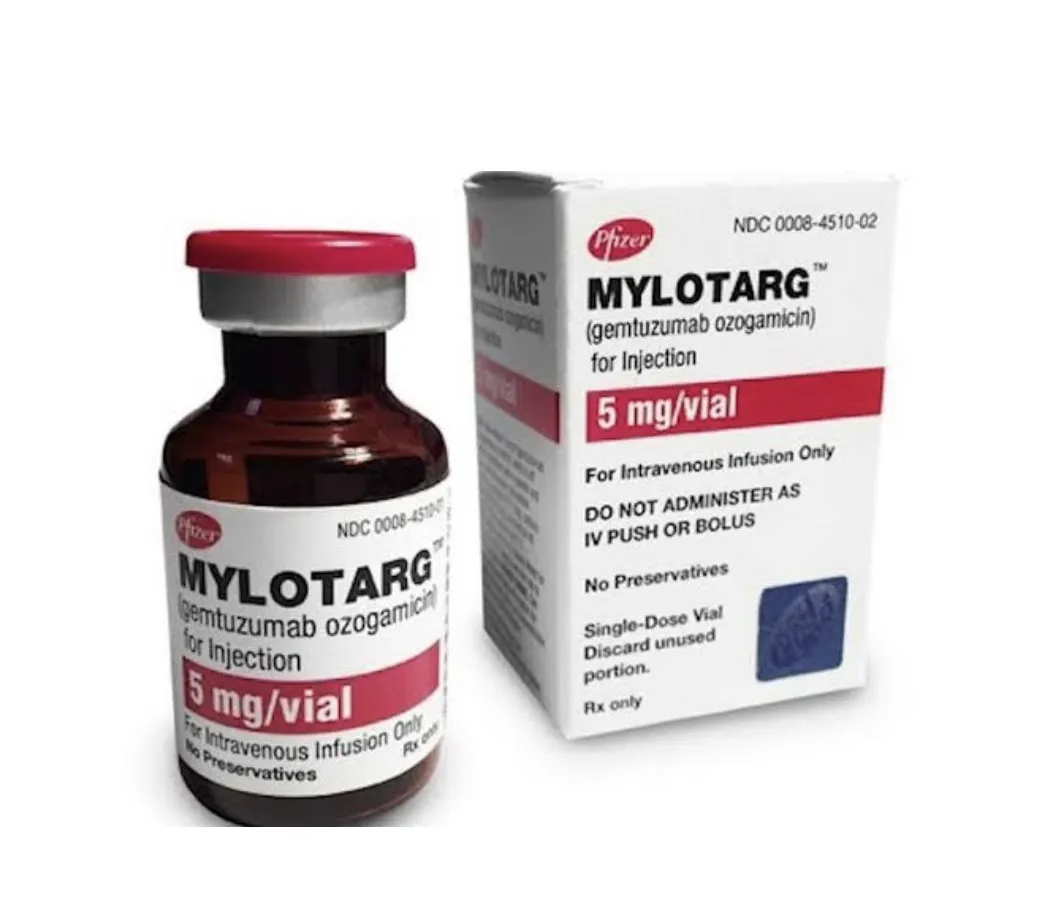
Brand Name: Mylotarg, generics
Drug Group: Antibody-drug conjugate (antineoplastic)
Commonly Used For
- Treat newly diagnosed CD33-positive AML.
- Manage relapsed or refractory CD33-positive AML.
- Combine with chemotherapy in AML therapy.
Key Characteristics
Form: Single-use vials for IV infusion (4.5 mg) (detailed in Dosage section).
Mechanism: Binds CD33, releasing calicheamicin to damage DNA and trigger cell death.
Approval: FDA-approved (2000, withdrawn 2010, re-approved 2017) and EMA-approved for AML.
Indications and Uses of Gemtuzumab Ozogamicin
Gemtuzumab Ozogamicin is indicated for specific hematologic malignancies, leveraging its targeted cytotoxic action:
Newly Diagnosed CD33-Positive AML: Treats de novo AML in adults and children (≥1 month) with favorable or intermediate-risk cytogenetics, per oncology guidelines, supported by clinical trials showing improved event-free survival rates (e.g., 27% at 3 years in combination therapy).
Relapsed or Refractory CD33-Positive AML: Manages AML in patients who failed prior treatments, reducing blast counts, recommended in hematology protocols with evidence of response rates up to 26% in salvage therapy.
Combination Therapy with Chemotherapy: Enhances efficacy when combined with cytarabine and daunorubicin in induction and consolidation phases, improving complete remission rates, with leukemia research data.
Minimal Residual Disease (MRD) Eradication: Investigated off-label to eliminate MRD post-induction, with molecular oncology evidence.
High-Risk Myelodysplastic Syndromes (MDS): Explored off-label in CD33-positive MDS progressing to AML, with hematology-oncology studies.
Pediatric AML with Poor Prognosis: Used off-label in children with adverse cytogenetics, with pediatric oncology data.
Elderly AML Patients: Initiated off-label as a less intensive option, with geriatric hematology research.
Post-Transplant Relapse: Managed off-label to control AML recurrence after allogeneic stem cell transplant, with transplant medicine evidence.
Therapy-Related AML: Investigated off-label in secondary AML from prior chemotherapy, with oncology studies.
Chronic Myelomonocytic Leukemia (CMML): Explored off-label in CD33-positive CMML, with hematologic research.
Dosage of Gemtuzumab Ozogamicin
Dosage for Adults
Newly Diagnosed CD33-Positive AML (Combination Therapy):
- 3 mg/m² (max 4.5 mg) on days 1, 4, and 7 in induction cycle 1, then 3 mg/m² on day 1 of consolidation cycles 1 and 2, with cytarabine and daunorubicin.
Relapsed or Refractory CD33-Positive AML:
- 3 mg/m² (max 4.5 mg) on days 1, 4, and 7 of a 28-day cycle, up to 2 cycles.
Dosage for Children (≥1 month)
Newly Diagnosed CD33-Positive AML:
- 3 mg/m² (max 4.5 mg) on days 1, 4, and 7 in induction, adjusted for body surface area (BSA), under pediatric oncology supervision.
Relapsed or Refractory CD33-Positive AML:
- 3 mg/m² (max 4.5 mg) on days 1, 4, and 7, with dose capping based on BSA and liver function.
Dosage for Pregnant Women
Pregnancy Category D: Use only if benefits outweigh risks; consult an obstetrician and oncologist, with fetal monitoring and dose adjustment based on maternal health.
Dosage Adjustments
Renal Impairment:
Mild to moderate (CrCl 30–80 mL/min): No adjustment; monitor closely.
Severe (CrCl <30 mL/min): Avoid due to limited data on clearance.
Hepatic Impairment:
Mild (bilirubin 1–1.5× ULN): Use cautiously; moderate to severe (bilirubin >1.5× ULN): Reduce dose or avoid due to VOD risk.
Concomitant Medications: Adjust if combined with hepatotoxic drugs (e.g., methotrexate); monitor liver enzymes.
Elderly: No specific adjustment; assess liver and renal function regularly.
Toxicity: Interrupt or discontinue if VOD or severe infusion reaction occurs.
Additional Considerations
- Administer this active ingredient via IV infusion over 2 hours through a 0.2-micron filter, with premedication (e.g., acetaminophen, diphenhydramine).
- Use central venous access if possible to minimize irritation.
- Monitor complete blood counts (CBC) and liver function tests (LFTs) weekly during therapy.
How to Use Gemtuzumab Ozogamicin
Administration:
IV Infusion: Reconstitute vial with 5 mL sterile water, dilute in 100–250 mL normal saline, and infuse over 2 hours via a dedicated line.
Premedicate with antihistamines and antipyretics 30–60 minutes prior to reduce infusion reactions.
Timing: Administer on scheduled days (e.g., days 1, 4, 7) as part of a cycle, with breaks for recovery.
Monitoring: Watch for fever, rash, or signs of VOD (e.g., jaundice, weight gain); report changes immediately.
Additional Tips:
- Store at 2–8°C (36–46°F); do not freeze or shake vials.
- Keep out of reach of children; handle with cytotoxic precautions.
- Educate patients on recognizing infusion reaction symptoms (e.g., chills, dyspnea) and reporting promptly.
- Schedule regular assessments of liver function (e.g., bilirubin, ALT) and cardiac status (e.g., echocardiogram) every cycle.
- Use protective equipment for healthcare providers during preparation and administration due to cytotoxic nature.
Contraindications for Gemtuzumab Ozogamicin
Hypersensitivity: Patients with a known allergy to Gemtuzumab Ozogamicin or its components (e.g., calicheamicin).
Severe Hepatic Impairment: Contraindicated in bilirubin >3× ULN due to VOD risk.
Severe Renal Impairment: Contraindicated in CrCl <30 mL/min due to unknown clearance.
Active Hepatitis or Cirrhosis: Avoid due to heightened hepatotoxicity risk.
Pregnancy: Contraindicated in pregnancy (Category D) unless life-saving.
Breastfeeding: Contraindicated due to potential excretion in breast milk.
Concurrent Myelotoxic Therapy: Avoid with other marrow-suppressive agents without adjustment.
Uncontrolled Infection: Contraindicated until infection is managed to prevent sepsis risk.
Warnings & Precautions for Gemtuzumab Ozogamicin
General Warnings
Hepatotoxicity/Veno-Occlusive Disease (VOD): Risk of liver injury or VOD (incidence 5–10% in trials); monitor LFTs and weight daily.
Infusion Reactions: Risk of anaphylaxis or cytokine release syndrome (CRS); premedicate and observe for 1 hour post-infusion.
Myelosuppression: Risk of severe neutropenia, thrombocytopenia, or anemia; monitor CBC weekly.
Embryo-Fetal Toxicity: Risk of fetal harm; use contraception during and after therapy (6 months for females, 3 months for males).
Cardiotoxicity: Rare risk of cardiomyopathy; assess baseline and periodic cardiac function.
Additional Warnings
Secondary Malignancies: Long-term risk of MDS or AML relapse; monitor post-therapy.
Bleeding Risk: Increased with thrombocytopenia; avoid invasive procedures.
Tumor Lysis Syndrome (TLS): Risk in high tumor burden; hydrate and monitor electrolytes.
Pulmonary Toxicity: Rare interstitial pneumonitis; assess respiratory symptoms.
Hypersensitivity Reactions: Rare severe reactions (e.g., Stevens-Johnson syndrome); discontinue if severe.
Use in Specific Populations
Pregnancy: Category D; avoid unless life-saving, with counseling on teratogenicity.
Breastfeeding: Contraindicated; discontinue nursing during and for 1 month post-therapy.
Elderly: Higher risk of VOD and myelosuppression; adjust based on comorbidities.
Children: Safe for AML with pediatric oncology oversight.
Renal/Hepatic Impairment: Contraindicated or adjusted based on severity.
Additional Precautions
- Inform your doctor about liver disease, recent infections, or pregnancy plans before starting this medication.
- Avoid live vaccines during therapy due to immunosuppression risk.
- Use supportive care (e.g., growth factors) for severe myelosuppression as needed.
Overdose and Management of Gemtuzumab Ozogamicin
Overdose Symptoms
- Exacerbated myelosuppression (e.g., prolonged neutropenia) or infusion reactions.
- Severe cases: VOD, multi-organ failure, or fatal CRS.
- Fever, hypotension, or jaundice as early signs.
- Coma or profound bone marrow aplasia with extremely high doses.
Immediate Actions
Contact the Medical Team: Seek immediate medical help if overdose is suspected.
Supportive Care: Monitor vital signs, provide hydration, and manage CRS with corticosteroids or tocilizumab if needed.
Specific Treatment: No specific antidote; discontinue and support liver function (e.g., defibrotide for VOD) under specialist guidance.
Monitor: Check LFTs, CBC, and cardiac enzymes for 48–72 hours; assess for TLS or VOD.
Patient Education: Advise against self-administering extra doses and to report errors immediately.
Additional Notes
- Overdose risk is linked to dosing errors or hepatic dysfunction; store securely and verify doses.
- Report persistent symptoms (e.g., severe abdominal pain, dark urine) promptly to prevent liver failure.
Side Effects of Gemtuzumab Ozogamicin
Common Side Effects
- Fever (30–40%, managed with antipyretics)
- Nausea (20–30%, controlled with antiemetics)
- Thrombocytopenia (15–25%, monitored with transfusions)
- Neutropenia (10–20%, managed with growth factors)
- Fatigue (10–15%, relieved with rest)
These effects may subside with cycle breaks or supportive care.
Serious Side Effects
Seek immediate medical attention for:
- Hepatic: VOD, jaundice, or liver failure (incidence 5–10%).
- Infectious: Severe sepsis or pneumonia due to neutropenia.
- Hemorrhagic: Major bleeding from thrombocytopenia.
- Cardiac: Cardiomyopathy or heart failure (rare).
- Allergic: Anaphylaxis or severe infusion reactions.
Additional Notes
Regular monitoring with LFTs (e.g., bilirubin, ALT) and CBC every 2–3 days is critical to detect VOD or myelosuppression early.
Patients with prior liver damage should have baseline and weekly imaging (e.g., ultrasound) to assess for VOD.
Infusion reactions require immediate cessation and supportive care; premedication reduces severity.
Report any unusual symptoms (e.g., yellowing skin, rapid heartbeat) immediately to an oncologist to address organ toxicity.
Long-term survivors (>1 year) should be screened for secondary malignancies with annual blood tests.
Drug Interactions with Gemtuzumab Ozogamicin
This active ingredient may interact with:
- Hepatotoxic Drugs: Increases VOD risk (e.g., busulfan); monitor LFTs.
- Myelosuppressive Agents: Enhances bone marrow suppression (e.g., cyclophosphamide); adjust doses.
- Live Vaccines: Reduces immune response; avoid during therapy.
- CYP3A4 Inhibitors: No significant interaction, but monitor for calicheamicin metabolism.
- Anticoagulants: Increases bleeding risk (e.g., warfarin); use cautiously.
Action: Provide your oncologist with a complete list of medications.
Patient Education or Lifestyle
Medication Adherence: Use this antibody-drug conjugate as prescribed for AML, following the infusion schedule.
Monitoring: Report fever, jaundice, or signs of bleeding immediately.
Lifestyle: Avoid crowds to reduce infection risk; maintain nutrition.
Diet: No specific restrictions; avoid alcohol to protect liver.
Emergency Awareness: Know signs of VOD or sepsis; seek care if present.
Follow-Up: Schedule regular check-ups every week during therapy to monitor liver, blood counts, and cardiac health.
Pharmacokinetics of Gemtuzumab Ozogamicin
Absorption: IV, no oral bioavailability; peak antibody levels at end of infusion.
Distribution: Volume of distribution ~10–20 L; targets CD33-positive cells.
Metabolism: Hepatic via proteolysis; calicheamicin released intracellularly.
Excretion: Primarily biliary (as metabolites); half-life 40–100 hours.
Half-Life: 40–100 hours, with prolonged effects due to intracellular action.
Pharmacodynamics of Gemtuzumab Ozogamicin
This drug exerts its effects by:
- Binding CD33 on AML cells, internalizing calicheamicin to cleave DNA double strands.
- Inducing apoptosis in CD33-positive leukemic blasts.
- Exhibiting dose-dependent risks of VOD and myelosuppression.
Storage of Gemtuzumab Ozogamicin
Temperature: Store at 2–8°C (36–46°F); do not freeze or shake.
Protection: Keep in original carton, away from light and heat.
Safety: Store in a secure location out of reach of children and pets due to cytotoxic risk.
Disposal: Dispose of unused vials or waste per cytotoxic drug regulations or consult a pharmacist.
Frequently Asked Questions (FAQs)
Q: What does Gemtuzumab Ozogamicin treat?
A: This medication treats CD33-positive AML.
Q: Can this active ingredient cause fever?
A: Yes, fever is common; report if persistent.
Q: Is Gemtuzumab Ozogamicin safe for children?
A: Yes, with pediatric oncology supervision.
Q: How is this drug taken?
A: Via IV infusion, as directed.
Q: How long is Gemtuzumab Ozogamicin treatment?
A: Typically 1–2 cycles, or as prescribed.
Q: Can I use Gemtuzumab Ozogamicin if pregnant?
A: No, unless life-saving; consult a doctor.
Regulatory Information
This medication is approved by:
U.S. Food and Drug Administration (FDA): Approved in 2000, withdrawn 2010, re-approved 2017 (Mylotarg) for AML.
European Medicines Agency (EMA): Approved for CD33-positive AML in adults and children.
Other Agencies: Approved globally for leukemia; consult local guidelines.
References
- U.S. Food and Drug Administration (FDA). (2023). Mylotarg (Gemtuzumab Ozogamicin) Prescribing Information.
- Official FDA documentation detailing the drug’s approved uses, dosage, and safety.
- European Medicines Agency (EMA). (2023). Gemtuzumab Ozogamicin Summary of Product Characteristics.
- EMA’s comprehensive information on the medication’s indications and precautions in Europe.
- National Institutes of Health (NIH). (2023). Gemtuzumab Ozogamicin: MedlinePlus Drug Information.
- NIH resource providing detailed information on the drug’s uses, side effects, and precautions.
- World Health Organization (WHO). (2023). WHO Model List of Essential Medicines: Gemtuzumab Ozogamicin.
- WHO’s consideration of Gemtuzumab Ozogamicin for leukemia.
- Blood Journal. (2022). Gemtuzumab in AML Therapy.
- Peer-reviewed article on Gemtuzumab Ozogamicin efficacy (note: access may require a subscription).
