
Comprehensive Guide to Gefitinib: Uses, Dosage, Side Effects, and More
What is Gefitinib?
Overview of Gefitinib
Generic Name: Gefitinib
Brand Name: Iressa, generics
Drug Group: Tyrosine kinase inhibitor (antineoplastic)
Commonly Used For
- Treat non-small cell lung cancer (NSCLC).
- Manage metastatic NSCLC with EGFR mutations.
- Control disease progression in advanced cases.
Key Characteristics
Form: Oral tablets (250 mg) (detailed in Dosage section).
Mechanism: Selectively inhibits EGFR tyrosine kinase, blocking downstream signaling pathways.
Approval: FDA-approved (2015 for Iressa) and EMA-approved for EGFR-mutated NSCLC.
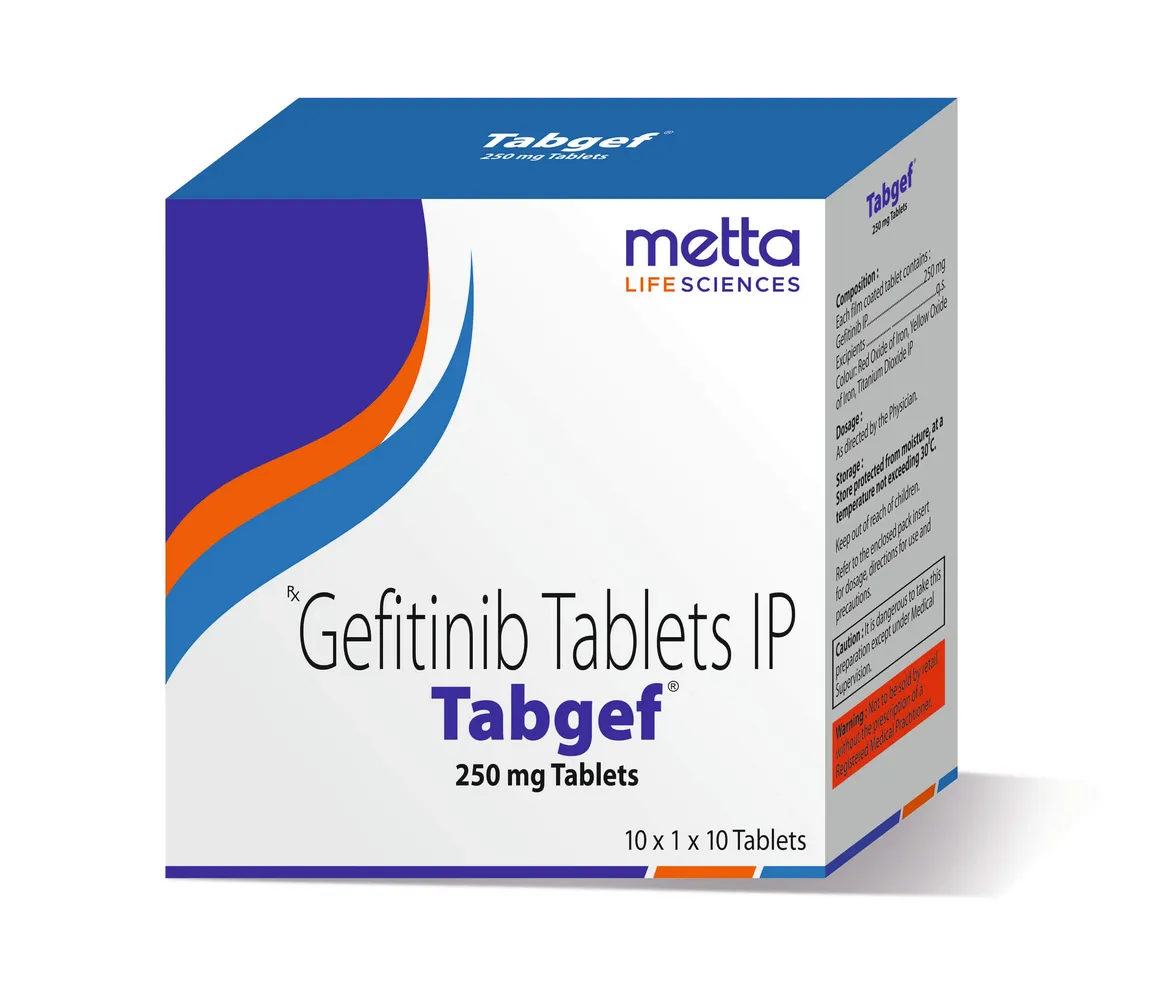
Indications and Uses of Gefitinib
Gefitinib is indicated for specific oncologic conditions, leveraging its targeted inhibition of EGFR:
Non-Small Cell Lung Cancer (NSCLC) with EGFR Mutations: Treats locally advanced or metastatic NSCLC in patients with exon 19 deletions or exon 21 (L858R) mutations, per oncology guidelines, supported by clinical trials showing a 60–80% response rate in mutation-positive cases.
First-Line Therapy for Advanced NSCLC: Manages newly diagnosed metastatic NSCLC with EGFR mutations, improving progression-free survival, recommended in lung cancer protocols.
Second-Line Therapy for NSCLC: Controls disease after platinum-based chemotherapy failure in EGFR-mutated patients, with oncology evidence.
Brain Metastases from NSCLC: Investigated off-label to reduce intracranial tumor burden, with neuro-oncology data.
Head and Neck Squamous Cell Carcinoma (HNSCC): Explored off-label for EGFR-overexpressing tumors, with head and neck cancer research.
Pancreatic Cancer: Managed off-label in EGFR-driven cases, with pancreatic oncology studies.
Colorectal Cancer with EGFR Amplification: Initiated off-label to inhibit tumor growth, with gastrointestinal oncology evidence.
Esophageal Cancer: Investigated off-label for advanced cases with EGFR overexpression, with esophageal cancer research.
Ovarian Cancer: Explored off-label in platinum-resistant cases with EGFR mutations, with gynecologic oncology data.
Combination Therapy in NSCLC: Used off-label with immunotherapy (e.g., pembrolizumab) to enhance efficacy, with immunotherapy-oncology studies.
Dosage of Gefitinib
Dosage for Adults
NSCLC with EGFR Mutations:
- 250 mg once daily orally, taken with or without food, continued until disease progression or unacceptable toxicity.
- Duration: Typically 6–12 months or longer, depending on response.
Dosage for Children
Not Established: Not approved for pediatric use; off-label use requires oncologist oversight and dose adjustment based on body surface area (e.g., 150–200 mg/m²/day).
Dosage for Pregnant Women
Pregnancy Category D: Avoid unless benefits outweigh risks; consult an obstetrician and oncologist, with fetal monitoring and genetic counseling.
Dosage Adjustments
Renal Impairment:
- Mild to moderate (CrCl 30–80 mL/min): No adjustment; monitor closely.
- Severe (CrCl <30 mL/min): Avoid due to limited data.
Hepatic Impairment:
- Mild (Child-Pugh A): No adjustment; monitor liver function.
- Moderate to severe (Child-Pugh B or C): Reduce to 250 mg every other day or avoid, with frequent liver enzyme checks.
Concomitant Medications: Adjust if combined with CYP3A4 inducers (e.g., rifampicin) or inhibitors (e.g., ketoconazole); monitor for drug interactions.
Elderly: No specific adjustment; assess for comorbidities and tolerability.
Toxicity Management: Interrupt or reduce dose (e.g., to 250 mg every other day) if severe diarrhea, skin reactions, or hepatotoxicity occur.
Additional Considerations
- Take this active ingredient at the same time daily, with a full glass of water, avoiding grapefruit juice.
- Administer anti-diarrheal or skin care measures as needed to manage side effects.
How to Use Gefitinib
Administration:
Oral: Swallow tablets whole, with or without food, preferably with water.
Do not crush or chew tablets to ensure proper absorption.
Timing: Take once daily, at a consistent time, to maintain steady plasma levels.
Monitoring: Watch for rash, diarrhea, or signs of lung toxicity (e.g., shortness of breath); report changes immediately.
Additional Tips:
- Store at 15–30°C (59–86°F), protecting from moisture and light.
- Keep out of reach of children; dispose of unused tablets per local regulations.
- Use supportive care (e.g., loperamide for diarrhea, moisturizers for rash) as advised by a provider.
- Schedule regular liver function tests (e.g., ALT, AST) and pulmonary function assessments every 2–4 weeks during initial therapy.
- Educate patients on recognizing severe side effects and maintaining hydration to support renal function.
Contraindications for Gefitinib
Hypersensitivity: Patients with a known allergy to Gefitinib or other TKIs.
Severe Hepatic Impairment: Contraindicated in Child-Pugh Class C due to hepatotoxicity risk.
Severe Renal Impairment: Avoid in CrCl <30 mL/min due to limited excretion data.
Interstitial Lung Disease (ILD) History: Contraindicated in patients with prior ILD due to exacerbation risk.
Concurrent Use with Strong CYP3A4 Inducers: Avoid with rifampicin or phenytoin due to reduced efficacy.
Pregnancy: Contraindicated in pregnancy (Category D) unless life-saving.
Warnings & Precautions for Gefitinib
General Warnings
Interstitial Lung Disease (ILD): Risk of fatal lung toxicity; monitor for cough, dyspnea, or fever, especially in the first 3 months.
Hepatotoxicity: Risk of liver injury; check ALT, AST, and bilirubin every 2–4 weeks.
Gastrointestinal Perforation: Rare risk; assess for abdominal pain or fever.
Skin Reactions: Risk of severe rash or bullous conditions; manage with dermatologic support.
Ocular Toxicity: Risk of keratitis or corneal ulceration; monitor vision changes.
Additional Warnings
Cardiac Dysfunction: Rare risk of QT prolongation; monitor ECG in at-risk patients.
Renal Failure: Risk with dehydration from diarrhea; ensure adequate hydration.
Embryo-Fetal Toxicity: Teratogenic potential; use contraception during and after therapy.
Hypersensitivity Reactions: Rare anaphylaxis; discontinue if severe.
Bone Marrow Suppression: Rare thrombocytopenia or neutropenia; monitor CBC.
Use in Specific Populations
Pregnancy: Category D; avoid unless critical, with contraception for 2 months post-treatment.
Breastfeeding: Contraindicated; discontinue nursing during therapy.
Elderly: Higher risk of toxicity; adjust based on liver/renal function.
Children: Not recommended; off-label use requires specialist oversight.
Renal/Hepatic Impairment: Adjust or avoid based on severity.
Additional Precautions
- Inform your doctor about liver disease, lung conditions, or pregnancy plans before starting this medication.
- Avoid smoking to prevent reduced efficacy, as it induces CYP1A1 metabolism.
Overdose and Management of Gefitinib
Overdose Symptoms
- Nausea, diarrhea, or rash (mild overdose).
- Severe cases: ILD, hepatotoxicity, or severe skin reactions.
- Fatigue, jaundice, or shortness of breath as early signs.
- Coma or multi-organ failure with extremely high doses.
Immediate Actions
Contact the Medical Team: Seek immediate medical help if overdose is suspected.
Supportive Care: Provide hydration, monitor liver function, and manage symptoms (e.g., anti-diarrheals, steroids for ILD).
Specific Treatment: No specific antidote; use supportive measures and discontinue drug.
Monitor: Check ALT, AST, bilirubin, and pulmonary function for 24–72 hours; assess for ILD progression.
Patient Education: Advise against self-adjusting doses and to store tablets securely.
Additional Notes
- Overdose risk is linked to accidental ingestion; store out of reach of children.
- Report persistent symptoms (e.g., severe cough, yellowing skin) promptly.
Side Effects of Gefitinib
Common Side Effects
- Diarrhea (40–50%, managed with loperamide)
- Rash/Acne (30–40%, treated with moisturizers)
- Nausea (15–25%, relieved with food)
- Fatigue (10–20%, improves with rest)
- Dry Skin (10–15%, managed with emollients)
These effects may subside with adaptation or supportive care.
Serious Side Effects
Seek immediate medical attention for:
- Pulmonary: ILD or pneumonitis (e.g., dyspnea, cough).
- Hepatic: Hepatotoxicity or liver failure (e.g., jaundice).
- Dermatologic: Severe rash, Stevens-Johnson syndrome, or toxic epidermal necrolysis.
- Gastrointestinal: Perforation or severe diarrhea.
- Ocular: Keratitis or corneal erosion.
Additional Notes
Regular monitoring with chest X-rays or CT scans every 4–6 weeks is essential to detect ILD early.
Liver function tests (ALT, AST) should be conducted biweekly during the first 2 months, then monthly.
Patients with a history of skin conditions should be monitored for severe reactions, with dermatology consultation if needed.
Report any unusual symptoms (e.g., persistent fever, vision changes) immediately to an oncologist to address potential toxicity.
Long-term use (>6 months) requires eye exams and bone marrow assessments to mitigate rare complications.
Drug Interactions with Gefitinib
This active ingredient may interact with:
- CYP3A4 Inducers: Reduces levels (e.g., rifampicin); avoid or increase dose.
- CYP3A4 Inhibitors: Increases levels (e.g., ketoconazole); reduce dose if needed.
- Antacids: Decreases absorption; separate by 6 hours.
- Warfarin: Enhances bleeding risk; monitor INR.
- Phenytoin: Alters metabolism; monitor levels.
Action: Provide your oncologist with a complete list of medications.
Patient Education or Lifestyle
Medication Adherence: Use this tyrosine kinase inhibitor as prescribed for cancer treatment, following the daily schedule.
Monitoring: Report rash, diarrhea, or breathing difficulties immediately.
Lifestyle: Avoid smoking; use sun protection for skin reactions.
Diet: Take with food if nausea occurs; avoid grapefruit juice.
Emergency Awareness: Know signs of lung or liver toxicity; seek care if present.
Follow-Up: Schedule regular check-ups every 2–4 weeks to monitor liver, lung, and tumor response.
Pharmacokinetics of Gefitinib
Absorption: Oral, peak at 3–7 hours; bioavailability ~60% (affected by food).
Distribution: Volume of distribution ~1400 L; 90% protein-bound.
Metabolism: Hepatic via CYP3A4 and CYP2D6 to metabolites.
Excretion: Primarily fecal (86% as metabolites); renal (4%); half-life 48 hours.
Half-Life: 48 hours, with steady-state at 7–10 days.
Pharmacodynamics of Gefitinib
This drug exerts its effects by:
Inhibiting EGFR tyrosine kinase, blocking phosphorylation and downstream signaling (e.g., MAPK, PI3K).
Inducing apoptosis in EGFR-mutated cancer cells.
Exhibiting dose-dependent risks of ILD and hepatotoxicity.
Storage of Gefitinib
Temperature: Store at 15–30°C (59–86°F); protect from moisture and light.
Protection: Keep in original container, away from heat and humidity.
Safety: Store in a secure location out of reach of children and pets due to toxicity risk.
Disposal: Dispose of unused tablets per local regulations or consult a pharmacist.
Frequently Asked Questions (FAQs)
Q: What does Gefitinib treat?
A: This medication treats NSCLC with EGFR mutations.
Q: Can this active ingredient cause diarrhea?
A: Yes, diarrhea is common; use loperamide if advised.
Q: Is Gefitinib safe for children?
A: No, not approved; off-label use requires supervision.
Q: How is this drug taken?
A: Orally as tablets, once daily.
Q: How long is Gefitinib treatment?
A: Often 6–12 months or until progression.
Q: Can I use Gefitinib if pregnant?
A: No, avoid unless critical; consult a doctor.
Regulatory Information for Gefitinib
This medication is approved by:
U.S. Food and Drug Administration (FDA): Approved in 2015 (Iressa) for EGFR-mutated NSCLC.
European Medicines Agency (EMA): Approved for first-line NSCLC with EGFR mutations.
Other Agencies: Approved globally for targeted cancer therapy; consult local guidelines.
References
- U.S. Food and Drug Administration (FDA). (2023). Iressa (Gefitinib) Prescribing Information.
- Official FDA documentation detailing the drug’s approved uses, dosage, and safety.
- European Medicines Agency (EMA). (2023). Gefitinib Summary of Product Characteristics.
- EMA’s comprehensive information on the medication’s indications and precautions in Europe.
- National Institutes of Health (NIH). (2023). Gefitinib: MedlinePlus Drug Information.
- NIH resource providing detailed information on the drug’s uses, side effects, and precautions.
- World Health Organization (WHO). (2023). WHO Model List of Essential Medicines: Gefitinib.
- WHO’s consideration of Gefitinib for cancer treatment.
- Journal of Clinical Oncology. (2022). Gefitinib in NSCLC.
- Peer-reviewed article on Gefitinib efficacy (note: access may require a subscription).
