
Comprehensive Guide to Galcanezumab: Uses, Dosage, Side Effects, and More
What is Galcanezumab?
Overview of Galcanezumab
Generic Name: Galcanezumab
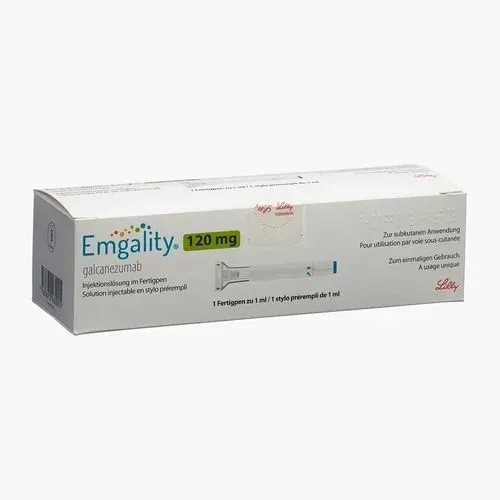
Brand Name: Emgality
Drug Group: Calcitonin gene-related peptide (CGRP) inhibitor (migraine preventive)
Commonly Used For
- Prevent episodic and chronic migraines.
- Reduce migraine-related disability.
- Manage cluster headache episodes.
Key Characteristics
Form: Prefilled pen or syringe for subcutaneous injection (120 mg, 100 mg loading dose) (detailed in Dosage section).
Mechanism: Binds CGRP ligand, preventing its interaction with receptors, thus reducing neurogenic inflammation.
Approval: FDA-approved (2018 for Emgality) and EMA-approved for migraine prevention.
Indications and Uses of Galcanezumab
Galcanezumab is indicated for various headache disorders, leveraging its CGRP inhibition:
Episodic Migraine Prevention: Reduces frequency (4–14 headache days/month) in adults, per neurology guidelines, supported by clinical trials showing a 50–60% reduction in migraine days over 6 months.
Chronic Migraine Prevention: Manages frequent migraines (≥15 headache days/month, with ≥8 migraine days), improving quality of life, recommended in headache management protocols with evidence of decreased acute medication use.
Cluster Headache Prevention: Treats episodic cluster headaches, reducing attack frequency, with neurology data from phase 3 trials.
Medication Overuse Headache (MOH): Investigated off-label to break the cycle in chronic migraineurs, with headache research evidence.
Post-Traumatic Headache (PTH): Explored off-label in patients with concussion-related headaches, with traumatic brain injury studies.
Menstrual Migraine Prevention: Managed off-label to stabilize hormone-related migraines, with gynecology-neurology data.
Tension-Type Headache with Migraine Features: Used off-label to reduce mixed headache patterns, with pain management evidence.
Pediatric Migraine Prevention: Initiated off-label in adolescents (12–17 years) with severe migraines, with pediatric neurology research.
Migraine with Aura Prophylaxis: Investigated off-label to mitigate aura frequency, with migraine pathophysiology studies.
Chronic Pain Syndromes: Explored off-label for neuropathic pain with migraine overlap, with pain medicine data.
Dosage of Galcanezumab
Dosage for Adults
Episodic or Chronic Migraine Prevention:
- Loading Dose: 240 mg (two 120 mg injections) as a single subcutaneous dose at treatment initiation.
- Maintenance Dose: 120 mg once monthly via subcutaneous injection.
Cluster Headache Prevention:
- Loading Dose: 300 mg (three 100 mg injections) as a single subcutaneous dose at treatment initiation.
- Maintenance Dose: 100 mg once monthly, with an option to increase to 300 mg if needed.
Dosage for Adolescents (12–17 years, Off-Label)
Migraine Prevention:
- Loading Dose: 120 mg (one 120 mg injection), adjusted based on weight and response.
- Maintenance Dose: 60–120 mg once monthly, under pediatric neurology supervision.
Dosage for Pregnant Women
Pregnancy Category C: Use only if benefits outweigh risks; consult an obstetrician and neurologist, with fetal monitoring.
Dosage Adjustments
Renal Impairment: No adjustment needed; monitor for rare systemic effects in severe cases (CrCl <30 mL/min).
Hepatic Impairment:
Mild to moderate (Child-Pugh A or B): Use cautiously; severe (Child-Pugh C): Avoid due to limited data.
Concomitant Medications: Adjust if combined with other migraine preventives (e.g., topiramate); monitor for additive effects.
Elderly: No specific adjustment; assess cardiovascular risk and injection tolerance.
Body Weight: No dose adjustment based on weight, but monitor response in underweight patients (<50 kg).
Additional Considerations
Administer this active ingredient via subcutaneous injection into the abdomen, thigh, or back of the upper arm, rotating sites.
Use a new prefilled pen or syringe for each dose; do not shake the device.
Store in the refrigerator at 2–8°C (36–46°F); allow to reach room temperature before injection.
How to Use Galcanezumab
Administration:
Subcutaneous: Clean the injection site with an alcohol swab, pinch the skin, insert the needle at a 45–90° angle, and inject steadily; release the pinch before removing the needle.
Dispose of used pens or syringes in a sharps container.
Timing: Administer monthly on a consistent day, with the loading dose given at the start of therapy.
Monitoring: Watch for injection site reactions (e.g., redness, swelling) or systemic symptoms (e.g., chest tightness); report changes immediately.
Additional Tips:
- Store at 2–8°C (36–46°F) in the original carton to protect from light; can be kept at room temperature (up to 30°C/86°F) for up to 7 days.
- Keep out of reach of children; train patients or caregivers on proper injection technique.
- Avoid injecting into scarred, bruised, or tender areas; rotate sites to prevent lipodystrophy.
- Schedule follow-up visits every 1–3 months with a neurologist to assess migraine frequency and side effects.
- Provide a migraine diary to track headache days and medication response for therapy optimization.
Contraindications for Galcanezumab
Hypersensitivity: Patients with a known allergy to Galcanezumab or its excipients (e.g., L-histidine).
Severe Hypersensitivity Reactions: Avoid in patients with a history of anaphylaxis or angioedema to this medication.
Active Cardiovascular Disease: Contraindicated in uncontrolled hypertension or recent myocardial infarction due to CGRP inhibition concerns.
Severe Renal Impairment: Avoid in CrCl <30 mL/min due to limited excretion data.
Severe Hepatic Impairment: Contraindicated in Child-Pugh Class C due to potential accumulation.
Pregnancy with High Risk: Avoid in high-risk pregnancies without specialist oversight due to Category C status.
Warnings & Precautions for Galcanezumab
General Warnings
Hypersensitivity Reactions: Risk of anaphylaxis or angioedema; discontinue if severe symptoms occur.
Cardiovascular Risks: Potential increase in blood pressure or heart rate; monitor in patients with cardiovascular history.
Injection Site Reactions: Common redness or swelling; manage with cold compresses.
Constipation: Risk of severe constipation; monitor bowel function.
Immune Response: Rare risk of antibody development reducing efficacy; assess with periodic testing.
Additional Warnings
Neurological Effects: Rare reports of worsening headache; discontinue if new symptoms emerge.
Liver Function Changes: Mild elevation in liver enzymes; monitor in at-risk patients.
Pregnancy Risks: Potential fetal effects; use only if clearly needed.
Elderly Patients: Higher risk of side effects; start with lower doses if tolerated.
Hypersensitivity Monitoring: Watch for delayed reactions (e.g., rash) up to 7 days post-injection.
Use in Specific Populations
Pregnancy: Category C; use with caution, monitoring fetal development.
Breastfeeding: Use caution; monitor infant for effects from potential transfer.
Elderly: Higher risk of cardiovascular events; assess baseline health.
Children: Safe off-label with pediatric neurology oversight.
Renal/Hepatic Impairment: Adjust or avoid in severe cases.
Additional Precautions
- Inform your doctor about heart conditions, allergies, or pregnancy plans before starting this medication.
- Avoid self-adjusting doses to prevent adverse reactions.
- Use supportive care (e.g., hydration) for constipation management.
Overdose and Management of Galcanezumab
Overdose Symptoms
- Injection site reactions (e.g., severe swelling, pain) or mild systemic effects (e.g., nausea).
- Severe cases: Anaphylaxis, cardiovascular instability, or profound constipation.
- Headache exacerbation or dizziness as early signs.
- Rare coma or respiratory depression with extremely high doses.
Immediate Actions
Contact the Medical Team: Seek immediate medical help if systemic symptoms occur.
Supportive Care: Monitor vital signs, provide antihistamines for allergic reactions, and manage constipation with laxatives if needed.
Specific Treatment: No specific antidote; discontinue use and observe for 24–48 hours.
Monitor: Check cardiovascular parameters, liver function, and allergic response; consult an allergist if severe.
Patient Education: Advise against multiple injections and to report accidental over-administration.
Additional Notes
- Overdose risk is low due to subcutaneous route; store securely and verify doses.
- Report persistent symptoms (e.g., chest pain, severe swelling) promptly.
Side Effects of Galcanezumab
Common Side Effects
- Injection Site Reactions (10–15%, redness or swelling, managed with ice)
- Constipation (5–10%, relieved with dietary fiber or laxatives)
- Nasopharyngitis (3–7%, decreases with time)
- Fatigue (2–5%, managed with rest)
- Dizziness (1–4%, resolves with hydration)
These effects may subside with adaptation.
Serious Side Effects
Seek immediate medical attention for:
- Allergic: Anaphylaxis, angioedema, or urticaria.
- Cardiovascular: Hypertension or tachycardia.
- Neurological: Worsening migraine or new headache patterns.
- Hepatic: Jaundice or liver enzyme elevation (rare).
- Immune: Antibody-mediated reactions reducing efficacy.
Additional Notes
Regular monitoring with blood pressure checks and liver function tests every 3 months is advised for long-term use.
Patients with a history of allergies should be observed for delayed hypersensitivity.
Report any unusual symptoms (e.g., difficulty breathing, severe constipation) immediately to a neurologist.
Long-term use (>12 months) requires assessment for cardiovascular risk factors and immune response.
Drug Interactions with Galcanezumab
This active ingredient may interact with:
- Other Migraine Preventives: Increases sedation risk (e.g., topiramate); monitor.
- Immunosuppressants: Potential immune interaction; use cautiously.
- Antihypertensives: May alter blood pressure effects; adjust if needed.
- Live Vaccines: Avoid during therapy due to immune suppression risk.
- NSAIDs: No significant interaction, but monitor for gastrointestinal effects.
Action: Provide your healthcare provider with a complete list of medications.
Patient Education or Lifestyle
Medication Adherence: Use this CGRP inhibitor as prescribed for migraine prevention, following the monthly schedule.
Monitoring: Report injection site issues, constipation, or signs of allergy immediately.
Lifestyle: Maintain a regular sleep schedule; avoid migraine triggers (e.g., stress).
Diet: Increase fiber intake to manage constipation; stay hydrated.
Emergency Awareness: Know signs of anaphylaxis or cardiovascular distress; seek care if present.
Follow-Up: Schedule regular check-ups every 1–3 months to assess migraine control and side effects.
Pharmacokinetics of Galcanezumab
Absorption: Subcutaneous, peak at 5–7 days; bioavailability ~70–80%.
Distribution: Volume of distribution ~7.3 L; minimal protein binding.
Metabolism: Degraded via proteolysis into small peptides, no hepatic metabolism.
Excretion: Primarily via reticuloendothelial system; half-life ~27 days.
Half-Life: 27 days, supporting monthly dosing.
Pharmacodynamics of Galcanezumab
This drug exerts its effects by:
Binding CGRP ligand, inhibiting its vasodilatory and pro-inflammatory actions.
Reducing cortical spreading depression and trigeminovascular activation in migraines.
Preventing cluster headache attacks by blocking CGRP-mediated pain pathways.
Exhibiting dose-dependent risks of injection site reactions and constipation.
Storage of Galcanezumab
Temperature: Store at 2–8°C (36–46°F) in the original carton; protect from light.
Protection: Avoid freezing; can be kept at room temperature (up to 30°C/86°F) for up to 7 days.
Safety: Store in a secure location out of reach of children and pets.
Disposal: Dispose of used pens or syringes in a sharps container per local regulations or consult a pharmacist.
Frequently Asked Questions (FAQs)
Q: What does Galcanezumab treat?
A: This medication prevents migraines and cluster headaches.
Q: Can this active ingredient cause constipation?
A: Yes, constipation is common; manage with fiber.
Q: Is Galcanezumab safe for children?
A: Yes, off-label with supervision.
Q: How is this drug taken?
A: Via subcutaneous injection, monthly.
Q: How long is Galcanezumab treatment?
A: Typically 3–6 months, or longer as prescribed.
Q: Can I use Galcanezumab if pregnant?
A: Yes, with caution; consult a doctor.
Regulatory Information
This medication is approved by:
U.S. Food and Drug Administration (FDA): Approved in 2018 (Emgality) for migraine prevention.
European Medicines Agency (EMA): Approved for episodic and chronic migraine prevention.
Other Agencies: Approved globally for migraine therapy; consult local guidelines.
References
- U.S. Food and Drug Administration (FDA). (2023). Emgality (Galcanezumab) Prescribing Information.
- Official FDA documentation detailing the drug’s approved uses, dosage, and safety.
- European Medicines Agency (EMA). (2023). Galcanezumab Summary of Product Characteristics.
- EMA’s comprehensive information on the medication’s indications and precautions in Europe.
- National Institutes of Health (NIH). (2023). Galcanezumab: MedlinePlus Drug Information.
- NIH resource providing detailed information on the drug’s uses, side effects, and precautions.
- World Health Organization (WHO). (2023). WHO Model List of Essential Medicines: Galcanezumab.
- WHO’s consideration of Galcanezumab for migraine prevention.
- Headache. (2022). Galcanezumab in Cluster Headache.
- Peer-reviewed article on Galcanezumab efficacy (note: access may require a subscription).
