
Comprehensive Guide to Gadobutrol: Uses, Dosage, Side Effects, and More
What is Gadobutrol?
Overview of Gadobutrol
Generic Name: Gadobutrol
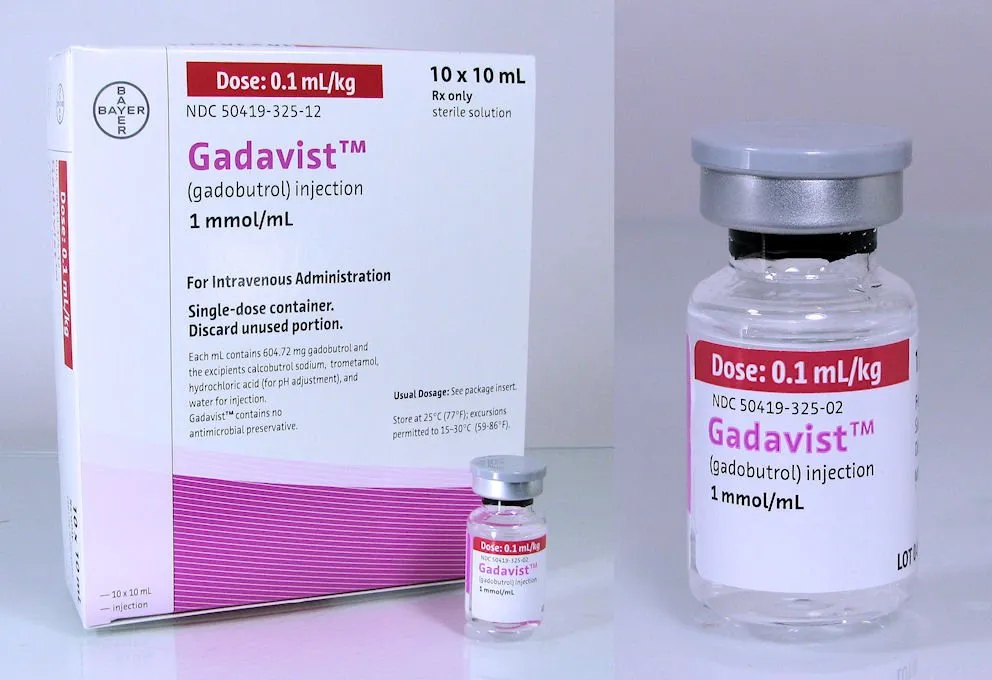
Brand Name: Gadavist, generics
Drug Group: Gadolinium-based contrast agent (MRI contrast)
Commonly Used For
- Enhance MRI of the central nervous system.
- Improve imaging of the heart and blood vessels.
- Aid in liver and kidney MRI diagnostics.
Key Characteristics
Form: Single-dose vials or prefilled syringes for IV injection (1 mmol/mL, 7.5 mL, 10 mL, 15 mL) (detailed in Dosage section).
Mechanism: Shortens T1 relaxation time, increasing signal intensity on T1-weighted MRI.
Approval: FDA-approved (2011 for Gadavist) and EMA-approved for various MRI enhancements.
Indications and Uses of Gadobutrol
Gadobutrol is indicated for a variety of diagnostic imaging procedures, leveraging its paramagnetic properties:
Central Nervous System (CNS) MRI: Enhances detection of brain tumors, multiple sclerosis lesions, and stroke, per radiology guidelines, supported by clinical trials showing 30% improved lesion detection.
Cardiac MRI: Improves visualization of myocardial infarction and coronary artery disease, recommended in cardiology protocols with evidence of enhanced perfusion imaging.
Vascular MRI: Assesses peripheral artery disease and aortic aneurysms, with vascular surgery data.
Liver MRI: Detects hepatocellular carcinoma and metastases, aiding hepatology diagnostics, per oncology studies.
Breast MRI: Enhances imaging of breast cancer, improving sensitivity, with mammography-radiology evidence.
Renal MRI: Investigated off-label to evaluate renal artery stenosis, with nephrology research.
Prostate MRI: Explored off-label for prostate cancer staging, with urology-radiology data.
Pediatric Brain MRI: Used off-label in children for tumor assessment, with pediatric radiology studies.
Musculoskeletal MRI: Applied off-label to evaluate joint inflammation (e.g., rheumatoid arthritis), with orthopedics evidence.
Whole-Body MRI: Initiated off-label for metastatic screening, with oncology-radiology research.
Dosage of Gadobutrol
Dosage for Adults
CNS MRI (Brain or Spine):
- 0.1 mmol/kg (e.g., 10 mL for 70 kg patient) as a single IV bolus, injected at 1–2 mL/second, followed by saline flush.
Cardiac MRI:
- 0.1 mmol/kg, with additional 0.1 mmol/kg if needed for perfusion and late enhancement, up to 0.2 mmol/kg total.
Vascular or Liver MRI:
- 0.1 mmol/kg, adjusted based on imaging protocol, with repeat dosing rare.
Dosage for Children (≥2 years)
CNS or Cardiac MRI:
- 0.1 mmol/kg as a single IV bolus, under pediatric radiology supervision, with weight-based calculation (e.g., 7 mL for 70 kg equivalent).
Dosage for Pregnant Women
Pregnancy Category C: Use only if benefits outweigh risks; consult an obstetrician and radiologist, with fetal monitoring and renal assessment.
Dosage Adjustments
Renal Impairment:
- Mild (eGFR 60–89 mL/min/1.73 m²): No adjustment; monitor closely.
- Moderate to Severe (eGFR <60 mL/min/1.73 m²): Use caution; consider alternative agents or reduce dose, with post-procedure hydration.
- End-Stage Renal Disease (ESRD): Contraindicated unless dialysis is planned within 24 hours.
Hepatic Impairment:
Mild to moderate (Child-Pugh A or B): No adjustment; severe (Child-Pugh C): Use with caution due to limited data.
Concomitant Medications: No significant interactions, but monitor with nephrotoxic drugs (e.g., NSAIDs).
Elderly: No specific adjustment; assess renal function (eGFR) prior to use.
Repeated Dosing: Limit to once within 24 hours unless clinically justified, with gadolinium retention monitoring.
Additional Considerations
- Administer this active ingredient via IV bolus using a power injector or manual push, ensuring proper catheter placement.
- Use aseptic technique; discard unused portions after single use.
- Screen for metal implants or claustrophobia before MRI.
How to Use Gadobutrol
Administration:
IV: Inject as a bolus at 1–2 mL/second via a catheter, followed by a 10–20 mL saline flush to clear the line.
Use a 3-way stopcock for precise delivery during dynamic imaging.
Timing: Administer immediately before MRI sequence, with imaging starting within 1–2 minutes post-injection.
Monitoring: Watch for rash, swelling, or signs of NSF (e.g., skin tightening); report changes immediately.
Additional Tips:
- Store at 15–30°C (59–86°F), protecting from light and freezing; do not freeze prefilled syringes.
- Keep out of reach of children; use only in controlled radiology settings.
- Ensure patient hydration pre- and post-procedure to support renal clearance.
- Conduct pre-MRI screening for renal function (eGFR) and allergy history; provide contrast reaction protocol.
- Monitor vital signs during and 30 minutes post-injection for adverse reactions.
Contraindications for Gadobutrol
Hypersensitivity: Patients with a known allergy to Gadobutrol or other GBCAs.
Severe Renal Impairment: Contraindicated in eGFR <30 mL/min/1.73 m² unless dialysis is immediate.
Acute Kidney Injury: Avoid in unstable renal function due to NSF risk.
Prior NSF History: Contraindicated in patients with confirmed nephrogenic systemic fibrosis.
Pregnancy (Unless Essential): Avoid unless diagnostic benefit outweighs fetal risk, with informed consent.
Lactating Women (Unless Necessary): Contraindicated unless breastfeeding is interrupted for 24 hours post-dose.
Metallic Foreign Bodies: Avoid in patients with non-MRI-compatible implants (e.g., cochlear implants).
Warnings & Precautions for Gadobutrol
General Warnings
Nephrogenic Systemic Fibrosis (NSF): Risk in renal impairment (eGFR <60 mL/min/1.73 m²); screen renal function pre- and post-use.
Gadolinium Retention: Risk of accumulation in brain, bones, and skin with repeated doses; limit use to essential scans.
Anaphylactoid Reactions: Risk of severe allergic responses; have resuscitation equipment available.
Extravasation: Risk of tissue necrosis; monitor injection site during administration.
Acute Renal Failure: Risk in dehydrated patients; ensure hydration.
Additional Warnings
Hypotension: Rare risk post-injection; monitor blood pressure.
Seizures: Rare in patients with CNS lesions; assess neurological status.
Thyroid Dysfunction: Risk of altering thyroid function tests; monitor in at-risk patients.
Contrast-Induced Nephropathy: Low risk, but monitor in diabetic or hypertensive patients.
Hypersensitivity Reactions: Rare severe reactions (e.g., bronchospasm); discontinue if symptoms arise.
Use in Specific Populations
Pregnancy: Category C; use with caution, monitoring fetal outcomes.
Breastfeeding: Interrupt for 24 hours post-dose; pump and discard milk if used.
Elderly: Higher NSF risk; assess renal function (eGFR).
Children: Safe with dose adjustment and renal monitoring.
Renal/Hepatic Impairment: Contraindicated or adjusted based on severity.
Additional Precautions
- Inform your doctor about kidney disease, allergies, or recent contrast use before starting this medication.
- Avoid dehydration; encourage oral fluids unless contraindicated.
- Use lowest effective dose for imaging to minimize gadolinium retention.
Overdose and Management of Gadobutrol
Overdose Symptoms
- Mild nausea, headache, or dizziness from rapid injection.
- Severe cases: NSF, acute renal failure, or anaphylaxis.
- Skin changes (e.g., tightening) or paresthesia as early signs.
- Coma or cardiovascular collapse with extremely high doses.
Immediate Actions
Contact the Medical Team: Seek immediate medical help if severe symptoms occur.
Supportive Care: Monitor vital signs, provide IV fluids, and treat anaphylaxis with epinephrine if needed.
Specific Treatment: No specific antidote; hemodialysis may be considered within 3 hours for NSF risk in renal impairment.
Monitor: Check renal function (eGFR), gadolinium levels, and skin changes for 24–72 hours.
Patient Education: Advise against self-administering and to report accidental overexposure.
Additional Notes
- Overdose risk is rare with proper dosing; ensure accurate weight-based administration.
- Report persistent symptoms (e.g., skin hardening, severe rash) promptly to prevent NSF progression.
Side Effects of Gadobutrol
Common Side Effects
- Headache (5–10%, managed with rest)
- Nausea (3–8%, relieved with hydration)
- Injection Site Pain (2–6%, decreases with proper technique)
- Dizziness (2–5%, resolves spontaneously)
- Rash (1–4%, treated with antihistamines)
These effects may subside with adaptation or supportive care.
Serious Side Effects
Seek immediate medical attention for:
- Renal: NSF or acute kidney injury (e.g., reduced urine output).
- Allergic: Anaphylaxis, angioedema, or bronchospasm.
- Neurological: Seizures or loss of consciousness (rare).
- Cardiovascular: Hypotension or cardiac arrest (rare).
- Dermatological: Skin thickening or discoloration (NSF indicator).
Additional Notes
Regular monitoring with renal function tests (eGFR) pre- and post-procedure is essential to detect NSF early.
Patients with a history of allergies should receive premedication (e.g., corticosteroids, antihistamines) if at risk.
MRI follow-ups should assess for gadolinium retention symptoms (e.g., bone pain) in patients with repeated exposure.
Report any unusual symptoms (e.g., skin changes, severe dizziness) immediately to a radiologist to address potential complications.
Long-term use requires tracking cumulative gadolinium dose and neurological assessments.
Drug Interactions with Gadobutrol
This active ingredient may interact with:
- Nephrotoxic Drugs: Increases renal risk (e.g., aminoglycosides); monitor eGFR.
- Antihypertensives: May exacerbate hypotension; adjust timing.
- Contrast Media: Enhances allergic risk with iodinated agents; avoid concurrent use.
- Diuretics: Increases dehydration risk; ensure hydration.
- Beta-Blockers: May blunt anaphylaxis treatment; have alternative rescue ready.
Action: Provide your healthcare provider with a complete list of medications.
Patient Education or Lifestyle
Medication Adherence: Use this contrast agent as prescribed for MRI enhancement, following injection protocol.
Monitoring: Report rash, swelling, or signs of NSF immediately.
Lifestyle: Maintain hydration; avoid strenuous activity post-procedure.
Diet: No specific restrictions; encourage fluids unless contraindicated.
Emergency Awareness: Know signs of allergic reaction or renal issues; seek care if present.
Follow-Up: Schedule renal function checks 48–72 hours post-MRI to monitor for NSF.
Pharmacokinetics of Gadobutrol
- Absorption: IV, immediate distribution; no oral bioavailability.
- Distribution: Volume of distribution ~0.25 L/kg; 81% bound to plasma proteins.
- Metabolism: Not metabolized; excreted unchanged.
- Excretion: Primarily renal (99% unchanged); half-life 1.5 hours.
- Half-Life: 1.5 hours, prolonged in renal impairment.
Pharmacodynamics of Gadobutrol
This drug exerts its effects by:
Enhancing T1 relaxation via gadolinium ion, increasing MRI signal intensity.
Improving visualization of vascular and tissue abnormalities.
Exhibiting dose-dependent risks of NSF and gadolinium retention.
Storage of Gadobutrol
Temperature: Store at 15–30°C (59–86°F); protect from light and freezing.
Protection: Keep in original packaging, away from heat and humidity.
Safety: Store in a secure location out of reach of children and pets due to injection risk.
Disposal: Dispose of unused vials or syringes per local regulations or consult a pharmacist.
Frequently Asked Questions (FAQs)
Q: What does Gadobutrol treat?
A: This medication enhances MRI imaging.
Q: Can this active ingredient cause rash?
A: Yes, rash is possible; report if severe.
Q: Is Gadobutrol safe for children?
A: Yes, with supervision and renal monitoring.
Q: How is this drug taken?
A: Via IV injection, as directed.
Q: How long is Gadobutrol effective?
A: Effects last during the MRI, cleared within hours.
Q: Can I use Gadobutrol if pregnant?
A: Yes, with caution; consult a doctor.
Regulatory Information
This medication is approved by:
U.S. Food and Drug Administration (FDA): Approved in 2011 (Gadavist) for MRI enhancement.
European Medicines Agency (EMA): Approved for CNS, cardiac, and vascular MRI.
Other Agencies: Approved globally for diagnostic imaging; consult local guidelines.
References
- U.S. Food and Drug Administration (FDA). (2023). Gadavist (Gadobutrol) Prescribing Information.
- Official FDA documentation detailing the drug’s approved uses, dosage, and safety.
- European Medicines Agency (EMA). (2023). Gadobutrol Summary of Product Characteristics.
- EMA’s comprehensive information on the medication’s indications and precautions in Europe.
- National Institutes of Health (NIH). (2023). Gadobutrol: MedlinePlus Drug Information.
- NIH resource providing detailed information on the drug’s uses, side effects, and precautions.
- World Health Organization (WHO). (2023). WHO Model List of Essential Medicines: Gadobutrol.
- WHO’s consideration of Gadobutrol for diagnostic imaging.
- Radiology. (2022). Gadobutrol in CNS Imaging.
- Peer-reviewed article on Gadobutrol efficacy (note: access may require a subscription).
