
Comprehensive Guide to Formoterol + Budesonide: Uses, Dosage, Side Effects, and More
What is Formoterol + Budesonide?
Overview of Formoterol + Budesonide
Generic Name: Formoterol Fumarate + Budesonide
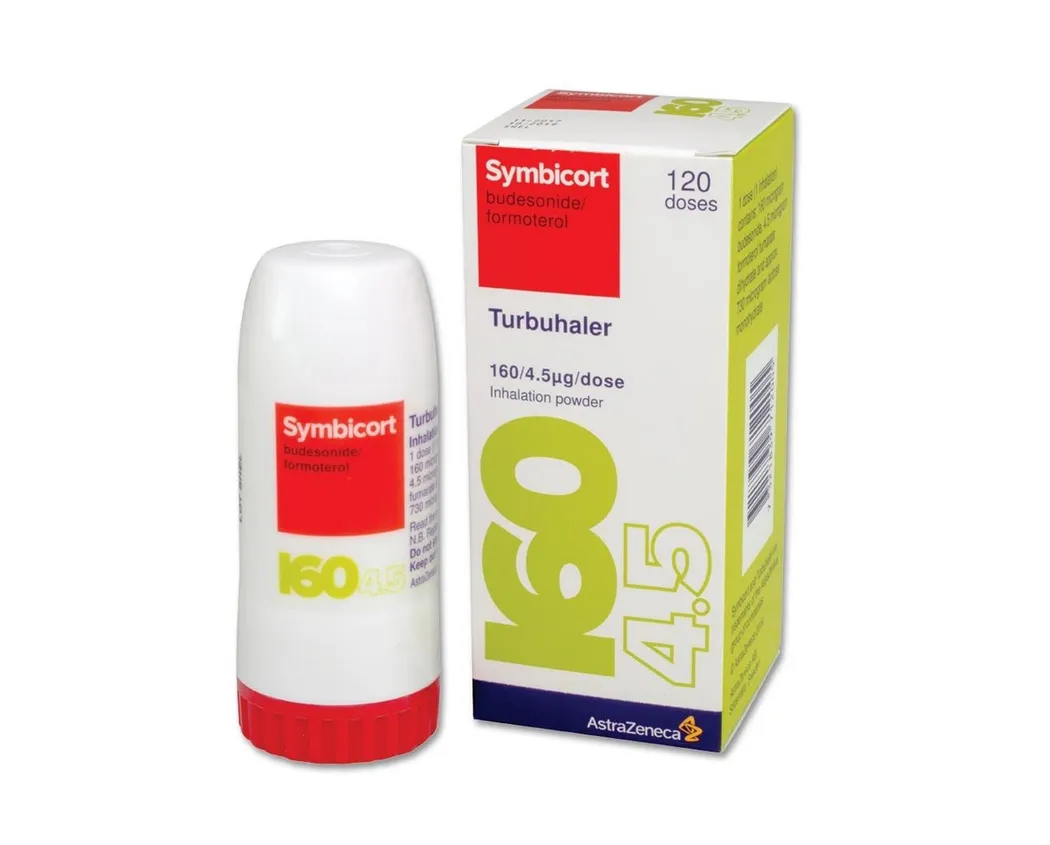
Brand Name: Symbicort, generics
Drug Group: LABA + ICS (bronchodilator + anti-inflammatory)
Commonly Used For
This combination is used to:
- Control asthma symptoms.
- Manage chronic obstructive pulmonary disease (COPD).
- Prevent exacerbations.
Key Characteristics
Form: Dry powder inhaler (80/4.5 mcg, 160/4.5 mcg per actuation); metered-dose inhaler (MDI) variants (detailed in Dosage section).
Mechanism: Formoterol provides rapid, long-acting bronchodilation; Budesonide reduces airway inflammation.
Approval: FDA-approved (2006 for Symbicort) and EMA-approved for asthma and COPD.
Indications and Uses of Formoterol + Budesonide
Formoterol + Budesonide is indicated for chronic respiratory diseases, offering dual-action control:
Asthma (Maintenance Therapy): Controls persistent asthma in adults and children (6+ years), reducing symptoms, improving lung function, and preventing exacerbations, per GINA and NHLBI guidelines.
COPD (Maintenance Therapy): Manages COPD with FEV1 <70% predicted, reducing exacerbations and improving quality of life, supported by GOLD guidelines and trials like PATHOS.
Asthma-COPD Overlap (ACO): Treats patients with features of both asthma and COPD, improving symptom control and reducing hospitalizations, with emerging ACO research.
Exercise-Induced Bronchoconstriction (EIB): Used off-label as pre-exercise prophylaxis in asthma patients, reducing bronchospasm, under pulmonologist guidance.
Allergic Rhinitis with Asthma: Employed off-label to manage comorbid allergic rhinitis and asthma, improving nasal and bronchial symptoms, supported by allergy studies.
Post-Viral Cough in Asthma: Investigated off-label to reduce persistent cough post-respiratory infection in asthmatics, with data from respiratory medicine cohorts.
Pediatric Severe Asthma: Manages severe persistent asthma in children (6–11 years) with high-dose ICS needs, enhancing adherence via combination therapy, per pediatric pulmonology protocols.
Smoking-Related Lung Disease: Used off-label in smokers with early COPD to slow decline in lung function, with cautious use under specialist care.
Bronchiectasis with Airflow Obstruction: Explored off-label to reduce exacerbations in bronchiectasis patients with airflow limitation, supported by respiratory infection studies.
Dosage of Formoterol + Budesonide
Dosage for Adults
Asthma (Maintenance):
- Mild-Moderate: 80/4.5 mcg, 1–2 inhalations twice daily.
- Moderate-Severe: 160/4.5 mcg, 2 inhalations twice daily, maximum 320/9 mcg/day.
COPD (Maintenance): 160/4.5 mcg, 2 inhalations twice daily.
Dosage for Children
Asthma (6–11 years): 80/4.5 mcg, 2 inhalations twice daily, under pediatric pulmonologist supervision.
Not recommended under 6 years.
Dosage for Pregnant Women
Pregnancy Category C: Use only if benefits outweigh risks (e.g., uncontrolled asthma). Consult an obstetrician, with fetal monitoring.
Dosage Adjustments
Renal Impairment: No adjustment needed.
Hepatic Impairment: Use caution in severe cases (Child-Pugh C); monitor adrenal function.
Elderly: Start with 80/4.5 mcg twice daily; increase if tolerated.
Concomitant Medications: Reduce dose if combined with CYP3A4 inhibitors (e.g., ketoconazole).
Additional Considerations
- Take this combination with or without food, using the inhaler device correctly.
- Rinse mouth after use to prevent oral thrush.
How to Use Formoterol + Budesonide
Administration:
- Shake MDI if applicable; prime if new; inhale deeply and hold breath for 10 seconds.
- Use Turbuhaler or MDI as prescribed; clean device weekly.
Timing: Use twice daily (morning and evening), maintaining consistency.
Monitoring: Watch for hoarseness, throat irritation, or signs of adrenal suppression (e.g., fatigue).
Additional Tips:
- Store at 20–25°C (68–77°F), protecting from moisture and heat.
- Keep out of reach of children due to overdose risk.
- Report severe wheezing, vision changes, or signs of infection immediately.
Contraindications for Formoterol + Budesonide
Hypersensitivity: Patients with a known allergy to Formoterol, Budesonide, or components.
Status Asthmaticus: Contraindicated as primary treatment for acute attacks.
Untreated Infections: Avoid in active pulmonary tuberculosis or fungal infections.
Warnings & Precautions for Formoterol + Budesonide
General Warnings
Asthma-Related Death: LABA monotherapy increases risk; always combine with ICS.
Adrenal Suppression: Risk with high-dose, long-term use; monitor growth in children.
Pneumonia: Increased risk in COPD patients; treat promptly.
Oral Candidiasis: Risk of thrush; rinse mouth after use.
Bone Density: May reduce BMD; assess in long-term users.
Additional Warnings
Cardiovascular Effects: Risk of tachycardia or QT prolongation; monitor in heart disease.
Hypokalemia: Formoterol may lower potassium; monitor in severe cases.
Hyperglycemia: Budesonide may elevate glucose; monitor in diabetics.
Cataracts/Glaucoma: Increased risk; screen eyes annually.
Hypersensitivity Reactions: Rare anaphylaxis; discontinue if swelling occurs.
Use in Specific Populations
Pregnancy: Category C; use only if essential with fetal monitoring.
Breastfeeding: Excreted in breast milk; monitor infant for growth.
Elderly: Higher risk of side effects; start with lower doses.
Children: Limited to 6+ years; monitor growth velocity.
Renal/Hepatic Impairment: Use caution; avoid in severe cases.
Additional Precautions
- Inform your doctor about heart disease, diabetes, or eye issues before starting this medication.
- Do not stop abruptly; taper under medical supervision.
Overdose and Management
Overdose Symptoms
- Tremor, palpitations, or headache.
- Severe cases: Arrhythmia, hypokalemia, or adrenal crisis.
- Nausea, dizziness, or hyperglycemia as early signs.
- Seizures with extremely high doses.
Immediate Actions
Contact the Medical Team: Seek immediate medical help.
Supportive Care: Monitor vital signs, correct electrolytes, and provide beta-blockers if needed.
Specific Treatment: Manage symptoms; no specific antidote.
Monitor: Check ECG, potassium, and glucose for 24–48 hours.
Additional Notes
- Overdose risk is low; store securely.
- Report persistent symptoms (e.g., rapid heartbeat, confusion) promptly.
Side Effects of Formoterol + Budesonide
Common Side Effects
- Oral Candidiasis (5–10%, prevented by rinsing)
- Hoarseness (3–8%, transient)
- Headache (5–10%, relieved with rest)
- Throat Irritation (3–7%, reduced with technique)
- Tremor (2–6%, decreases with tolerance)
These effects may subside with dose adjustment.
Serious Side Effects
Seek immediate medical attention for:
- Cardiovascular: Arrhythmia, chest pain, or hypertension.
- Respiratory: Paradoxical bronchospasm or pneumonia.
- Endocrine: Adrenal suppression or growth delay.
- Ocular: Cataracts or increased intraocular pressure.
- Allergic: Rash, angioedema, or anaphylaxis.
Additional Notes
- Regular monitoring for lung function, growth, and bone density is advised.
- Report any unusual symptoms (e.g., white patches in mouth, vision blur) immediately to a healthcare provider.
Drug Interactions with Formoterol + Budesonide
This combination may interact with:
- CYP3A4 Inhibitors: Increases Budesonide levels (e.g., ketoconazole); reduce dose.
- Beta-Blockers: Reduces Formoterol efficacy; avoid non-selective.
- Diuretics: Enhances hypokalemia; monitor potassium.
- Antidepressants: Risk of QT prolongation (e.g., citalopram); monitor ECG.
- Live Vaccines: Reduces immune response; avoid.
Action: Provide your healthcare provider with a complete list of medications.
Patient Education or Lifestyle
Medication Adherence: Take this LABA/ICS inhaler as prescribed, following the exact schedule.
Monitoring: Report wheezing, oral thrush, or rapid heartbeat immediately.
Lifestyle: Avoid smoking; use spacer with MDI if needed.
Diet: Take with or without food; rinse mouth post-use.
Emergency Awareness: Know signs of asthma attack or adrenal crisis; seek care if present.
Follow-Up: Schedule regular check-ups every 3–6 months to monitor lung function and growth.
Pharmacokinetics
Absorption: Rapid lung deposition; Formoterol peak at 15 min, Budesonide at 30 min.
Distribution: Formoterol Vd ~4 L/kg, 50% protein-bound; Budesonide Vd ~3 L/kg, 88% bound.
Metabolism: Formoterol via glucuronidation; Budesonide via CYP3A4.
Excretion: Formoterol renal (10%) and fecal; Budesonide fecal (60%); half-life Formoterol 10 hrs, Budesonide 2–3 hrs.
Half-Life: Combined effect lasts 12 hours, supporting twice-daily dosing.
Pharmacodynamics
This combination exerts effects by:
Formoterol activating β2-receptors, relaxing bronchial smooth muscle.
Budesonide binding glucocorticoid receptors, reducing inflammation.
Synergizing to improve FEV1 and reduce exacerbations.
Exhibiting dose-dependent risks of systemic corticosteroid effects.
Storage
Temperature: Store at 20–25°C (68–77°F); protect from moisture.
Protection: Keep in original foil pouch until use.
Safety: Store out of reach of children due to overdose risk.
Disposal: Dispose of unused inhalers per local regulations.
Regulatory Information
This medication is approved by:
U.S. Food and Drug Administration (FDA): Approved in 2006 (Symbicort) for asthma and COPD.
European Medicines Agency (EMA): Approved for respiratory management.
Other Agencies: Approved globally; consult local guidelines.
References
- U.S. Food and Drug Administration (FDA). (2023). Symbicort (Formoterol + Budesonide) Prescribing Information.
- Official FDA documentation.
- European Medicines Agency (EMA). (2023). Symbicort Summary of Product Characteristics.
- EMA’s information.
- National Institutes of Health (NIH). (2023). Formoterol + Budesonide: MedlinePlus.
- NIH resource.
- Global Initiative for Asthma (GINA). (2023). GINA Report.
- GINA guidelines.
- Lancet Respiratory Medicine. (2022). Symbicort in ACO.
- Peer-reviewed article.
